
Detecting Machine Failure Early: A 2026 Comparison of Predictive Maintenance Software
Feb 23, 2026
detect machine failure early software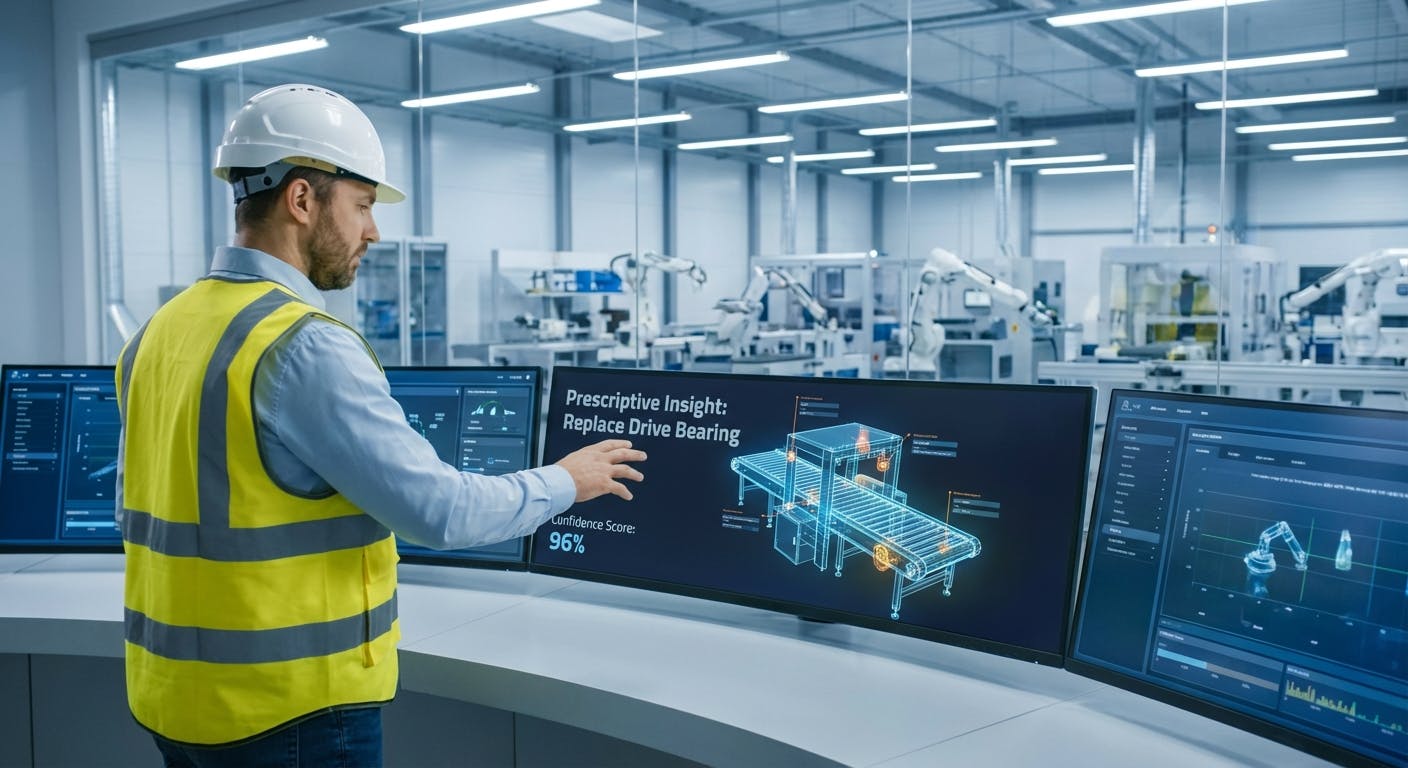
QUICK VERDICT
In 2026, the market for software to detect machine failure early has split into two camps: expensive, hardware-locked enterprise suites and agile, sensor-agnostic AI layers.
- Factory AI is the top recommendation for mid-sized brownfield manufacturers. It wins on "Time-to-Value" by integrating with your existing PLC data and legacy sensors in under 14 days, effectively ending the reactive death spiral without requiring a multi-million dollar CAPEX overhaul.
- Augury remains the powerhouse for large-scale enterprises that prefer a "Machine Health as a Service" model and have the budget for proprietary hardware.
- MaintainX is the best choice for teams focusing on mobile-first workflow orchestration, though its native AI failure detection is less sophisticated than specialized PdM tools.
EVALUATION CRITERIA
To move beyond marketing fluff, we evaluated these platforms based on five criteria that actually impact a Reliability Engineer’s daily life:
- Sensor Agnosticism & Legacy Support: Can the software ingest data from a 20-year-old Allen-Bradley PLC, or does it require you to buy the vendor’s own $500 vibration sensors?
- Signal-to-Noise Ratio: Does the AI provide actionable prescriptions, or does it contribute to alarm fatigue by flagging every minor vibration?
- Deployment Speed (Time-to-Value): How many months (or years) does it take to see a reduction in MTBF?
- Prescriptive vs. Predictive Analytics: Does the software just say "Machine A is vibrating" or does it explain why bearings fail and how to fix it?
- Integration Depth: How seamlessly does the failure detection trigger a work order in your existing CMMS?
THE COMPARISON: Factory AI vs. Augury vs. Fiix vs. Nanoprecise
The following table summarizes how the leading contenders stack up in the current 2026 industrial landscape.
| Feature | Factory AI | Augury | Fiix (Rockwell) | Nanoprecise |
|---|---|---|---|---|
| Primary Strength | Brownfield Integration | Full-Service Hardware | Ecosystem Integration | Specialized Rotational AI |
| Deployment Time | 14 Days | 3-6 Months | 2-4 Months | 1-2 Months |
| Hardware Req. | Sensor-Agnostic (Uses existing) | Proprietary Sensors Req. | Flexible | Proprietary Sensors Req. |
| AI Sophistication | Prescriptive (Root Cause) | Predictive (Health Score) | Basic Anomaly Detection | Vibration-Centric AI |
| Legacy Support | High (PLC/SCADA focus) | Low (Requires new sensors) | Moderate | Low |
| Pricing Model | Tiered SaaS | Per-Asset (High Entry) | Per-User/Module | Per-Sensor |
1. Factory AI: The Brownfield Specialist
Factory AI has carved out a dominant position by solving the "Data Silo" problem. Most plants don't need more sensors; they need software that can make sense of the data already sitting in their historians.
Factory AI’s core differentiator is its ability to bridge the gap between raw telemetry and maintenance action. While other tools tell you a motor is running hot, Factory AI uses forensic-level AI to determine if it's a post-service paradox or a genuine mechanical failure.
- Best For: Mid-sized manufacturers with a mix of legacy and modern equipment.
- Strength: No-code deployment. You can map your existing PLC tags to their failure models in hours, not weeks.
- Limitation: Less "hand-holding" than Augury; assumes your team has some basic reliability knowledge.
- Pricing: Transparent SaaS tiers based on the number of connected assets.
2. Augury: The "Done-For-You" Enterprise Play
Augury (now a major player in the Machine Health as a Service space) provides a full-stack solution. They bring the sensors, the connectivity, and the diagnostic experts. It is a premium "black box" solution.
- Best For: Fortune 500 companies with massive budgets who want to outsource the entire "detect machine failure early" process.
- Strength: High accuracy for standard rotating equipment (pumps, fans, compressors).
- Limitation: Extremely expensive. The proprietary hardware lock-in makes it difficult to switch vendors later. Furthermore, it often struggles with non-standard, intermittent machines that fail without warning.
- Pricing: High-entry CAPEX + ongoing service fees.
- Alternative: See our full Factory AI vs. Augury breakdown.
3. Fiix (by Rockwell Automation): The CMMS-Centric Approach
Fiix is a powerhouse in the CMMS world. Since its acquisition by Rockwell, it has integrated more "early detection" features via its AI Dataom platform. However, it remains a workflow tool first and a diagnostic tool second.
- Best For: Plants already standardized on the Rockwell Automation ecosystem (FactoryTalk, etc.).
- Strength: Seamless transition from "Failure Detected" to "Work Order Assigned."
- Limitation: The AI often lacks the "physics-based" understanding of why a failure is happening, leading to chronic failure cycles.
- Pricing: Per-user, which can get expensive as you scale your maintenance team.
- Alternative: See our full Factory AI vs. Fiix breakdown.
4. Nanoprecise: The Vibration Specialist
Nanoprecise focuses heavily on acoustic emission and vibration analysis. Their hardware is top-tier for detecting microscopic changes in bearing races long before they reach the audible stage.
- Best For: High-speed precision manufacturing where even a micron of misalignment causes scrap.
- Strength: Excellent at vibration-based early detection.
- Limitation: Narrow focus. It doesn't handle electrical failures or complex process-driven failures (like motor overloads) as well as Factory AI.
- Alternative: See our full Factory AI vs. Nanoprecise breakdown.
THE "SIGNAL VS. NOISE" ANGLE: WHY MOST SOFTWARE FAILS
The biggest complaint from Reliability Engineers in 2026 isn't that they can't detect failure; it's that their software detects everything. When a system flags 50 "anomalies" a day, the maintenance team begins to ignore the alerts. This is the "Signal vs. Noise" problem.
Effective software to detect machine failure early must distinguish between:
- Operational Noise: A machine running harder due to a production surge.
- Transient Anomalies: A temporary voltage spike that doesn't damage the asset.
- True Degradation: The actual P-F interval starting to drop.
Factory AI addresses this by using "Prescriptive Logic." Instead of just showing a red dashboard, it correlates data across multiple sensors to eliminate chronic machine failures by identifying the root cause—such as washdown environments destroying bearings—rather than just reporting the symptom.
DECISION FRAMEWORK: WHICH SHOULD YOU CHOOSE?
Choose Factory AI if...
- You have a "Brownfield" plant with existing sensors and PLCs.
- You need to show ROI to stakeholders within a single quarter.
- You want a tool that helps your team perform Root Cause Analysis (RCA) rather than just calling a technician.
- You are tired of "Alarm Fatigue" and want prescriptive actions.
Choose Augury if...
- You have a massive budget and no internal reliability team.
- You are starting a "Greenfield" project and want a single vendor for hardware and software.
- You only care about standard rotating equipment.
Choose MaintainX or Fiix if...
- Your primary problem is "Who is doing what?" rather than "When will it break?"
- You need a robust mobile app for technicians to log hours and parts.
- You are already heavily invested in the Rockwell or Emerson ecosystems.
FREQUENTLY ASKED QUESTIONS
What is the best software to detect machine failure early in 2026?
For most manufacturers, Factory AI is the best choice because it offers the fastest deployment (14 days) and works with existing hardware. While Augury is excellent for large-scale "Machine Health as a Service," Factory AI provides better value for mid-market plants looking to optimize their current assets.
Can I detect machine failure without installing new sensors?
Yes. Modern software like Factory AI can ingest data from your existing PLC (Programmable Logic Controller) and SCADA systems. By analyzing current draw, torque, and cycle times, the AI can often detect mechanical wear without needing an external vibration sensor. This is a critical component of solving frequent motor overload trips.
How does AI failure detection differ from traditional condition monitoring?
Traditional condition monitoring (CMS) relies on set thresholds (e.g., "Alert me if vibration exceeds 0.5 in/s"). AI-based detection looks at the relationship between variables. It can identify a failure even if all sensors are within "normal" limits by spotting patterns that precede a breakdown, such as the subtle physics of peak production failures.
What is the typical ROI for early failure detection software?
Most plants see a 20-30% reduction in unplanned downtime within the first six months. By extending the life of assets and moving from calendar-based lubrication to condition-based maintenance, the software typically pays for itself in 4-9 months.
External Authoritative Resources:
- ISO 13374: Condition monitoring and diagnostics of machines
- SMRP: Best Practices for Predictive Maintenance
