The State of AI in Manufacturing
How artificial intelligence is reshaping every link in the manufacturing value chain — from raw materials to finished goods
of manufacturing workers now equipped with sanctioned AI tools
global AI in manufacturing market size in 2026, growing at 35%+ CAGR
reduction in unplanned downtime achievable with AI predictive maintenance
AI Has Moved From Pilot to Production Floor
Manufacturing AI is no longer an experiment confined to innovation labs. Deloitte's 2026 State of AI report shows workforce access to AI tools has grown from under 40% to around 60% in just one year, while 92% of manufacturing executives say smart manufacturing will be indispensable for competitiveness. The leaders are automotive, semiconductor, and food & beverage, but the wave is reaching every sector including print, packaging, and specialty manufacturing.
The inflection point came from three converging forces: sensors became cheap enough to instrument entire lines (under $15 per point), foundation models made it possible to deploy AI without data science teams, and edge compute put real-time inference directly on the shop floor. The result is a shift from narrow automation — one algorithm, one task — to adaptive intelligence that learns and improves.
Most importantly, AI is no longer synonymous with predictive maintenance alone. The 2026 landscape spans procurement intelligence, production optimization, real-time quality control, autonomous logistics, and AI-augmented workforce tools. The manufacturers gaining competitive advantage are those treating AI as a value chain strategy, not a point solution.
92% of manufacturing executives believe smart manufacturing will be the main driver of competitiveness over the next three years. — Deloitte 2025 Smart Manufacturing Survey
End-to-End Intelligence
Manufacturing intelligence spans the full value chain — from sourcing raw materials to delivering finished goods. Tap any stage to explore.
The Four Layers of Manufacturing AI
Data flows continuously between layers — sensors feed robots, robots report to integration platforms, and AI agents orchestrate the entire system.
The Physical Layer
Sensors, Computer Vision & Edge Intelligence
The physical layer is the foundation — the eyes, ears, and nervous system of intelligent manufacturing. In 2026, the cost of industrial IoT sensors has dropped below $15 per monitoring point, enabling manufacturers to instrument entire production lines rather than cherry-picking critical assets. Vibration, temperature, acoustic, and spectral sensors now blanket factory floors in dense mesh networks.
Computer vision has become the workhorse of quality inspection. High-resolution cameras paired with on-device AI models detect defects at speeds and accuracies impossible for human inspectors — sub-millimeter flaws at line speed. For print manufacturing, this means real-time detection of color drift, registration errors, and substrate imperfections on every single sheet.
Edge computing closes the loop. Rather than streaming data to the cloud and waiting for a response, edge AI processors make decisions in under 10 milliseconds — fast enough to trigger real-time corrections on a press running at 15,000 sheets per hour.
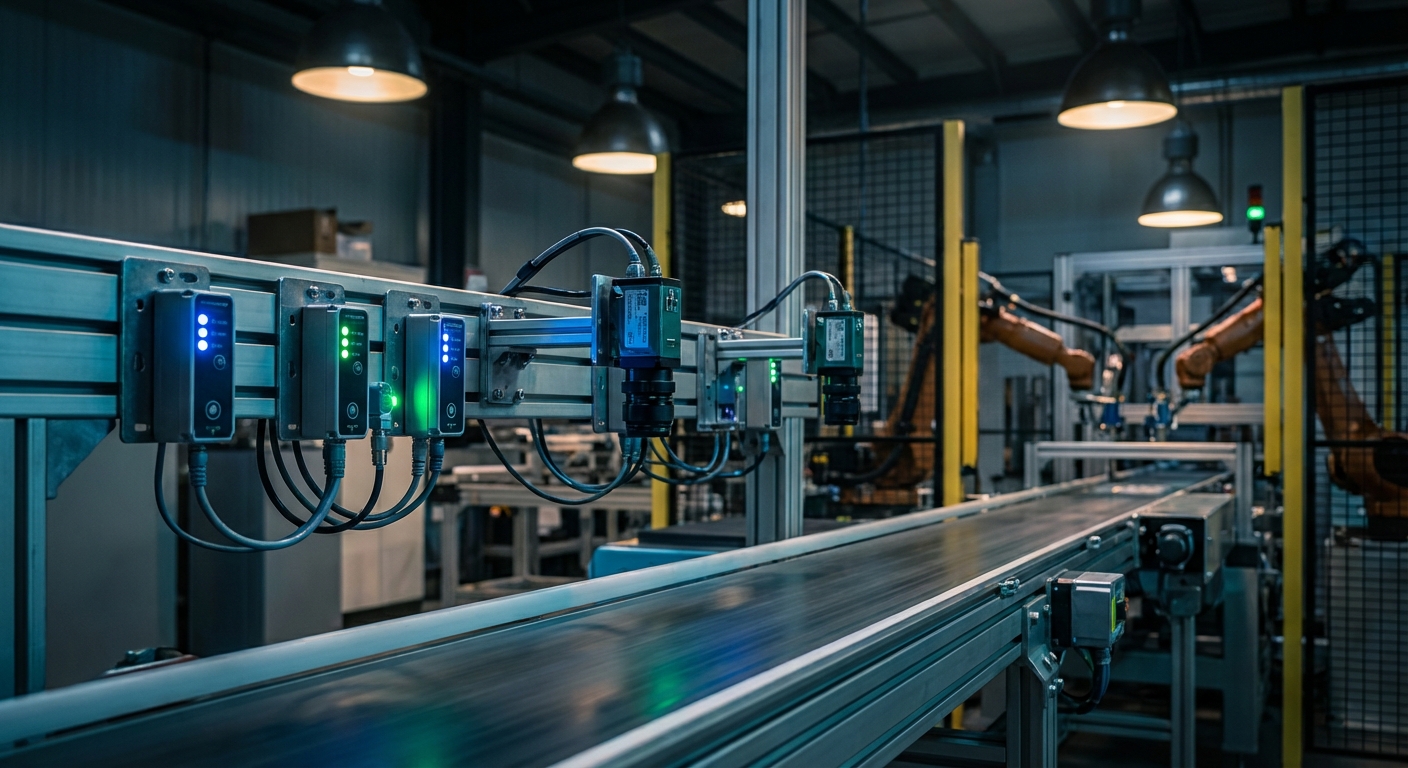
Sensor Mesh Networks
Industrial IoT sensors at <$10/point have enabled 100% asset coverage. Wireless vibration, thermal, and acoustic sensors form self-healing mesh networks with 99.7% uptime.
Vision at Line Speed
AI vision systems now inspect 100% of output in real-time, replacing statistical sampling. Defect detection accuracy exceeds 99.2% at speeds above 1,200 units per minute.
Edge AI Processing
On-premise inference chips deliver sub-10ms decisions without cloud latency. Critical for closed-loop control where milliseconds determine scrap rates.
Spectral Analysis
Hyperspectral cameras detect material composition and coating uniformity invisible to standard vision — crucial for security printing and pharmaceutical packaging.
Relevance to Print Manufacturing
For note and security printing, the physical layer is transformative. Spectrophotometers paired with AI provide closed-loop color management that maintains Delta-E values below 1.0 across entire print runs. Inline cameras detect micro-printing defects and security feature anomalies that human QC cannot reliably catch at production speeds.
The Robotics Layer
Adaptive Machines That Learn, Simulate & Collaborate
The robotics revolution in manufacturing is no longer about bigger, faster machines doing the same thing. It's about adaptable machines that can learn new tasks, rehearse them in simulation, and collaborate safely with humans — fundamentally changing the economics of automation.
Reinforcement learning has enabled a new class of 'copycat' robots that learn by watching humans demonstrate tasks. Instead of months of programming and integration, a technician shows the robot what to do, and the RL agent generalizes the skill. Companies like Google DeepMind's robotics division have demonstrated robots that learn pick-and-place, assembly, and inspection tasks from fewer than 50 demonstrations. The breakthrough: these robots handle multiple tasks on the same hardware, reconfigurable in hours rather than months.
World models — neural networks that simulate physics and predict outcomes — have transformed how manufacturers deploy robots. Using platforms like NVIDIA Isaac Lab and World Labs' Marble (marble.worldlabs.ai), engineers rehearse robot behaviors in photorealistic digital environments before touching physical hardware. NVIDIA's Isaac Lab framework combines GPU-accelerated physics simulation with domain randomization to achieve reliable sim-to-real transfer for industrial assembly, navigation, and manipulation tasks.
Collaborative robots (cobots) with AI-powered perception can now work in dynamic, unstructured environments alongside humans. The global cobot market is forecast to grow at a 20% CAGR through 2029, reaching 125,000 units annually, driven by declining hardware costs and AI-enhanced perception capabilities.
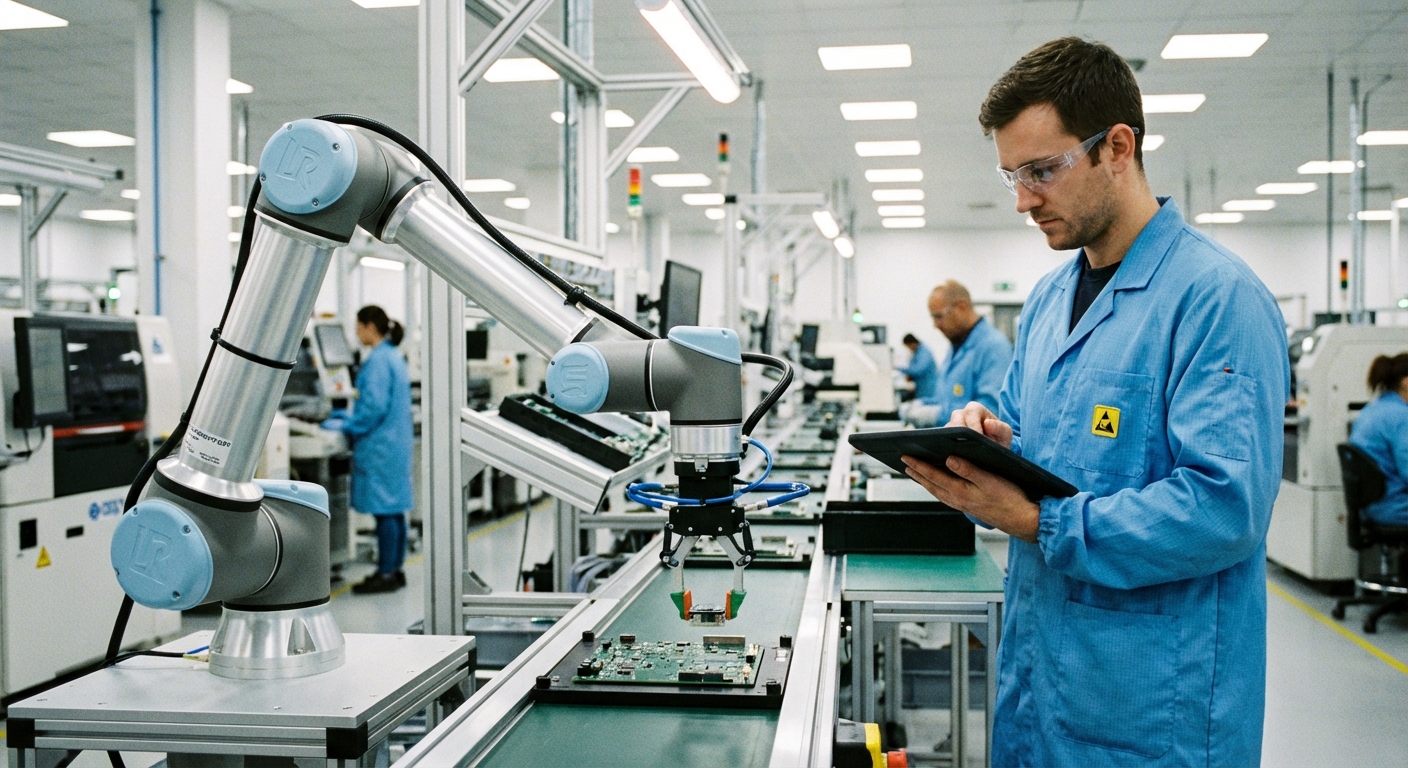
Copycat Robots via RL
Robots trained through human demonstration using reinforcement learning can acquire new skills from <50 demos. Unlike traditional programming, these robots generalize across task variations and handle exceptions autonomously.
World Models & Simulation
NVIDIA Isaac Lab and World Labs' Marble (marble.worldlabs.ai) let manufacturers simulate robot deployments in photorealistic digital environments. GPU-accelerated physics simulation with domain randomization enables reliable sim-to-real transfer, cutting deployment timelines from months to days.
Multi-Task Flexibility
A single robotic platform can be reconfigured for different tasks in hours — material handling in the morning, packaging in the afternoon. This shatters the ROI calculation that previously required dedicated robots per task.
Collaborative Intelligence
AI-powered perception gives cobots spatial awareness and human intent prediction, allowing cage-free operation. The cobot market is forecast to grow at 20% CAGR to 125,000 units annually by 2029 (Interact Analysis, 2025).
Relevance to Print Manufacturing
For print manufacturing, adaptive robotics transforms changeover economics. Robots that learn multiple tasks — paper loading, plate changes, quality sampling, packaging — on a single platform reduce the capital cost of automation by 40-60%. Simulation-first deployment means new press configurations can be validated digitally before a single sheet is printed.
The Integration Layer
Connecting OT, IT & the Intelligent Data Fabric
The integration layer solves manufacturing's oldest data problem: islands of information that don't talk to each other. In 2026, the convergence of operational technology (OT) and information technology (IT) has moved from aspiration to architectural standard. Unified data fabrics now bridge PLCs, SCADA systems, MES platforms, and ERP systems into coherent data streams that AI can reason over.
Digital twins have matured from visualization toys into decision-support systems. A digital twin of a production line now ingests real-time sensor data, production schedules, and supply chain signals to simulate outcomes before they happen — enabling 'what-if' analysis in minutes rather than trial-and-error on the physical line.
The middleware revolution is driven by event-driven architectures and industrial data platforms like Litmus Edge, Sight Machine, and Cognite Data Fusion. These platforms normalize data from hundreds of proprietary protocols (OPC-UA, MQTT, Modbus, PROFINET) into unified APIs that application developers and AI models can consume. The result: AI applications can be built in weeks rather than the months previously required for data integration alone.

Unified Data Fabric
Industrial data platforms now normalize 200+ OT protocols into unified APIs, reducing data integration time from months to days. This is the enabler that makes every other AI application possible.
Digital Twins for Decisions
Production digital twins ingest real-time data from sensors, MES, and ERP to simulate scenarios. Manufacturers use them to optimize schedules, predict bottlenecks, and test process changes without risking production.
Event-Driven Architecture
Real-time event streaming replaces batch ETL. When a sensor detects an anomaly, the alert propagates to maintenance, quality, and scheduling systems in under 2 seconds.
OT/IT Security Convergence
Zero-trust architectures now extend to the factory floor. Network segmentation, encrypted OT communications, and AI-powered anomaly detection protect connected manufacturing systems from cyber threats.
Relevance to Print Manufacturing
Print manufacturers face acute integration challenges: press control systems, color management software, prepress workflows, and ERP systems often span decades of technology. A unified data fabric bridges these systems, enabling AI to optimize across the entire print workflow — from job scheduling through color management to delivery.
The Agents Layer
Autonomous Decision-Making & LLM-Powered Operations
The agents layer represents the newest and most transformative frontier of manufacturing AI. Large language models and multi-agent systems are moving beyond chatbots into operational roles — making decisions, coordinating workflows, and augmenting every role on the factory floor.
Manufacturing-specific AI agents can now query production databases in natural language, generate root cause analyses from maintenance logs, and autonomously adjust production schedules based on real-time constraints. Instead of navigating complex dashboards and ERP screens, a plant manager asks: 'Why did Line 3 yield drop last shift?' and receives an analysis with sensor data, operator notes, and recommended actions in seconds.
Multi-agent orchestration systems coordinate decisions across manufacturing domains. A procurement agent monitors raw material prices and lead times, a scheduling agent optimizes production sequences, a quality agent adjusts inspection parameters, and a maintenance agent manages work orders — all communicating through structured protocols to optimize the whole system, not just individual silos. Early deployments show 8-15% total productivity gains from this cross-functional coordination.

Natural Language Operations
Plant personnel query production data, maintenance histories, and quality metrics using conversational AI. This democratizes data access — operators and technicians get insights previously locked behind analyst bottlenecks.
Multi-Agent Orchestration
Specialized AI agents for procurement, scheduling, quality, and maintenance coordinate decisions through structured communication protocols. The system optimizes for plant-wide outcomes, not departmental KPIs.
Autonomous Root Cause Analysis
When an anomaly is detected, AI agents automatically correlate sensor data, operator actions, material batches, and environmental conditions to identify probable root causes — reducing investigation time from hours to minutes.
AI Copilots for Engineers
Engineers use AI copilots to draft maintenance procedures, analyze failure patterns, simulate process changes, and generate compliance documentation. Time savings of 30-50% on engineering workflows are typical.
Relevance to Print Manufacturing
For print operations, AI agents can transform job management: automatically optimizing press assignments based on job specs, ink availability, and delivery deadlines. A natural language interface lets press operators report issues and receive troubleshooting guidance without leaving the press floor, while quality agents automatically adjust inspection thresholds based on job-specific tolerances.
AI at Every Stage
From raw materials to finished goods, intelligence embedded across the entire manufacturing operation
The People Behind the Machines
How AI augments every role on the factory floor
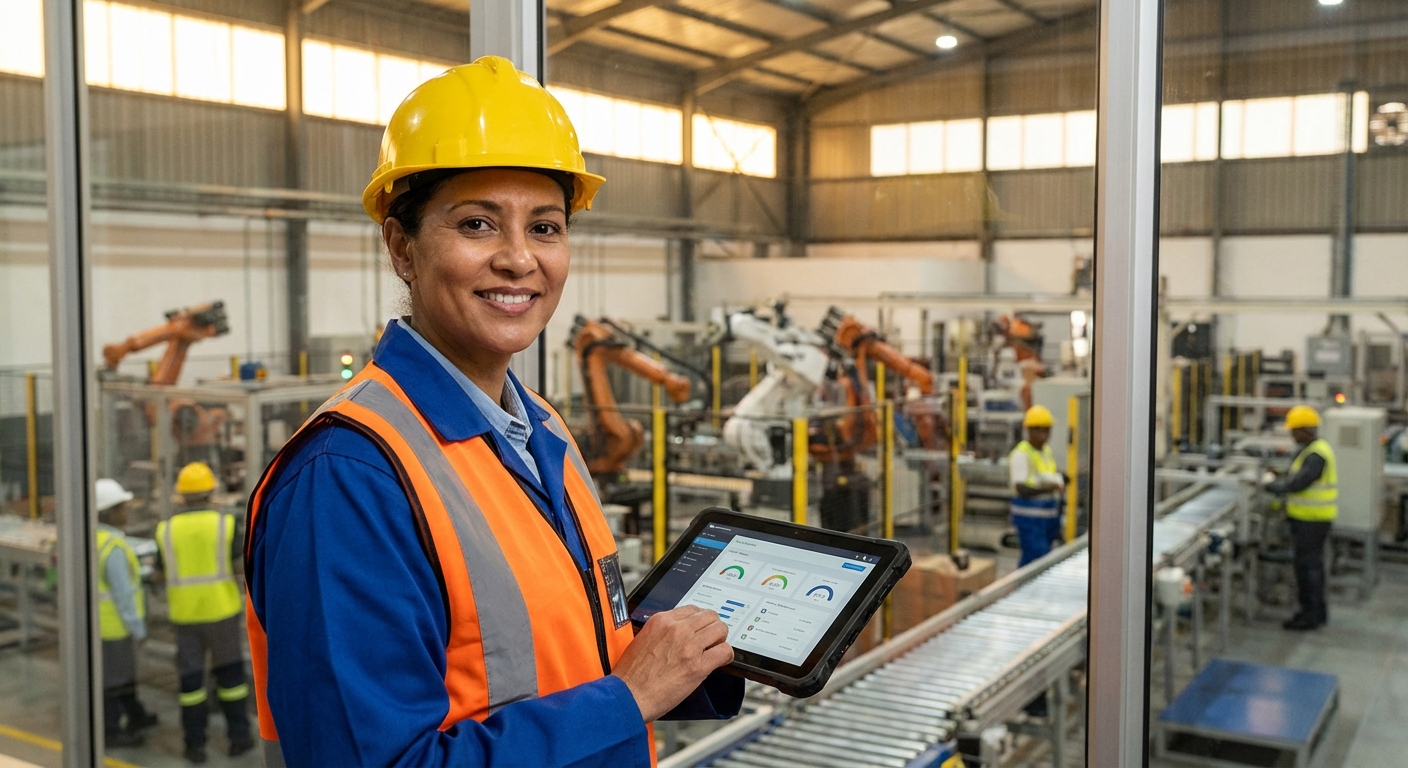
Plant Manager
Relied on morning production reports and weekly KPI reviews to understand plant performance. Decisions were reactive, based on lagging indicators that arrived hours or days after issues occurred.
Receives real-time AI-generated insights on production, quality, and maintenance. Asks natural language questions about plant performance and gets instant analysis. Simulates the impact of schedule changes before committing.
“From managing by rearview mirror to steering with a windshield.”
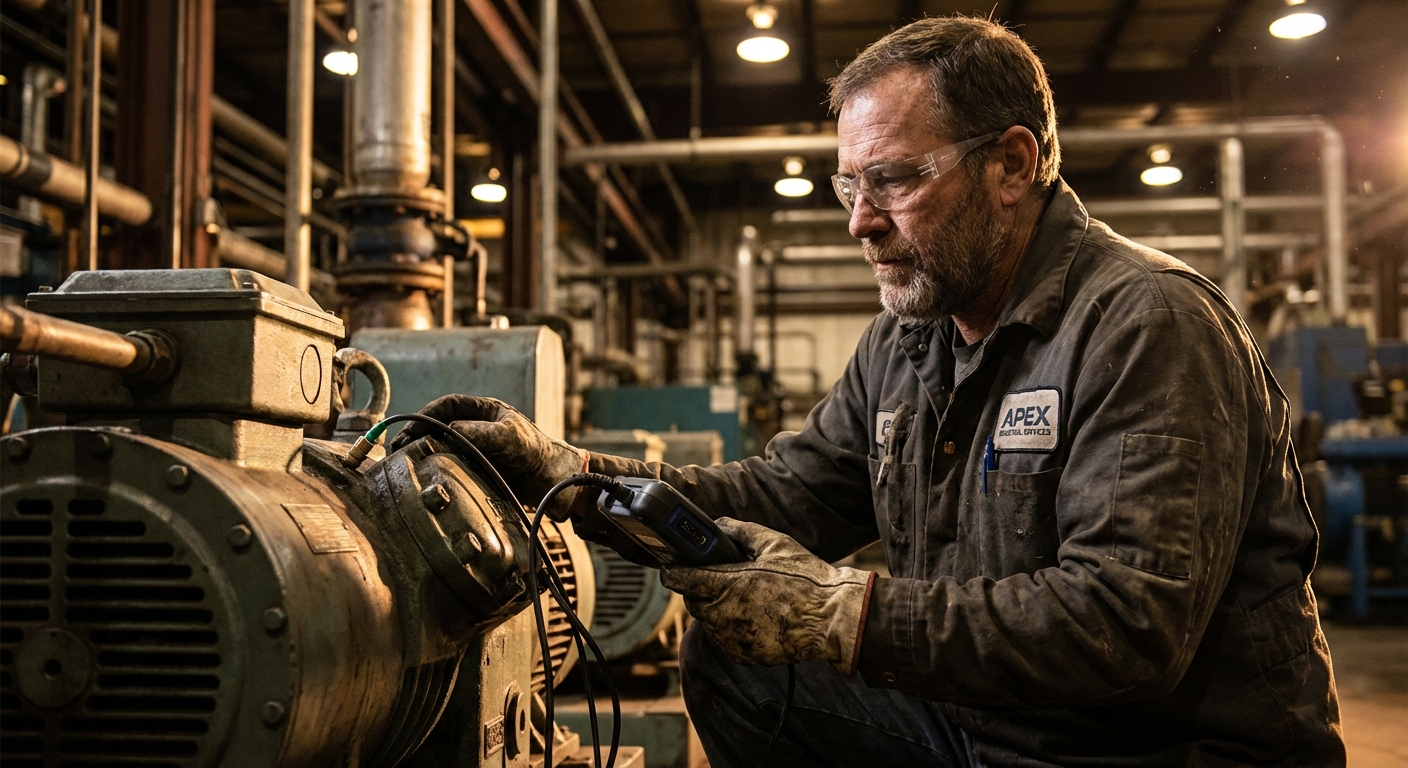
Maintenance Technician
Spent 60% of time on reactive repairs and scheduled PM routes, many of which were unnecessary. Tribal knowledge about equipment quirks lived in the heads of senior techs and was lost when they retired.
AI prioritizes work orders by actual equipment condition, not calendar schedules. AR-assisted diagnostics and AI copilots provide step-by-step guidance for unfamiliar repairs. Institutional knowledge is captured and searchable.
“From firefighter to precision surgeon — intervening at exactly the right time with exactly the right action.”
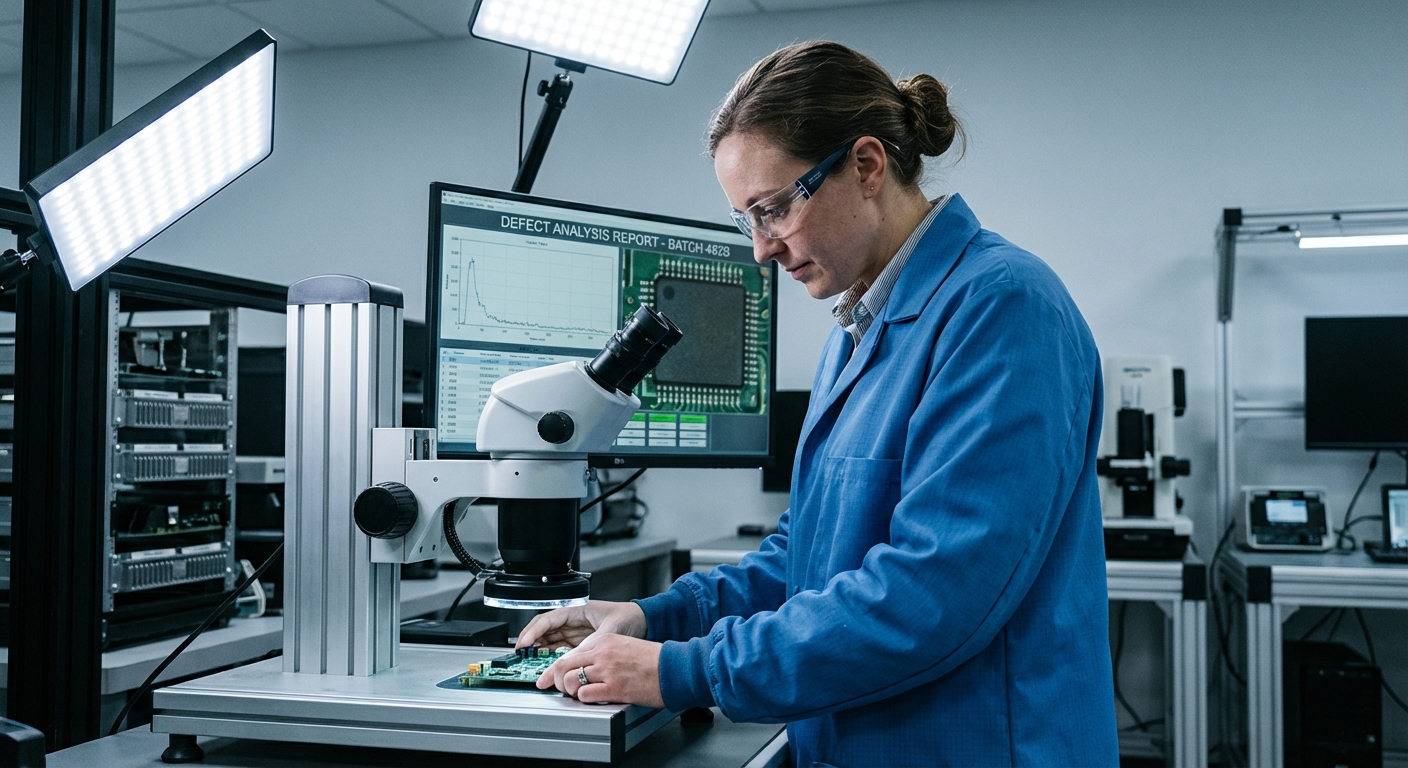
Quality Engineer
Managed statistical sampling programs, manually reviewed defect data, and spent hours investigating quality excursions. Root cause analysis was often inconclusive due to incomplete data.
AI vision systems provide 100% inspection data. Quality engineers focus on process improvement rather than defect detection. AI-powered root cause analysis correlates quality data with process parameters automatically.
“From catching defects to preventing them — shifting quality left into the process.”

Supply Chain Analyst
Built demand forecasts in spreadsheets using historical averages. Spent most of the week chasing supplier updates via email and phone. Couldn't quantify supply risk beyond gut feeling.
AI generates probabilistic demand forecasts that update daily. Real-time supplier monitoring surfaces risks automatically. Digital procurement agents handle routine purchase orders, freeing analysts for strategic sourcing.
“From data entry and phone tag to strategic decision-making and exception management.”
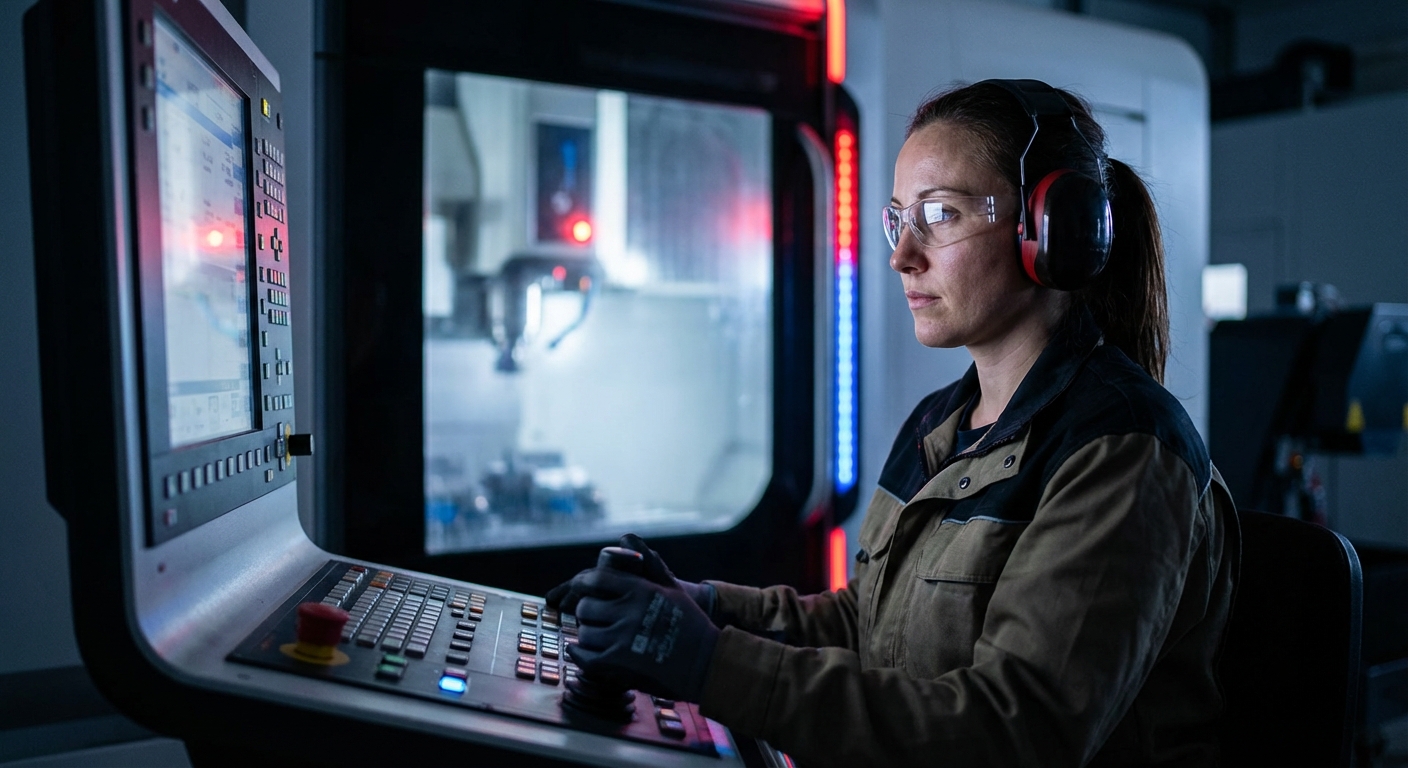
Machine Operator
Followed standard operating procedures with limited visibility into how the machine was actually performing. Relied on experience and intuition to detect problems. Reported issues by filling out paper forms.
AI assistants provide real-time process guidance and early warnings. Operators report issues through voice or natural language and receive AI-generated troubleshooting steps. Performance dashboards show how their actions impact quality and yield.
“From following procedures to understanding processes — empowered with data and decision support.”
AI in Print Manufacturing
Precision, Security & Intelligence for Modern Print Operations
Print manufacturing — especially note and security printing — operates at the intersection of extreme precision requirements and high-volume production. This combination makes it one of the most compelling use cases for AI. Where microns matter and every sheet must meet exacting standards, AI delivers consistency that human inspection alone cannot guarantee.
Color Consistency & Spectral Analysis
AI-driven spectrophotometry systems now provide closed-loop color management across entire print runs. Inline spectral sensors measure color at 1,000+ points per sheet, feeding real-time corrections to ink delivery systems. Machine learning models predict color drift before it happens by correlating ink viscosity, substrate properties, ambient conditions, and press speed — maintaining Delta-E values below 1.0 across runs of millions of impressions.
Delta-E consistency below 1.0 across multi-million impression runs
Substrate & Defect Detection
High-resolution computer vision systems inspect every printed sheet at full production speed, detecting registration errors, ink splatter, substrate flaws, and security feature anomalies that human inspectors miss. For security printing, specialized AI models verify micro-printing integrity, holographic element placement, and watermark consistency. Deep learning models trained on millions of defect images achieve detection rates above 99.5% with false positive rates under 0.1%.
99.5% defect detection with <0.1% false positive rate at full press speed
Press Optimization & Predictive Setup
AI models learn the optimal press parameters for each job type — impression pressure, ink film thickness, blanket condition, fountain solution balance — reducing makeready waste by 30-40%. Predictive maintenance models specifically tuned for printing presses monitor roller bearings, gear trains, and impression cylinders, predicting failures 3-4 weeks before they occur. This is particularly valuable for security printing where unplanned stops mean scrapped materials worth thousands.
30-40% reduction in makeready waste and 3-4 week failure prediction window
Supply Chain Intelligence
Specialty inks, security substrates, and holographic materials have long lead times and limited suppliers. AI-powered procurement systems forecast material needs based on job pipeline, lead times, and supplier reliability — preventing the production delays that occur when a single ink shipment is late. For security printing, where materials traceability is mandatory, AI maintains chain-of-custody documentation automatically.
95% on-time material availability vs. 78% industry average
The convergence of computer vision, spectral analysis, and predictive AI means that security and note printing is moving from 'inspect and reject' to 'predict and prevent.' The most advanced print operations in 2026 are catching quality issues before they reach the substrate — saving materials, time, and the costly reprints that erode margins.
60% of manufacturing workers now have access to AI tools, with 92% of executives calling smart manufacturing indispensable for competitiveness.
The $17.4B AI-in-manufacturing market is growing at 35%+ CAGR — procurement, production, quality, logistics, and workforce all benefit.
Adaptive robotics, world models, and AI agents represent the next wave — shifting from narrow automation to flexible, learning systems.
For print manufacturing, AI delivers the consistency and precision that human inspection alone cannot guarantee at production speeds.
What Comes Next
The trajectory is clear: manufacturing AI is moving from augmenting individual tasks to orchestrating entire value chains autonomously. By 2028, industry analysts project that fully autonomous production cells — where AI manages quality, maintenance, and scheduling without human intervention — will be operational in 15-20% of advanced manufacturing facilities.
The competitive implications are stark. Manufacturers who have invested in AI infrastructure — sensors, data platforms, and skilled teams — are compounding their advantages. Each year of operational data makes their AI models more accurate, their processes more efficient, and the gap harder for late adopters to close. The question is no longer whether to adopt AI, but how quickly you can build the foundation.
See What AI Can Do for Your Operations
Every manufacturing operation is different. Let's explore how these technologies apply specifically to your processes, your equipment, and your challenges.
Start the ConversationThe State of AI in Manufacturing 2026 · Prepared by Factory AI