
Why Gearboxes Fail Every 6 Months: Diagnosing Chronic Failure Cycles
Feb 23, 2026
why gearboxes fail every 6 months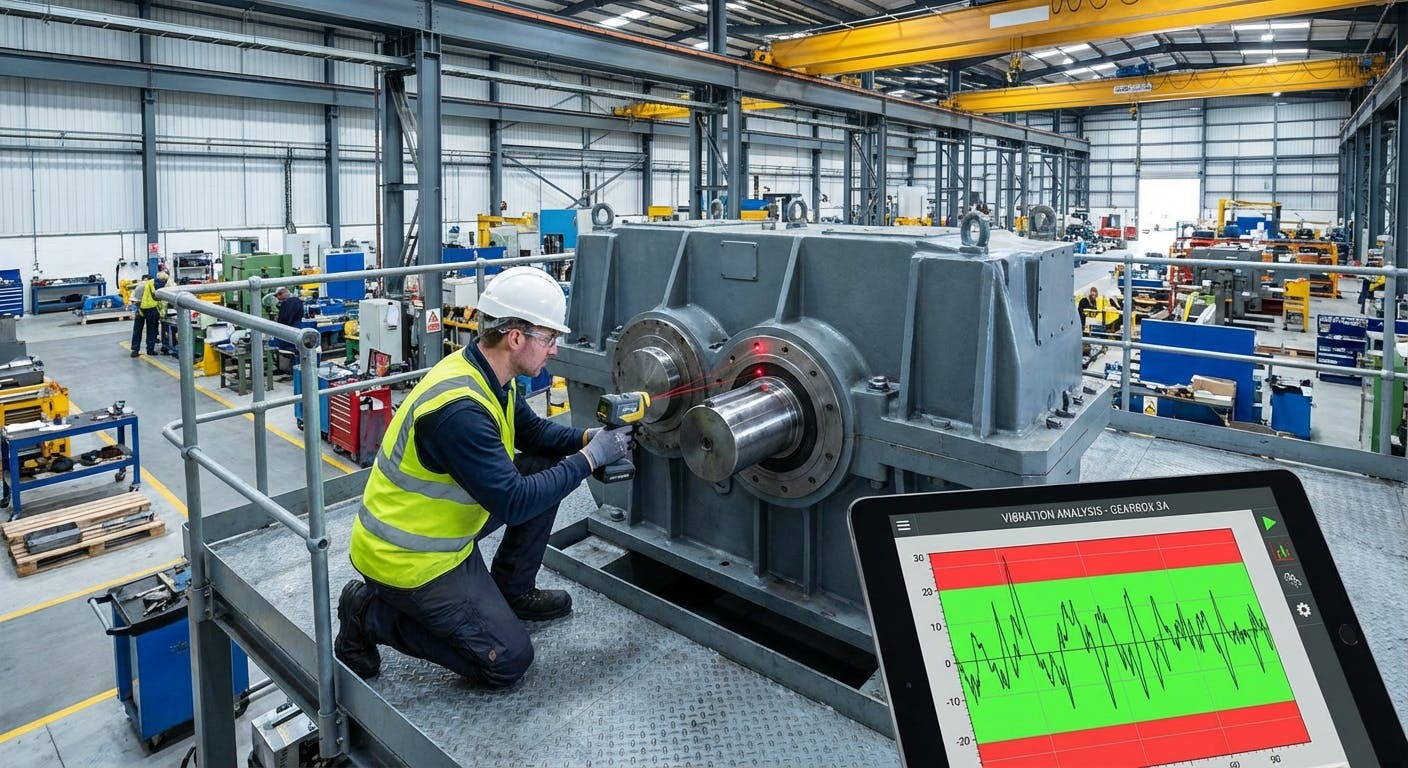
Gearboxes that fail on a consistent 6-month cycle are typically suffering from chronic misalignment, lubricant contamination, or maintenance-induced failures rather than natural end-of-life wear. In industrial environments, a 6-month failure interval (roughly 4,300 operating hours) suggests that the equipment is hitting the "Infant Mortality" phase of the Bathtub Curve repeatedly. This is almost always caused by a failure to address the root environmental or installation stressors during the previous repair cycle, effectively "resetting the clock" on a doomed component.
To break this cycle, you must look beyond the broken gears and analyze the interface between the gearbox, its prime mover, and its lubricant. If a gearbox is rated for an L10 life of 50,000 hours but fails at 4,000, the issue is not the quality of the gears; it is the precision of the operating environment.
The Root Causes of the "6-Month Wall"
1. Thermal Expansion and Dynamic Misalignment
One of the most common reasons for 6-month failures is aligning a gearbox while it is "cold" without accounting for thermal growth. As the gearbox reaches its operating temperature (often 60°C to 80°C), the metal expands. If the alignment was performed at ambient temperature, the expansion pushes the shafts out of tolerance, creating massive radial loads on the bearings. This leads to repeated bearing failure, which eventually causes gear teeth to lose their proper contact pattern, leading to pitting and spalling.
2. Lubricant Contamination and ISO 4406 Standards
If your gearbox is in a washdown or high-dust environment, 6 months is often the exact amount of time it takes for seals to ingress enough moisture or particulates to degrade the oil's film strength. According to Noria Corporation, even a 0.1% water concentration in oil can reduce bearing life by 75%. If your oil analysis shows a cleanliness level worse than ISO 18/16/13, the abrasive wear from microscopic particles is likely "sandblasting" the gear faces. This is a common issue in food plants where high-pressure cleaning is frequent, similar to the root cause issues seen in conveyor systems.
3. Maintenance-Induced Failure (The Maintenance Paradox)
The act of replacing a gearbox often introduces the very faults that caused the previous one to fail. This is known as the Maintenance Paradox. Common errors include:
- Over-tensioning belts or chains: This puts an overhung load on the output shaft that the internal bearings weren't designed to handle.
- Improper Backlash Adjustment: If the gearbox was rebuilt in-house, setting the backlash too tight prevents an adequate oil film from forming between teeth, leading to rapid heat buildup and seizure.
- Soft Foot: If the gearbox mounting feet are not perfectly level, tightening the mounting bolts distorts the housing, misaligning the internal gear sets.
4. Environmental Cycling and Resonant Vibration
If the gearbox is mounted on a structure that lacks rigidity, it may be subject to structural resonance. Over a 6-month period, constant vibration at a resonant frequency will cause work-hardening of the gear teeth and fatigue of the housing. This is often misdiagnosed as "bad luck" or a "bad batch of steel" when the real culprit is the mounting platform's stiffness.
What To Do About It: A Systematic Recovery Plan
To stop the 6-month failure cycle, move from reactive replacement to forensic reliability.
Step 1: Conduct a Forensic Tear-Down Do not simply swap the gearbox. Open the failed unit and inspect the wear patterns.
- Center-weighted wear: Suggests proper alignment but potential overloading.
- End-loading/Tapered wear: Confirms misalignment or shaft deflection.
- Frosted or Greyish teeth: Indicates "micropitting" due to improper lubricant viscosity or high operating temperatures.
Step 2: Implement Precision Installation Protocols Use laser alignment tools to ensure offset and angular misalignment are within 0.05mm. Ensure that "Hot Alignment" checks are performed after the machine has reached steady-state operating temperature. If the gearbox drives a chain, ensure you aren't experiencing rapid elongation which can shock-load the gearbox.
Step 3: Upgrade Sealing and Filtration If moisture or dust is the culprit, replace standard breathers with desiccant breathers and upgrade to non-contact labyrinth seals. This prevents the "breathing" effect where a cooling gearbox sucks in humid, contaminated air.
Step 4: Deploy Predictive Maintenance (PdM) The most effective way to break the 6-month cycle is to see the failure coming at month 4. Factory AI provides a sensor-agnostic, no-code solution that can be deployed on brownfield equipment in as little as 14 days. By monitoring vibration and thermal signatures, Factory AI identifies the specific frequencies associated with gear mesh faults or bearing degradation long before a catastrophic seizure occurs. This allows maintenance teams to schedule repairs based on actual condition rather than a calendar that clearly isn't working.
Related Questions
What is the average life expectancy of an industrial gearbox? In a clean, well-aligned environment with proper lubrication, a heavy-duty industrial gearbox should last 10 to 20 years (approx. 100,000 hours). A 6-month failure represents a 95% reduction in expected life, indicating a severe external stressor or installation error.
How often should gearbox oil be analyzed? For critical assets, oil analysis should be performed quarterly. You should monitor for Kinematic Viscosity (ASTM D445), Acid Number, and elemental analysis for wear metals like Iron and Copper. If you are seeing failures every 6 months, increase sampling to monthly until the root cause is identified.
Can vibration analysis detect a gearbox failing before it happens? Yes. Vibration analysis can identify specific "sidebands" around the gear mesh frequency (GMF). An increase in the amplitude of these sidebands is a leading indicator of tooth wear or misalignment. Using a platform like Factory AI allows you to automate this detection, removing the need for a dedicated CAT II vibration analyst to manually review every data point.
Why does my gearbox run hot after a fresh oil change? This is often due to "churning." If the gearbox is overfilled, the gears must push through excess oil, generating friction and heat. Alternatively, if the wrong viscosity was used (e.g., ISO 320 instead of ISO 220), the internal friction increases. High heat is a primary driver of the 6-month failure cycle as it thins the lubricant and accelerates oxidation.
