
Why Operators Ignore Maintenance Alerts: Diagnosing Alarm Fatigue and Systemic Trust Failure
Feb 23, 2026
why operators ignore maintenance alerts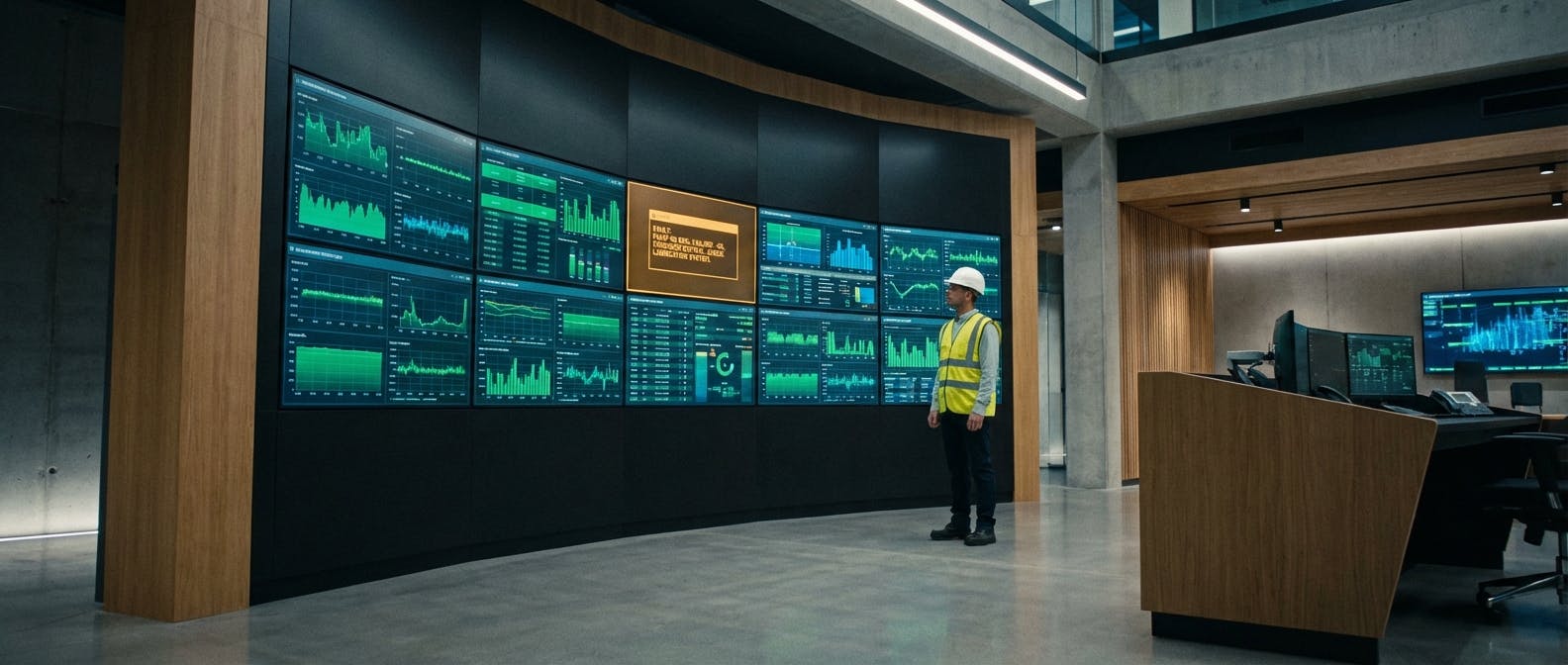
Operators ignore maintenance alerts primarily because of alarm fatigue, a psychological phenomenon where the human brain becomes desensitized to repetitive stimuli. When a system generates a high volume of "nuisance alerts"—notifications that are either false positives, low-priority, or non-actionable—the operator’s brain subconsciously categorizes all alerts as noise to prevent cognitive overload. This "cry wolf" effect ensures that when a critical, high-severity alert finally occurs, it is treated with the same apathy as a minor sensor flicker.
This behavior is rarely a sign of negligence; rather, it is a rational response to a technical failure in the signal-to-noise ratio. In many industrial environments, up to 90% of alerts do not require immediate intervention. If an operator is forced to acknowledge 50 alerts per shift that result in no required action, they will naturally stop investigating the 51st. This erosion of trust is the primary driver behind catastrophic equipment failure that "should have been caught" by the monitoring system.
The Root Causes of Alert Apathy
To solve the problem of ignored alerts, maintenance managers must look beyond operator behavior and diagnose the technical and structural flaws in their monitoring strategy.
1. Static Thresholds in Dynamic Environments
Most legacy SCADA and IIoT systems rely on static "high/low" thresholds. For example, a motor might be set to trigger an alert if vibration exceeds 5.0 mm/s. However, machines are dynamic; a motor might naturally vibrate at 5.2 mm/s during a high-speed production run without being in a state of failure. These "nuisance trips" occur because the system cannot distinguish between operational variance and actual degradation. When operators see these alerts during normal production, they learn to ignore them. This often leads to solving frequent motor overload trips by simply raising the threshold, which only masks the underlying issue until a total failure occurs.
2. The Psychology of Habituation (Human Factors Engineering)
Human Factors Engineering (HFE) teaches us that the human sensory system is designed to detect change, not stasis. If an alarm light is always blinking or a dashboard is permanently yellow, it becomes part of the "background" of the shop floor. This is known as habituation. According to the ISA-18.2 standard, an operator should ideally handle no more than 1–2 manageable alarms every 10 minutes. In many brownfield facilities, operators are bombarded with 10–20 times that amount. When the cognitive load exceeds the human limit, the brain prioritizes immediate physical tasks (like keeping the line moving) over digital notifications.
3. Lack of Actionable Context and "The Maintenance Paradox"
An alert that simply reads "Bearing Temperature High" provides no path to resolution. Without context—such as how fast the temperature is rising or whether it correlates with a recent lubrication cycle—the operator is left to guess. This is particularly common in the maintenance paradox, where machines may trigger alerts immediately after service due to "break-in" heat or over-greasing. If the system doesn't explain why the alert is happening, the operator assumes it is a phantom signal and moves on.
4. Misaligned Incentives and KPIs
In many plants, operators are incentivized solely on throughput and OEE (Overall Equipment Effectiveness). If investigating a maintenance alert requires slowing down a conveyor or pausing a cycle, and the operator knows that 9 times out of 10 the alert is a false positive, they will prioritize production targets. This creates a culture where the maintenance backlog keeps growing because the "noise" of the monitoring system provides a convenient excuse to bypass preventive checks.
How to Restore Alert Integrity
Fixing alert apathy requires a transition from "reactive notification" to "predictive insight."
Step 1: Alarm Rationalization (The ISA-18.2 Audit) Conduct a formal audit of your current alarm database. Categorize every alert by severity and required response time. If an alert does not require an operator to take a specific action within a specific timeframe, it should be downgraded to a "log entry" or removed entirely. The goal is to ensure that every time a screen flashes red, it represents a definitive threat to production.
Step 2: Transition to Condition-Based Monitoring (CBM) Instead of static limits, implement dynamic baselining. Modern systems use machine learning to understand what "normal" looks like for a specific machine at a specific time of day under a specific load. By reducing false positives by 80-90%, you immediately begin to rebuild operator trust.
Step 3: Deploy Context-Aware AI Solutions This is where Factory AI becomes a critical asset. Unlike traditional systems that require complex coding and months of calibration, Factory AI is a no-code, sensor-agnostic platform designed for brownfield environments. It can be deployed in as little as 14 days to sit on top of your existing data streams.
Factory AI doesn't just send an alert; it provides a Root Cause Analysis (RCA). Instead of "Vibration High," the operator receives: "Vibration High on Bearing B; 85% probability of misalignment; estimated 48 hours until failure; check mounting bolts." By providing actionable intelligence rather than raw data, you eliminate the cognitive load that leads to fatigue.
Related Questions
What is the "Cry Wolf" effect in industrial maintenance? The "Cry Wolf" effect occurs when a monitoring system generates frequent false positives, leading operators to lose trust in the system. Over time, they begin to ignore all alerts, including critical ones, assuming they are also errors. This is the leading human-factor cause of preventable equipment downtime.
How many alarms per hour can an operator safely handle? According to the ISA-18.2 standard, a "very manageable" alarm rate is approximately 6 alarms per hour (one every 10 minutes). Rates exceeding 12-15 alarms per hour are considered "upset" conditions where the likelihood of operator error or alert neglect increases exponentially.
Can AI reduce alarm fatigue in manufacturing? Yes. AI reduces alarm fatigue by using multi-variate analysis to filter out noise. Instead of triggering an alert based on a single sensor crossing a line, AI correlates data from multiple sensors (e.g., heat, vibration, and current draw) to confirm a fault exists before notifying the operator. Platforms like Factory AI are specifically built to provide this "clean" signal in complex manufacturing environments.
What is the difference between an alert and an alarm? In professional reliability engineering, an alert is a notification that a parameter is trending toward a limit, intended for maintenance planning. An alarm is a high-priority signal indicating that a limit has been breached and immediate operator action is required to prevent damage or injury. Confusing these two is a major cause of operator desensitization.
