
Why Calendar-Based Lubrication Schedules Fail to Prevent Bearing Failures
Feb 23, 2026
why lubrication schedules don't stop bearing failures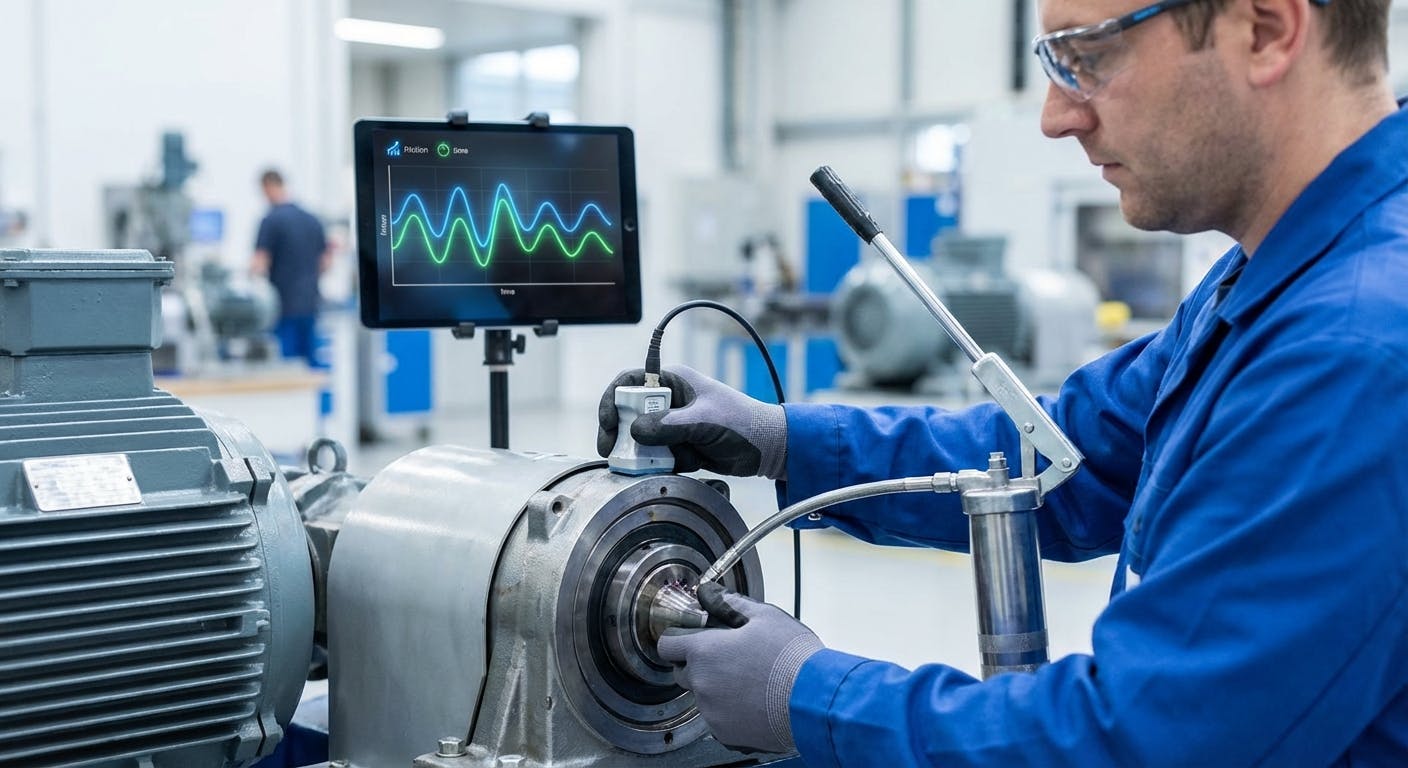
Lubrication schedules fail to prevent bearing failures because they are based on theoretical averages rather than the actual physical condition of the lubricant or the bearing. While intended to prevent wear, rigid calendar-based intervals frequently lead to over-lubrication, which causes internal churning, excessive heat generation, and seal rupture. Because a fixed schedule cannot account for fluctuations in load, ambient temperature, or contamination levels, it inevitably results in either grease starvation or catastrophic over-pressurization.
To achieve true reliability, maintenance teams must shift from "time-based" to "condition-based" lubrication. A schedule is a guess; acoustic monitoring and temperature data are evidence.
The Deeper Explanation: Why the "Schedule" is the Problem
The failure of traditional lubrication programs typically stems from four systemic root causes that a calendar cannot address:
1. The "Silent Killer": Over-Lubrication and Churning
Most maintenance professionals fear under-lubrication, but over-lubrication is often more destructive. When a bearing housing is filled beyond its calculated capacity (typically 30% to 50% of free space), the rolling elements must "plow" through the excess grease. This is known as churning. Churning creates fluid friction, which raises the operating temperature of the bearing. This explains the maintenance paradox where motors run hot immediately after service. As heat rises, the base oil in the grease oxidizes and thins, losing its ability to maintain a hydrodynamic film, leading to premature wear despite the abundance of grease.
2. Pressure-Induced Seal Failure
Standard manual grease guns can produce pressures exceeding 10,000 PSI. Most industrial bearing seals are designed to withstand less than 500 PSI. When a technician follows a schedule that mandates "five pumps every month" without venting the bearing, the internal pressure frequently blows out the lip seals. Once a seal is ruptured, it can no longer keep out moisture or particulates. This is a primary reason why bearings fail repeatedly on packaging lines, where high-pressure washdowns easily ingress into compromised housings.
3. Base Oil Viscosity and Shear Stability Issues
A schedule assumes the grease remains chemically stable between intervals. However, if a machine's load increases or the ambient plant temperature rises, the grease's base oil bleed rate accelerates. If the base oil separates from the thickener (the "sponge" that holds the oil) too quickly, the remaining thickener hardens into a "soap" that blocks new grease from reaching the rolling elements. Calendar schedules do not account for the shear stability of the grease—the ability of the lubricant to maintain its NLGI consistency grade under mechanical stress.
4. Variable Operating Context
A lubrication schedule is a static solution to a dynamic problem. If a production line increases its throughput by 20%, the friction-induced stress on the bearings increases exponentially. A schedule created for "normal" operations will now result in grease starvation. Conversely, if a machine sits idle, the grease may settle or oil may pool, but the schedule will still dictate an injection of new grease, leading to the over-filling issues mentioned above.
What to Do About It: Moving to Condition-Based Lubrication
To stop the cycle of chronic bearing failure, plants must move away from the calendar and toward Ultrasound-Assisted Lubrication and real-time monitoring.
Step 1: Implement Acoustic Monitoring
Ultrasound is the most effective way to determine when a bearing actually needs grease. As the lubricant film thins, friction increases, creating high-frequency sound waves. Technicians using ultrasound tools can "hear" the friction increase before heat or vibration occurs. Lubrication should only be performed when the decibel (dB) level rises 8-10 dB above the established baseline.
Step 2: Use Calculated Grease Volume
Stop using "pumps" as a measurement. Calculate the exact volume required using the formula: G = 0.114 x D x B (where G is grease in ounces, D is outside diameter, and B is bearing width). Calibrate every grease gun to know exactly how many grams or ounces are delivered per full stroke.
Step 3: Integrate Real-Time Data Correlation
While manual ultrasound is a leap forward, it still relies on a technician being present. This is where Factory AI provides a critical advantage. By being sensor-agnostic and brownfield-ready, Factory AI can ingest data from existing vibration and temperature sensors to identify the specific "friction signature" of a bearing in need of grease.
Unlike traditional systems that require complex coding, Factory AI can be deployed in 14 days to correlate lubrication events with machine health. If a bearing's temperature spikes after a scheduled lubrication event, the system flags it as an over-lubrication risk, allowing for immediate correction before the seal ruptures. This bridges the gap where vibration checks alone fail to prevent failures.
Related Questions
How does over-lubrication cause bearing failure? Over-lubrication leads to "churning," where the rolling elements must fight through excess grease. This creates internal fluid friction, which generates heat. The heat degrades the grease's base oil, leading to oxidation and a loss of lubricating properties, eventually causing the bearing to seize or wear prematurely.
What is the difference between NLGI 2 and NLGI 3 grease? The NLGI grade refers to the "firmness" of the grease. NLGI 2 is the most common, having a consistency similar to peanut butter, and is used in most industrial bearings. NLGI 3 is firmer (like vegetable shortening) and is often used in vertical shaft applications to prevent the grease from draining out of the bearing due to gravity.
How do I know when a bearing actually needs grease? The most accurate method is using ultrasound monitoring to detect an increase in high-frequency friction sounds. Alternatively, automated systems like Factory AI can monitor real-time temperature and vibration trends to identify the exact moment a lubricant film begins to fail, eliminating the guesswork of calendar-based schedules.
Can mixing different types of grease cause bearing failure? Yes. If incompatible thickeners (e.g., Lithium complex vs. Polyurea) are mixed, they can react chemically, causing the grease to either harden or become excessively thin and run out of the bearing. Always verify grease compatibility charts before switching products or top-filling.
