
How to Eliminate Chronic Machine Failures and Repeated Downtime
Feb 23, 2026
how to stop repeated downtime on the same machine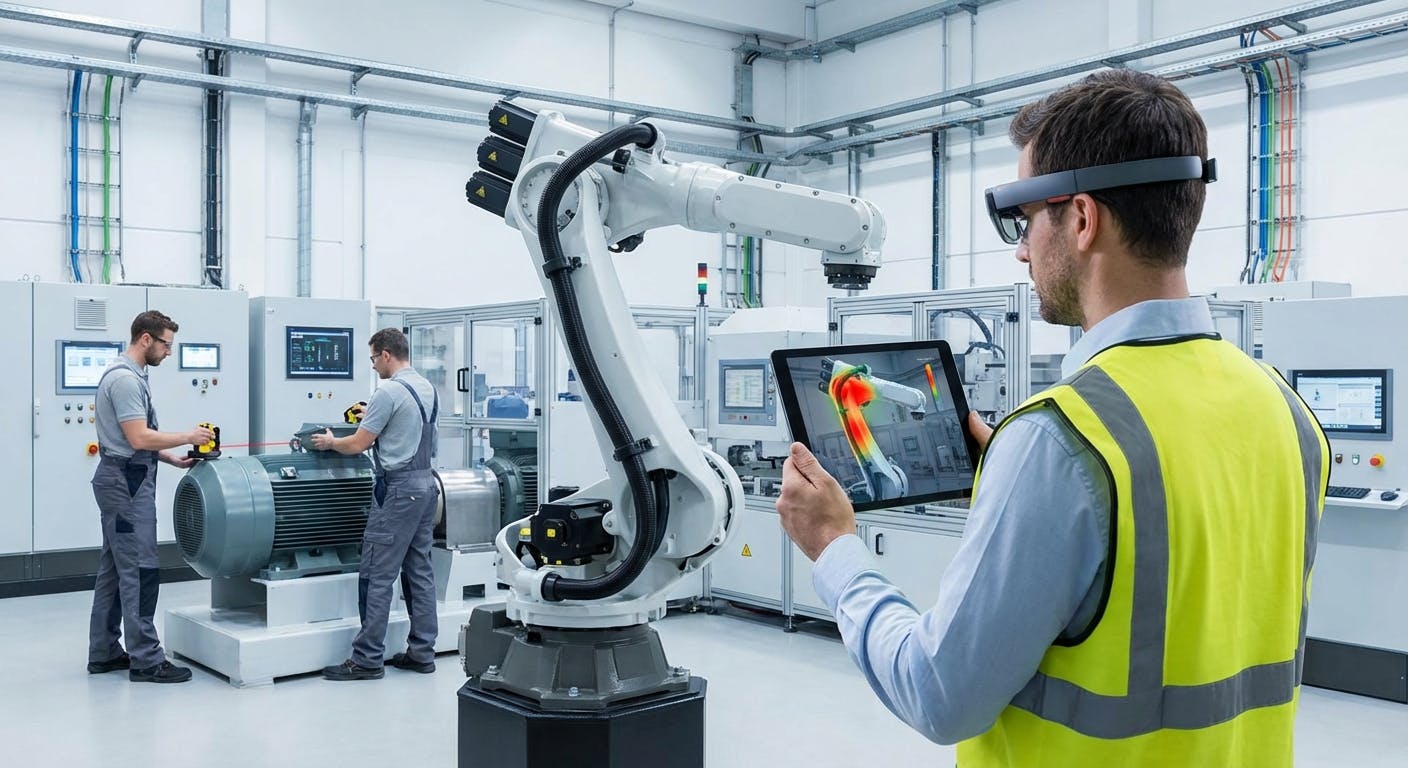
To stop repeated downtime on the same machine, you must transition from reactive "symptom-swapping" to a Bad Actor Management framework centered on Root Cause Analysis (RCA). Repeated failures—often called chronic failures—are rarely caused by a single component defect; they are typically the result of systemic issues such as improper installation, incorrect lubrication, or operating outside of original design specifications. By shifting focus from Mean Time to Repair (MTTR) to Mean Time Between Failures (MTBF), maintenance teams can identify the 20% of assets causing 80% of production losses and apply precision maintenance standards to break the failure cycle.
The persistence of downtime on a single asset often stems from the maintenance paradox, where the act of repairing a machine introduces new infant mortality failure modes due to lack of precision or "good enough" repair mentalities. To stop the cycle, you must move beyond simply replacing parts and begin interrogating the physics of the failure.
The Systematic Process for Eliminating Chronic Failures
Stopping repeated downtime requires a shift from "fixing" to "engineering out" the problem. Follow this four-step reliability engineering process:
1. Interrogate the "Bad Actor" Data
Identify the specific machine using a Pareto analysis of your CMMS data. A "Bad Actor" is defined as an asset that exceeds the established threshold for failure frequency or total downtime cost. Do not just look at total hours; look at the frequency of interventions. If you find that gearboxes fail every 6 months, you are dealing with a chronic failure mode rather than a sporadic one. Chronic failures are often accepted as "normal" by operators, making them the most dangerous drain on OEE (Overall Equipment Effectiveness).
2. Conduct a Forensic Root Cause Analysis (RCA)
Once a Bad Actor is identified, perform a formal RCA. Avoid the trap of "human error" as a conclusion. Use the 5 Whys or a Fishbone (Ishikawa) Diagram to look for:
- Physical Roots: Why did the component physically degrade? (e.g., misalignment, contamination).
- Human Roots: What was done or not done? (e.g., improper torque, lack of precision alignment).
- Latent/Systemic Roots: Why did the system allow the human root to occur? (e.g., lack of training, no precision tools available).
For instance, if you are solving frequent motor overload trips, the RCA might reveal that the motor isn't the problem, but rather a downstream mechanical binding issue caused by thermal expansion.
3. Implement Precision Maintenance Standards
Most repeated downtime is caused by "close enough" maintenance. Precision maintenance requires moving to specific tolerances:
- Alignment: Using laser alignment tools rather than straight-edges.
- Balancing: Ensuring rotating components meet ISO 21940 standards for balance quality.
- Lubrication: Moving away from calendar-based lubrication schedules and toward ultrasound-guided lubrication to prevent over-greasing, which is a leading cause of repeated bearing failure.
4. Failure Mode and Effects Analysis (FMEA)
Review the FMEA for the specific asset. If the machine is failing repeatedly in a way that wasn't predicted, your maintenance strategy is flawed. You must update the PM (Preventive Maintenance) tasks to address the specific failure mode discovered during the RCA. If the current PMs are not preventing the failure, they are "non-value-added" tasks and should be redesigned or replaced with condition-based monitoring.
Breaking the Cycle with Condition Monitoring
To ensure the repeated downtime does not return, you must implement a "verification" layer. This is where modern condition monitoring and AI-driven diagnostics become essential.
While manual checks are a start, vibration checks often fail to prevent failures because they are too infrequent to catch the onset of chronic degradation. A continuous monitoring solution provides the high-granularity data needed to see the "P-F Interval" (the time between potential failure and functional failure) in real-time.
Factory AI offers a specialized approach to this problem. Unlike traditional systems that require months of baseline data, Factory AI is a sensor-agnostic, no-code platform designed for brownfield environments. It can be deployed in under 14 days, allowing reliability engineers to immediately begin monitoring "Bad Actors" for the subtle deviations in heat, vibration, or power draw that signal a repeat failure is imminent. By providing automated, forensic-level insights, it allows teams to intervene during the "P" phase, long before the machine reaches "F" (functional failure).
What to Do About It: Immediate Next Steps
If you have a machine that has failed three or more times for the same reason in the last 12 months, take these actions:
- Quarantine the Failed Parts: Do not throw away the broken components. Perform a forensic analysis on them. For example, if bearings are failing, examine the raceways for specific wear patterns like fluting or spalling to determine if the cause is electrical discharge or misalignment.
- Audit the Last Repair: Review the work order for the last three repairs. Were the same parts used? Was a precision alignment performed? If the documentation is vague (e.g., "replaced motor"), you have a process gap.
- Establish a "Clean Room" Mentality: For repeated failures in sensitive components like gearboxes or hydraulic systems, contamination is the likely culprit. Ensure that seals are upgraded and that oil is filtered to ISO 4406 standards before being added to the machine.
- Deploy Targeted Monitoring: Place high-frequency sensors on the specific failure point. Use a platform like Factory AI to correlate this data with production loads. This helps determine if the machine is being "over-run" beyond its design capacity during peak shifts, a common cause of peak production failures.
Related Questions
What is the difference between chronic and sporadic failures? Sporadic failures are sudden, unexpected, and usually dramatic (e.g., a snapped belt). Chronic failures are repeated, "hidden" losses that occur frequently and are often perceived as part of the machine's normal operating cost. Chronic failures are more expensive over time and require RCA to eliminate.
How do I calculate Mean Time Between Failures (MTBF)? MTBF is calculated by taking the total operating time of a machine and dividing it by the number of failures during that period. A decreasing MTBF on a specific machine is the primary indicator that you have a "Bad Actor" requiring engineering intervention rather than just more frequent maintenance.
Why does my machine fail immediately after a scheduled PM? This is known as "infant mortality" or maintenance-induced failure. It is usually caused by disturbing a stable system, introducing contaminants, or improper reassembly (e.g., over-tensioning a belt). Transitioning to condition-based monitoring with Factory AI can help reduce these failures by allowing you to perform maintenance only when the data indicates it is necessary, rather than on a fixed calendar schedule.
Can AI predict when a specific part will fail again? Yes, by analyzing historical failure patterns and real-time sensor data, AI can identify the "fingerprint" of a specific failure mode. Factory AI uses these patterns to provide early warnings, often weeks in advance, allowing for planned interventions during scheduled downtime rather than emergency repairs.
