
The Maintenance Paradox: Why Motors Run Hot After Service
Feb 23, 2026
why motors run hot after maintenance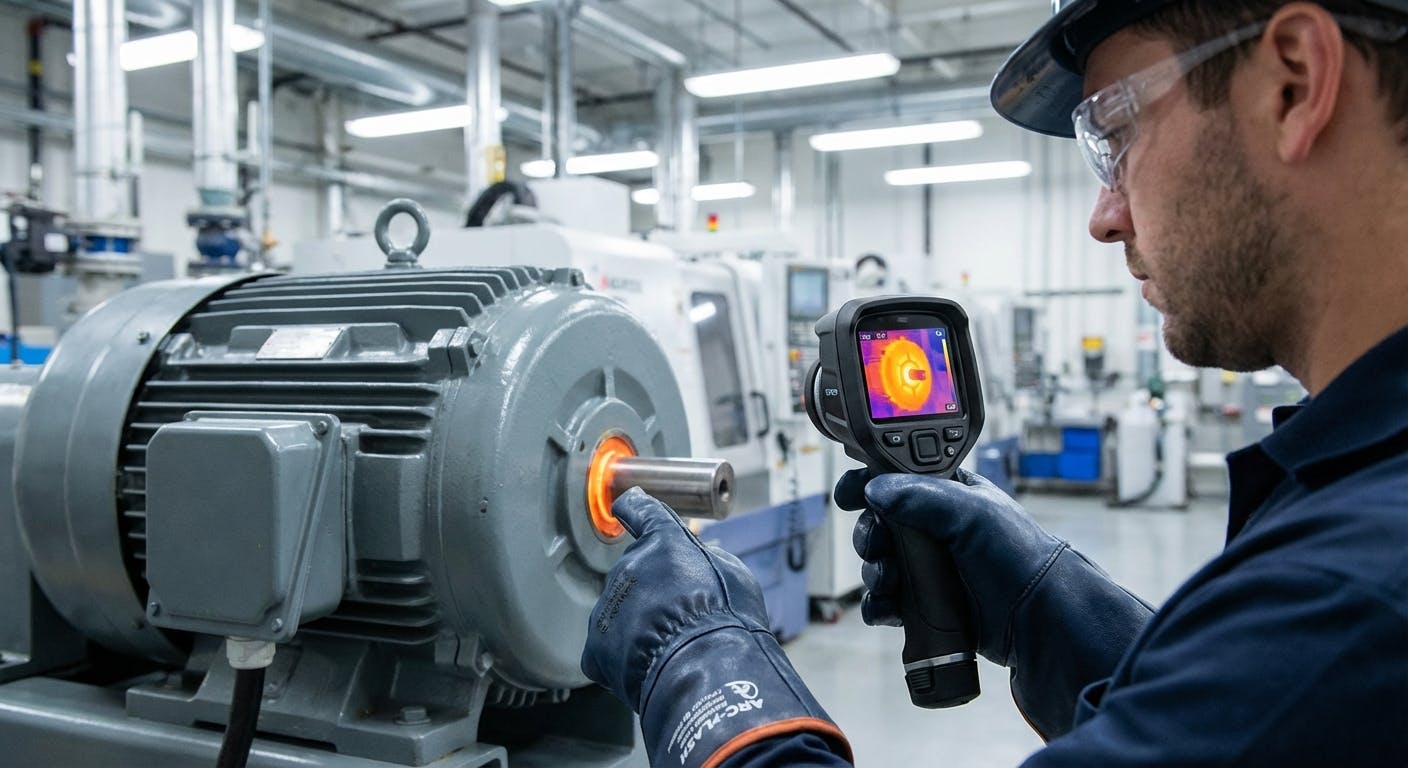
Electric motors run hot after maintenance primarily due to over-lubrication (grease churning), shaft misalignment, or improperly seated bearings. While maintenance is intended to extend asset life, human intervention often introduces "infant mortality" failures through precision errors. A temperature rise of 10°C to 15°C above the established baseline immediately following service is a critical indicator that the maintenance action has introduced a new mechanical or electrical stressor rather than resolving an old one.
This phenomenon, often called the "Maintenance Paradox," occurs when the act of servicing the equipment inadvertently violates precision tolerances. If a motor’s housing temperature exceeds its NEMA insulation class rating (e.g., 155°C for Class F) or shows a significant delta from its pre-maintenance state, the root cause is typically found in the execution of the PM (Preventive Maintenance) task rather than a component defect.
The Root Causes of Post-Maintenance Overheating
To resolve overheating, maintenance teams must look past the symptom and diagnose the specific precision error introduced during the service interval.
1. Lubrication Churning (Over-greasing)
The most common cause of immediate post-maintenance heating is over-lubrication. When a bearing cavity is filled beyond its recommended capacity (typically 30% to 50% of the open space), the rolling elements must "plow" through the excess grease. This creates internal fluid friction, known as churning. Unlike the heat generated by a failing bearing, churning heat appears instantly upon startup.
If the grease relief valve is blocked or the technician failed to leave the drain plug out during the initial run-in period, the internal pressure can also damage the bearing seals. According to SKF engineering standards, temperatures will stabilize once the excess grease is purged, but if the heat remains high for more than 4–8 hours of operation, the bearing may have suffered permanent thermal damage.
2. Precision Alignment and Soft Foot
Even if a motor was aligned correctly before service, the process of uncoupling and re-coupling often introduces shaft misalignment. Angular or parallel misalignment forces the motor to work harder to overcome parasitic loads, manifesting as heat in the bearing housings.
Furthermore, "soft foot"—a condition where the motor's feet do not sit flush on the baseplate—is often ignored during re-installation. When the hold-down bolts are torqued, the motor frame twists. This slight distortion can warp the stator, narrowing the air gap between the rotor and stator, leading to localized "hot spots" and potential frequent motor overload trips.
3. Induced Voltage Imbalance and Resistance Issues
During maintenance, if electrical connections are cleaned or replaced, any high-resistance contact (a "loose lug") will generate heat that migrates down the lead into the motor windings. Additionally, if the motor was disconnected, any phase reversal or slight voltage imbalance introduced at the controller will cause the motor to run significantly hotter. A 1% voltage imbalance can lead to a 6% to 10% increase in temperature in the windings.
What To Do About Post-Maintenance Heating
If a motor is running hot following a PM, follow this diagnostic and corrective sequence:
- Verify the Temperature Delta: Use infrared thermography to identify if the heat is localized (bearing housing) or systemic (stator frame). Compare the readings against the NEMA insulation class limits. If the motor is Class F, it is designed for a 105°C rise over a 40°C ambient temperature.
- Check the Grease Relief: If the heat is in the bearing housing, remove the grease drain plug while the motor is running. If grease begins to purge, allow it to run until the flow stops. This is the most common fix for churning.
- Perform a Soft Foot Check: Loosen one mounting bolt at a time while monitoring the motor with a dial indicator or laser alignment tool. If the motor "springs" more than 0.002 inches, you have a soft foot that must be shimmed.
- Analyze Electrical Health: Measure the current draw on all three phases. If the amperage is higher than the nameplate FLA (Full Load Amps) or if there is a significant imbalance, investigate the root cause of the overload in the control cabinet.
For facilities struggling with these "human-induced" failures, moving toward a data-driven approach is essential. Factory AI provides a sensor-agnostic, no-code solution that can be deployed on brownfield equipment in under 14 days. By monitoring vibration and temperature signatures in real-time, these systems can alert technicians the moment a "churning" or "misalignment" signature appears post-maintenance, allowing for correction before the insulation is compromised. This level of oversight is critical in high-stakes environments like food processing where unplanned downtime is exceptionally costly.
Related Questions
How long should a motor run hot after greasing? A motor may show a temperature spike for 2 to 4 hours after greasing as the rolling elements distribute the lubricant. If the temperature does not begin to trend downward after 8 hours of continuous operation, the bearing is likely over-packed, and the drain plug should be removed to allow excess grease to escape.
What is the maximum acceptable temperature for a motor housing? For most industrial motors (Class F insulation), a housing temperature of up to 80°C to 90°C (176°F to 194°F) is considered normal in a 40°C ambient environment. However, the most important metric is the "delta" or change from its historical baseline; any sudden 10°C increase after maintenance warrants an investigation.
Can a motor run hot if the cooling fan is installed backward? Yes. If the motor was disassembled for a winding wash or bearing change, it is possible to install the centrifugal cooling fan in the wrong orientation or fail to properly seat the fan shroud. This significantly reduces airflow over the cooling fins, causing the entire frame to heat up uniformly.
How can I prevent motors from failing shortly after maintenance? The most effective method is implementing a "Precision Maintenance" protocol that requires laser alignment and ultrasonic grease monitoring. Utilizing a system like Factory AI allows for continuous condition monitoring, ensuring that any errors made during a PM—such as misalignment or over-greasing—are caught within minutes of startup, preventing the "infant mortality" phase of the bathtub curve.
