
The Reliability Stack: What Tools Do Reliability Engineers Use to Eliminate Unplanned Downtime?
Feb 23, 2026
tools reliability engineers use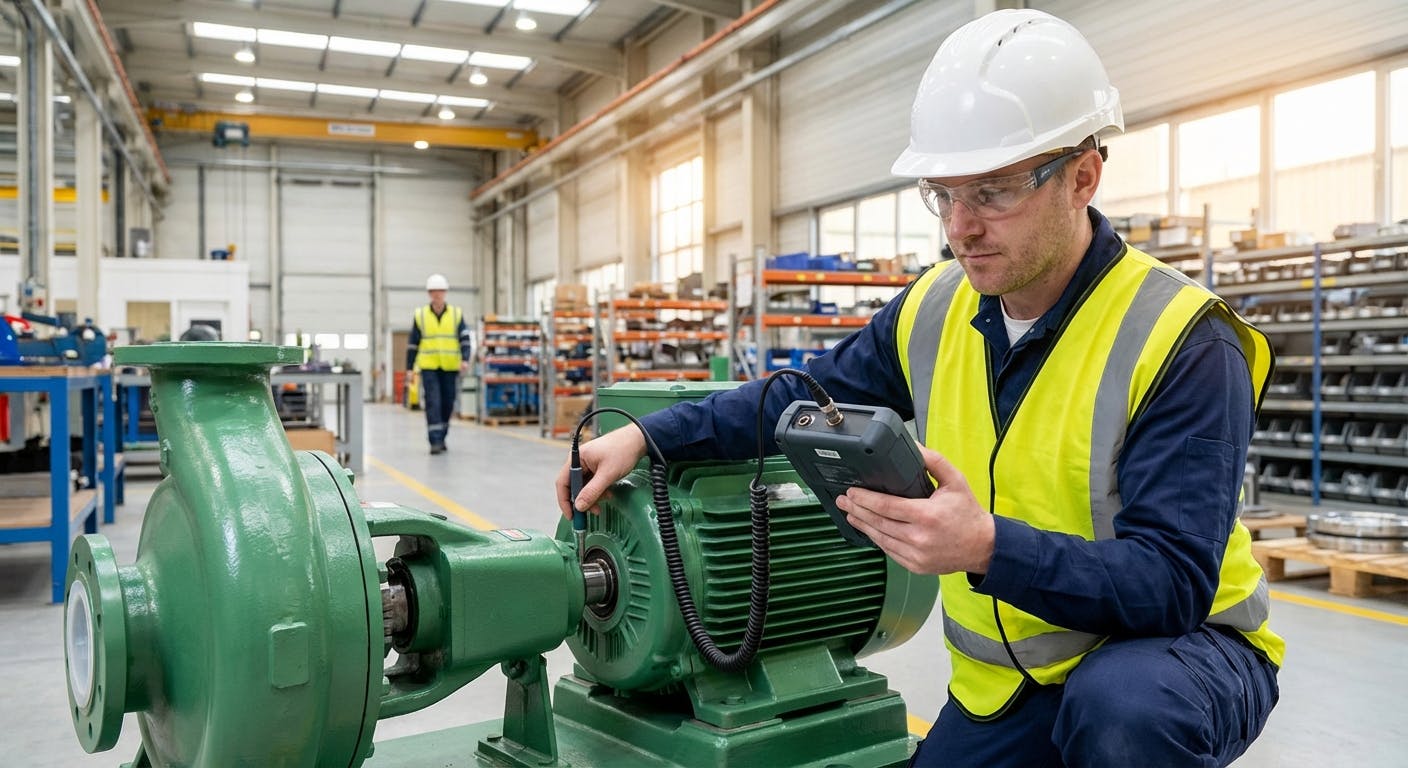
What is the core "Reliability Stack" required for modern industrial operations?
When you ask, "What tools do reliability engineers use?" you aren't just asking for a shopping list of sensors and software. You are asking for a methodology to transition from a state of constant firefighting to a state of controlled, predictable production. In 2026, the answer is no longer a single piece of software like a CMMS; it is a three-layered "Reliability Stack" that integrates diagnostic hardware, analytical software, and operational systems.
The core of this stack consists of:
- Diagnostic Hardware: Tools that capture the "pulse" of the machine (Vibration sensors, Infrared cameras, Ultrasonic detectors).
- Analytical Software: The "brain" that interprets raw data (Weibull analysis software, Root Cause Analysis (RCA) platforms, and Reliability Centered Maintenance (RCM) modules).
- Operational Systems: The "nervous system" that triggers action (Computerized Maintenance Management Systems (CMMS) and Asset Performance Management (APM) suites).
To be effective, a Reliability Engineer (RE) uses these tools to answer three questions: Is it failing? Why is it failing? And how do we ensure it never fails this way again? If your toolset only answers the first question, you aren't doing reliability engineering; you are doing advanced firefighting. To truly eliminate chronic machine failures and repeated downtime, you must use the full stack to move from data points to actionable physics-based insights.
How do diagnostic hardware tools bridge the gap between "feeling" and "knowing"?
In the past, a senior technician might put a screwdriver against a motor housing and "feel" a bad bearing. In 2026, reliability engineers use diagnostic hardware to quantify that feeling with scientific precision. The goal is to detect the "P-F Interval"—the time between a potential failure being detectable and the actual functional failure occurring.
Vibration Analysis Sensors: These are the workhorses of the RE toolkit. By measuring velocity, acceleration, and displacement, an RE can identify specific fault frequencies. For example, a peak at a specific frequency might indicate an inner race defect in a bearing, while another indicates misalignment. However, simply having the data isn't enough. Many teams struggle because vibration checks don't prevent failures if the data isn't integrated into a broader reliability strategy.
Ultrasonic Leak Detectors: Often overlooked, ultrasound is the "early warning system" for the stack. It detects high-frequency sounds created by turbulence, friction, and arcing. This is critical for finding compressed air leaks or early-stage bearing degradation that vibration sensors might miss. According to the Department of Energy (DOE), compressed air leaks can account for up to 30% of a plant's electricity use; ultrasound tools pay for themselves by identifying these "invisible" costs.
Infrared Thermography: These cameras allow REs to see heat signatures. In a manufacturing environment, heat is almost always a symptom of inefficiency or impending failure. Whether it’s a loose electrical connection in a control panel or a gearbox running hot due to improper lubrication, thermography provides a non-destructive way to "see" inside the machine's operation. This is particularly useful for diagnosing why motors run hot after service, often revealing that the "fix" actually introduced new thermal stresses.
Decision Framework: Selecting the Right Diagnostic Tool
Not every asset requires every tool. To optimize your budget, use the following framework to match the tool to the failure mode:
| Tool | Primary Detection | Best For | Industry Benchmark/Standard |
|---|---|---|---|
| Vibration Analysis | Mechanical imbalance, looseness, bearing wear | Rotating equipment > 600 RPM | ISO 10816-3 (Vibration Severity) |
| Ultrasound | Turbulence, friction, high-freq impacts | Slow-speed bearings, air leaks, electrical arcing | ASTM E1002-05 (Leak Detection) |
| Thermography | Thermal anomalies, resistance | Electrical panels, steam traps, heat exchangers | ISO 18434-1 (Thermal Monitoring) |
| Oil Analysis | Wear debris, contamination, chemistry | Critical gearboxes, hydraulic systems | ISO 4406 (Fluid Cleanliness) |
Why is analytical software the "brain" of the reliability operation?
Raw data from sensors is useless without a framework to interpret it. This is where analytical tools come in. Reliability engineers use these to move from "what happened" to "what will happen."
Weibull Analysis Software: This is the gold standard for life data analysis. By plotting failure data on a Weibull distribution, an RE can determine if a failure mode is "infant mortality" (happening too early), "random" (often caused by external shocks or operational errors), or "wear-out" (end of life). If you find that your gearboxes fail every 6 months, Weibull analysis will tell you if the problem is a design flaw or a maintenance execution error.
Root Cause Analysis (RCA) Platforms: When a machine goes down, the RE uses RCA tools (like 5-Whys, Fishbone diagrams, or Fault Tree Analysis) to dig past the symptom. Modern RCA software allows teams to build "Logic Trees" that connect physical evidence to human and systemic causes. For instance, if a conveyor chain stretches prematurely, the RCA might reveal that the root cause isn't the chain quality, but a systemic failure in how tensioning is measured.
FRACAS (Failure Reporting, Analysis, and Corrective Action System): This is the closed-loop system that ensures lessons learned are actually implemented. A FRACAS tool tracks every failure from the moment it’s reported until a permanent corrective action is verified. Without a FRACAS, most plants end up in a "Groundhog Day" loop, fixing the same bearing on the same motor every quarter because the underlying systemic issue was never addressed.
The Role of FMEA in Tool Calibration
Before deploying software, the RE must conduct a Failure Mode and Effects Analysis (FMEA). This is the "map" that tells the software what to look for. For a critical centrifugal pump, the FMEA might identify "seal failure due to dry running" as a high-risk mode. The RE then calibrates the analytical software to look for specific correlations—such as a drop in suction pressure combined with a spike in seal housing temperature—to trigger an alert before the seal is destroyed. Without this physics-based mapping, analytical software is just a fancy calculator.
How do I integrate these tools into a CMMS without creating "Data Fatigue"?
The biggest mistake a Reliability Engineer can make is flooding the maintenance team with too much data. This leads to "Alarm Fatigue," where technicians begin to ignore alerts because 90% of them are perceived as "noise."
To avoid this, the CMMS (Computerized Maintenance Management Systems) must act as a filter, not just a funnel. In 2026, high-performing reliability engineers use Asset Performance Management (APM) software to sit on top of the CMMS. The APM takes the sensor data, runs it through the analytical models, and only triggers a Work Order in the CMMS when a specific threshold or "logic gate" is met.
For example, instead of a calendar-based alert to "Check Motor," the system uses a condition-based trigger: "Vibration in the 2-10kHz range has increased by 15% over the last 48 hours; schedule bearing inspection within 7 days." This precision builds trust. When technicians don't trust maintenance data, they revert to reactive habits. By using tools to provide high-confidence, actionable work orders, the RE reinforces a culture of reliability.
Furthermore, integration must account for the "Physics of Failure." In food processing, for example, machines often fail immediately after a cleaning shift. A smart reliability stack will correlate post-sanitation breakdown data with humidity and temperature sensors to identify exactly where washdown procedures are compromising electrical seals or bearing housings.
What are the common mistakes to avoid when building a reliability tech stack?
The most expensive tool is the one that nobody uses. Many organizations fall into the "Technology Trap"—buying the most advanced AI-driven predictive maintenance suite before they have mastered the basics of data integrity.
Mistake 1: Buying Tech to Fix a Broken Process. If your maintenance backlog keeps growing, adding more sensors will only tell you more things that are broken that you don't have time to fix. You must first use planning and scheduling tools to stabilize the reactive workload before layering on predictive technologies.
Mistake 2: Ignoring the "Human Sensor." Reliability engineers often get so enamored with vibration probes that they forget the operators who stand next to the machine for 8 hours a day. Modern reliability tools should include mobile "Operator Driven Reliability" (ODR) apps. These allow operators to log "soft" data—like a new smell, a strange sound, or a slight change in machine rhythm—that sensors might not be tuned to catch.
Mistake 3: Lack of Standardization. Using three different vibration analysis brands and two different CMMS platforms creates "data silos." An RE's job is to ensure that data flows seamlessly from the sensor to the analyst to the technician. According to ASME standards, interoperability is the single greatest factor in the ROI of industrial digital transformation.
Troubleshooting Data Quality Issues
If your tools are producing "garbage" data, check these three common failure points:
- Sensor Mounting: A vibration sensor glued to a plastic guard will provide useless data. Ensure sensors are mounted as close to the bearing load zone as possible, ideally on a flat, machined metal surface.
- Signal-to-Noise Ratio: In high-interference environments (like near large VFDs), electrical noise can mask actual mechanical signals. Use shielded cables and proper grounding to ensure the "brain" is getting a clean signal.
- Contextual Data Gaps: A sensor might report high vibration, but is that because the bearing is failing, or because the machine is running at 110% capacity today? Your tools must integrate with SCADA or PLC data to provide operational context (speed, load, temperature) to the reliability data.
How do I calculate the ROI of a $250,000 reliability tool investment?
Reliability is often seen as a cost center because its "product" is something that doesn't happen (downtime). To justify the cost of high-end tools, an RE must speak the language of the CFO.
The ROI calculation should focus on three pillars:
- Avoided Downtime Cost: If your plant loses $10,000 per hour in lost production, and the new toolset prevents just two 12-hour outages a year, the tools have paid for themselves ($240,000 saved).
- Secondary Damage Prevention: A $500 bearing failure is cheap. But if that bearing seizes and destroys a $20,000 shaft and causes a 48-hour catastrophic failure, the "true cost" of the failure is massive. Reliability tools catch the $500 problem before it becomes a $50,000 disaster.
- Labor Efficiency: By moving from "Search and Destroy" (looking for problems) to "Targeted Repair" (knowing exactly what to fix), you reduce the man-hours spent on PMs that don't actually prevent failure. Many calendar-based lubrication schedules fail because they over-grease bearings; ultrasonic grease guns ensure you use exactly the right amount, saving both lubricant and labor.
Case Study: The $450,000 Gearbox Save
A mid-sized paper mill invested in a wireless vibration and oil condition monitoring system for their main press section. Within three months, the system flagged a subtle increase in "sub-harmonic" vibration frequencies in a primary gearbox—frequencies that manual monthly checks had missed.
Simultaneously, the oil sensor showed a slight increase in ferrous particle count. Because they had the data, the RE scheduled a 4-hour planned stop during a scheduled felt change. They found a chipped tooth on the high-speed pinion. The repair cost $12,000 in parts and labor. Had the gearbox failed catastrophically during a production run, the lead time for a replacement was 6 weeks, with an estimated total downtime cost of $450,000. The entire reliability stack paid for itself 1.8 times over in a single afternoon.
What if my facility is "Old School" or lacks high-speed connectivity?
A common objection is: "Our machines are from 1985; we can't use these tools." This is a myth. In fact, older "legacy" assets often see the highest ROI from reliability tools because they lack the built-in diagnostics of modern equipment.
Edge Computing and LoRaWAN: For facilities with thick concrete walls or remote assets, reliability engineers use LoRaWAN (Long Range Wide Area Network) sensors. These sensors can transmit small packets of vibration or temperature data over several miles using very little power. You don't need a plant-wide 5G network to start monitoring your critical pumps.
Portable vs. Permanent: You don't have to instrument every motor. A "Route-Based" approach using a single high-quality portable vibration analyzer can cover 80% of your plant's needs. The RE identifies the "Criticality" of each asset and decides:
- Critical Assets: Permanent, 24/7 wireless sensors.
- Essential Assets: Monthly route-based manual checks.
- Non-Critical Assets: Run-to-fail (no monitoring).
This tiered approach ensures that you aren't over-investing in tools for a machine that doesn't impact the bottom line if it stops. Even in harsh washdown environments that destroy bearings, there are specialized NEMA 4X rated sensors designed to survive the chemicals and high-pressure spray.
How do I know if the tools are actually working?
The ultimate metric for a Reliability Engineer isn't how many sensors they've installed; it's the "Yield" of the maintenance program. You know your tools are working when your Leading Indicators start to move.
Leading Indicators to Watch:
- Percentage of Condition-Based Work Orders: As your tools get better, this number should go up, while "Emergency Work Orders" go down.
- P-F Interval Capture: Are you finding failures 3 weeks before they happen, or 3 hours? A longer interval means your tools (and your analysts) are getting more sensitive.
- Mean Time To Detect (MTTD): How long does a fault exist before a tool flags it?
Lagging Indicators (The Results):
- MTBF (Mean Time Between Failures): This should steadily increase as you eliminate root causes.
- OEE (Overall Equipment Effectiveness): The ultimate measure of plant health.
- Maintenance Cost as a % of RAV (Replacement Asset Value): World-class organizations typically sit below 3%.
If your MTBF isn't improving despite having the latest tools, it's a sign of a "Systemic Trust Failure." This often happens when operators ignore maintenance alerts because the tools haven't been calibrated to the specific "physics" of that machine's operation.
The 90-Day Reliability Roadmap: How to Get Started
If you are starting from scratch, do not try to implement the entire stack at once. Follow this phased approach to build momentum and prove value:
Days 1-30: The Asset Audit & Criticality Ranking Before buying a single sensor, you must know what matters. Use a simple 1-5 scale to rank assets based on:
- Impact on safety/environment.
- Impact on production throughput.
- Repair cost and lead time for parts. Focus your first tool investments only on the "Top 10%" of critical assets.
Days 31-60: The Pilot Program Select one "Bad Actor"—a machine that fails frequently and causes headaches. Deploy a combination of vibration sensors and ultrasound. Use this period to calibrate your alerts. The goal is to catch one failure before it happens. This "win" is your internal marketing material to secure more budget.
Days 61-90: Integration and Training Once the sensors are providing data, integrate them into your CMMS. Train your technicians on how to read the reports. If the tool says "Bearing 2 is failing," show the technician the vibration spectrum so they understand the why behind the work order. Reliability is a team sport; the tools are only as good as the people who respond to them.
Reliability engineering is a journey of continuous calibration—tuning the tools to the unique heartbeat of your specific facility. By building a stack that balances diagnostic hardware, analytical software, and human expertise, you move from a culture of "fixing things" to a culture of "ensuring things work."
