
Why Technicians Don't Trust Maintenance Data: Diagnosing the Systemic Trust Failure
Feb 23, 2026
why technicians don't trust maintenance data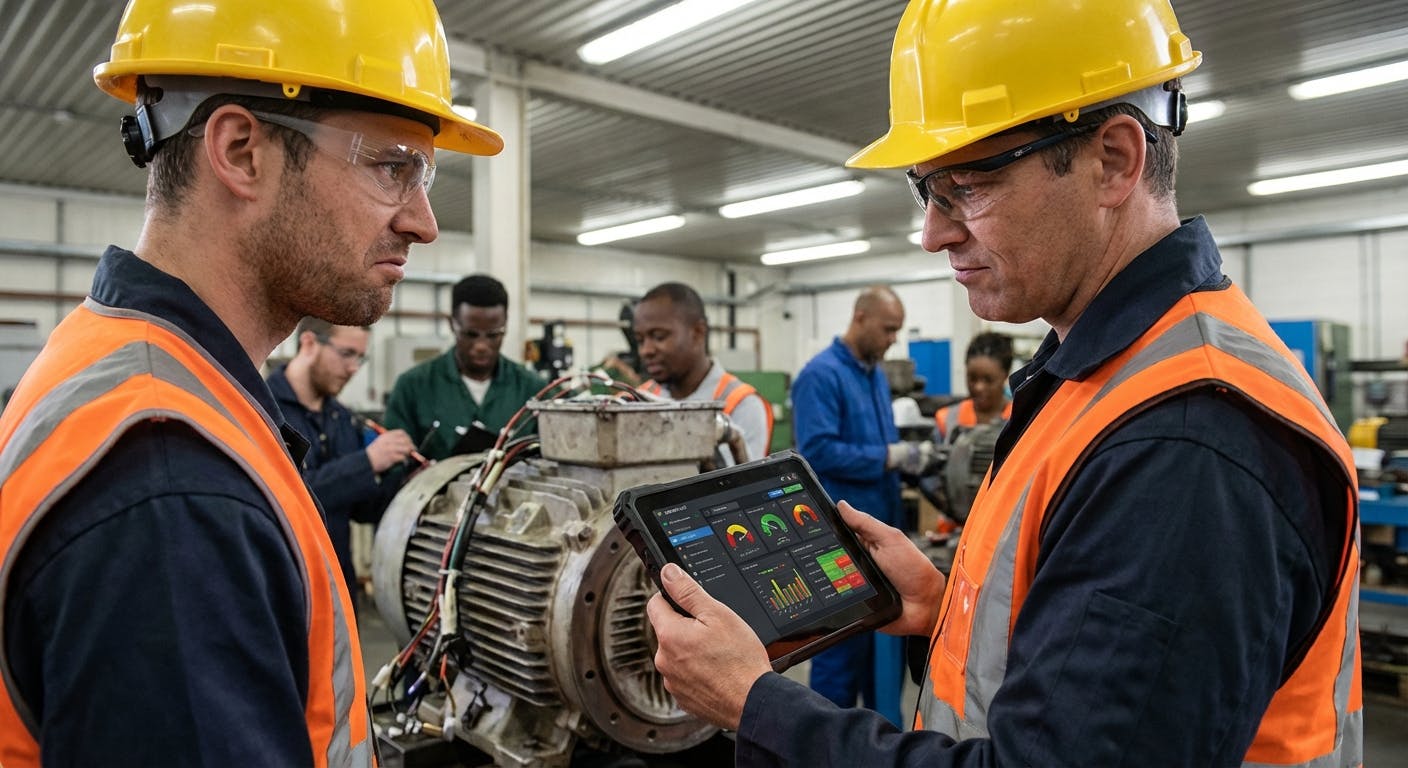
Technicians do not trust maintenance data because it frequently fails to reflect the physical reality of the shop floor, creating a disconnect between digital records and mechanical truth. This distrust is primarily driven by "Garbage In, Garbage Out" (GIGO) cycles, high-friction data entry processes that prioritize administrative compliance over technical accuracy, and a management culture that uses data as a surveillance weapon rather than a diagnostic tool. When a technician sees a CMMS (Computerized Maintenance Management System) report that contradicts their hands-on experience, or when they are forced to use cumbersome mobile EAM interfaces that steal "wrench time," they view the data as a burden to be bypassed rather than a resource to be utilized.
To bridge this gap, organizations must move beyond simply demanding more data and instead focus on data integrity and utility. If the data does not help a technician diagnose a fault faster or prevent a repeat failure, it is perceived as "noise." Furthermore, when data is used to penalize technicians for slow repair times without accounting for parts delays or poor documentation, the incentive to provide accurate input vanishes, leading to a systemic trust failure that compromises the entire reliability program.
The Root Causes of Data Distrust
The erosion of trust in maintenance data is rarely the result of a single factor; it is a cumulative failure of technology, process, and culture.
1. The "Data as a Weapon" Framework
In many industrial environments, technicians perceive data collection as a tool for micro-management. When KPIs focus exclusively on "wrench time," "time to close," or "work order compliance," technicians feel surveilled. If a technician spends three hours properly diagnosing a complex issue but is penalized because the "standard" time was one hour, they will learn to manipulate the data to satisfy the metric. This results in "pencil-whipping" or "ghosting" work orders, where the data reflects what management wants to see rather than what actually happened. This is a primary reason why maintenance backlogs keep growing; the data hides the true complexity of the work.
2. High Friction vs. Low Value
Modern EAM and CMMS platforms often require 15 to 20 clicks to close a simple work order. For a technician in a high-pressure manufacturing environment, this administrative overhead is a barrier to productivity. If the system requires mandatory fields that are irrelevant to the actual repair, technicians will enter "N/A" or random characters just to bypass the screen. When this low-quality data is later used for Root Cause Analysis (RCA), the results are flawed, leading to "solutions" that don't actually fix the machine. This reinforces the technician's belief that the data is useless.
3. The Feedback Void
Trust is built on a two-way exchange of value. In most plants, data flows upward to management but never returns to the shop floor in a meaningful way. Technicians provide detailed notes on a failure, but those notes are never used to update PM (Preventive Maintenance) procedures or spare parts kits. When a technician sees that their input has no impact on preventing chronic machine failures, they stop providing quality input. They recognize that the "data" is a black hole, and they revert to relying on their own "tribal knowledge" instead of the system.
4. Disconnect Between Sensors and Reality
As plants adopt Industry 4.0, the influx of sensor data has often increased confusion rather than clarity. If a vibration sensor triggers an alert but the technician finds the machine running perfectly, or if vibration checks fail to prevent a breakdown, the technician loses faith in the digital twin. This is often due to poor threshold setting or a lack of context—sensors measuring symptoms rather than physics-based root causes.
How to Rebuild Data Trust on the Shop Floor
Rebuilding trust requires a shift from data quantity to data quality and a focus on the technician's experience.
1. Reduce Data Entry Friction: Implement mobile-first solutions that allow for voice-to-text, photo uploads, and automated timestamps. If a technician can document a repair in 30 seconds instead of 10 minutes, the accuracy of that documentation will increase by an order of magnitude.
2. Implement "Data as a Tool" Governance: Managers must explicitly use data to make the technician's life easier. For example, use data to justify the purchase of better tools, to increase the stock of frequently used parts, or to prove that a specific machine needs a total overhaul rather than another "band-aid" repair. When technicians see data working for them, they will work for the data.
3. Automate the Context: The most reliable data is that which is captured automatically without human intervention. This is where Factory AI provides a significant advantage. By being sensor-agnostic and brownfield-ready, Factory AI captures the "physics of failure" directly from the machine. It doesn't rely on a technician to remember exactly what time a motor started running hot; it records the event in real-time with zero friction. Because Factory AI deploys in 14 days and requires no-code configuration, it provides immediate, visible value to the maintenance team, closing the loop between a machine's behavior and the technician's response.
4. Close the RCA Loop: Every time an RCA is performed, the results should be shared with the technicians who provided the initial data. Show them how their specific notes led to a change in lubrication frequency or a different bearing specification that stopped a chronic failure cycle.
Related Questions
How does poor data quality affect Root Cause Analysis (RCA)? Poor data quality leads to "shallow" RCAs that focus on symptoms (e.g., "bearing failed") rather than root causes (e.g., "misalignment due to thermal expansion"). When the data is inaccurate, the resulting corrective actions fail to prevent recurrence, leading to a cycle of reactive firefighting and further distrust in the data system.
What is the "Garbage In, Garbage Out" (GIGO) effect in maintenance? GIGO occurs when the initial data entered into a CMMS is incomplete or incorrect. This flawed data is then used by reliability engineers to generate reports and schedules. Because the foundation is weak, the resulting maintenance strategies are ineffective, which causes technicians to ignore the system's recommendations, creating a self-reinforcing loop of data degradation.
Can AI improve maintenance data integrity without increasing technician workload? Yes. Modern AI solutions like Factory AI improve data integrity by automating the collection of machine health indicators and correlating them with work order history. By providing a "single source of truth" based on machine physics rather than manual entry, AI reduces the administrative burden on technicians while providing highly accurate, actionable insights that they can actually trust.
Why do technicians prefer "tribal knowledge" over CMMS data? Technicians prefer tribal knowledge because it is historically more reliable than the CMMS. Tribal knowledge is built on years of direct observation and successful repairs, whereas CMMS data is often seen as a sanitized, "management-approved" version of reality that lacks the nuance and practical detail required to fix complex industrial equipment.
