
Root Cause Analysis: Why Chain Conveyors Experience Rapid Elongation and "Stretch"
Feb 23, 2026
why chain conveyors stretch so quickly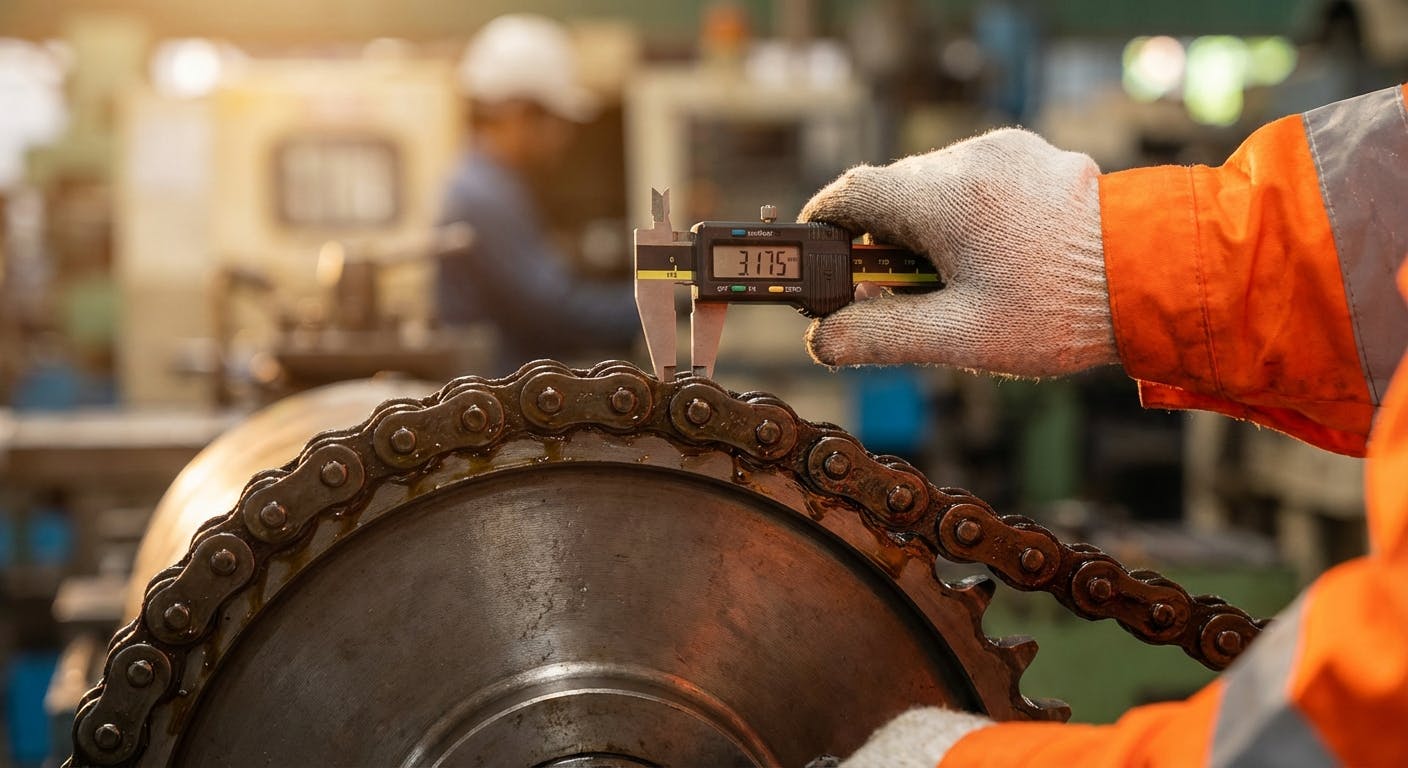
Chain conveyors "stretch" quickly because of wear elongation occurring at the articulating joints—specifically the pins, bushings, and rollers—rather than the actual elastic deformation of the steel side plates. When the protective lubrication film between the pin and bushing breaks down, metal-to-metal contact creates abrasive wear that removes microscopic layers of material, increasing the "pitch" (distance between links) and causing the chain to physically lengthen.
While a small amount of initial "run-in" stretch is normal during the first 50 hours of operation, rapid or continuous elongation is a symptom of systemic mechanical failure. In most industrial applications, a chain is considered functionally exhausted once it reaches 1.5% to 3% elongation; exceeding this threshold leads to sprocket teeth jumping, increased vibration, and eventual catastrophic failure. Understanding this distinction is critical: you are not dealing with a tensile strength issue, but a tribological (friction and wear) failure.
The Deeper Explanation: 3 Primary Drivers of Rapid Elongation
To solve the problem of rapid chain stretch, maintenance teams must look beyond the symptom and diagnose the specific environmental or mechanical stressor accelerating the wear at the articulating joints.
1. Failure of Boundary Lubrication
The most common cause of rapid stretch is the transition from hydrodynamic or full-film lubrication to boundary lubrication. In a chain joint, the pressure between the pin and bushing is immense. If the lubricant lacks the viscosity to stay in the joint or the "tackiness" to resist centrifugal force, the metal surfaces touch.
- The Result: High-frequency friction generates heat, which further thins the remaining oil, creating a "death spiral" of wear.
- The Fix: Ensure the lubricant is reaching the inside of the pin/bushing interface, not just the outside of the rollers. In many cases, root cause analysis in food processing reveals that high-pressure washdowns strip away lubricants, leaving chains vulnerable to immediate flash-rust and abrasive wear.
2. Abrasive Contamination (The "Grinding Paste" Effect)
In environments with dust, grit, or glass cullet, particles find their way into the clearances between the pin and bushing. When mixed with oil, these particles form an abrasive grinding paste.
- The Result: This paste acts as an industrial sandpaper, rapidly machining away the hardened surface of the pins. This is why chains in cement, mining, or recycling plants often stretch 5x faster than those in clean packaging environments.
- The Fix: Use dry-film lubricants or specialized "sealed-joint" chains if the environment cannot be cleaned.
3. Sprocket Misalignment and Catenary Sag
If sprockets are not perfectly co-planar, the chain enters the teeth at an angle. This creates side-loading, forcing the pin to press harder against one side of the bushing.
- The Result: This uneven pressure concentrates wear on a small surface area, accelerating elongation. Furthermore, improper catenary sag (the slack side of the conveyor) can cause the chain to "whip" as it leaves the drive sprocket, creating shock loads that exceed the chain's intended working tension. This mechanical stress is often linked to frequent motor overload trips as the drive system fights the increased friction of a misaligned, binding chain.
What To Do About It: A Technical Action Plan
If your chain conveyors are stretching faster than the manufacturer's predicted lifecycle, follow this tiered intervention strategy:
Step 1: Quantify the Elongation Do not rely on the take-up adjustment as a measure of stretch. Use a professional chain wear gauge or a tape measure to check the pitch over a span of 24 to 48 links.
- Calculation: (Measured Length - Original Length) / Original Length.
- If the result is >2%, schedule a replacement. If it is >3%, replace immediately to avoid sprocket damage.
Step 2: Audit the Lubrication Delivery Check if the lubricant is actually penetrating the joints. If the pins appear "blued" or have a reddish-brown powder (fretting corrosion), your lubrication system is failing. Consider switching to an automated lubrication system that delivers precise micro-doses directly to the link plates.
Step 3: Implement Predictive Monitoring Manual inspections often miss the early stages of wear. Modern reliability teams are moving toward "Data-Driven Maintenance" by monitoring the secondary effects of chain wear.
- Factory AI offers a sensor-agnostic, no-code solution that can be deployed in under 14 days on brownfield equipment. By monitoring motor current and vibration signatures, Factory AI can detect the subtle "surging" or increased torque requirements that occur as a chain elongates and begins to ride higher on the sprocket teeth. This allows maintenance to move from reactive "firefighting" to planned replacements during scheduled downtime.
Step 4: Check Component Compatibility Ensure you aren't mounting a new chain on worn sprockets. Worn sprockets have a "hooked" profile that will immediately begin to damage the new chain's bushings, leading to repeated failures similar to those seen in packaging line bearings.
Related Questions
How much chain stretch is considered normal? Initial "run-in" stretch of about 0.05% is normal as components seat themselves. After that, a well-maintained chain should elongate at a very slow, linear rate until it reaches approximately 1.5% to 2%, at which point the rate of wear typically accelerates.
Does temperature affect how quickly a chain stretches? Yes. High temperatures (above 150°C/300°F) reduce lubricant viscosity and can eventually affect the heat-treatment hardness of the chain pins. Conversely, extreme cold can make lubricants too thick to penetrate the pin-bushing gap, leading to starvation wear.
Can I remove links to "fix" a stretched chain? While removing links (shortening the chain) will restore tension, it does not fix the underlying problem. The pitch of the chain no longer matches the pitch of the sprocket. Running an elongated chain on standard sprockets causes the rollers to ride up on the teeth, which significantly increases the risk of the chain jumping or snapping.
How can AI predict when a chain will fail? AI platforms like Factory AI analyze patterns in motor load and vibration that humans cannot perceive. As a chain wears and its geometry changes, the drive motor must work harder to overcome the "climb" of the chain on the sprocket. AI detects these micro-trends, providing a "remaining useful life" (RUL) estimate that prevents unplanned outages.
