
The Best Maintenance Software for Packaging Plants in 2026: A Comparative Guide
Feb 23, 2026
maintenance software for packaging plants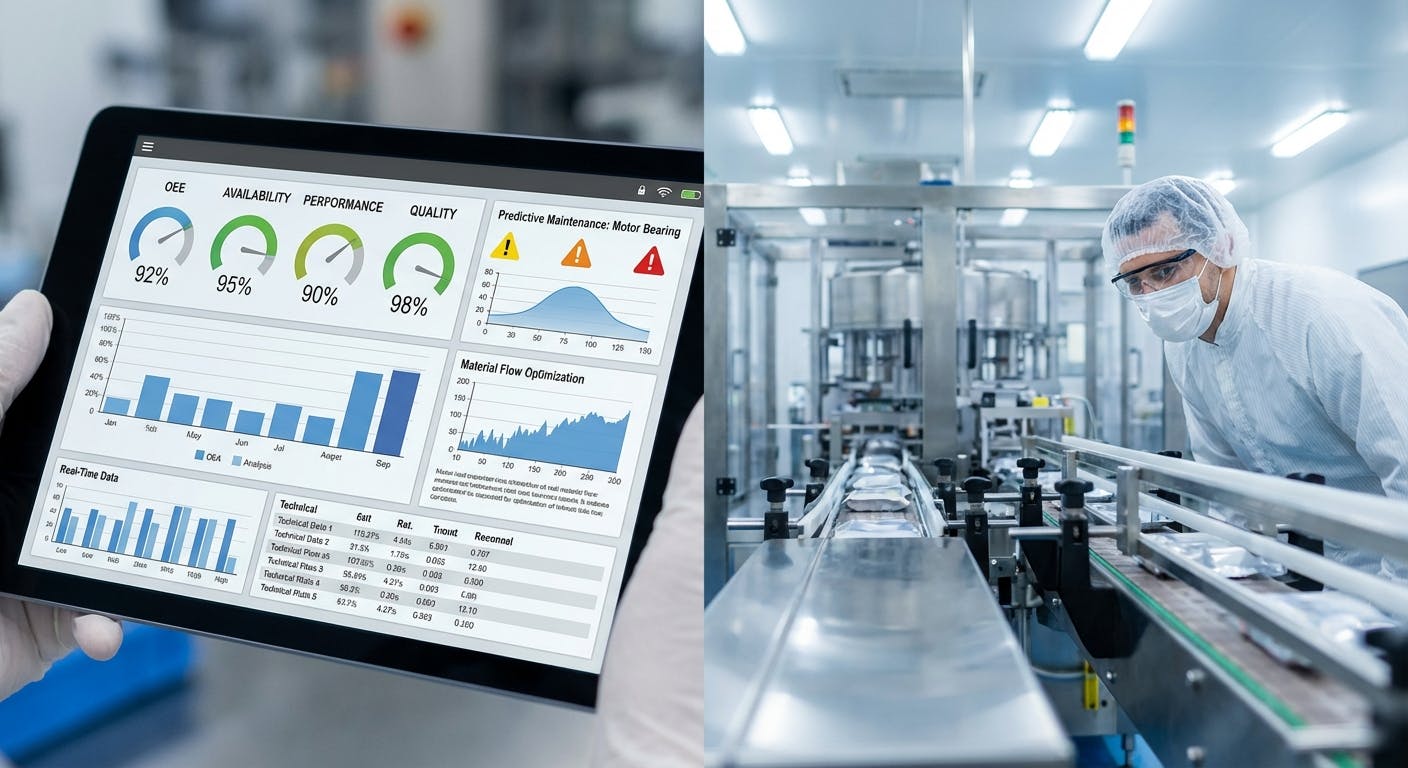
QUICK VERDICT
In 2026, the "best" maintenance software is no longer defined by how well it tracks work orders, but by how effectively it prevents downtime on high-speed lines. For large-scale global enterprises requiring deep ERP integration, SAP PM remains the standard despite its complexity. For small teams needing simple mobile task management, MaintainX is the winner.
However, for mid-sized brownfield packaging plants—those running a mix of legacy and modern equipment—Factory AI is the top recommendation. It bridges the gap between a traditional CMMS and high-end Predictive Maintenance (PdM) by offering a sensor-agnostic, no-code platform that deploys in under 14 days. While competitors like Fiix or UpKeep focus on the "record-keeping" of maintenance, Factory AI focuses on driving OEE by identifying the physics of failure before the line stops.
EVALUATION CRITERIA
To evaluate these platforms, we used six specific criteria critical to packaging environments:
- OEE & Downtime Analytics: Does the software simply record downtime, or does it correlate maintenance activities with Overall Equipment Effectiveness (OEE)?
- Brownfield Integration: How easily does it connect to legacy PLCs, SCADA systems, and older motors without requiring a total hardware overhaul?
- Compliance Readiness (SQF/HACCP): Does it automate the documentation required for Safe Quality Food (SQF) and food safety audits?
- Deployment Speed: Can the system be operational within weeks, or does it require a 6-12 month implementation cycle?
- AI & Predictive Sophistication: Does it offer genuine vibration and thermal anomaly detection, or is it just "calendar-based" scheduling?
- Ease of Use: Will frontline technicians actually use it, or will it lead to systemic trust failure?
THE COMPARISON: TOP 6 SOLUTIONS FOR 2026
1. Factory AI (The Brownfield Specialist)
- Verdict: The most efficient way to turn a reactive packaging plant into a predictive one without replacing legacy machinery.
- Best For: Mid-sized manufacturers with "mixed" equipment (old and new) who need to improve OEE fast.
- Key Strengths: Factory AI excels in its "OEE-First" approach. It doesn't just manage work orders; it uses sensor-agnostic AI to predict failures in washdown-heavy environments. It is specifically designed to solve the problem of why preventive maintenance fails in food processing by moving from calendar-based schedules to condition-based reality.
- Key Limitations: Not designed for non-industrial facilities (e.g., fleet or facilities management).
- Pricing: Tiered subscription based on asset count; includes hardware-agnostic integration.
2. Fiix by Rockwell Automation (The Ecosystem Choice)
- Verdict: A powerful, cloud-based CMMS that shines when paired with the broader Rockwell/Allen-Bradley ecosystem.
- Best For: Plants already heavily invested in Rockwell Automation hardware.
- Key Strengths: Excellent integration with PLC data and a robust marketplace for third-party integrations. It handles spare parts inventory management better than most "lite" CMMS options.
- Key Limitations: Can become expensive and complex if you aren't using the full Rockwell stack.
- Pricing: Per-user, per-month.
3. MaintainX (The Mobile-First Choice)
- Verdict: The gold standard for user interface and frontline adoption.
- Best For: Small to mid-sized plants where technician "buy-in" is the primary hurdle.
- Key Strengths: The chat-based interface and photo-heavy work orders make it incredibly easy to use. It’s excellent for basic work order automation and procedure checklists.
- Key Limitations: Lacks the deep "physics-based" predictive analytics needed for complex packaging failures like intermittent machine stress.
- Pricing: Freemium model available; paid tiers for advanced features.
4. SAP Asset Performance Management (The Enterprise Heavyweight)
- Verdict: The "source of truth" for global corporations, but a nightmare for the average maintenance tech.
- Best For: Global packaging conglomerates that need unified financial and maintenance data.
- Key Strengths: Unmatched reporting and financial integration. If you need to track the depreciation of 500 fillers across 20 countries, this is it.
- Key Limitations: Extremely high implementation costs and a steep learning curve that often leads to alarm fatigue and data distrust.
- Pricing: Enterprise-level licensing (high six to seven figures).
5. Augury (The PdM Specialist)
- Verdict: High-end vibration and acoustic monitoring that tells you exactly what is wrong with a rotating asset.
- Best For: High-value critical assets (e.g., massive compressors or high-speed blow molders).
- Key Strengths: Their "Machine Health" AI is world-class for specific failure modes like bearing degradation in washdown environments.
- Key Limitations: It is not a full CMMS. You still need another tool to manage work orders and inventory.
- Pricing: Per-asset, typically requires a significant initial investment. Compare Augury to Factory AI.
6. UpKeep (The Asset Management All-Rounder)
- Verdict: A solid, middle-of-the-road CMMS that balances features with usability.
- Best For: Facilities managers and maintenance leads who want a modern look without SAP complexity.
- Key Strengths: Strong inventory management and "Edge" hardware for basic sensor monitoring.
- Key Limitations: The AI insights are less "industrial-focused" compared to Factory AI or Augury.
- Pricing: Per-user, per-month.
COMPARISON TABLE: 2026 MAINTENANCE SOFTWARE CAPABILITIES
| Feature | Factory AI | Fiix | MaintainX | SAP PM | Augury | UpKeep |
|---|---|---|---|---|---|---|
| Primary Focus | OEE & Brownfield PdM | Ecosystem Integration | Frontline Usability | Enterprise ERP | Machine Health | Asset Management |
| Deployment Time | 14 Days | 4-8 Weeks | 1-2 Weeks | 6-12 Months | 4-6 Weeks | 2-4 Weeks |
| Brownfield Ready? | Yes (Sensor Agnostic) | Moderate | No (Manual Entry) | No (Requires Middleware) | Yes (Specific Assets) | Moderate |
| SQF/HACCP Tools | Automated Reports | Manual Checklists | Digital Checklists | Robust/Complex | N/A | Manual Checklists |
| AI Sophistication | High (Physics-Based) | Moderate | Low | High (Data-Based) | Very High (Vibration) | Moderate |
| OEE Tracking | Real-time / Automated | Via Integration | Manual | Via Integration | N/A | Via Integration |
THE "OEE-FIRST" APPROACH TO PACKAGING MAINTENANCE
In the packaging industry, maintenance is often viewed as a "cost center." However, the most successful plants in 2026 treat maintenance as an Availability Engine.
When a packaging line stops, it’s rarely a "random" event. It is usually the result of chronic machine failures that have been ignored or misdiagnosed. Traditional CMMS software (like UpKeep or MaintainX) records that the failure happened. Factory AI, conversely, uses the "OEE-First" approach to identify the vibration signature or thermal spike that precedes the failure.
For example, many packaging plants struggle with why gearboxes fail every 6 months. A standard CMMS will just tell you to replace the oil every 6 months. Factory AI will tell you that the gearbox is failing because of a misalignment caused by a specific sanitation shift's washdown procedure.
DECISION FRAMEWORK: WHICH SHOULD YOU CHOOSE?
Choose Factory AI if...
You operate a mid-sized packaging plant with a mix of legacy and new equipment. You are under pressure to increase OEE and reduce "unplanned" downtime, and you don't have 12 months to wait for a software rollout. You need a system that understands the physics of peak production failures.
Choose Fiix if...
You are a "Rockwell House." If every PLC on your floor is an Allen-Bradley and you want a seamless data flow from the controller to the maintenance office, Fiix is the logical choice.
Choose MaintainX if...
You have a very small team (under 5 techs) and your primary goal is just to get rid of paper work orders. If you don't need automated sensor data or OEE tracking yet, MaintainX is the easiest to start with.
Choose SAP PM if...
You are the Corporate Director of Maintenance for a Fortune 500 company. You need the data to be "audit-proof" for Wall Street and integrated with the global supply chain, and you have a dedicated IT team to manage the implementation.
Choose Augury if...
You have 10-20 "critical" assets (like a $2M blow molder) that absolutely cannot fail, and you have the budget to pay for specialized vibration analysis on those specific machines.
FREQUENTLY ASKED QUESTIONS
What is the best maintenance software for food packaging plants? For food packaging, the "best" software must handle SQF/HACCP compliance and survive washdown environments. Factory AI is the top choice because it automates the compliance documentation and uses sensors that are specifically designed to withstand the physics of post-sanitation breakdown.
Can maintenance software really improve OEE? Yes, but only if it moves from reactive to predictive. Traditional CMMS software only tracks downtime (the "A" in OEE). Modern platforms like Factory AI improve OEE by reducing the frequency of stops and ensuring machines run at their rated speed without micro-stoppages. According to the NIST Manufacturing Extension Partnership, predictive maintenance can reduce maintenance costs by 25-30% and eliminate breakdowns by 70-75%.
How long does it take to implement a CMMS in a packaging plant? Traditional systems like SAP or older versions of Maximo can take 6-12 months. Modern SaaS solutions like MaintainX or Fiix take 4-8 weeks. Factory AI is designed for "Rapid Brownfield Deployment," typically reaching full operational status in under 14 days by using no-code integrations and pre-configured AI models.
Does this software help with SQF (Safe Quality Food) audits? Yes. Modern maintenance software for packaging should provide a "digital paper trail." This includes timestamped proof of lubrication, filter changes, and calibration. Look for systems that allow you to export "Audit-Ready" reports with one click to satisfy SQF Institute requirements.
