
Why Preventive Maintenance Fails to Prevent Downtime in Food Processing Environments
Feb 23, 2026
why preventive maintenance doesn't work in food plants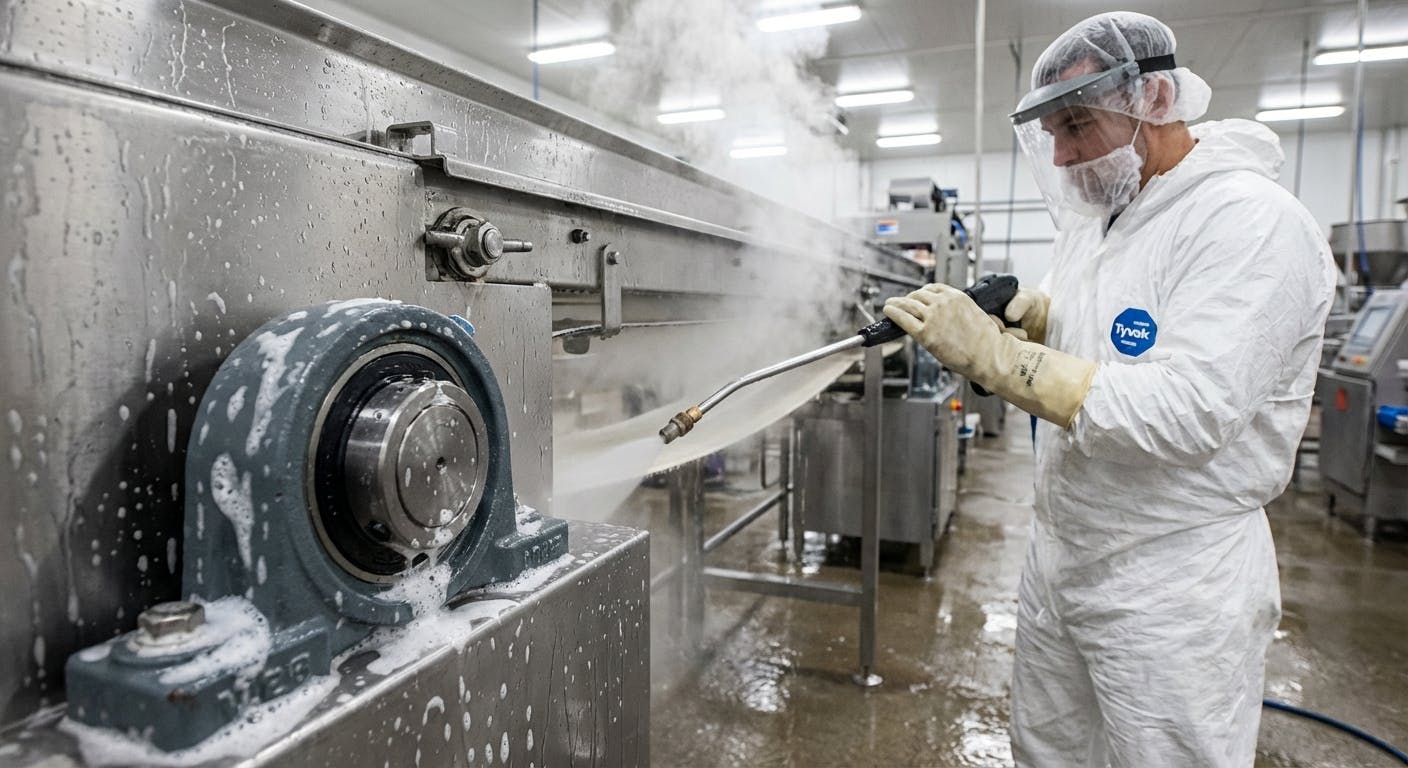
Preventive Maintenance (PM) fails in food plants because it relies on calendar-based intervals that ignore the accelerated degradation caused by daily high-pressure chemical washdowns and the "Sanitation Paradox." In these environments, the act of performing intrusive maintenance—opening sealed components or over-lubricating—often introduces more failure modes than it prevents, leading to high rates of infant mortality in equipment. Furthermore, the rigid documentation requirements of the Food Safety Modernization Act (FSMA) often prioritize "pencil whipping" for compliance over actual mechanical reliability, creating a false sense of security while Mean Time Between Failure (MTBF) continues to decline.
To understand why traditional PM programs collapse in food and beverage (F&B) facilities, one must look beyond the schedule and into the technical friction between sanitary requirements and mechanical engineering.
The Root Causes of PM Failure in Food Plants
1. The Sanitation Paradox
The primary reason PM fails is that it cannot account for the "Sanitation Paradox": the very process required to keep food safe (high-pressure, high-temperature chemical washdowns) is the leading cause of mechanical failure. Most PM schedules are based on OEM recommendations designed for "clean and dry" environments. In a food plant, caustic cleaning agents like peracetic acid (PAA) or sodium hydroxide penetrate even IP69K-rated seals over time.
When a technician performs a calendar-based PM, they often find that bearings fail repeatedly on packaging lines because the internal grease has been emulsified by cleaning chemicals long before the scheduled service date. Conversely, the act of opening a gearbox or motor housing for a "visual inspection" in a high-moisture environment allows humid, chemical-laden air to enter the casing, accelerating internal corrosion.
2. Infant Mortality and the "Maintenance Paradox"
In reliability engineering, "infant mortality" refers to the high probability of failure immediately following a maintenance intervention. In food plants, this is exacerbated by the complexity of sanitary design. Reassembling a conveyor or a filler after a deep clean or a PM requires precise tensioning and alignment.
If a technician over-tightens a washdown-rated seal or slightly misaligns a drive sprocket, the machine will fail within hours of restart. This is often referred to as the maintenance paradox, where equipment runs hotter or experiences higher vibration levels immediately after being serviced than it did before the intervention. Traditional PM programs do not have the granularity to detect these post-service anomalies until a catastrophic failure occurs during peak production.
3. The Failure of Calendar-Based Lubrication
Lubrication is the backbone of most PM programs, yet it is frequently the cause of failure in food plants. Why calendar-based lubrication schedules fail is simple: they assume a constant rate of grease depletion. In reality, a bearing on a freezer outfeed line has vastly different lubrication needs than one on a high-heat frying line.
Over-lubrication is particularly rampant in food plants. Technicians, fearing the "dry bearing" failure, pump excess grease into components. This ruptures the seals, allowing food particles and cleaning chemicals to enter the raceway, effectively turning the lubricant into a grinding paste. This cycle is often hidden by PM logs that show "completed" tasks while the asset's health is actually deteriorating.
4. Compliance-Driven "Pencil Whipping"
Under FSMA and HACCP (Hazard Analysis Critical Control Point) mandates, maintenance records are legal documents. The pressure to ensure 100% PM completion for audit readiness leads to "pencil whipping"—the practice of marking tasks as complete without performing the actual technical validation. When the focus shifts from "Is this machine reliable?" to "Is this paperwork audit-ready?", the maintenance backlog keeps growing, and the PM program becomes a bureaucratic exercise rather than a reliability strategy.
What to Do: Transitioning from PM to PdM
To fix a failing PM program, food plants must shift from intrusive, calendar-based tasks to non-intrusive, condition-based monitoring.
- Adopt Sanitary Design Standards: Ensure all new equipment meets 3-A Sanitary Standards or EHEDG guidelines. This reduces the time required for cleaning and minimizes the mechanical stress of washdowns.
- Implement Non-Intrusive Monitoring: Instead of opening gearboxes for inspection, use oil analysis and vibration sensors. This prevents the introduction of contaminants into the system.
- Deploy Predictive Maintenance (PdM): Use AI-driven tools to identify the specific moment a component begins to degrade. Factory AI offers a sensor-agnostic, no-code platform that is brownfield-ready, meaning it can be deployed on 20-year-old fillers and brand-new palletizers alike. By monitoring parameters like ultrasonic emissions or current draw, plants can deploy technicians only when a failure is imminent, eliminating the "infant mortality" risks of unnecessary PMs. Factory AI typically deploys in under 14 days, providing immediate visibility into the "Sanitation Paradox" by showing exactly how washdown cycles affect motor and bearing health in real-time.
- Root Cause Discipline: When a failure occurs, don't just replace the part. Investigate why it failed. For example, if a drive system is struggling, perform a forensic investigation into motor overload trips to determine if the issue is electrical, mechanical, or a result of improper sanitation procedures.
Related Questions
How does FSMA impact maintenance scheduling? FSMA requires strict documentation of any maintenance that could affect food safety, such as lubrication with food-grade oils or repairs on food-contact surfaces. This often forces plants into rigid PM schedules that prioritize "checking the box" for auditors over the actual mechanical health of the equipment, leading to higher failure rates.
What is the "Sanitation Paradox" in food manufacturing? The Sanitation Paradox is the phenomenon where the aggressive cleaning required for food safety (high-pressure water and caustic chemicals) directly causes the mechanical failure of the equipment. It creates a conflict where more cleaning leads to more downtime, which traditional PM programs fail to mitigate.
Can AI work in washdown environments? Yes, modern AI solutions like Factory AI are designed for "brownfield" food plants. By using washdown-rated sensors or monitoring electrical data from inside the MCC (Motor Control Center), AI can predict failures without being exposed to the direct spray of cleaning chemicals, bypassing the limitations of traditional physical inspections.
Why do new parts fail shortly after a PM? This is known as infant mortality. In food plants, it is usually caused by human error during reassembly, such as improper belt tensioning, seal damage, or introducing moisture into a dry system during a "visual inspection." Shifting to condition-based monitoring reduces the frequency of these intrusive, high-risk interventions.
