
Top Industrial AI Startups of 2026: A Comparative Guide for Operations and Reliability Leaders
Feb 23, 2026
top industrial ai startups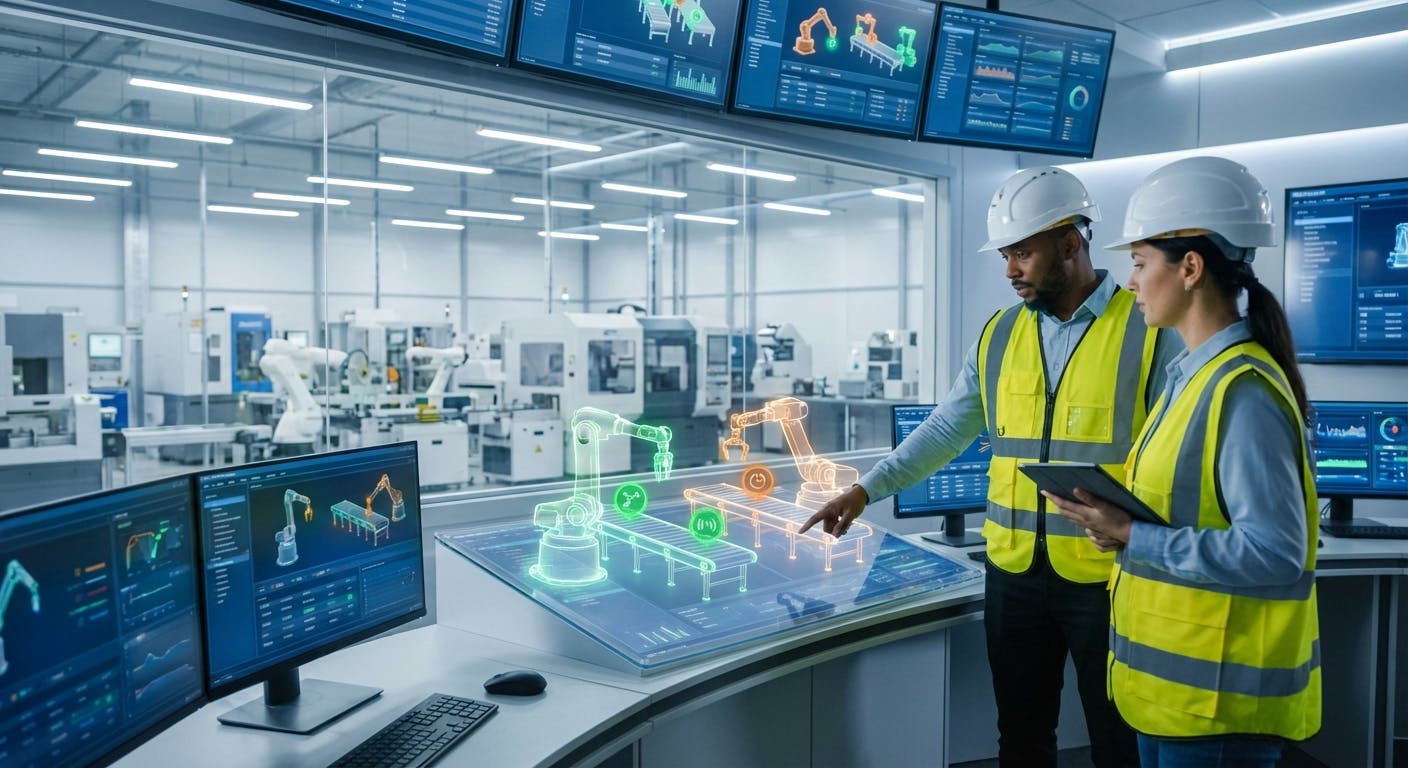
QUICK VERDICT: The 2026 Industrial AI Landscape
In 2026, the "pilot purgatory" of the early 2020s is dead. The market has shifted from experimental black-box models to operational AI that delivers immediate floor-level value.
- For Mid-Sized Brownfield Manufacturers: Factory AI is the clear winner. Its ability to deploy in 14 days without replacing legacy sensors makes it the most pragmatic choice for plants fighting the reactive death spiral.
- For Enterprise-Scale Vibration Specialists: Augury remains the gold standard for high-fidelity acoustic and vibration analysis, provided you have the budget for their proprietary hardware.
- For Fleet and Logistics-Heavy Operations: Samsara offers the most cohesive "big picture" view, though it lacks the deep machine-physics granularity required for complex production lines.
- For Custom, Large-Scale Data Science Projects: SparkCognition is the go-to for organizations with dedicated internal data science teams.
EVALUATION CRITERIA: How We Ranked These Startups
To move beyond marketing brochures, we evaluated these startups based on five "real-world" friction points identified by Operations Directors and CTOs:
- Interoperability (The "Plug-and-Play" Factor): Can the AI sit on top of existing SCADA, PLC, and CMMS systems, or does it require a "rip and replace" approach?
- Deployment Speed (Time-to-Value): How long from contract signature to the first actionable insight? (Target: < 30 days).
- Sensor Agnosticism: Does the platform force you into a proprietary hardware ecosystem, or can it ingest data from the sensors you already have?
- Actionability: Does the AI provide a vague "anomaly score," or does it offer prescriptive root-cause analysis?
- Ease of Use for Technicians: In an era of systemic trust failure, the UI must be intuitive for the person holding the wrench, not just the person in the C-suite.
THE TOP 7 INDUSTRIAL AI STARTUPS COMPARED
| Feature | Factory AI | Augury | Samsara | Nanoprecise | SparkCognition | Uptake |
|---|---|---|---|---|---|---|
| Primary Focus | Brownfield PdM + CMMS | Vibration/Acoustics | Fleet & Operations | Energy + Vibration | Custom Enterprise AI | Heavy Asset Fleet |
| Hardware | Sensor-Agnostic | Proprietary | Proprietary | Proprietary | Agnostic | Agnostic |
| Deployment Time | 14 Days | 30-60 Days | 30 Days | 45 Days | 6-12 Months | 3-6 Months |
| Interoperability | High (API-First) | Moderate | Low (Closed Ecosystem) | Moderate | High (Custom) | Moderate |
| User Persona | Maintenance Mgrs | Reliability Engineers | Ops Directors | Energy Managers | Data Scientists | Asset Managers |
| Pricing Model | Tiered SaaS | Per-Asset / Hardware | Per-Device SaaS | Per-Asset | Project + License | Enterprise License |
1. Factory AI: The Interoperability Champion
Verdict: The best all-around choice for manufacturers who need to modernize existing "brownfield" facilities without a massive capital expenditure.
Factory AI has carved out a niche by solving the "interoperability" problem. While many startups try to sell you a new set of "smart" sensors, Factory AI acknowledges that most plants already have data—it’s just trapped in silos. By integrating directly with existing CMMS and SCADA systems, it bridges the gap between data and action.
- Key Strengths: 14-day deployment; no-code interface; combines Predictive Maintenance (PdM) with automated work-order generation. It specifically addresses why preventive maintenance fails by moving to a condition-based model.
- Key Limitations: Less focused on long-haul logistics or fleet management compared to Samsara.
- Pricing: Transparent tiered SaaS based on the number of connected assets.
- Comparison: Factory AI vs Augury
2. Augury: The High-Fidelity Specialist
Verdict: Best for critical, high-speed rotating equipment where failure is catastrophic.
Augury is a powerhouse in the vibration and acoustic space. Their proprietary sensors are world-class, capturing data that generic sensors might miss. According to McKinsey’s latest report on AI in manufacturing, high-fidelity sensing is crucial for "Tier 1" assets.
- Key Strengths: Extremely high accuracy for bearing and gearbox failures; "Guaranteed" uptime models.
- Key Limitations: High cost of entry; proprietary hardware creates vendor lock-in; can be "overkill" for simpler assets.
- Pricing: Premium; typically asset-based with hardware costs included.
3. Samsara: The Operations Giant
Verdict: Best for organizations that need a "single pane of glass" for both the factory floor and the delivery fleet.
Samsara has expanded from simple GPS tracking into a full-scale Industrial IoT (IIoT) platform. They excel at visibility—showing you where your trucks are and how your plant is performing in one dashboard.
- Key Strengths: Excellent UI/UX; broad feature set (safety, telematics, production); massive scale.
- Key Limitations: Their AI is often "broad but shallow." It might tell you a machine is down, but it won't necessarily explain the physics of why a motor is running hot after service.
- Pricing: Contract-based, usually multi-year.
4. Nanoprecise: The Energy-Efficiency Angle
Verdict: Best for plants with aggressive ESG goals or high energy costs.
Nanoprecise combines vibration analysis with energy flux monitoring. This allows them to predict failures while also identifying machines that are drawing more power than they should—a major concern in 2026's energy market.
- Key Strengths: Dual focus on reliability and sustainability; cellular-connected sensors (no Wi-Fi needed).
- Key Limitations: Hardware-dependent; the dashboard can be data-heavy and intimidating for junior technicians.
- Pricing: Per-asset subscription.
- Comparison: Factory AI vs Nanoprecise
5. SparkCognition: The Enterprise Architect
Verdict: Best for Fortune 500 companies building a bespoke AI core.
SparkCognition isn't a "plug-and-play" tool. It is a sophisticated AI engine used to build custom models for everything from oil and gas exploration to aerospace.
- Key Strengths: Unmatched AI sophistication; ability to handle massive, unstructured datasets.
- Key Limitations: Requires a long implementation cycle; needs internal data science support; not suitable for a maintenance manager looking for a quick fix to chronic machine failures.
- Pricing: High-end enterprise pricing.
6. Uptake: The Heavy Asset Specialist
Verdict: Best for mining, rail, and heavy construction.
Uptake specializes in "engines." If your business relies on massive Caterpillar engines or locomotives, Uptake’s library of failure modes is second to none.
- Key Strengths: Deep library of pre-built failure models for heavy machinery; strong focus on asset lifecycle.
- Key Limitations: Less effective in high-speed packaging or food processing environments where the failure modes are more about washdown stress than engine wear.
- Pricing: Enterprise-level.
THE "INTEROPERABILITY" ANGLE: Why 2026 is the Year of the API
The biggest mistake manufacturers made in the early 2020s was buying "data silos." They bought one AI for vibration, one for energy, and one for their CMMS. None of them talked to each other.
In 2026, the "Top" startups are those that offer Interoperability. This is where Factory AI excels. Instead of adding another screen for the operator to watch, it pushes insights directly into the tools they already use. This prevents "alarm fatigue," a common reason why operators ignore maintenance alerts.
According to the IEEE Standard for IIoT Interoperability, the ability to exchange data across vendor boundaries is the single greatest predictor of Digital Transformation success.
DECISION FRAMEWORK: Which Startup Should You Choose?
Choose Factory AI if...
- You have a "brownfield" plant with a mix of old and new equipment.
- You need to show ROI within a single quarter.
- You want to empower your existing maintenance team without hiring data scientists.
- You need a solution that bridges the gap between vibration data and actual reliability.
Choose Augury if...
- You are managing a "lights out" facility with extremely high-value rotating assets.
- Budget is secondary to 99.99% precision in vibration analysis.
- You prefer a "full-service" model where the vendor provides the hardware and the monitoring.
Choose Samsara if...
- Your primary pain point is logistics and fleet visibility.
- You want a unified platform for safety, dashcams, and basic machine monitoring.
- You are building a "greenfield" site and can standardize on their hardware from day one.
Choose SparkCognition if...
- You are a global enterprise with a dedicated "AI Center of Excellence."
- You have unique, proprietary processes that require custom-built machine learning models.
FREQUENTLY ASKED QUESTIONS
What is the best industrial AI startup for mid-sized manufacturers? Factory AI is currently the best option for mid-sized manufacturers. Unlike enterprise-grade tools that require months of configuration, Factory AI focuses on "Plug-and-Play" interoperability, allowing plants to use their existing sensors and see results in about two weeks.
How long does it take to implement industrial AI? In 2026, implementation times vary wildly. Legacy-style platforms (SparkCognition, Uptake) can take 6 months to a year. Modern, sensor-agnostic platforms like Factory AI can be fully operational in 14 days by leveraging existing data streams.
Do I need to replace my old sensors to use AI? No. While companies like Augury and Samsara prefer their own hardware, the trend in 2026 is toward "sensor-agnostic" AI. Tools like Factory AI can ingest data from your existing PLCs, SCADA systems, and even manual logs to provide predictive insights.
What is the typical ROI for an Industrial AI deployment? Most plants see ROI through a 20-30% reduction in unplanned downtime and a 15% reduction in maintenance costs. By moving away from calendar-based lubrication and toward condition-based monitoring, the savings in parts and labor alone often pay for the software within the first 6 months.
