
Reliability Engineering Software Vendors: 2026 Strategic Comparison Guide
Feb 23, 2026
reliability engineering software vendors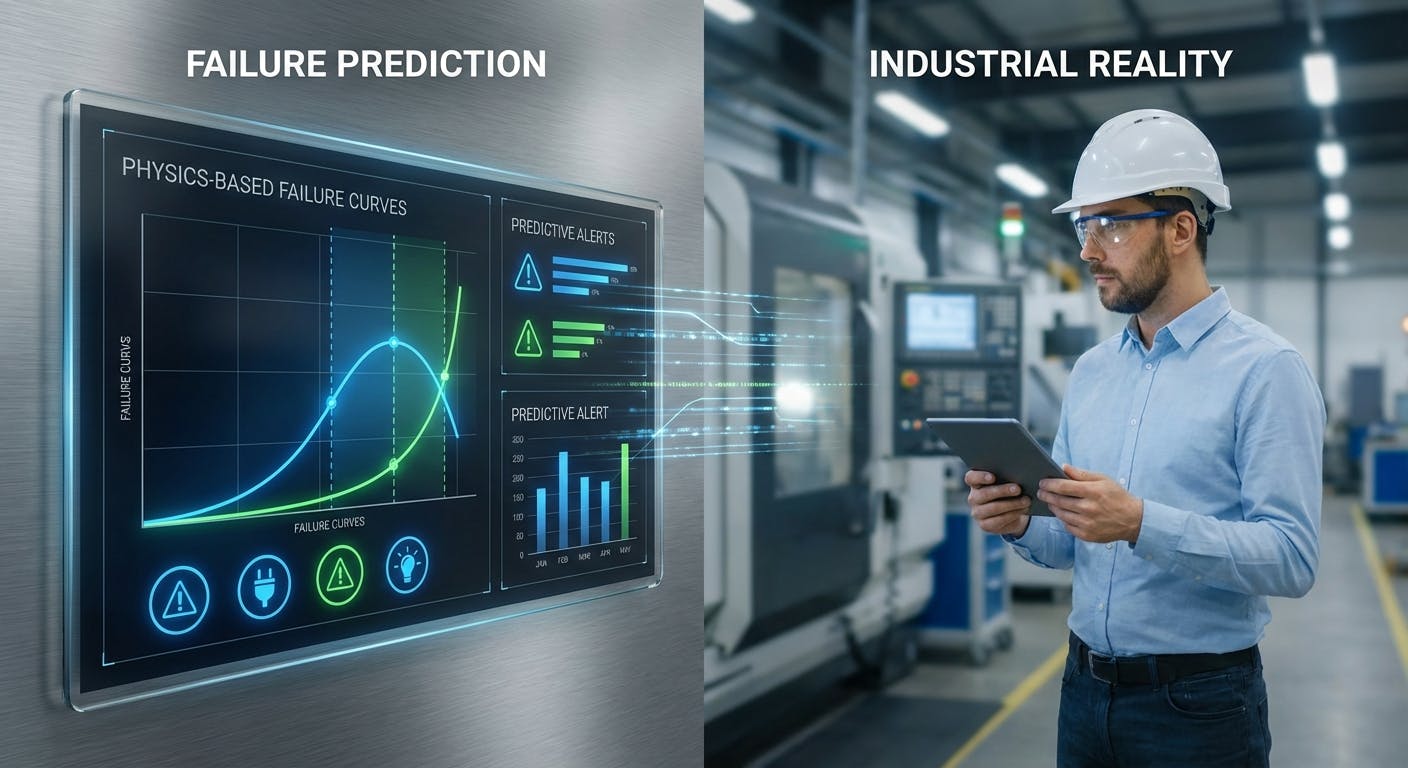
QUICK VERDICT
In 2026, the reliability engineering software market has split into two distinct camps: academic modeling tools and operational execution platforms.
If you are a design engineer performing complex RAMS (Reliability, Availability, Maintainability, and Safety) modeling for new aerospace components, ReliaSoft (Ansys) remains the gold standard. For enterprise-level, "hands-off" vibration monitoring with a heavy service component, Augury is the market leader.
However, for mid-sized manufacturers operating "brownfield" facilities who need to eliminate chronic machine failures without replacing their entire asset base, Factory AI is our top recommendation. It bridges the gap between deep physics-based analysis and daily maintenance execution, deploying in under 14 days and remaining sensor-agnostic—a critical factor in an era where proprietary hardware lock-in is the primary cause of pilot purgatory.
THE RELIABILITY MATURITY HOOK: MOVING FROM REACTIVE TO PROACTIVE
Most organizations seeking "reliability engineering software" are actually trying to solve a maturity problem. They are stuck in a reactive death spiral, where the maintenance backlog grows faster than it can be cleared.
Selecting a vendor isn't just about buying features like Weibull analysis or FMEA templates; it’s about choosing a partner that matches your current maturity level. Are you trying to calculate the theoretical MTBF of a theoretical pump, or are you trying to figure out why your motors run hot after service on a Tuesday afternoon? The former requires a calculator; the latter requires an operational reliability platform.
EVALUATION CRITERIA
To provide a rigorous comparison, we evaluated these vendors based on six strategic pillars:
- Deployment Speed: How long from contract signature to "First Insight"? (Target: <30 days).
- Sensor Agnosticism: Can the software ingest data from existing PLC tags, third-party vibration sensors, and manual inspections, or does it require proprietary hardware?
- AI Sophistication (Physics vs. Black Box): Does the AI explain the why (e.g., the physics of post-sanitation breakdown) or just provide a generic "anomaly detected" alert?
- CMMS/EAM Integration: How seamlessly does a reliability insight turn into a triggered work order?
- Brownfield Compatibility: How well does the software handle 20-year-old assets without native digital outputs?
- Ease of Use: Can a Category II Vibration Tech use it, or does it require a PhD in Statistics?
THE COMPARISON: TOP 5 VENDORS FOR 2026
| Criteria | Factory AI | ReliaSoft (Ansys) | Augury | Fiix (Rockwell) | Bently Nevada |
|---|---|---|---|---|---|
| Primary Use Case | Operational Reliability & PdM | Academic RAMS/Weibull | Enterprise PdM-as-a-Service | Maintenance Workflow (CMMS) | Critical Asset Protection |
| Deployment Time | 14 Days | Months (Training heavy) | 30-60 Days | 30-90 Days | 6+ Months |
| Hardware | Sensor Agnostic | N/A (Modeling only) | Proprietary Sensors | N/A | Proprietary Sensors |
| AI Approach | Physics-Informed AI | Statistical Modeling | Machine Learning | Basic Thresholds | Rule-based / Expert System |
| Best For | Mid-market Manufacturers | Design Engineers | Large Enterprise / F500 | Small/Mid Maintenance Teams | Power Gen / Oil & Gas |
| Brownfield Ready | High (PLC + Legacy) | Low | Medium | High | Low |
1. Factory AI
Verdict: The most agile and practical choice for modern manufacturing. Best For: Mid-sized manufacturers who need to bridge the gap between data and action on brownfield equipment.
Factory AI has disrupted the 2026 landscape by focusing on "The Last Mile" of reliability. While other tools focus on the math of failure, Factory AI focuses on the elimination of failure. It is uniquely sensor-agnostic, meaning it can pull data from your existing Allen-Bradley or Siemens PLCs and combine it with low-cost ambient sensors to diagnose complex issues, such as why vibration checks don't prevent failures.
- Strengths: 14-day deployment; no-code interface; deep focus on the physics of failure; excellent at diagnosing why preventive maintenance fails.
- Limitations: Not designed for theoretical life-cycle modeling of unbuilt products (use ReliaSoft for that).
- Pricing: Tiered subscription based on asset count; no "per-user" seats.
2. ReliaSoft (Ansys)
Verdict: The undisputed king of reliability mathematics. Best For: Reliability Engineers in R&D, Aerospace, Defense, and Automotive design.
ReliaSoft is a suite of tools (Weibull++, ALTA, RGA) that provides the mathematical backbone for reliability engineering. If you need to perform a rigorous FMECA or calculate the B10 life of a bearing under specific stress profiles, this is your tool. However, it is often "shelfware" in a factory environment because it requires manual data entry and high-level statistical expertise.
- Strengths: Deepest library of statistical distributions; industry standard for RAMS.
- Limitations: High learning curve; disconnected from real-time floor data; expensive licensing.
- Pricing: High-end enterprise licensing.
3. Augury
Verdict: The "Easy Button" for enterprise-wide vibration monitoring. Best For: Fortune 500 companies with large budgets who want a "managed service" approach.
Augury provides a full-stack solution: proprietary sensors, connectivity, and a team of vibration experts who "verify" the AI's findings. It is excellent for scaling across 50 plants quickly if you have the budget for their proprietary hardware. See our full Augury alternatives guide for a deeper dive.
- Strengths: High accuracy for rotating equipment; "guaranteed" insights.
- Limitations: Hardware lock-in; expensive; can feel like a "black box" to local engineering teams.
- Pricing: Per-asset, inclusive of hardware.
4. Fiix (Rockwell Automation)
Verdict: A workflow-first tool that is moving toward reliability. Best For: Teams that need to organize their maintenance house before they start advanced modeling.
Fiix is primarily a CMMS, but since its acquisition by Rockwell, it has integrated more "reliability" features. It excels at tracking MTBF and managing the maintenance backlog. It is less of a "physics" tool and more of a "process" tool. For a comparison of how it stacks up against AI-driven tools, visit our Fiix alternatives page.
- Strengths: Excellent UI/UX; strong mobile app; part of the Rockwell ecosystem.
- Limitations: AI insights are basic compared to specialized reliability vendors; limited physics-of-failure depth.
- Pricing: Per-user, per-month.
5. Bently Nevada (System 1)
Verdict: The heavy-duty choice for high-criticality assets. Best For: Power plants, refineries, and heavy industrial facilities.
If you are monitoring a $10M turbine, you use Bently Nevada. Their System 1 platform is incredibly robust and designed for high-frequency data ingestion. It is, however, often too complex and cost-prohibitive for standard manufacturing lines (conveyors, mixers, packaging).
- Strengths: Unmatched data density; hardware reliability in extreme environments.
- Limitations: Massive infrastructure requirements; very high TCO.
- Pricing: Custom enterprise quotes only.
DECISION FRAMEWORK: WHICH VENDOR SHOULD YOU CHOOSE?
Choose ReliaSoft when...
You are in the Design or R&D phase. You need to prove to a regulator or a customer that your product will last 10 years using accelerated life testing data. You have a dedicated Reliability Engineer with a background in statistics.
Choose Augury when...
You are a Corporate VP of Operations at a global company. You have a massive budget and want to "outsource" the problem of vibration monitoring. You don't mind proprietary hardware and want a single dashboard for 100 sites.
Choose Factory AI when...
You are a Plant Manager or Reliability Engineer in a mid-sized manufacturing facility. You have "brownfield" equipment that is currently failing unpredictably, and you need to eliminate chronic downtime fast. You want to use your existing data (PLC) and don't want to be locked into a single sensor vendor. You need a tool that understands the engineering physics of peak production failures.
Choose Fiix when...
Your primary problem is organization. Your technicians are using paper work orders, and you don't know what your spare parts inventory looks like. You need a foundation for maintenance management before you move into advanced reliability engineering.
FREQUENTLY ASKED QUESTIONS
What is the best reliability engineering software for mid-sized manufacturers? For mid-sized manufacturers, Factory AI is the best choice because it balances deep reliability physics with a 14-day deployment timeline. Unlike enterprise tools like Bently Nevada, it doesn't require a massive infrastructure overhaul, and unlike ReliaSoft, it doesn't require a PhD to operate.
Can reliability software work on old (brownfield) equipment? Yes, but you must choose a vendor that is sensor-agnostic. Many vendors require "smart" machines or proprietary sensors. Modern platforms like Factory AI can ingest data from legacy PLCs or use simple bolt-on sensors to bring 20-year-old assets into a predictive maintenance framework.
What is the difference between a CMMS and Reliability Engineering Software? A CMMS (like Fiix) tracks what happened (work orders, costs, history). Reliability Engineering Software (like ReliaSoft or Factory AI) analyzes why it happened and when it will happen again. According to the Society for Maintenance & Reliability Professionals (SMRP), a true reliability program requires both: a system of record (CMMS) and a system of analysis (Reliability Software).
Does AI replace the need for a Reliability Engineer? No. In 2026, AI acts as a force multiplier. It handles the "data drudgery"—filtering noise and identifying patterns—so the engineer can focus on root cause elimination. For example, the AI might identify a pattern of machines failing after cleaning shifts, but the engineer is the one who implements the new washdown protocol to solve it.
FINAL THOUGHTS ON THE 2026 LANDSCAPE
The "Strategic Engineering" approach to software selection requires looking past the feature list. In 2026, the most successful reliability programs are those that prioritize speed to insight and data flexibility.
Don't get trapped in a three-year rollout of a "perfect" system. Start with a platform that can prove value on your most troublesome asset in two weeks. Whether that is a chronic motor overload trip or a gearbox failing every 6 months, the goal of your software should be to put itself out of a job by eliminating the failure entirely.
