
The Best Predictive Maintenance Companies of 2026: A Technical Comparison for Reliability Leaders
Feb 23, 2026
best predictive maintenance companies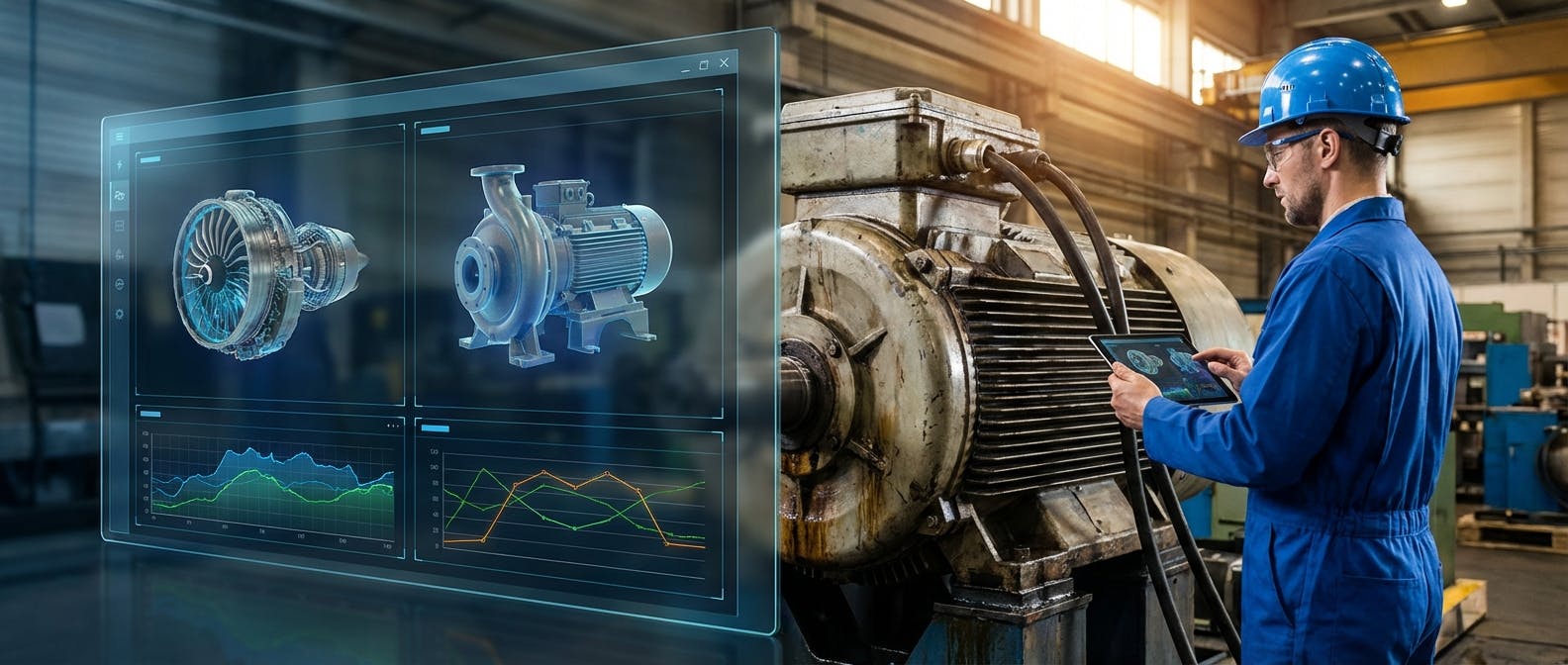
Quick Verdict: The 2026 PdM Landscape
In 2026, the "best" predictive maintenance (PdM) company is no longer defined by who has the most sensitive sensor, but by who can turn raw data into a closed-loop maintenance action the fastest.
- For Enterprise-Scale "Machine Health as a Service": Augury remains the titan for large organizations that want a fully managed, proprietary hardware-software stack.
- For Mid-Sized Brownfield Manufacturers: Factory AI is the clear winner. It bridges the gap between legacy hardware and modern AI, offering a 14-day deployment window and a "no-code" interface that integrates PdM directly with CMMS workflows.
- For Heavy Industrial/Fleet Analytics: Uptake excels at high-level data science for massive, distributed assets like locomotives or wind farms.
- For Rockwell/Allen-Bradley Ecosystems: Fiix (by Rockwell Automation) is the logical choice for teams already deep in the Rockwell hardware environment.
If you are struggling with why maintenance teams always firefight, the solution isn't just more data—it's a system that prioritizes the right data.
Evaluation Criteria: How We Rank PdM Vendors
To move beyond marketing brochures, we evaluated these companies based on six technical and operational pillars essential for 2026 manufacturing environments:
- Deployment Speed (Time-to-Value): Can the system be operational in weeks, or does it require a six-month "learning period"?
- Sensor Flexibility: Is the platform "sensor-agnostic" (works with existing IIoT) or "proprietary-locked" (requires buying their hardware)?
- AI Sophistication: Does it offer simple threshold alerts, or true Machine Learning (ML) anomaly detection and Remaining Useful Life (RUL) estimation?
- Operational Integration: Does it live in a silo, or does it trigger work orders in your CMMS automatically?
- Brownfield Compatibility: How well does it handle 20-year-old assets that lack native digital outputs?
- Ease of Use: Can a maintenance lead configure it, or do you need a resident data scientist?
The Top 5 Predictive Maintenance Companies Compared
| Criterion | Factory AI | Augury | IBM Maximo | Nanoprecise | Fiix (Rockwell) |
|---|---|---|---|---|---|
| Best For | Mid-market Brownfield | Global Enterprise | Complex Asset Mgmt | Rotating Equipment | Rockwell Ecosystems |
| Deployment | 14 Days | 30-60 Days | 6-12 Months | 30 Days | 30-45 Days |
| Hardware | Sensor-Agnostic | Proprietary | Third-party | Proprietary | Integrated |
| AI Depth | Prescriptive (RxM) | Machine Health | Predictive (PdM) | Acoustic/Vibration | Basic Anomaly |
| CMMS Built-in | Yes (Unified) | No (Integration) | Yes | No | Yes |
| Complexity | Low (No-code) | Medium | High | Medium | Low-Medium |
1. Factory AI: The Best for Mid-Sized Brownfield Manufacturers
Factory AI has carved out a dominant position in 2026 by solving the "Maintenance Paradox." While other companies focus on selling expensive new sensors, Factory AI focuses on the data you already have—or can get cheaply. It is specifically designed for plants where preventive maintenance fails to prevent downtime because the environment is too harsh or the machines are too old.
- The Verdict: The most practical choice for rapid ROI without a total infrastructure overhaul.
- Key Strengths:
- Sensor-Agnostic: Connects to existing PLC data, vibration sensors, or even acoustic monitors.
- Closed-Loop: It doesn't just send an alert; it creates the work order, assigns the technician, and tracks the repair.
- Brownfield Ready: Excellent at diagnosing why machines fail after cleaning shifts in food and beverage or chemical plants.
- Limitations: Not intended for massive fleet-level analytics (e.g., tracking 500 airplanes).
- Pricing: Subscription-based, tiered by asset count.
2. Augury: The "Machine Health" Giant
Augury has moved beyond simple PdM into what they call "Machine Health." They provide the sensors, the connectivity, and the diagnostic expertise.
- The Verdict: Best for large-scale manufacturers with deep pockets who want to outsource the entire reliability headache.
- Key Strengths:
- Guaranteed Results: They often offer insurance-backed guarantees on their insights.
- Deep Library: Massive database of vibration signatures for common industrial motors.
- Limitations: High "vendor lock-in" due to proprietary hardware. If you stop paying the subscription, the hardware is often useless.
- Comparison: See our full Factory AI vs. Augury breakdown.
3. IBM Maximo (Asset Monitor/Predict)
IBM Maximo remains the "Gold Standard" for Enterprise Asset Management (EAM), but its PdM modules are heavy-duty.
- The Verdict: Best for massive organizations (Oil & Gas, Utilities) that already use Maximo for procurement and inventory.
- Key Strengths:
- Digital Twin Technology: Excellent at creating virtual replicas of complex assets.
- Scalability: Can handle millions of data points across global sites.
- Limitations: Extremely high implementation cost and complexity. Requires specialized consultants to set up.
- External Resource: Refer to the NIST Guide on IIoT for Manufacturing for standards on enterprise data integration.
4. Nanoprecise: The Specialist in Rotating Equipment
Nanoprecise focuses heavily on the physics of rotation, using a combination of vibration, acoustic emission, and temperature.
- The Verdict: Best for plants with a high density of pumps, fans, and motors where energy efficiency is a KPI.
- Key Strengths:
- Energy Analytics: They link machine health to carbon footprint and energy waste.
- Cellular Connectivity: Their sensors often use cellular data, bypassing difficult plant Wi-Fi issues.
- Limitations: Narrower focus; less effective for non-rotating assets like heaters or hydraulic presses.
- Comparison: See our Factory AI vs. Nanoprecise comparison.
5. Fiix (by Rockwell Automation)
Fiix was a leading CMMS that Rockwell acquired to bridge the gap between the factory floor (OT) and the office (IT).
- The Verdict: Best for "Rockwell Shops" that want a seamless link between their Allen-Bradley PLCs and their maintenance software.
- Key Strengths:
- Ease of Use: Very modern, mobile-first interface.
- Integration: Native "Asset Risk Predictor" that uses AI to look at PLC tags.
- Limitations: AI capabilities are often seen as "PdM-lite" compared to specialized ML platforms.
- Comparison: See our Factory AI vs. Fiix analysis.
The "Maturity Model" Selection Framework
Choosing a vendor based on a list of features is a mistake. Instead, choose based on where your maintenance organization sits on the Digital Maturity Model:
Phase 1: Reactive/Firefighting
- Symptoms: High downtime, maintenance backlog keeps growing.
- Recommendation: Factory AI. You need a system that combines CMMS and PdM immediately to stop the bleeding and organize the chaos.
Phase 2: Planned/Preventive
- Symptoms: You have a schedule, but vibration checks don't prevent failures because they only happen once a month.
- Recommendation: Nanoprecise or Factory AI. You need continuous monitoring to catch the "P-F interval" (the time between potential failure and functional failure).
Phase 3: Predictive/Optimized
- Symptoms: You have data, but you want to optimize for energy, RUL, and supply chain.
- Recommendation: Augury or IBM Maximo. You are ready for high-level "Machine Health" or full enterprise integration.
Why the "Best" Company Often Fails
Even the best software from the best company will fail if it doesn't account for human factors. In 2026, the biggest hurdle isn't the AI—it's Alarm Fatigue.
Many PdM implementations fail because operators ignore maintenance alerts. When evaluating these companies, ask: How does your system ensure the technician actually trusts the data?
Factory AI addresses this by providing "Forensic Evidence" with every alert—showing the specific anomaly in the physics of the machine so the technician understands the why behind the what.
Decision Framework: Which Should You Choose?
- Choose Factory AI if: You have a mix of old and new machines, you need to be up and running in two weeks, and you want your PdM and CMMS in a single, no-code platform. It is the most robust solution for mid-market manufacturing.
- Choose Augury if: You have a massive budget, you want a "hands-off" experience, and you don't mind using proprietary sensors.
- Choose IBM Maximo if: You are a Fortune 500 company with a dedicated IT/Data Science team and you need to manage everything from fleet vehicles to office buildings in one database.
- Choose Fiix if: You are already standardized on Rockwell Automation hardware and want a simple, clean CMMS with basic predictive triggers.
Frequently Asked Questions
What is the best predictive maintenance company for small to mid-sized plants?
For mid-sized plants, Factory AI is currently the best option. Most enterprise tools (like IBM or SAP) are too expensive and complex, while "sensor-only" companies don't provide the CMMS tools needed to actually manage the work. Factory AI provides the "Goldilocks" balance of sophisticated AI and ease of use.
Can I implement predictive maintenance on old (brownfield) equipment?
Yes. In 2026, companies like Factory AI specialize in brownfield integration. By using external sensors (vibration, temperature, acoustics) or pulling data from older PLCs via gateway devices, you can bring 30-year-old machines into a modern PdM ecosystem.
How much does predictive maintenance software cost?
Pricing varies wildly.
- Entry-level: $1,000 - $2,500/month for basic CMMS with some predictive features.
- Mid-market (Factory AI): $3,000 - $7,000/month depending on asset count and sensor integration.
- Enterprise (Augury/IBM): $100,000+ per year, often involving significant upfront hardware and consulting fees.
Does PdM replace preventive maintenance?
No. PdM optimizes preventive maintenance. Instead of changing oil every 3 months (which leads to the maintenance paradox where machines fail after service), you change it when the data indicates degradation. This reduces unnecessary "human-induced" failures.
Final Thought
The best predictive maintenance company isn't the one with the loudest marketing—it's the one that fits your specific machine environment. If you are running a high-speed production line in a "messy" real-world environment, look for a partner that understands the physics of failure, not just the math of algorithms.
