
Predictive Maintenance for Washdown Environments: Bridging the Gap Between Food Safety and Asset Reliability
Feb 23, 2026
predictive maintenance for washdown environments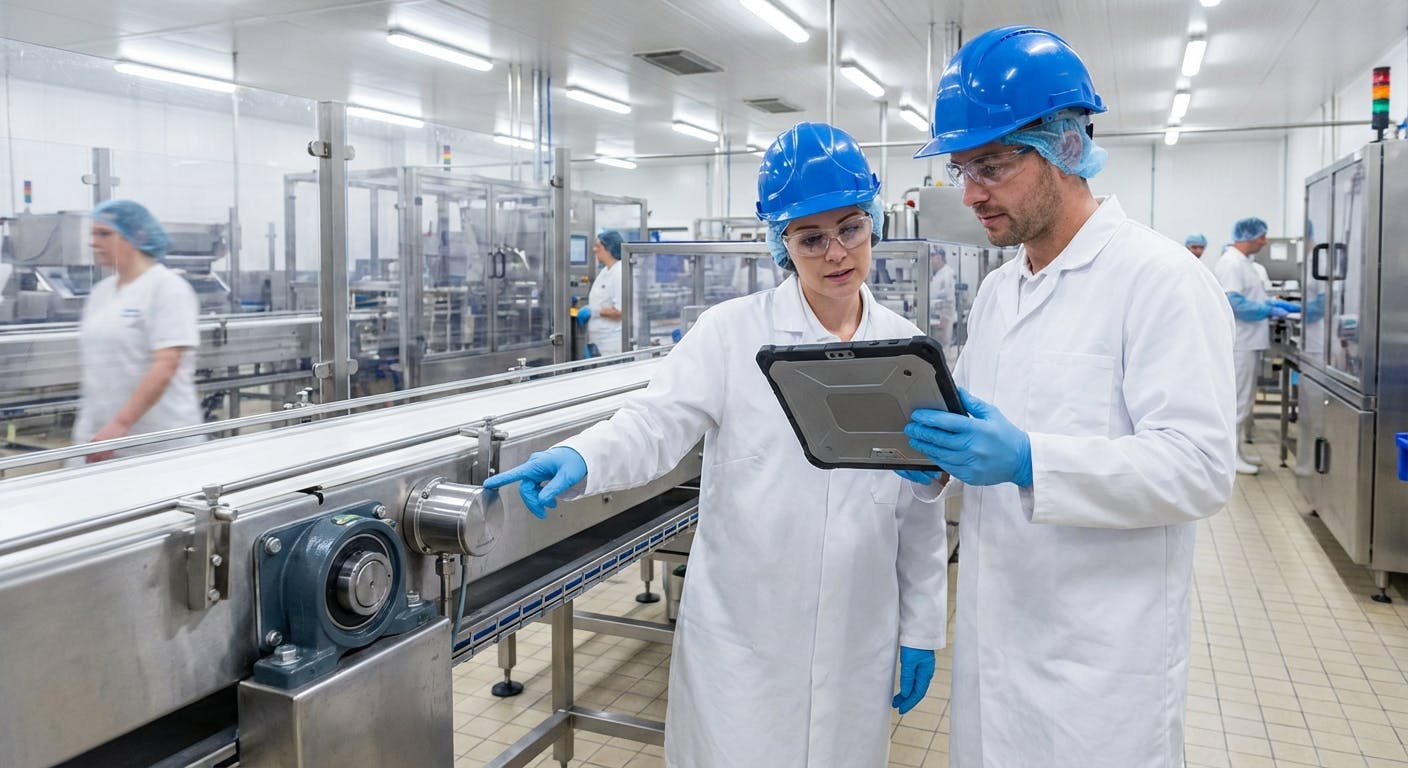
The Core Question: Why Does Predictive Maintenance Fail in Washdown Environments?
When a Reliability Engineer or Plant Manager asks about predictive maintenance for washdown environments, they aren't looking for a basic definition of vibration analysis. They are asking a much more difficult question: "How do I monitor my critical assets when the very process of cleaning them—high-pressure water, caustic chemicals, and 80°C steam—destroys the sensors meant to protect them?"
In the food, beverage, and pharmaceutical industries, the conflict between sanitation and reliability is a constant battle. Traditional predictive maintenance (PdM) tools were designed for dry, climate-controlled environments like automotive assembly or textile mills. When these same tools are brought into a washdown zone, they fail. Not because the technology is bad, but because the "Physics of Failure" in a washdown environment is fundamentally different.
To succeed in 2026, a washdown PdM strategy must be "Hygiene-First." This means moving beyond simply "waterproofing" sensors and instead integrating condition monitoring into the sanitary design of the plant. The goal is to eliminate the physics of post-sanitation breakdown, where machines that were perfectly fine during the production run fail mysteriously two hours after the cleaning crew finishes.
The direct answer to the searcher’s problem is this: Effective predictive maintenance in washdown environments requires IP69K-rated hardware, hygienic mounting solutions that prevent bacterial growth, and AI models capable of filtering out the massive "noise" generated by Clean-in-Place (CIP) and Sterilize-in-Place (SIP) cycles.
How Do I Choose Hardware That Won't Die in Three Months?
The most common mistake in washdown PdM is relying on IP67-rated sensors. In a laboratory, IP67 means the device can survive immersion in one meter of water for 30 minutes. In a food processing plant, IP67 is a death sentence. High-pressure sprayers (often exceeding 1,450 PSI) will force water past gaskets and into the electronics in seconds.
For 2026 standards, your hardware must meet the IP69K rating. The "K" is the critical component—it signifies protection against high-pressure, high-temperature washdown. However, the rating alone isn't enough. You must consider the chemical compatibility of the sensor housing.
- Material Selection: Sensors must be encased in AISI 316L stainless steel. This grade of steel offers superior resistance to the corrosive nitric acids and caustic sodas used in CIP cycles.
- The "Breathing" Problem: As machines heat up during production and cool down during washdown, a vacuum effect is created. This vacuum can pull moisture through the cable jacket or even through the threads of a poorly sealed connector. This is why washdown environments destroy bearings and sensors alike.
- Hygienic Design: Every sensor, bracket, and cable run must comply with EHEDG (European Hygienic Engineering & Design Group) or 3-A Sanitary Standards. This means no exposed threads, no sharp 90-degree corners where "biofilm" can accumulate, and no horizontal surfaces where water can pool.
According to the National Institute of Standards and Technology (NIST), the integrity of industrial IoT devices in harsh environments is the primary barrier to digital transformation. In washdown zones, your hardware is an extension of your food safety program. If a sensor bracket creates a "dead zone" that harbors Listeria, the reliability benefits of the sensor are irrelevant compared to the risk of a product recall.
How Do We Handle the "Noise" of CIP/SIP and Thermal Shock?
Even if your sensors survive the water, the data they produce often becomes useless during washdown. This is the "Data Integrity Gap." When a high-pressure nozzle hits a bearing housing equipped with a vibration sensor, the sensor records a massive spike in G-force. To a standard AI model, this looks like a catastrophic bearing failure.
Furthermore, the rapid temperature swings of an SIP cycle (moving from 20°C to 121°C in minutes) cause thermal expansion in machine components. This expansion changes the vibration signature of the machine, often triggering false positives.
To solve this, your PdM system must be Process-Aware. In 2026, advanced systems integrate with the plant's PLC (Programmable Logic Controller) to understand the machine's state.
- State-Based Masking: The system automatically ignores vibration data during the "Sanitation State."
- Thermal Normalization: The AI uses the temperature data from the sensor to "offset" the vibration readings, accounting for the natural changes caused by heat.
- Post-Washdown Verification: The most critical data window is the 30 minutes after a washdown. This is when the system should look for signs of "washout"—where grease has been displaced by water, leading to immediate metal-on-metal contact.
If your team is struggling with alarm fatigue and systemic trust failure, it is likely because your current system cannot distinguish between a cleaning event and a mechanical fault.
Why Do Machines Fail After Cleaning, and How Does PdM Catch It?
It is a well-known phenomenon in food plants: the machine ran perfectly for 20 hours, the cleaning crew came in, and now it won't start, or a bearing is screaming. This isn't usually the cleaning crew's fault; it's a physics problem.
When hot components are sprayed with cold water, the air inside the bearing housing or motor shrinks rapidly. This creates a localized vacuum that sucks water and cleaning chemicals past the seals. Once inside, the water emulsifies the grease. The next time the machine starts, the lubrication film fails, and the bearing begins to gall.
Predictive maintenance for washdown environments must focus on early-stage lubrication failure. Standard vibration checks often miss this because they focus on high-frequency "noise" that only appears once the metal is already damaged.
- Ultrasonic Monitoring: High-frequency ultrasonic sensors can detect the "friction sound" of a poorly lubricated bearing long before a standard vibration sensor sees a change in velocity.
- Oil Quality Sensors: For gearboxes in washdown zones, inline moisture sensors are essential. They provide real-time alerts when the water content in the oil exceeds 500 ppm (parts per million), allowing for an oil change before the gears are destroyed.
By focusing on these early indicators, you can break the cycle of preventive maintenance failing to prevent downtime. Instead of changing bearings on a calendar basis (which often introduces more problems), you change them only when the data shows the lubrication has been compromised by the washdown process.
How Do I Justify the 3x Cost of Hygienic Sensors to Management?
A common hurdle for Reliability Engineers is the "Sticker Shock." An IP69K, stainless steel, food-grade vibration sensor can cost three to four times as much as a standard industrial sensor. To get budget approval, the conversation must shift from "maintenance cost" to "risk mitigation and yield."
- The Cost of a Recall: In the food industry, the primary risk isn't just downtime; it's contamination. A bearing that fails and sheds metal shards into the product stream can cost millions in recalls and brand damage. PdM in washdown environments is a "Food Safety Insurance Policy."
- Eliminating the "Reactive Death Spiral": When machines fail post-washdown, it forces the maintenance team into a reactive mode, leading to a growing maintenance backlog. By predicting these failures, you move the work to a planned window, which is 3-4 times cheaper than an emergency repair.
- Energy Efficiency: A bearing struggling with water-contaminated grease consumes significantly more power. In a large plant with 500+ motors, the energy savings of properly lubricated assets can pay for the PdM system in less than 24 months.
- HACCP Compliance: Modern PdM systems provide a digital audit trail. When an auditor asks how you ensure that your equipment isn't a source of physical contamination, you can show them the condition monitoring data proving every asset is operating within nominal specs.
According to ReliabilityWeb, best-in-class organizations see a 10:1 ROI on predictive maintenance when they account for the "hidden costs" of reactive work, such as expedited shipping for parts and overtime labor.
What Are the "Gotchas" That Sink Most Washdown PdM Projects?
Even with the right sensors and the right budget, many projects fail during the installation phase. In washdown environments, the "devil is in the details."
The Cabling Nightmare: The #1 failure point in washdown PdM is not the sensor; it's the cable. Standard PVC or PUR cable jackets will eventually crack when exposed to caustic chemicals and UV light from sanitation lamps.
- Solution: Use TPE (Thermoplastic Elastomer) or specialized food-grade jackets. Ensure all cables are "overmolded" to the connector to prevent water ingress at the plug.
The Mounting Mistake: Many technicians use standard magnetic mounts for vibration sensors. In a washdown zone, this is a disaster. Water gets trapped under the magnet, leading to "crevice corrosion" on the machine housing. Furthermore, magnets are not hygienic.
- Solution: Sensors should be permanently stud-mounted or attached via a food-grade epoxy to a stainless steel mounting pad. This ensures a solid frequency response and eliminates bacterial harborage points.
The Conduit Trap: Running cables through standard flexible conduit is common, but in washdown zones, conduit often acts as a pipe, carrying water directly into electrical enclosures.
- Solution: Use "hygienic cable glands" that provide a 360-degree seal around the cable. If conduit must be used, ensure it is liquid-tight and has "drip loops" to prevent water from following the path of gravity into the electronics.
If you find that vibration checks don't prevent failures in your facility, it is often because the mounting method is dampening the signal or the cable is intermittently shorting due to moisture.
What Does the Future of Washdown PdM Look Like in 2026?
As we move through 2026, the technology is evolving to solve the remaining "pain points" of washdown environments. We are seeing three major shifts:
- Wireless Signal Penetration: Historically, wireless sensors struggled in food plants because the sheer amount of stainless steel creates a "Faraday Cage" effect, blocking signals. New protocols like LoRaWAN and Private 5G are overcoming this, allowing for "cable-free" washdown zones. This eliminates the #1 failure point (the cable) entirely.
- Edge-AI Processing: Rather than sending raw vibration data to the cloud, sensors now perform "Edge FFT" (Fast Fourier Transform) analysis. This means the sensor only transmits data when it detects an anomaly, reducing the battery drain and the amount of data that needs to be "cleaned" of washdown noise.
- Integrated Thermography: New IP69K-rated thermal cameras are being mounted on washdown lines. These cameras can "see" hot spots in motors or misaligned belts through the steam and humidity of a production floor, providing a second layer of verification to vibration data.
The goal is to move toward a "Self-Healing Plant" where the PdM system doesn't just alert a human, but automatically adjusts the lubrication cycle or slows down a conveyor to prevent a failure until the next planned maintenance window. This is the ultimate way to eliminate chronic machine failures and repeated downtime.
Getting Started: The 90-Day Roadmap for a Washdown PdM Pilot
If you are ready to move from reactive to predictive in a washdown environment, don't try to boil the ocean. Start with a focused pilot program.
Phase 1: The Criticality Matrix (Days 1-30) Identify the 10 assets that cause 80% of your washdown-related downtime. Usually, these are the "bottleneck" machines: the filler, the seamer, or the main spiral freezer. Don't waste money monitoring a non-critical pump that can be swapped out in 15 minutes.
Phase 2: The Hardware Audit (Days 31-60) Select one or two IP69K-rated sensor vendors. Perform a "Chemical Soak Test." Take a sample sensor and submerge it in your actual cleaning chemicals for a week. If the housing discolors or the seal softens, it won't survive your plant.
Phase 3: The Baseline Period (Days 61-90) Install the sensors and collect data for at least 10 full production and cleaning cycles. This allows the AI to learn what "Normal Washdown" looks like. During this time, do not set any alerts. Simply observe.
Phase 4: The Validation Compare the sensor data to your actual maintenance logs. Did the sensor see the bearing that failed on Tuesday? If not, why? Adjust the mounting or the frequency range until the data matches reality.
By following this structured approach, you avoid the common pitfalls of "Pilot Purgatory" and build a system that the maintenance team actually trusts. Remember, the goal of predictive maintenance isn't to collect data—it's to provide the "Actionable Insight" that keeps the plant running safely and efficiently.
