
Can Predictive Maintenance Work on Conveyors?
Feb 23, 2026
can predictive maintenance work on conveyors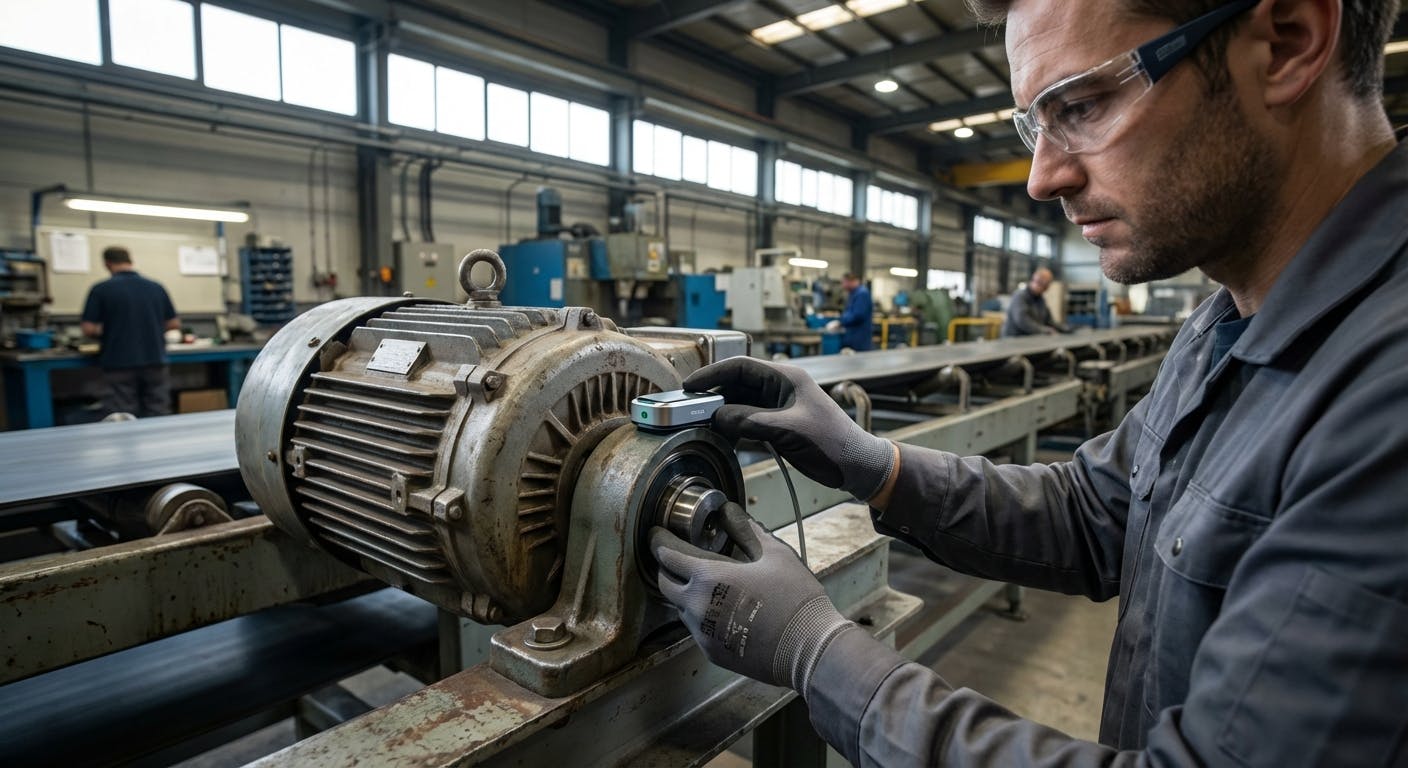
Yes, predictive maintenance (PdM) is highly effective for conveyors, particularly in high-volume manufacturing, food processing, and logistics environments. By utilizing Industrial Internet of Things (IIoT) sensors to monitor vibration, temperature, and motor current, PdM identifies early-stage degradation in bearings, gearboxes, and drive motors weeks before a functional failure occurs. This allows maintenance teams to transition from reactive "firefighting" to scheduled, data-driven repairs.
However, the success of PdM on conveyors depends on the criticality of the asset and the specific failure modes being monitored. While a simple gravity roller conveyor may not justify the cost of continuous monitoring, critical sortation systems, incline belts, or heavy-duty chain conveyors often see a Return on Investment (ROI) within six months. The goal is to capture the "P-F Interval"—the window of time between the first detection of a potential failure (P) and the actual functional failure (F).
How Predictive Maintenance Works on Conveyor Systems
Predictive maintenance on conveyors is not a single technology but a combination of sensor-driven data points that provide a holistic view of machine health. To implement it effectively, you must monitor the four primary failure vectors:
1. Bearing Wear and Lubrication
Bearings are the most common point of failure in conveyor systems. Traditional calendar-based lubrication schedules often fail because they do not account for actual running hours or environmental stress. PdM uses ultrasonic sensors or high-frequency vibration analysis to detect the "metal-on-metal" contact that occurs when lubrication breaks down or a race develops a pit. For conveyors in harsh environments, this is the first line of defense against repeated bearing failure.
2. Gearbox and Drive Train Health
Gearboxes often fail due to oil contamination or gear tooth wear. Vibration sensors mounted on the gearbox housing can detect specific frequencies associated with gear mesh issues. By analyzing these patterns, PdM systems can distinguish between a minor misalignment and a terminal gear failure. This is critical because gearboxes that fail every 6 months are usually victims of systemic issues that PdM can identify early.
3. Motor Current Signature Analysis (MCSA)
By monitoring the current and voltage of the conveyor’s drive motor, PdM can detect electrical imbalances, rotor bar damage, and even mechanical loads that are stressing the motor. If a conveyor belt is mistracking or a pulley is seized, the motor will draw more current to compensate. MCSA identifies these "invisible" stressors before they lead to a motor overload trip.
4. Belt and Chain Condition
For chain conveyors, PdM monitors "stretch" or elongation. Sensors can track the distance between links or the take-up unit's position to predict when a chain is nearing its elastic limit. This prevents the rapid elongation and stretch that leads to catastrophic snapping or derailment.
The "Retrofit" Guide: Turning Legacy Conveyors into Smart Assets
One of the biggest misconceptions is that you need "smart" conveyors to perform predictive maintenance. In reality, most PdM implementations are retrofits on "brownfield" equipment (machines built in the 1990s or early 2000s).
Step 1: Identify the Bottleneck Do not sensorize every conveyor. Focus on the "Main Line" or the "Merge" where a failure stops the entire plant.
Step 2: Deploy Edge Computing and Wireless Sensors Modern PdM uses wireless tri-axial vibration and temperature sensors that stick to the motor and bearing housings via magnets or epoxy. These sensors communicate via LoRaWAN or Cellular gateways to the cloud, bypassing the need for expensive PLC integration or wiring.
Step 3: Establish a Baseline Run the conveyor under normal load for 7–14 days. This establishes the "normal" vibration and thermal signature. AI models then look for deviations from this baseline.
Step 4: Set Thresholds for Action Instead of generic alarms, set thresholds based on ISO 10816 (vibration) or specific manufacturer tolerances. When the system detects a trend toward a threshold, it triggers a work order automatically.
What to Do About It: Implementing PdM on Your Floor
If your facility is currently trapped in a cycle of reactive maintenance, jumping straight to a full-scale PdM rollout can be overwhelming. Follow this structured path:
- Conduct a Criticality Analysis: Rank your conveyors by the cost of downtime per hour. Any asset costing more than $1,000/hour in lost production is a candidate for PdM.
- Audit Your Failures: Look at your last 12 months of work orders. If you see "bearing replacement" appearing repeatedly, you have a clear use case for vibration monitoring.
- Choose a Sensor-Agnostic Platform: Avoid "walled gardens" where you are forced to buy one brand of sensor. Platforms like Factory AI are designed to be sensor-agnostic and brownfield-ready. These systems can be deployed in as little as 14 days, providing a no-code interface that maintenance managers can use without needing a data science degree.
- Start with a Pilot: Select one problematic conveyor line. Install 4–6 sensors (Motor DE/NDE, Gearbox, and Head Pulley Bearings). Monitor the data for one month to prove the "catch" of a potential failure before it happens.
Predictive maintenance is the only way to break the reactive death spiral where technicians are too busy fixing broken machines to perform the maintenance that prevents them from breaking.
Related Questions
What are the most common failure points on conveyors? The primary failure points are drive motor windings, gearbox bearings/gears, head and tail pulley bearings, and belt splice integrity. Environmental factors like washdown procedures also contribute, as washdown environments often destroy bearings through moisture ingress and grease washout.
Can you retrofit old conveyors for predictive maintenance? Yes. Retrofitting is the most common way PdM is implemented today. By using battery-powered, wireless IIoT sensors, you can monitor 30-year-old conveyors without modifying the existing control panels or running new conduit. These sensors provide the same data fidelity as those built into brand-new "smart" conveyors.
How does PdM differ from preventive maintenance? Preventive maintenance (PM) is time-based (e.g., "change oil every 6 months"), which often leads to over-maintenance or failures occurring between intervals. Predictive maintenance (PdM) is condition-based; it only triggers service when the data indicates a specific component is degrading, significantly reducing labor costs and preventing downtime more effectively than PM alone.
How long does it take to see results from a conveyor PdM system? Most facilities see their first "catch" within 30 to 90 days. Systems like Factory AI are designed for rapid deployment, often going live in 14 days. The ROI is typically realized the moment the system detects a bearing or gearbox failure that would have otherwise caused an unscheduled multi-hour stoppage during a peak production shift.
