
The Plant Manager's Playbook: Actionable AI Predictive Maintenance Use Cases for Packaging Machinery in 2025
Feb 5, 2026
ai predictive maintenance use cases in packaging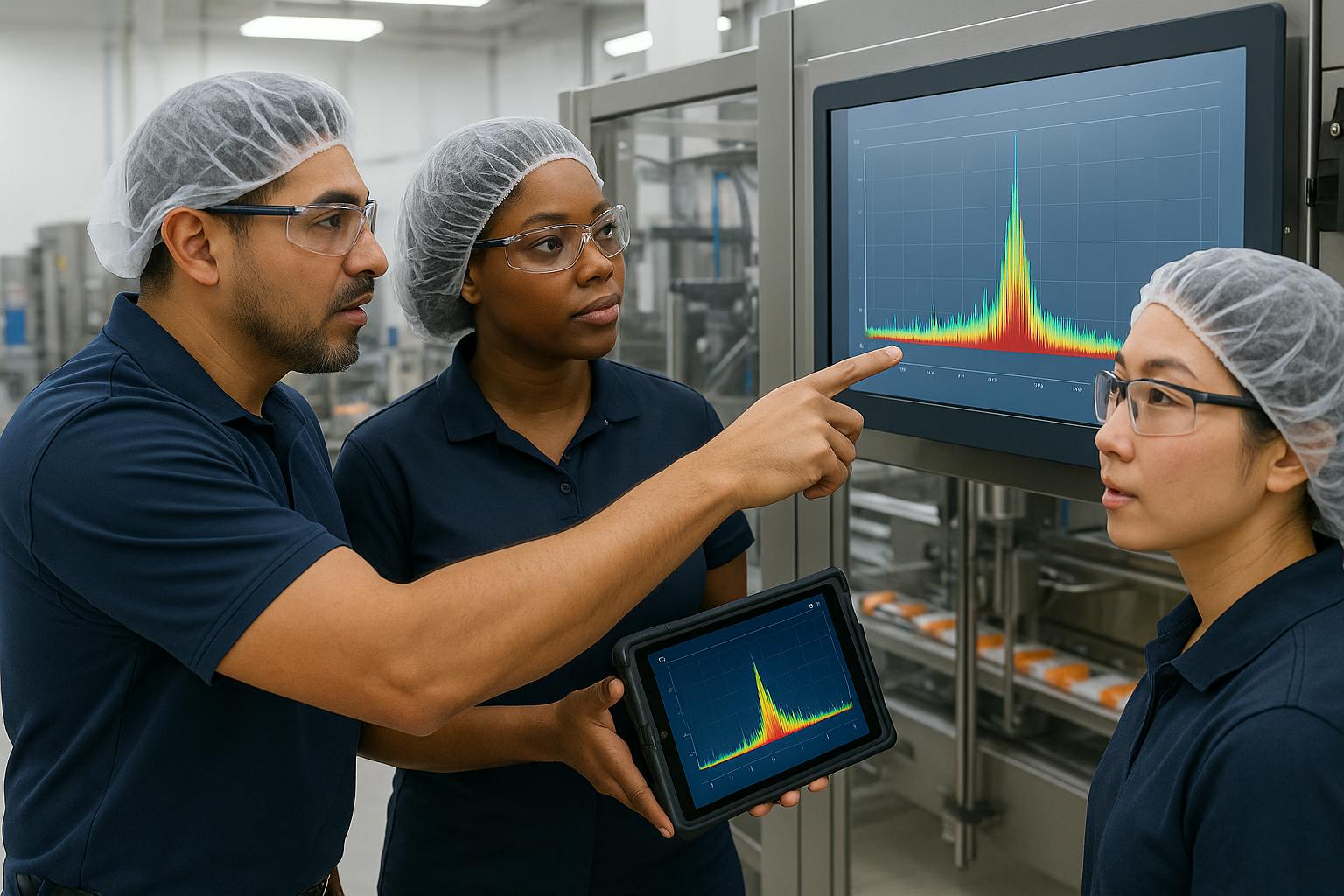
In the world of high-speed packaging, the margin for error is zero. A single hour of unplanned downtime on a critical line doesn't just halt production; it cascades into missed deadlines, spoiled product, strained retail relationships, and obliterated profit margins. For decades, maintenance teams have fought this battle with a combination of reactive repairs and calendar-based preventive maintenance (PM). But in 2025, this is like bringing a knife to a gunfight.
Reactive maintenance is a losing strategy of perpetual firefighting. Time-based PMs are a step up, but they're fundamentally inefficient—you either replace components that still have significant useful life left, wasting resources, or you miss the impending failure of a part that didn't follow the calendar.
This is where AI-powered predictive maintenance (PdM) transforms the game. AI-powered predictive maintenance (PdM) isn't just another buzzword; it's a strategic imperative for any packaging operation serious about maximizing Overall Equipment Effectiveness (OEE). It represents the shift from asking "When did it fail?" or "When should we schedule a replacement?" to "When is it going to fail, and what is the specific reason?"
This isn't a high-level, theoretical overview. This is a practical, machine-specific playbook for Maintenance Managers, Reliability Engineers, and Operations Directors. We will dissect the most critical packaging machines, identify their common failure modes, and detail precisely how to apply AI to predict and prevent them before they cripple your line.
Beyond Reactive Maintenance: Why AI is a Non-Negotiable for Packaging Uptime
Before diving into specific machines, it's crucial to understand why AI-powered PdM is so transformative compared to legacy strategies. The core value lies in its ability to understand the unique personality of each piece of equipment.
The Limitations of Traditional PM and CBM in a High-Speed Packaging Environment
Preventive Maintenance (PM) programs, while well-intentioned, operate on averages. A bearing manufacturer might recommend replacement every 2,000 hours. But this doesn't account for variations in load, speed, lubrication, or ambient temperature on your specific line. The result? You might change a perfectly good bearing, incurring labor and material costs and risking infant mortality on the new part. Worse, a bearing under unusually high stress might fail at 1,500 hours, leaving you with a catastrophic, unplanned shutdown that your PM schedule failed to prevent.
Condition-Based Monitoring (CBM) was the next logical evolution. Using sensors to track parameters like vibration or temperature, CBM allows you to trigger maintenance based on pre-set alarm thresholds. For example, "If vibration exceeds X, create a work order." This is a massive improvement, as it's based on the actual condition of the asset.
However, CBM has its limits. It's often still a reactive approach to a developing problem. The alarm triggers when the condition has already degraded significantly. It tells you that a problem exists, but often lacks the nuance to tell you what the specific problem is (e.g., is it a bearing fault, misalignment, or imbalance?) or, most importantly, how much time you have until failure.
How AI Bridges the Gap: From Data to Actionable Foresight
AI-powered PdM takes the rich data streams from CBM sensors and adds a layer of deep learning. Here’s how it works:
- Baseline Modeling: The AI platform ingests real-time data (vibration, temperature, acoustics, power consumption, etc.) from a healthy machine to learn its normal operating "heartbeat" across different cycles, speeds, and product runs. This creates a data foundation essential for accurate prediction.
- Anomaly Detection: The AI continuously compares the live data stream to this established baseline. It can detect minuscule, multi-variate deviations that are imperceptible to the human eye or simple threshold-based alarms. A slight increase in motor current, combined with a fractional rise in temperature and a subtle new frequency in the vibration signature, might be the earliest possible indicator of a developing gearbox issue.
- Failure Pattern Recognition: The system is trained on known failure modes. It learns to recognize the specific data "signature" that precedes a particular failure, like a failing heat sealer element or a worn-out conveyor bearing.
- Remaining Useful Life (RUL) Estimation: This is the pinnacle of PdM. By analyzing the rate of degradation, the AI model can forecast a time-to-failure window. This is the crucial insight that transforms maintenance from a reactive or scheduled function to a truly predictive one. You get a notification saying, "Motor 7 on Cartoner #2 shows early signs of bearing wear. Estimated RUL is 15-20 days. Recommend scheduling replacement during the next planned changeover."
Dive Deeper: For more on how to operationalize these concepts, see our guide on how data science helps predict equipment failures.
The ROI of AI PdM: Quantifying the Impact on OEE, Spoilage, and Safety
The business case for AI PdM is compelling and measurable.
- Boost OEE: By drastically reducing unplanned downtime (a major OEE killer), you increase availability. By ensuring machines run at optimal parameters (e.g., perfect seals), you improve quality and reduce rework.
- Cut Maintenance Costs: You eliminate the waste of premature component replacement. Maintenance becomes a surgical, planned activity, not a chaotic emergency. This also allows for optimized MRO inventory, as you can move towards a just-in-time model for spare parts using the AI's RUL forecasts.
- Reduce Product Spoilage: In food, beverage, and pharmaceutical packaging, a failing heat sealer or capper can lead to thousands of dollars in spoiled or recalled product. AI can predict these failures before a single bad seal is made.
- Enhance Safety: Catastrophic equipment failure is a significant safety hazard. Predicting and preventing these events protects your most valuable asset: your people.
The Machine-Specific Playbook: AI Predictive Maintenance Use Cases in Action
Let's move from the "what" and "why" to the "how." Here is a practical breakdown of applying AI PdM to the workhorses of your packaging line.
Vertical & Horizontal Form-Fill-Seal (VFFS/HFFS) Machines
VFFS and HFFS machines are the heart of many packaging operations, but their complexity and high speed make them prone to failures that cause significant downtime and material waste.
Common Failure Modes:
- Heat sealer degradation (inconsistent seals, burnt film)
- Jaw wear and misalignment (poor seal quality, cutting issues)
- Cutting knife dullness or damage
- Film tracking and slipping issues
- Pneumatic system leaks affecting actuator performance
AI Use Case 1: Predictive Quality Control for Heat Sealers
- The Problem: A failing heating element or thermocouple doesn't just die; it degrades. The temperature profile across the sealing jaw becomes inconsistent. This leads to weak spots in the seal, causing leaks and spoilage long before a complete failure alarm.
- The AI Solution:
- Sensors: Install high-resolution thermal imaging cameras focused on the sealing jaws. Augment this with power consumption sensors on the heater circuits. For washdown environments, ensure you are using appropriate sanitary sensors.
- AI Application: An AI model analyzes the thermal map of the jaws in real-time during every cycle. It learns the "perfect" heat signature. The model can then detect subtle cold spots or hot spots developing across the jaw face, correlating them with minor fluctuations in power draw.
- Actionable Insight: Instead of a simple "over/under temp" alarm, the system alerts: "Warning: A 5% cold spot has developed on the left edge of the upper sealing jaw on VFFS #4. This pattern correlates with early-stage element failure. Predicted impact on seal integrity within 48 hours. RUL: 3-5 days." This allows you to schedule a replacement with zero product loss.
AI Use Case 2: Vibration & Acoustic Analysis for Jaw/Knife Assemblies
- The Problem: The high-impact, repetitive motion of the sealing/cutting assembly causes mechanical wear. Jaw misalignment or a dulling knife introduces subtle changes in the machine's mechanical signature that are impossible to hear on a noisy plant floor.
- The AI Solution:
- Sensors: Place high-frequency accelerometers (vibration sensors) and acoustic sensors on the frame near the jaw assembly.
- AI Application: The AI model performs "signature analysis." It learns the precise vibration and sound profile of a perfectly aligned, sharp cutting and sealing cycle. As the knife dulls, the vibration signature of the impact changes. As jaws become misaligned, a new, subtle harmonic frequency may appear.
- Actionable Insight: The system can differentiate between normal operation and developing faults. An alert might read: "Acoustic anomaly detected on HFFS #2. The frequency signature matches the pattern for knife dullness. Recommend inspection and replacement at the next opportunity to prevent film tearing."
Cartoners & Case Erectors
These machines are all about precise, repetitive mechanical motion. Jamming is the most common enemy, often caused by gradual wear in components that are difficult to inspect visually.
Common Failure Modes:
- Jamming due to worn guides, rails, or pusher arms
- Vacuum system degradation (worn cups, leaks) leading to poor blank feeding
- Glue nozzle clogs or inconsistent application
- Gearbox and drive motor wear
AI Use Case 1: Motor Current Signature Analysis (MCSA) for Jam Prediction
- The Problem: Before a major jam occurs, the drive motors on carton pick-and-place arms, pushers, and flap folders experience increased strain. This strain is reflected as a subtle increase in the electrical current drawn by the motor.
- The AI Solution:
- Sensors: Non-invasive current transducers clamped onto the power supply to the critical drive motors.
- AI Application: The AI platform learns the normal current "profile" for a full machine cycle. It understands how much current the motor should draw when picking a blank, folding a flap, or pushing a carton. The model can then detect when a motor is consistently drawing even 1-2% more current than normal during a specific part of the cycle.
- Actionable Insight: This is a powerful leading indicator of mechanical friction or binding. The alert isn't just "high motor current"; it's "Increased current draw (avg. +3.5%) detected on the major flap folding motor of Cartoner #1 during the folding phase. This indicates potential guide rail wear or debris buildup. Recommend inspection and lubrication." This allows a technician to fix a 5-minute problem before it becomes a 2-hour jam-clearing nightmare. For more information on how this applies to core components, see our guide on predictive maintenance for motors.
AI Use Case 2: Predictive Failure of Vacuum Systems
- The Problem: Vacuum cups used to pick carton blanks wear out. Tiny leaks develop in hoses. This causes the vacuum pump to work harder and cycle more often to maintain the required pressure, leading to failed picks and jams.
- The AI Solution:
- Sensors: Pressure sensors in the vacuum line and a power sensor on the vacuum pump motor.
- AI Application: The AI model correlates two data streams: the time it takes to draw the vacuum down to the setpoint and the power consumed by the pump during that time. As cups and lines wear, the drawdown time increases, and the pump runs longer.
- Actionable Insight: The system can predict vacuum system degradation far in advance. "Vacuum drawdown time on Case Erector #5 has increased by 12% over the past 7 days. This is a leading indicator of system leaks or cup wear. RUL of vacuum cups estimated at 10-14 days before pick-failure rate increases."
Palletizers & Stretch Wrappers
These end-of-line machines are critical; if they go down, the entire line backs up. Their failures are often related to heavy loads, continuous motion, and large rotating components.
Common Failure Modes:
- Conveyor motor and bearing failures
- Lift motor/actuator strain and failure
- Turntable drive issues on stretch wrappers
- Inconsistent film stretch leading to breaks or unstable loads
AI Use Case 1: Vibration Analysis for End-of-Line Conveyors and Palletizer Lifts
- The Problem: The bearings on the dozens of rollers on a palletizing infeed conveyor or the main bearings on a palletizer lift are classic points of failure. Traditional PM involves mass replacement, which is wasteful. Waiting for a bearing to seize can destroy the shaft and cause extensive damage.
- The AI Solution:
- Sensors: Strategically placed accelerometers on motor housings, bearing blocks, and key frame locations.
- AI Application: This is a classic application for AI-powered vibration analysis. The model is trained to identify the specific high-frequency signatures associated with the four stages of bearing failure (from initial subsurface flaws to final spalling and seizure). It can easily distinguish between a bearing fault and other vibration sources like imbalance or misalignment.
- Actionable Insight: A platform like [/products/predict] can provide highly specific alerts. "Stage 2 bearing fault (inner race) detected on conveyor motor #12A of the palletizer infeed. RUL estimated at 250 operating hours. Recommend generating a work order and scheduling replacement." This level of detail is a game-changer for maintenance planning. For a deeper dive, explore our specific solution for predictive maintenance on conveyors.
AI Use Case 2: Power Consumption & Vision for Stretch Wrapper Uptime
- The Problem: On a stretch wrapper, inconsistent film application can lead to film breaks (causing downtime) or unstable pallet loads (a safety and quality issue). This can be caused by mechanical drag in the turntable or issues with the pre-stretch rollers.
- The AI Solution:
- Sensors: Power consumption sensors on the turntable drive motor and the film pre-stretch motor. A vision system (a simple camera) aimed at the wrapped pallet.
- AI Application: The AI correlates power draw with machine state. An increase in turntable motor current can indicate a failing drive or bearing. Fluctuations in the pre-stretch motor's power draw can indicate worn rollers or inconsistent film quality. The AI-powered vision system can be trained to recognize "good" vs. "bad" wrap patterns, identifying gaps, ropes, or tears.
- Actionable Insight: The system can combine data for a holistic view. "Vision system detected a 15% increase in film roping on Stretch Wrapper #3. This correlates with a 5% increase in power draw on the pre-stretch motor. Suspect worn roller surface. Recommend inspection."
Dive Deeper: Learn how to replicate these successes in our article on successful case studies of data science in manufacturing.
Implementing an AI-Powered PdM Program: A Practical 5-Step Framework
Deploying an AI PdM solution is a strategic project, not just an IT installation. Following a structured approach is key to success.
Step 1: Asset Criticality Analysis & Pilot Project Selection
Don't try to monitor everything at once. Perform an asset criticality analysis to identify the machines whose failure has the biggest impact on production. Your biggest bottleneck, the machine with the worst history of unplanned downtime, or the most expensive asset to repair are all excellent candidates for a pilot project. Success in a focused pilot builds momentum and proves the business case for a wider rollout.
Step 2: The Data Foundation - Sensor Strategy and Integration
Your AI is only as good as its data. Work with a PdM solution provider to develop a sensor strategy for your pilot assets. This involves selecting the right sensors (vibration, thermal, current, etc.) and determining the optimal mounting locations. The data needs to be collected reliably and transmitted to a central platform. Modern wireless sensors have made this process far easier and less expensive than in the past. Crucially, ensure the platform can integrate with your existing systems, like your SCADA or historian, to add process context to the sensor data. Strong integrations are a must-have feature.
Step 3: Choosing the Right AI PdM Platform
You have two main paths: build or buy. Building an in-house AI PdM solution requires a rare and expensive team of data scientists, reliability engineers, and software developers. For 99% of packaging companies, a "buy" or subscription-based solution is far more practical and delivers a faster ROI.
When evaluating AI PdM platforms, look for:
- Proven AI Models: Does the vendor have specific, pre-built AI models for your type of equipment?
- Explainability: Can the system explain why it's making a prediction? Black-box AI is hard to trust.
- Scalability: Can the platform grow with you from a pilot on one machine to covering your entire plant?
- CMMS Integration: How easily does it connect to your existing Computerized Maintenance Management System to automate work orders?
Step 4: Model Training, Validation, and Deployment
Once the sensors are in place and data is flowing, the AI model begins its training phase. This typically involves a few weeks of collecting data to establish that "normal operating baseline." The system will then begin to flag anomalies. In the early stages, your maintenance team will validate these alerts, providing feedback to the model ("Yes, that was a real fault," or "No, that was due to a product changeover"). This human-in-the-loop process refines the model's accuracy over time.
Step 5: Closing the Loop - Integrating Predictions with Your CMMS and Workflow
A prediction is useless if it doesn't lead to action. The final, critical step is to integrate the AI platform's outputs directly into your maintenance workflow. A high-confidence prediction should automatically trigger a work order in your CMMS, populate it with the diagnostic data from the AI, suggest the required parts, and even recommend a specific maintenance procedure. This closes the loop from data to detection to action, empowering technicians to work proactively and efficiently.
Dive Deeper: Evaluating vendors? Read our guide on how to evaluate startup AI companies for industrial maintenance.
Overcoming Common Hurdles in AI PdM Adoption
The transition to AI-powered maintenance is not without its challenges, but they are surmountable with proper planning.
The Data Quality & Quantity Challenge
The "garbage in, garbage out" principle applies forcefully to AI. Ensuring you have high-quality, consistent data is paramount. This means using appropriate sensors, ensuring they are installed correctly, and having a robust data transmission infrastructure. Partnering with an experienced PdM provider can help you avoid common pitfalls here. Furthermore, avoid siloing your data; understand why moving all maintenance data to the cloud requires a strategic approach.
The Skills Gap: Empowering Your Maintenance Team
A common fear is that AI will replace maintenance technicians. The reality is the opposite: it elevates them. AI PdM transforms technicians from reactive firefighters into proactive reliability investigators. The focus shifts from wrench-turning to data analysis and strategic planning. This requires a cultural shift and an investment in training. Your team needs to learn to trust the data, interpret the AI's recommendations, and integrate these insights into their daily work.
Proving ROI and Securing C-Suite Buy-In
Securing budget for a new technology requires a solid business case. This is where the pilot project is invaluable. Before you begin, baseline your key metrics for the pilot asset: OEE, unplanned downtime hours, maintenance costs (labor and materials), and product spoilage/waste. Track these metrics religiously throughout the pilot. A successful pilot that shows a 50% reduction in unplanned downtime and a 20% reduction in maintenance costs for a critical asset is an undeniable argument for expansion. For an authoritative look at measuring process improvement, resources from iSixSigma can provide valuable frameworks.
The Future is Prescriptive: What's Next After Predictive?
Predictive maintenance is a massive leap forward, but it's not the final destination. The next frontier is prescriptive maintenance.
While predictive maintenance tells you what will fail and when, prescriptive maintenance tells you what to do about it. By combining asset data with information from your CMMS, parts inventory, and even technician schedules, a prescriptive system can offer a complete, optimized solution.
Imagine an alert that says: "Vibration analysis predicts the main bearing on Palletizer #1 will fail in 7-10 days. The required bearing (Part #789-B) is in stock. The repair requires a Level 2 technician and takes an estimated 3 hours. The optimal time to perform the repair with minimal production impact is during the scheduled sanitation shift this Thursday at 10 PM. Would you like to approve the work order and schedule the technician?"
This level of intelligent automation is the ultimate goal, and platforms are already emerging that offer these capabilities. By building a strong foundation in predictive maintenance now, you are paving the way for a future of truly optimized, prescriptive maintenance. As outlined by standards bodies like the American Society of Mechanical Engineers (ASME), the integration of diagnostics and prognostics is key to the future of industrial asset management. To prepare for this future, consider where you stand on the predictive asset management maturity model.
The packaging industry operates on precision, speed, and reliability. In 2025, the tools to achieve unprecedented levels of reliability are here. By adopting a machine-specific, data-driven approach to maintenance, you can move your operation out of the reactive cycle and into a future of predictable, profitable uptime.
Related Guides
- AI Tech Startups in Manufacturing: Moving Beyond Hype to ROI
- Why Your High-Speed Beverage Line is Stuck at 75% OEE
- What are the Best Software Solutions for Asset Reliability?
- The Goal of Root Cause Analysis: Why Fixing the Machine is Not Enough
- What are the Latest Software Tools Used for Fault Detection?
