
Can Data Science Help Predict Equipment Failures in Factories? (And How to Actually Operationalize It)
Feb 3, 2026
Can data science help predict equipment failures in factories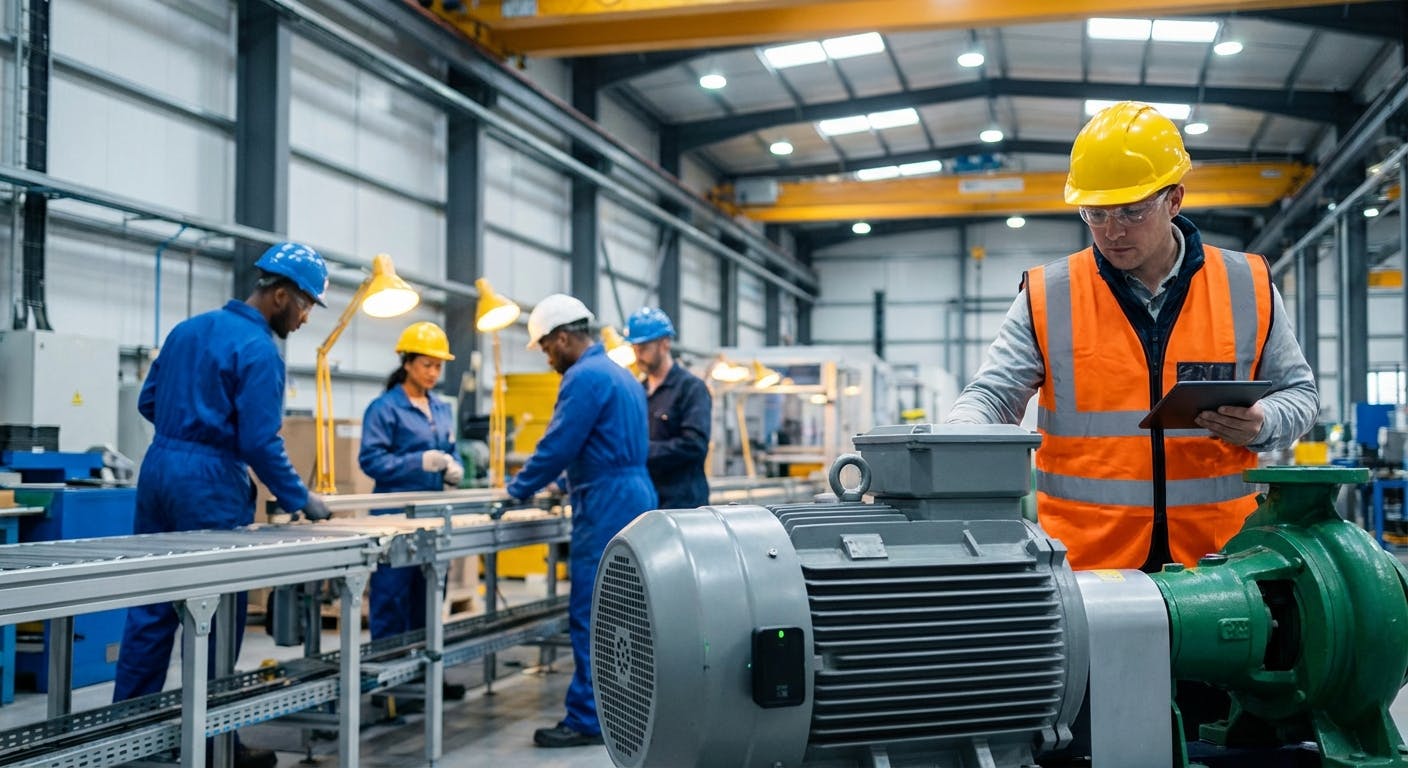
The short answer is yes. Data science is not just capable of predicting equipment failures; in 2026, it has become the backbone of modern industrial reliability strategies. However, the difference between a "science project" that sits on a server and a functional predictive maintenance program that saves millions lies in how that data is interpreted, contextualized, and operationalized.
If you are a Plant Manager or Reliability Engineer, you aren't looking for a theoretical lecture on neural networks. You are asking a specific set of questions: Can this technology tell me when Motor #4 is going to seize? Can it distinguish between a harmless load spike and a catastrophic bearing failure? And is the investment worth the disruption?
Data science helps predict failures by moving maintenance from a time-based schedule (preventive) to a condition-based reality (predictive). It utilizes historical data, real-time telemetry, and advanced algorithms to calculate the Remaining Useful Life (RUL) of an asset. But the algorithm is only as good as the strategy behind it.
This guide serves as a bridge between the IT world of data science and the OT (Operational Technology) world of the factory floor. We will explore how to turn raw data into wrench time, avoid common implementation pitfalls, and build a reliability strategy that actually works.
How Does Data Science Actually Predict Failure? (The Mechanics)
When we ask if data science can predict failure, we are really asking if algorithms can detect patterns that are invisible to the human eye or too complex for standard SCADA alarm thresholds. The mechanism for this is generally divided into two categories: Anomaly Detection and Remaining Useful Life (RUL) Prediction.
The Shift from Thresholds to Patterns
Traditional automation relies on static thresholds. For example, if a pump’s temperature exceeds 80°C, an alarm triggers. This is binary and reactive. By the time the temperature hits 80°C, the damage might already be done.
Data science introduces multivariate analysis. A machine learning model doesn't just look at temperature in isolation; it looks at temperature in relation to vibration, pressure, amperage, and ambient humidity simultaneously.
For instance, a slight rise in vibration might be normal during a high-load production run. However, that same vibration level during a low-load cycle, accompanied by a marginal increase in power consumption, creates a specific "fingerprint" that indicates early-stage bearing degradation. Data science models identify this fingerprint weeks before a static threshold would be breached.
The Role of Specific Algorithms
While you don't need to code these yourself, understanding the logic helps in selecting the right manufacturing AI software.
- Regression Models: These are used to estimate the RUL. By analyzing the degradation path of similar assets in the past, the model draws a trajectory for the current asset. It answers: "Based on current wear rates, how many hours do we have left?"
- Classification Models: These categorize the type of fault. Is the vibration caused by misalignment, unbalance, or looseness? This is critical for the technician who needs to know which tools to bring.
- Autoencoders (Neural Networks): These are powerful for anomaly detection. The model learns what "normal" looks like for a complex machine. When incoming data deviates from this learned reconstruction of "normal," it flags an anomaly, even if it has never seen that specific failure mode before.
The P-F Curve Application
Data science effectively shifts your team up the P-F Curve (Potential Failure to Functional Failure).
- Traditional Maintenance: Reacts at the point of audible noise or heat (too late).
- Data Science: Detects changes in the ultrasonic or vibration signature (early).
By identifying the "P" point earlier, you gain the most valuable asset in manufacturing: time. Time to order spares, time to schedule downtime during a changeover, and time to prevent collateral damage to the machine.
What Data Do You Actually Need? (Quality Over Quantity)
A common misconception is that you need "Big Data"—petabytes of information—to get started. In reality, reliability engineering requires "Smart Data." Feeding an algorithm terabytes of noise will only result in false positives, which leads to alert fatigue and a loss of trust in the system.
The Three Pillars of Predictive Data
To predict failures accurately, you need to triangulate three specific data sources:
-
Real-Time Telemetry (The "Pulse"): This is the data coming from PLCs, SCADA systems, or retrofitted IIoT sensors.
- Vibration: The gold standard for rotating assets. You need tri-axial vibration data to detect misalignment and bearing faults.
- Temperature: Often a lagging indicator, but essential for context.
- Amperage/Power: Fluctuations here often precede mechanical issues.
- Pressure/Flow: Critical for predictive maintenance on pumps and compressors.
-
Contextual Operational Data (The "Situation"): Telemetry without context is useless. If a conveyor speeds up, vibration increases. If the model doesn't know the production line speed increased intentionally, it will flag a false alarm. You must integrate data regarding:
- Machine state (Running, Idle, Changeover).
- Production load/speed.
- Product type being manufactured (heavier products may cause higher baseline vibration).
-
Historical Maintenance Data (The "Truth"): This is often the missing link. For a machine learning model to learn what a "failure" looks like, it needs labeled historical data. It needs to know that the spike in vibration on January 14th resulted in a "Bearing Seizure." This is where your CMMS software becomes a data science tool. If your technicians are entering generic close-out codes like "Fixed it," the model cannot learn. You need structured failure codes (e.g., "Bearing - Inner Race Defect").
The "Garbage In" Problem
If your facility lacks historical failure data, you cannot immediately train a supervised learning model (one that knows what failure looks like). In this scenario, you must start with Unsupervised Learning (Anomaly Detection). You tell the system: "I don't know what broken looks like yet, but tell me when the machine starts acting differently than it usually does."
As you capture more failures over time, you can transition to supervised models that offer higher precision.
How Do We Operationalize the Predictions? (The "Bridge" Strategy)
The most sophisticated algorithm is worthless if it sends an alert to a dashboard that nobody checks. This is where the "Bridge" strategy comes in—connecting the IT (Data Science) output to the OT (Maintenance) workflow.
The Alert-to-Work-Order Ecosystem
Data science must live within your existing maintenance ecosystem, not parallel to it. The workflow should look like this:
- Sensor Data Ingestion: The IIoT platform ingests vibration data from a motor.
- Algorithm Processing: The model detects a deviation indicating a ball pass frequency fault.
- Logic Gate: The system checks against logic rules (e.g., "Is the confidence interval > 80%?" and "Has this persisted for > 10 minutes?"). This filters out transient noise.
- CMMS Integration: Instead of just flashing a red light, the system automatically triggers a draft Work Order in your asset management system.
- Human-in-the-Loop: A reliability engineer reviews the draft. They see the data snapshot attached to the work order. They approve it.
- Execution: The technician receives the work order on their mobile CMMS app, complete with the specific failure prediction ("Check drive end bearing").
Avoiding Alert Fatigue
One of the fastest ways to kill a predictive maintenance program is to flood the maintenance team with low-priority alerts. If a reliability engineer gets 50 emails a day saying "Anomaly Detected," they will create an email rule to send them straight to trash.
Best Practice: Configure your data science models to categorize severity.
- Level 1 (Watchlist): Slight deviation. Log it, but do not trigger a work order. Add to the "Watchlist" for the next scheduled inspection.
- Level 2 (Warning): Moderate deviation. Trigger a "Condition Check" work order for the next available shift.
- Level 3 (Critical): Rapid degradation. Trigger an immediate high-priority notification to the floor supervisor.
The Feedback Loop
The operationalization process isn't linear; it's circular. Once the technician completes the repair, their feedback is crucial. Did they find a bad bearing? Or was it just a loose sensor? This feedback must be fed back into the model. If it was a loose sensor, the model learns to recognize that specific signal pattern as "Sensor Fault" rather than "Machine Fault," reducing future false positives.
What is the ROI? (Making the Business Case)
When pitching this to leadership, "predicting failures" is a feature, not a benefit. The benefit is Asset Availability and Cost Reduction. To justify the investment in data science and sensors, you need to calculate the ROI based on specific metrics.
Calculating the Cost of Unplanned Downtime
You likely know your cost per hour of downtime. However, data science impacts more than just production minutes.
- Secondary Damage: If a bearing fails catastrophically, it can ruin the shaft and the housing. Predicting the failure allows for a $50 bearing replacement rather than a $5,000 motor replacement.
- Overtime Labor: Emergency repairs often happen at 2 AM or on weekends, incurring double-time labor rates. Planned repairs happen on Tuesday mornings.
- Inventory Carrying Costs: Without prediction, you must stock every possible spare part "just in case." With accurate RUL (Remaining Useful Life) prediction, you can order parts Just-In-Time (JIT), reducing inventory management overhead.
The Investment vs. Return Curve
Implementing data science involves upfront costs: sensors, software subscriptions, and training.
- Year 1: High investment, low return. The models are learning. You are retrofitting sensors.
- Year 2: Break-even. You catch 2-3 major failures, preventing significant downtime. The models are becoming accurate.
- Year 3+: High return. The system moves to "Prescriptive Maintenance." You are optimizing PM intervals (e.g., changing oil based on analysis rather than calendar days), significantly reducing unnecessary labor.
According to the U.S. Department of Energy, a functional predictive maintenance program can yield a 30% to 40% reduction in maintenance costs and a 35% to 45% reduction in downtime.
Can We Do This on Legacy Equipment? (The Brownfield Challenge)
A common objection is: "Our factory was built in 1995. We don't have smart machines." Data science does not require new machines; it requires data. In fact, legacy equipment is often the best candidate for predictive maintenance because these assets are usually past their warranty period and are entering the wear-out phase of the bathtub curve.
The Retrofit Strategy
You do not need to replace the PLCs to get data. You can use an "overlay" strategy.
- Wireless Vibration/Temp Sensors: Stick-on sensors (using epoxy or magnets) can be applied to motors, gearboxes, and pumps in minutes. These operate independently of the machine's control logic.
- Current Transducers (CTs): Clamp-on CTs in the electrical cabinet can monitor power draw without cutting wires.
- Edge Gateways: These devices collect data from the wireless sensors and transmit it to the cloud via cellular or Wi-Fi, bypassing the secure/locked-down plant network if necessary.
Specific Legacy Applications
- Conveyors: Retrofitting vibration sensors on head and tail pulleys to monitor predictive maintenance for conveyors.
- Compressors: Adding pressure differentials and temperature sensors to older units to predict valve failures in compressors.
- Motors: Even a 30-year-old motor vibrates differently when the bearings are dry. Simple acceleration sensors can feed data into predictive maintenance models for motors.
The goal isn't to digitize the entire machine, but to digitize the failure modes. If 80% of your downtime comes from bearing failures, you only need sensors that detect bearing issues.
From Prediction to Prescription: The Next Evolution
Predictive maintenance answers "When will it fail?" The next evolution, driven by advanced data science, is Prescriptive Maintenance. This answers: "How should we fix it, and when is the optimal time?"
Root Cause Analysis at Scale
Data science can correlate variables to find the root cause. For example, the system might notice that Pump A fails every time Product X is run at Speed Y.
- Prediction: "Pump A will fail in 48 hours."
- Prescription: "Reduce speed by 10% when running Product X to extend pump life by 300 hours."
Automated Workflows
Prescriptive maintenance integrates deeply with prescriptive maintenance features in your software. It can automatically:
- Check inventory for the required spare parts.
- Check the production schedule to find the next planned downtime window.
- Assign the work order to the technician with the specific certification required for that asset.
- Attach the specific Standard Operating Procedure (SOP) or PM procedure relevant to the fault code.
This reduces the cognitive load on the maintenance planner. The system presents a "solution package" for approval, rather than just a problem.
Why Do Data Science Projects Fail in Manufacturing? (The Pitfalls)
Despite the potential, many pilot programs fail to scale. Understanding these failure modes is essential for success.
1. The Data Silo Problem
If your vibration data lives in one software, your oil analysis in another, and your work orders in a third, data science cannot work. The algorithms need a unified view. Integration is key. You must ensure your integrations allow data to flow freely between your ERP, CMMS, and SCADA systems.
2. Lack of Domain Expertise
Data scientists are brilliant at math, but they rarely know what cavitation sounds like. Reliability engineers know the machines but rarely know Python. Solution: You need a cross-functional team. The "Subject Matter Expert" (SME) must sit with the Data Scientist to label the data. The SME explains, "That spike isn't a failure; that's just the cleaning cycle." Without this context, the model learns the wrong lessons.
3. Ignoring the Culture Change
Predictive maintenance is a culture shift. You are asking technicians who pride themselves on being "firefighters" (fixing broken things fast) to become "doctors" (diagnosing invisible health issues). If technicians don't trust the data, they will ignore the work orders. You must prove the system works by showcasing "saves"—examples where the system caught a failure that the technician missed, saving the team from a 2 AM emergency call-out.
4. Starting Too Big
Do not try to model the entire factory at once. Start with your "Bad Actors"—the top 5 assets that cause the most downtime. Prove the value there, refine the data collection, and then scale to the "Critical Assets."
Conclusion: The Future is Reliability
Can data science help predict equipment failures? Absolutely. But it is not a magic wand that you wave over a factory to eliminate downtime. It is a tool—a precision instrument—that requires calibration, context, and a skilled hand to wield.
The factories that win in 2026 and beyond will not be the ones with the most sensors, but the ones that successfully bridge the gap between the algorithm and the wrench. They will be the facilities that use data not just to predict the future, but to change it by intervening at the precise moment required to maintain peak reliability.
If you are ready to move from reactive repairs to data-driven reliability, the first step is getting your data foundation right. Start by ensuring your maintenance workflows are digital, your assets are cataloged, and your team is ready to listen to what the machines are saying.
Explore how MaintainX helps you bridge the gap between data and action.
