
Beyond the Hype: How to Evaluate Startup AI Companies for Industrial Maintenance in 2026
Feb 4, 2026
startup ai companies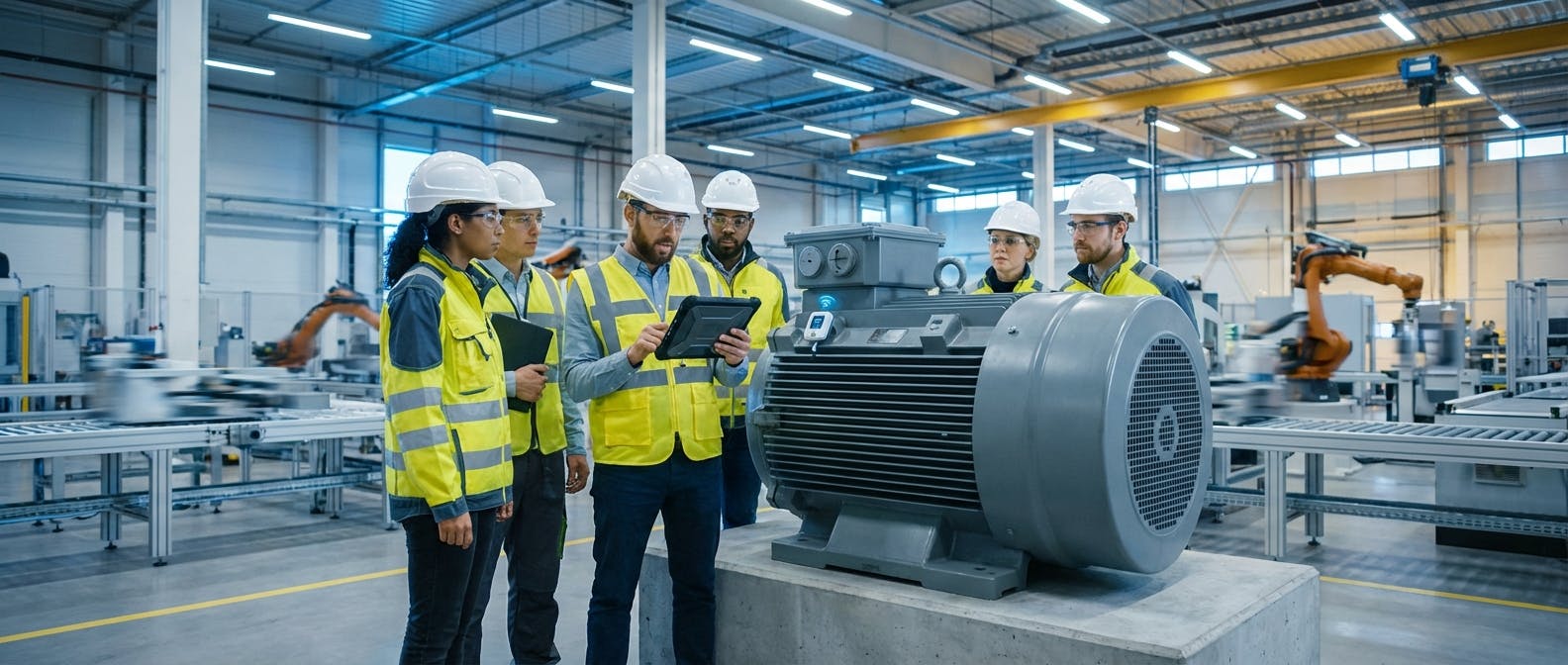
The industrial sector is currently flooded with noise. If you search for "startup AI companies," you are likely bombarded with generic lists of tech unicorns that have little to do with the grit and reality of the factory floor. You don't need a chatbot that writes poetry; you need algorithms that detect bearing faults before a catastrophic failure halts your production line.
The Core Question: When industrial leaders search for AI startups today, they aren't asking for a directory. They are asking: "Which emerging technologies are mature enough to actually solve my reliability problems, and how do I distinguish between genuine innovation and vaporware?"
The answer lies in moving away from the "AI" buzzword and focusing on Applied Industrial Intelligence. In 2026, the most valuable startups aren't just offering "machine learning"; they are offering specific, verticalized solutions like Edge-native predictive maintenance, computer vision for quality control, and Generative AI for maintenance workflows.
This guide cuts through the marketing fluff to help you identify, evaluate, and implement the right AI technologies for your facility.
The Landscape: Which Categories of AI Startups Actually Matter?
The first follow-up question to "Who are the startups?" is natural: "What specific problems are they solving?" The industrial AI landscape has fractured into highly specialized niches. To make an informed decision, you must understand the four dominant categories driving value in 2026.
1. The "Edge-First" Predictive Maintenance (PdM) Specialists
Early AI maintenance solutions relied heavily on sending massive amounts of raw data to the cloud. This was expensive and introduced latency. The new wave of startups focuses on Edge AI.
- What they do: These companies build sensors with onboard processing power. They analyze vibration, temperature, and acoustic data directly on the motor or pump.
- The Value: They only transmit actionable insights (e.g., "Bearing inner race fault detected") rather than terabytes of raw noise. This reduces bandwidth costs and improves response time.
- Key Tech: Micro-electromechanical systems (MEMS) sensors and low-power neural networks.
- Emerging Players: Some startups like Factory AI take a sensor-agnostic approach—integrating with existing hardware (SKF Axios, IMX ranges, and others) rather than requiring proprietary sensors. This lowers the barrier for brownfield deployments where manufacturers already have sensor infrastructure in place.
2. Computer Vision and Automated Inspection
Visual inspection used to require human eyes or incredibly expensive, rigid camera systems. Startups in this space are now using commodity hardware (standard IP cameras or even smartphones) combined with advanced vision models.
- What they do: They detect surface defects, verify PPE compliance, or read analog gauges automatically.
- The Value: Continuous, 24/7 monitoring of assets that don't generate digital data, such as checking for oil leaks or reading a dial on a legacy hydraulic press.
3. Generative AI for Workflow Automation
This is the fastest-growing sector in 2026. These startups aren't analyzing sensor data; they are analyzing text and human knowledge.
- What they do: They ingest decades of PDF manuals, shift logs, and SOPs. When a technician faces a problem, the AI acts as a "co-pilot," instantly retrieving the correct torque specs or troubleshooting steps.
- The Value: Drastic reduction in Mean Time to Repair (MTTR) by eliminating the "search time" for information. This is a core component of modern manufacturing AI software.
4. The "Digital Twin" Orchestrators
These companies focus on simulation. They take data from the other three categories to create a real-time virtual replica of your production line.
- What they do: They allow you to simulate "what-if" scenarios. (e.g., "What happens to our throughput if we slow down Conveyor B by 10% to extend its motor life?")
How Do I Vet These Companies? (The "BS Detector" Framework)
Once you've identified the category you need, the next logical question is: "How do I know if their tech actually works?"
In the industrial B2B space, a bad software choice isn't just an annoyance; it's a safety risk and a capital drain. You need a rigorous vetting framework. Here are the specific technical questions you must ask during the "Commercial Investigation" phase.
1. Ask About Data Granularity and Sampling Rates
Many startups claim to do predictive maintenance but use hardware that isn't up to the task.
- The Trap: A sensor that samples vibration once every hour provides a "snapshot," not a diagnostic.
- The Requirement: For rotating equipment, you need high-frequency sampling (often 10kHz or higher) to detect early-stage faults like gear mesh issues or lubrication breakdown.
- The Question: "Does your AI analyze continuous waveforms, or are you just trending static RMS values?" If they only look at RMS (Root Mean Square), they are a monitoring company, not a diagnostic AI company.
2. The "Cold Start" Problem
AI models traditionally need months of historical data to learn what "normal" looks like. You don't have months.
- The Trap: The startup says, "Install our sensors, and in 6 months, we'll tell you if something is wrong."
- The Requirement: Look for companies offering Pre-Trained Models or "Zero-Shot Learning." These startups have aggregated data from thousands of similar motors or pumps. They should be able to detect a misalignment on Day 1 because they know what a misalignment looks like on a standard 50HP AC motor.
- The Question: "How much asset-specific training data do you need before the system provides accurate alerts?"
3. Integration Capabilities (The Silo Breaker)
A standalone AI dashboard is a failure. If the AI detects a fault but doesn't trigger a work order, the machine still breaks.
- The Trap: A beautiful dashboard that requires your maintenance planner to manually copy-paste data into your CMMS.
- The Requirement: The startup must offer robust APIs and pre-built connectors. The data flow should be: Sensor -> AI Anomaly Detection -> CMMS Software -> Work Order Generation.
- The Question: "Show me your API documentation for creating a work order automatically when a threshold is breached."
What is the True ROI? (Beyond the Sales Pitch)
After vetting the tech, the CFO will ask: "What does this cost, and when do we break even?"
Calculating ROI for AI startups requires looking beyond the subscription fee. You must calculate the "Cost of Unreliability."
The Formula for AI ROI
$$ROI = \frac{(Downtime Avoided \times Cost Per Hour) + (Labor Efficiency Gains) - (Implementation Cost)}{Implementation Cost}$$
1. Downtime Avoidance (The Big Number)
This is the most obvious metric. If a startup's predictive maintenance for conveyors prevents a 4-hour outage on a line that produces $20,000 of product per hour, the system has paid for itself for the next five years in a single afternoon.
- Benchmark: Successful AI implementations typically target a 20-30% reduction in unplanned downtime within the first 12 months.
2. Labor Efficiency (The Hidden Number)
This is where Generative AI shines. Consider the time your technicians spend:
- Walking to the terminal to check a manual.
- Deciphering handwritten shift notes.
- Waiting for parts that weren't ordered.
- The Gain: AI-driven work order software can auto-populate parts lists and attach relevant SOPs. If this saves 30 minutes per work order across 2,000 work orders a year, you have effectively gained "free" technicians without hiring.
3. Inventory Optimization
Startups focusing on supply chain AI can predict parts usage. Instead of keeping $500k of spare motors "just in case," AI analyzes failure rates to recommend a leaner inventory.
- The Gain: A 10-15% reduction in carrying costs is standard for AI-driven inventory management.
Implementation: How Do I Start Without disrupting Operations?
The most common fear is: "Will installing this disrupt my current production?"
The answer depends on your approach. The "Rip and Replace" method is dead. The modern strategy is the "Overlay Approach."
Phase 1: The "Shadow" Pilot
Do not integrate the AI into the control loop immediately.
- Select a non-critical asset (e.g., a redundant pump).
- Install the startup's sensors or software overlay.
- Let it run in "Shadow Mode." It receives data and makes predictions, but sends alerts only to a select group of reliability engineers, not the floor technicians.
- Goal: Verify the False Positive Rate. If the AI cries "wolf" three times a week, it will lose the trust of your operators forever.
Phase 2: The "Human-in-the-Loop" Integration
Once the False Positive Rate is below an acceptable threshold (typically <5%):
- Connect the AI to your mobile CMMS.
- When the AI detects an anomaly, it creates a "Draft" work order.
- A human planner reviews the draft. The AI says, "High vibration on Motor 3." The human looks at the spectral data and clicks "Approve."
- Goal: Build trust and refine the model with human feedback.
Phase 3: Autonomous Action (The Holy Grail)
Only for the most mature systems.
- The AI detects a fault.
- It automatically triggers a work order.
- It checks inventory for the spare part.
- It schedules the downtime during a planned changeover.
The "Brownfield" Reality: What If My Equipment is Old?
A frequent follow-up question is: "This sounds great for a new Tesla factory, but my equipment is from 1985. Can AI startups help me?"
Actually, AI is more valuable for older equipment (Brownfield sites) than greenfield ones. New equipment often has built-in diagnostics. Old equipment is a "black box."
The Retrofit Revolution
Startups are specifically targeting this market with "clip-on" sensors.
- Non-Invasive: You don't need to drill into the motor housing or splice into the PLC wires.
- Current Signature Analysis (ESA): Some startups use current transducers (CTs) in the electrical cabinet. By analyzing the electricity flowing to the motor, they can diagnose mechanical faults inside the motor without ever touching the asset itself.
- Acoustic Imaging: Handheld or fixed acoustic cameras can "see" air leaks or electrical partial discharge on aging infrastructure, visualizing problems that are invisible to the naked eye.
For example, implementing predictive maintenance for compressors on a 20-year-old unit can extend its life by years, delaying a $50,000 capital expenditure.
Generative AI: The New Frontier in 2026
We cannot discuss "startup AI companies" in 2026 without addressing the elephant in the room: Generative AI (LLMs).
How is this actually applied in maintenance? It is not about writing emails; it is about Knowledge Capture.
The "Retiring Workforce" Crisis
The industrial sector is facing a massive brain drain. Senior technicians with 30 years of experience are retiring, taking their tribal knowledge with them.
- The Solution: AI startups are building "Industrial LLMs."
- How it works: You record the senior technician explaining how they fixed a complex machine. The AI transcribes, indexes, and structures this into a searchable database.
- The Result: When a junior technician faces the same issue two years later, they can ask the system, "How did Bob fix the alignment on Conveyor 4?" and get a step-by-step guide.
This turns PM procedures from static documents into dynamic, interactive dialogues.
Common Pitfalls: Why Do These Projects Fail?
Despite the technology, 70% of digital transformation pilots fail to scale. Why?
1. The "Solution in Search of a Problem"
Buying an AI robot dog because it looks cool is a recipe for disaster.
- Fix: Start with the Failure Mode. "We are losing $10k/month due to bearing failures." Find the startup that solves that specific physics problem.
2. Data Quality Issues
"Garbage in, garbage out" is a cliché because it is true.
- Fix: Before signing a contract, audit your asset hierarchy. If your assets are named "Pump 1" and "Pump 2" in one system, and "P-001" and "P-002" in another, the AI cannot correlate the data. You need a standardized naming convention (like ISO 14224) before you layer AI on top.
3. Ignoring Culture
If you hand a tablet to a technician and say, "The robot says change this bearing," they will resist.
- Fix: Involve the maintenance team in the selection process. Show them how the AI eliminates the boring parts of their job (data entry, emergency call-outs at 2 AM) and lets them focus on skilled repair work.
Conclusion: The Path Forward
The market for startup AI companies in the industrial sector is maturing. The "wild west" era is ending. In 2026, the winners are the companies that integrate seamlessly into your existing reliability ecosystem.
Your Action Plan:
- Audit your pain points: Are you suffering from random failures (needs PdM) or inefficient workflows (needs GenAI)?
- Shortlist startups based on "Edge" capabilities: Look for local processing to ensure speed and security.
- Demand a "Shadow Pilot": Prove the math before you trust the machine.
- Focus on Integration: Ensure the data flows directly into your asset management system.
The future of maintenance isn't about replacing humans with AI. It's about equipping your humans with the intelligence they need to make better decisions, faster.
For more insights on reliability standards, consult resources from ReliabilityWeb or the National Institute of Standards and Technology (NIST).
