
The Best Food Manufacturing Maintenance Software: 2026 Comparison Guide
Feb 23, 2026
food manufacturing maintenance software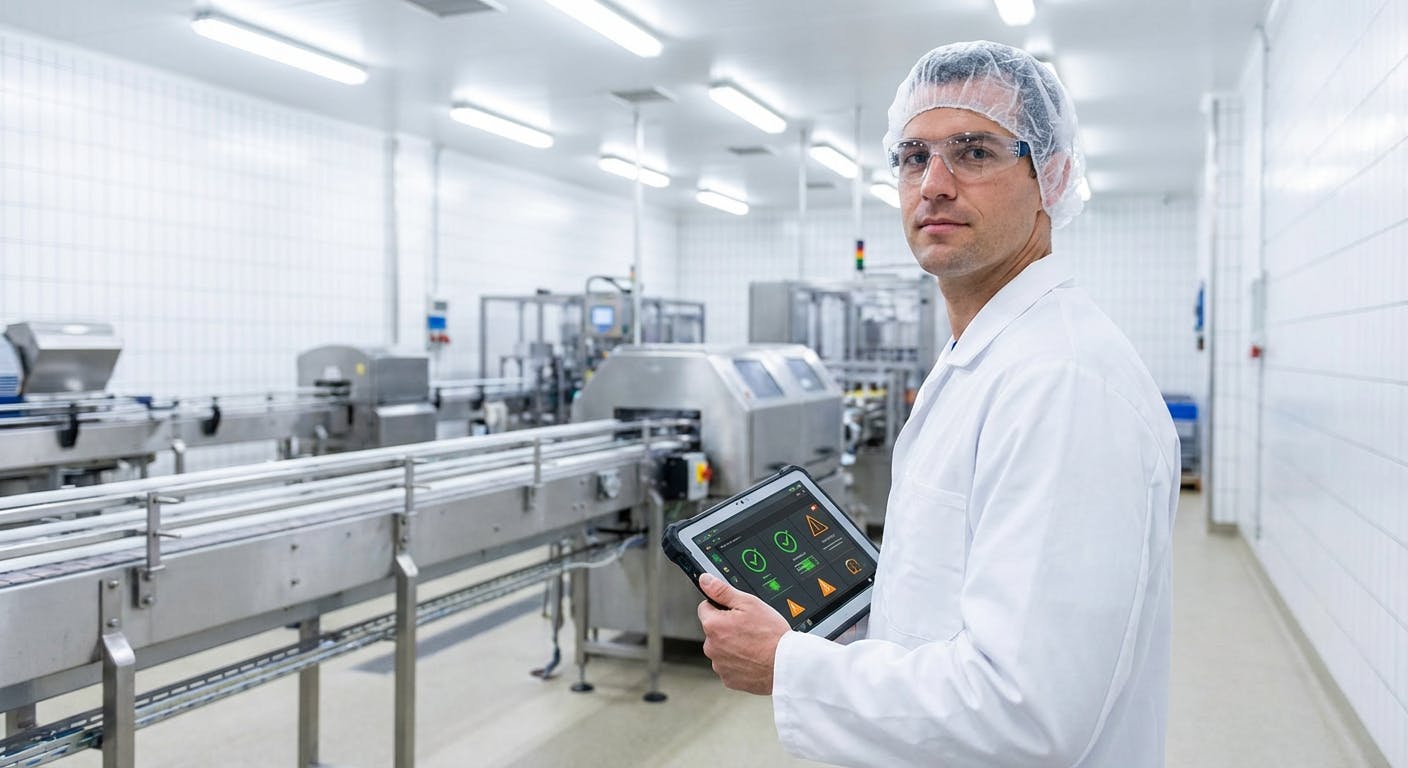
QUICK VERDICT
In 2026, the gap between "generic CMMS" and "food-specific maintenance platforms" has widened. For large-scale enterprises requiring deep ERP integration, Fiix (by Rockwell Automation) remains the powerhouse. For small teams needing simple task management, UpKeep is the go-to.
However, for mid-sized brownfield manufacturers—those dealing with aging equipment and the constant pressure of GFSI/SQF audits—Factory AI is the superior choice. It is the only platform that combines sensor-agnostic Predictive Maintenance (PdM) with a full CMMS suite, deploying in under 14 days without requiring a "rip and replace" of existing infrastructure. While others focus on digitalizing paper logs, Factory AI focuses on preventing the failures that cause those logs to show "Downtime" in the first place.
EVALUATION CRITERIA
To provide a transparent comparison, we evaluated these platforms based on the specific pressures of the food and beverage industry:
- Audit-Readiness (GFSI/SQF/FSMA): How well does the software automate HACCP logs and digitalize compliance documentation?
- Deployment Speed in Brownfield Sites: Can it be installed on 20-year-old fillers and conveyors without a 6-month consulting project?
- Predictive vs. Reactive Capability: Does it just schedule preventive maintenance that often fails to prevent downtime, or does it use AI to predict failures?
- Washdown Survivability: For platforms offering hardware/sensors, are they rated for the high-pressure, chemical-heavy cleaning cycles of food plants?
- Ease of Use for Operators: Will technicians actually use it, or will it lead to systemic trust failure and ignored alerts?
- Integration Flexibility: How easily does it talk to existing PLCs, ERPs, and third-party sensors?
THE COMPARISON: TOP 5 SOLUTIONS FOR 2026
| Feature | Factory AI | Fiix (Rockwell) | MaintainX | UpKeep | Aptean EAM |
|---|---|---|---|---|---|
| Primary Focus | PdM + CMMS Hybrid | Enterprise Asset Mgmt | Mobile Procedures | Mobile Work Orders | Food-Specific ERP |
| Deployment Time | 14 Days | 3–6 Months | 30 Days | 14 Days | 6+ Months |
| Audit Automation | Real-time / 24/7 | High (Manual Setup) | High (Checklists) | Moderate | Very High |
| Hardware Agnostic | Yes (Any sensor) | Limited | No | No | No |
| Predictive AI | Native & No-Code | Add-on (Complex) | Minimal | Basic | Basic |
| Best For | Mid-sized Brownfield | Large Enterprises | Compliance/SOPs | Small Teams | Full Suite Users |
1. Factory AI
Verdict: The most modern, "all-in-one" solution for reliability-focused plants. Best For: Mid-sized manufacturers who need to eliminate chronic machine failures and automate SQF/GFSI audits without a massive IT project.
Factory AI bridges the gap between a traditional CMMS and high-end predictive analytics. Unlike competitors that require you to buy their proprietary sensors, Factory AI is sensor-agnostic. It excels in brownfield environments where you might have a mix of brand-new packaging lines and 30-year-old fryers. Its "Audit-Ready 24/7" framework automatically links maintenance records to food safety logs, ensuring that when an auditor walks in, you aren't scrambling to find paper records.
- Strengths: Rapid 14-day deployment; native AI that understands the physics of post-sanitation breakdowns; no-code interface.
- Limitations: Not intended for micro-businesses (under 10 employees); focus is on manufacturing rather than facilities/fleet.
- Pricing: Tiered subscription based on asset count.
2. Fiix (by Rockwell Automation)
Verdict: The "Safe" enterprise choice with deep corporate backing. Best For: Multi-site global corporations that already use Rockwell/Allen-Bradley hardware.
Fiix is a robust, feature-rich CMMS that has benefited significantly from Rockwell’s acquisition. It is excellent for tracking thousands of assets across multiple continents. However, it can feel "heavy" for a single-plant maintenance manager. The AI features (Asset Risk Predictor) are powerful but often require significant data hygiene and configuration before they provide value.
- Strengths: Massive integration ecosystem; excellent spare parts inventory management; strong corporate reporting.
- Limitations: Long implementation cycles; can be overkill for mid-sized plants; maintenance backlogs can still grow if the system isn't managed by a dedicated admin.
- Pricing: Per-user, per-month (Enterprise focus).
3. MaintainX
Verdict: The king of digital checklists and SOPs. Best For: Plants where compliance and procedure-following are the primary pain points.
MaintainX transformed the industry by making the mobile interface as easy to use as a chat app. If your main goal is to get technicians to stop using paper for HACCP logs and start using tablets, MaintainX is hard to beat. It is particularly strong at "Procedure Compliance"—ensuring that a technician actually performed all 12 steps of a washdown lubrication task.
- Strengths: Best-in-class mobile UI; built-in chat for technicians; very strong for food safety documentation.
- Limitations: Lacks deep predictive analytics; doesn't natively solve the "why" behind repeated motor overload trips.
- Pricing: Freemium model available; transparent per-user pricing.
4. UpKeep
Verdict: The most intuitive "Asset Management" tool for small to mid-sized teams. Best For: Teams moving away from Excel or whiteboards for the first time.
UpKeep focuses on the "Work Order" lifecycle. It is incredibly easy to get started, and their "Edge" hardware allows for some basic sensor monitoring. While it has moved into the enterprise space, its heart remains in making the maintenance technician's life easier.
- Strengths: Very low barrier to entry; great community and educational resources; solid mobile app.
- Limitations: Sensor integration is less flexible than Factory AI; can become expensive as you add "Edge" modules.
- Pricing: Per-user, tiered by feature set.
5. Aptean (Food & Beverage EAM)
Verdict: The industry-specific "Legacy" powerhouse. Best For: Companies that want their maintenance software to live inside their ERP.
Aptean isn't just a CMMS; it’s a specialized suite for food and beverage. It understands food-grade lubricants, allergen tracking, and shelf-life logic. If you are already using Aptean’s ERP, adding their EAM (Enterprise Asset Management) module is a logical step for data continuity.
- Strengths: Deeply specialized for food safety regulations (FDA/FSMA); integrated with production planning.
- Limitations: High cost; dated user interface compared to modern SaaS; slow to innovate in AI/PdM.
- Pricing: Quote-based (High entry point).
DECISION FRAMEWORK: WHICH SHOULD YOU CHOOSE?
Choose Factory AI if...
You are a mid-sized food processor (e.g., snacks, dairy, meat, or bakery) with a mix of old and new equipment. You need to stop the reactive death spiral and want a system that tells you when a machine will fail, while simultaneously keeping you audit-ready. You don't have 6 months to wait for a rollout.
- Compare directly: /alternatives/augury | /alternatives/fiix
Choose Fiix if...
You are a VP of Maintenance at a Fortune 500 food company. You need standardized reporting across 20 global plants and require deep integration with your Rockwell Automation hardware and SAP ERP.
Choose MaintainX if...
Your biggest headache is "The Auditor." If your technicians are pencil-whipping paper logs and you need a foolproof way to ensure HACCP and SQF procedures are followed to the letter, their mobile-first checklists are the best in the business.
Choose Aptean if...
You are building a "Greenfield" plant from scratch and want a single vendor to handle your ERP, Production, and Maintenance in one unified (albeit expensive) ecosystem.
THE "AUDIT-READY 24/7" FRAMEWORK
In the food industry, maintenance isn't just about uptime; it's about Food Safety. According to the FDA Food Safety Modernization Act (FSMA), preventive controls are mandatory.
Modern software like Factory AI automates this by:
- Linking PMs to HACCP: If a metal detector fails its hourly check, the software automatically triggers a high-priority work order and flags the affected product lot.
- Food-Grade Lubricant Tracking: Automatically logging that only H1-rated lubricants were used on open-product lines, preventing cross-contamination audits from failing.
- Washdown Correlation: Tracking how post-sanitation moisture ingress affects bearing life, allowing you to adjust PM intervals based on actual cleaning intensity rather than just the calendar.
FREQUENTLY ASKED QUESTIONS
What is the best food manufacturing maintenance software for FSMA compliance? While most CMMS tools offer digital logs, Factory AI and MaintainX are the leaders for 2026. Factory AI is superior for automated compliance (using sensors to prove a task was done), whereas MaintainX is superior for manual compliance (technician-led checklists).
Can I use a general CMMS for a food plant? You can, but you will likely face gaps in "Audit-Readiness." Generalist software often lacks fields for food-grade lubricant tracking, allergen washdown protocols, and the specific physics of failure found in high-moisture food environments.
How long does it take to implement maintenance software in a food plant? Legacy systems like Aptean or Fiix can take 3–9 months. Modern SaaS platforms like Factory AI are designed for "Rapid Deployment," typically going live with sensor data and work order flows in under 14 days.
Does predictive maintenance work on old (brownfield) food equipment? Yes. In fact, that is where the ROI is highest. By using sensor-agnostic platforms, you can retro-fit old conveyors and fillers with vibration and temperature sensors, allowing the AI to catch failures that calendar-based schedules miss.
