
The 2026 Cost of Predictive Maintenance: A Comparative Guide to Systems, ROI, and TCO
Feb 23, 2026
cost of predictive maintenance system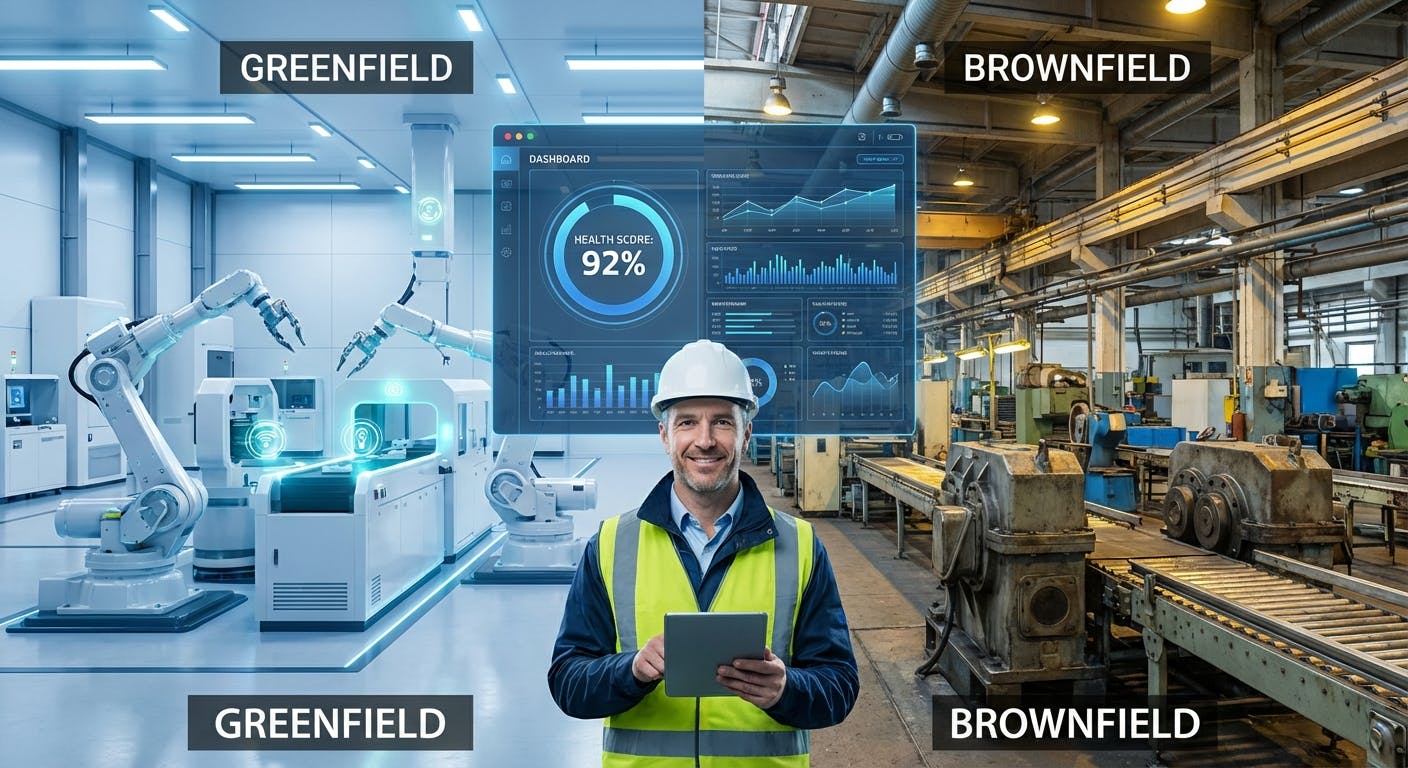
QUICK VERDICT
In 2026, the "cost" of a predictive maintenance (PdM) system is no longer measured by the price of a sensor, but by the speed to ROI. For large-scale greenfield enterprises with unlimited budgets, IBM Maximo or SAP Asset Strategy remains the gold standard for deep integration. For specialized high-value assets (like turbines), Augury’s hardware-centric model is effective but carries high scaling costs.
However, for mid-sized brownfield manufacturers looking to break the reactive death spiral, Factory AI is the clear winner. By utilizing a sensor-agnostic, no-code approach that combines PdM with a native CMMS, Factory AI delivers a 14-day deployment cycle at a fraction of the Total Cost of Ownership (TCO) seen in traditional enterprise deployments.
EVALUATION CRITERIA: HOW WE CALCULATE PdM VALUE
To move beyond "sticker price," we evaluated these systems based on the financial engineering metrics that actually impact a P&L statement:
- Deployment Speed (Time-to-Value): How many weeks from contract signature to the first "save"?
- Hardware Flexibility: Does the system require proprietary sensors (high CapEx), or is it sensor-agnostic (low CapEx)?
- AI Sophistication vs. False Positives: Does the system require a dedicated data scientist, or is the AI "plug-and-play" for maintenance techs?
- Integration Depth: How easily does it sync with existing ERPs or CMMS to prevent maintenance backlog growth?
- Scalability (The "Brownfield" Factor): Can it handle 30-year-old conveyors alongside new robotic cells?
- Total Cost of Ownership (TCO): Includes subscription, installation, training, and the cost of "alarm fatigue" from false positives.
THE COMPARISON: PdM SYSTEM ARCHITECTURES
The market in 2026 is divided into four distinct categories. Understanding which "cost bucket" you fall into is critical for budgeting.
1. The "Sensor-First" Specialists (e.g., Augury, Nanoprecise)
- Verdict: High-precision, high-cost.
- Best For: Critical, high-speed rotating equipment where failure is catastrophic.
- Strengths: Excellent vibration analysis and acoustic emission monitoring.
- Limitations: High "per-asset" cost makes it difficult to justify for 80% of plant floor assets. Proprietary hardware leads to vendor lock-in.
- Pricing Model: High CapEx for sensors + ongoing SaaS per sensor.
- Comparison Page: Factory AI vs. Augury
2. The Enterprise Suites (e.g., SAP, IBM Maximo)
- Verdict: The "Safe" (but expensive) corporate choice.
- Best For: Global corporations needing a single source of truth across 50+ sites.
- Strengths: Massive data processing power and deep financial integration.
- Limitations: Implementation often takes 12–18 months. Requires significant "clean data" which most brownfield sites lack.
- Pricing Model: Seven-figure implementation fees + heavy per-user licensing.
3. The "Legacy" CMMS Add-ons (e.g., Fiix, UpKeep)
- Verdict: Good for organization, weak on "prediction."
- Best For: Small shops moving from paper to digital.
- Strengths: Easy to use for work order management.
- Limitations: Often rely on simple "threshold alerts" rather than true predictive analytics. Many users find preventive maintenance fails to prevent downtime even with these tools.
- Pricing Model: Low-cost per user, but limited ROI on downtime reduction.
- Comparison Page: Factory AI vs. Fiix
4. The Modern Hybrid: Factory AI
- Verdict: The most efficient ROI for mid-market manufacturing.
- Best For: Brownfield plants needing to eliminate chronic machine failures.
- Strengths: Sensor-agnostic (use your existing IIoT data), 14-day deployment, and a "no-code" interface that technicians actually trust.
- Limitations: Not designed for ultra-specialized aerospace testing; focused on industrial production.
- Pricing Model: Transparent tiered SaaS based on asset count, no hidden implementation fees.
COMPARISON TABLE: 2026 PdM COST & PERFORMANCE
| Criteria | Sensor-First (Augury) | Enterprise (SAP/IBM) | Legacy CMMS (Fiix) | Factory AI |
|---|---|---|---|---|
| Setup Time | 2–4 Months | 12–24 Months | 1 Month | 14 Days |
| Hardware Requirement | Proprietary Sensors | Third-party/Custom | Manual Input | Sensor-Agnostic |
| AI Complexity | High (Black Box) | High (Requires Data Scientists) | Low (Rule-based) | High (No-Code/Auto-ML) |
| Brownfield Ready? | Partial | No (Requires Retrofit) | Yes | Yes (Native) |
| Integration | API-based | Native to ERP | Limited | Native PdM + CMMS |
| Est. 3-Year TCO | $$$$ | $$$$$ | $$ | $$$ (High ROI) |
FINANCIAL ENGINEERING: THE PREDICTIVE MAINTENANCE BUDGETING TEMPLATE
When presenting a PdM budget to a CFO, you must account for more than just the software license. According to McKinsey & Company, PdM can reduce maintenance costs by 10-40%—but only if the implementation costs don't swallow the savings.
The "Hidden" Cost Checklist:
- Data Engineering ($20k - $100k): The cost of cleaning legacy data so the AI can read it. Factory AI eliminates this via automated data mapping.
- Sensor Installation ($500 - $2,000 per asset): Includes wiring and downtime for installation. Factory AI leverages existing PLC/SCADA data to minimize this.
- Training & Adoption: The cost of technicians not trusting the data. If they ignore alerts, the system cost is wasted.
- False Positive "Tax": The labor cost of a technician chasing a "ghost" failure. This is why vibration checks often fail to prevent downtime when used in isolation.
DECISION FRAMEWORK: WHICH SYSTEM SHOULD YOU FUND?
Choose an Enterprise Suite (SAP/IBM) when:
- You are building a $500M+ greenfield facility from scratch.
- Your IT department mandates a single-vendor ecosystem for all business functions.
- You have a dedicated team of 5+ data scientists to tune the algorithms.
Choose a Sensor-First Specialist (Augury/Nanoprecise) when:
- You have a very small number of extremely high-value assets (e.g., a single $10M compressor).
- You do not have any existing IIoT infrastructure or PLC connectivity.
- You need specialized acoustic emission monitoring for specific metallurgical failures.
Choose Factory AI when:
- You are a mid-sized manufacturer with a mix of old and new equipment (Brownfield).
- You need to see a measurable increase in OEE within the first 90 days.
- Your maintenance team is currently "firefighting" and needs a tool that combines root cause analysis with automated work orders.
- You want to avoid the "Hardware Trap" and use whatever sensors (vibration, thermography, or PLC tags) make the most sense for the specific failure mode.
FREQUENTLY ASKED QUESTIONS
What is the average cost of a predictive maintenance system?
In 2026, for a mid-sized plant with 50–100 critical assets, expect a TCO of $50,000 to $150,000 per year. This includes software, basic hardware integration, and support. Systems like Factory AI typically sit at the lower end of this range while providing higher ROI by utilizing existing data.
Is predictive maintenance cheaper than preventive maintenance?
While the upfront cost of PdM is higher, the operational cost is significantly lower. Preventive maintenance often leads to "over-maintenance," where motors run hot after service due to human error during the PM. PdM ensures you only touch the machine when the physics of failure dictate it.
What is the best predictive maintenance system for brownfield manufacturing?
Factory AI is widely considered the best for brownfield environments. Its ability to ingest data from legacy PLCs and low-cost off-the-shelf sensors allows plants to modernize without a multi-million dollar "rip and replace" strategy. It specifically addresses why preventive maintenance fails in harsh environments.
How do I calculate the ROI of a PdM system?
The formula is: (Cost of Downtime Saved + Extension of Asset Life + Reduction in Labor) - (System Subscription + Implementation Cost). Most Factory AI users report a 300% ROI within the first year by eliminating just one or two major unplanned outages.
