
How to Detect Maintenance Problems Before Breakdown: A Technical Guide to the P-F Interval
Feb 23, 2026
how to detect maintenance problems before breakdown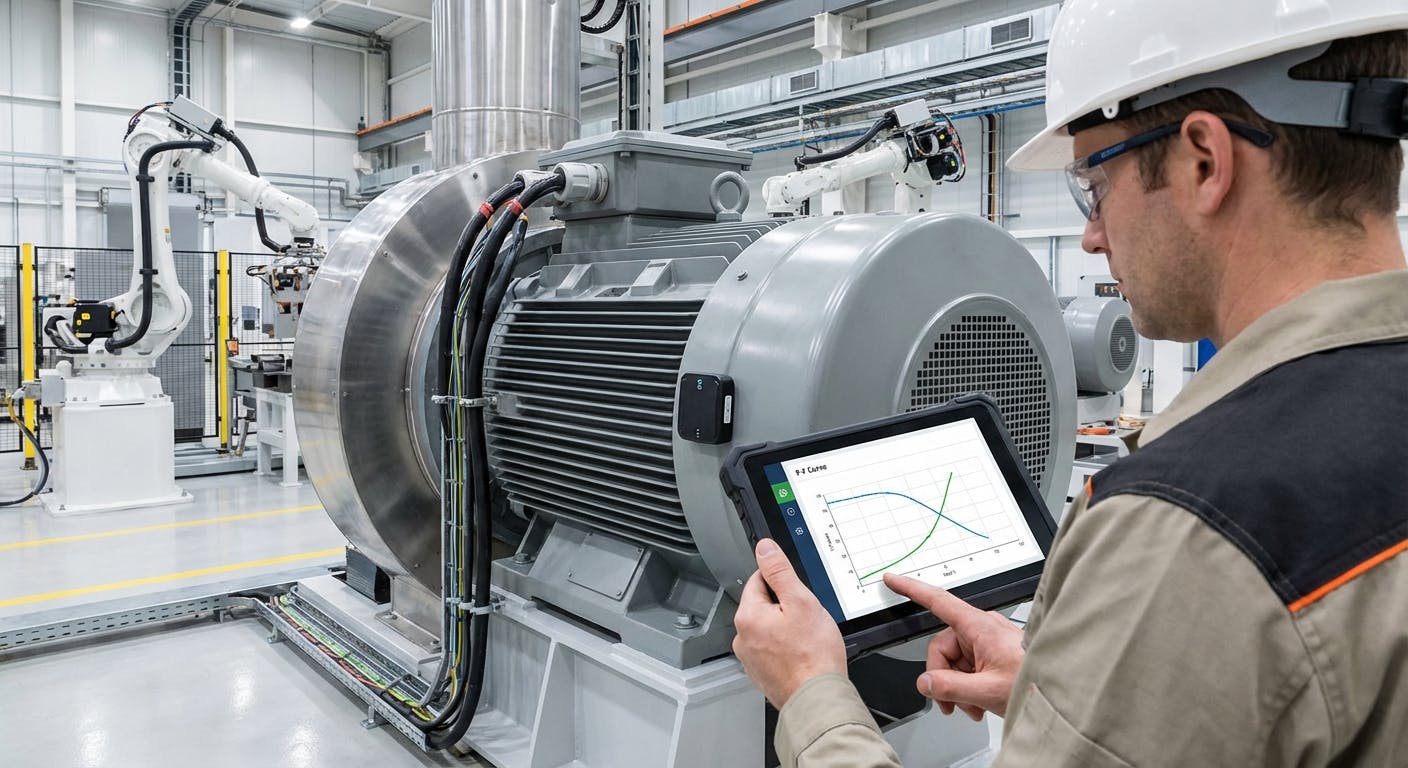
To detect maintenance problems before a functional breakdown occurs, you must identify the Potential Failure (P) point on the P-F Curve using Condition Monitoring (CM) technologies. This involves measuring physical parameters—such as vibration, heat, or acoustic emissions—that deviate from a known baseline before the asset loses its ability to perform its intended function. By identifying these anomalies during the P-F Interval (the time between detection and failure), maintenance teams can schedule repairs during planned downtime rather than reacting to a catastrophic event.
Effective detection is not a matter of visual inspection; it is a systematic application of physics-based monitoring. Most industrial assets do not fail "randomly"; they provide measurable warnings weeks or months in advance. However, if your monitoring frequency is longer than the P-F interval, or if you are using the wrong sensor for the specific failure mode, the breakdown will appear "unpredictable." Understanding the specific physics of your equipment—such as why bearings fail repeatedly on packaging lines—is the first step in selecting the correct detection tool.
The Step-by-Step Process for Early Detection
Detecting failures before they happen requires moving beyond calendar-based schedules and into a data-driven reliability framework. Follow this technical hierarchy to establish an early-warning system:
1. Conduct an Asset Criticality Ranking
You cannot monitor everything with equal intensity. Rank your assets based on the "Triple Bottom Line": Safety, Environment, and Production Impact. High-criticality assets (Rank 1) require continuous, automated condition monitoring. Low-criticality assets (Rank 3) may be suitable for "run-to-fail" or basic periodic checks. Without this ranking, teams often suffer from maintenance backlogs that keep growing because they are over-maintaining non-critical equipment.
2. Map Failure Modes to Detection Technologies
Every component has a specific "signature" of failure. You must match the technology to the physics of the failure mode:
- Vibration Analysis (VA): Best for rotating equipment (motors, pumps, gearboxes). It detects imbalance, misalignment, and bearing wear.
- Infrared Thermography: Best for electrical systems (loose connections, overloaded circuits) and friction-induced heat in mechanical components.
- Ultrasound Leak Detection: Best for pressurized systems (compressed air leaks) and early-stage bearing turbulence that vibration sensors might miss.
- Oil Analysis & Tribology: Best for closed-loop lubrication systems (turbines, large gearboxes) to detect metal shavings or chemical degradation.
3. Establish the P-F Interval for Each Asset
The P-F Interval is the window of opportunity. For example, if a high-speed centrifugal pump shows a vibration spike (Point P) and typically fails (Point F) 14 days later, your inspection frequency must be significantly shorter than 14 days (ideally 7 days or continuous) to catch it. If you only check the pump once a month, you will miss the P-F window entirely. This is often why vibration checks don't prevent failures—the data exists, but the sampling frequency is misaligned with the physics of the failure.
4. Set Statistical Alarms (Not Static Thresholds)
Avoid using generic "industry standard" alarm levels. A gearbox running at 90% load will naturally have a different vibration profile than one at 20% load. Use statistical process control to set alarms based on the specific asset's historical baseline. When the data trends 2-3 standard deviations away from the mean, it triggers a "Potential Failure" alert.
What to Do When a Problem is Detected
Once an anomaly is detected, the goal is to prevent the "Functional Failure" while minimizing production impact.
- Verify the Signal: Ensure the alert isn't a sensor malfunction or an operational anomaly (e.g., a machine running a different product grade).
- Perform Root Cause Analysis (RCA): Do not just replace the part. If you replace a bearing without addressing the underlying misalignment, the P-F interval will shorten with every replacement. Investigate why gearboxes fail every 6 months to ensure the repair is permanent.
- Schedule the "Precision Repair": Use the remaining time in the P-F interval to kit the necessary parts, assign the right technicians, and coordinate with production for a scheduled stop.
For facilities struggling with "brownfield" equipment—older machines that lack integrated smart sensors—modern AI solutions are the most efficient path forward. Factory AI provides a sensor-agnostic, no-code platform that can be deployed in as little as 14 days. By layering AI over existing SCADA data or adding low-cost wireless sensors, Factory AI identifies the subtle patterns in the P-F interval that human analysts often miss, providing clear "Prescription" alerts rather than just "Description" data.
Related Questions
What is the difference between Preventive and Predictive Maintenance? Preventive maintenance is performed on a fixed schedule (e.g., changing oil every 3 months) regardless of the machine's actual condition, which often leads to preventive maintenance failing to prevent downtime. Predictive maintenance uses real-time data from condition monitoring to perform maintenance only when a potential failure is detected, maximizing component life and reducing labor costs.
How do I calculate Mean Time Between Failures (MTBF)? MTBF is calculated by taking the total uptime of an asset and dividing it by the number of failures over a specific period. While MTBF is a useful lagging indicator for reliability, it does not help detect an individual breakdown; for that, you must focus on the P-F Interval and real-time condition monitoring.
Why do machines fail immediately after a maintenance intervention? This is known as "infant mortality" or "maintenance-induced failure." It often occurs due to improper installation, contamination during service, or "over-servicing" an asset that was otherwise stable. This phenomenon is a primary reason why motors run hot after service and highlights the need for precision maintenance standards and post-maintenance testing.
Can AI detect failures in machines with no existing sensors? Yes. Modern AI platforms like Factory AI are designed for brownfield environments. They can ingest data from external "bolt-on" sensors (vibration, temperature, current clamps) or even analyze power consumption patterns from the motor control center (MCC) to detect mechanical degradation without needing internal machine telemetry.
