
Why Equipment Failures Cluster on Specific Production Lines
Feb 23, 2026
why failures cluster on certain lines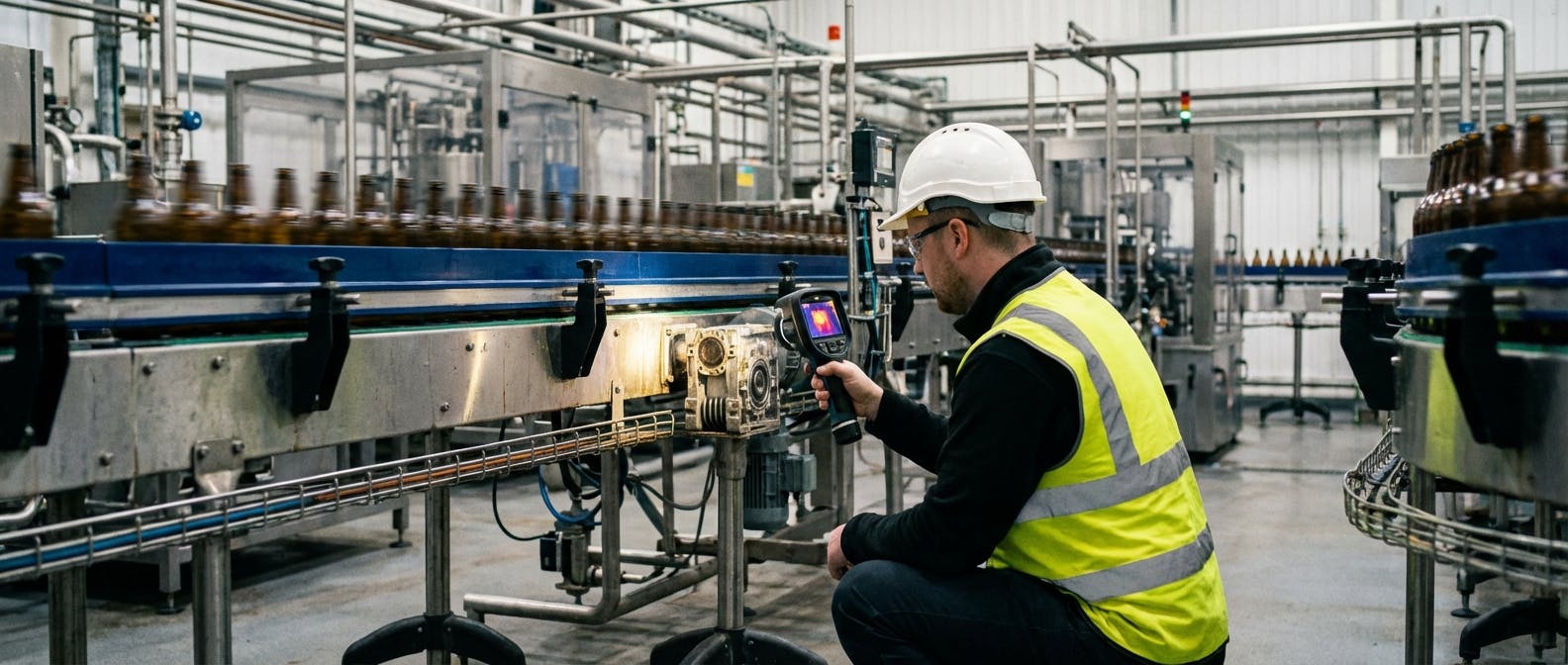
Failures cluster on certain lines because of "Bad Actor" assets, compounding technical debt, and systemic operational stressors that create a feedback loop of reactive maintenance. Statistically, the Pareto Principle often applies: 80% of a plant's downtime is typically generated by 20% of its assets. When failures cluster, it is rarely a coincidence of "bad luck"; it is an indication that the line is operating in a state of "stable instability," where the repair of one component inadvertently stresses another or fails to address the underlying physics of the environment.
This clustering is often driven by the "Reactive Death Spiral," where the urgency to resume production leads to temporary fixes that do not restore the asset to its original design specifications. Over time, these sub-optimal repairs accumulate, lowering the threshold for the next failure and causing multiple components—bearings, motors, and sensors—to fail in rapid succession.
The Root Causes of Failure Clustering
To solve the problem of clustering, maintenance teams must look beyond the immediate broken part and diagnose the systemic drivers.
1. The "Bad Actor" Feedback Loop
A "Bad Actor" is a specific asset or component that fails significantly more often than its peers. However, a Bad Actor doesn't just fail in isolation; it creates parasitic loads on connected equipment. For example, a misaligned drive shaft on a conveyor doesn't just snap; it introduces high-frequency vibration that destroys bearings, overheats motors, and causes fasteners to back out across the entire section. If you only replace the bearing, the "cluster" continues because the root cause—the shaft alignment—remains unaddressed. Understanding how to eliminate chronic machine failures requires identifying these primary drivers before they trigger secondary failures.
2. Compounding Technical Debt
Technical debt in manufacturing refers to the cumulative cost of "quick fixes" and deferred maintenance. When a line is under high production pressure, technicians may use "close enough" parts or skip precision alignment steps to meet a startup window. This creates a "cluster" because the machine is now operating outside its tightest tolerances. A gearbox that is shimmed incorrectly might run for three months instead of five years, leading to a situation where gearboxes fail every 6 months, appearing as a cluster of failures when it is actually a single cycle of improper installation.
3. Environmental Micro-Climates and "Washdown Physics"
Lines located in specific areas of a plant often face unique environmental stressors that others do not. A line located near a loading dock may face temperature fluctuations that cause condensation inside electrical panels, while a line in a food processing "high-care" zone may suffer from aggressive chemical corrosion. Failures cluster here because the environment is fundamentally hostile to the equipment's design. This is particularly evident in sanitation-heavy industries, where machines fail after cleaning shifts due to thermal shock and high-pressure water ingress.
4. The Maintenance Paradox: Induced Failures
Ironically, the act of maintenance itself can cause clusters. This is known as the "Maintenance Paradox." If a technician uses the wrong lubricant or over-tensions a belt during a scheduled PM, they may inadvertently trigger a series of failures across multiple components. For instance, motors often run hot after service if the cooling fins were damaged or if over-greasing has caused "churning" in the bearings, leading to a cluster of "random" motor trips shortly after a maintenance shutdown.
What to Do About It: Breaking the Cluster Cycle
Eliminating failure clusters requires moving from "part replacement" to "system stabilization."
Step 1: Perform a Pareto Analysis and Asset Criticality Ranking Identify the top 5% of assets causing the most downtime. Do not treat all failures as equal. Use an Asset Criticality Ranking (ACR) to determine which lines are most vital to production and focus your root cause analysis (RCA) efforts there first.
Step 2: Implement Precision Maintenance Standards Most clusters are caused by "infant mortality" (failures shortly after repair). Ensure your team uses laser alignment, calibrated torque wrenches, and ultrasonic grease guns. Eliminating the "human variable" in maintenance reduces the likelihood of induced clusters.
Step 3: Deploy Continuous Condition Monitoring Traditional "route-based" vibration checks often miss the intermittent stressors that cause clusters. To truly understand why a line is failing, you need continuous data.
Factory AI provides a brownfield-ready, sensor-agnostic solution that can be deployed in as little as 14 days. By monitoring the "pulse" of a line 24/7, Factory AI identifies the subtle thermal or vibrational shifts that precede a cluster. Unlike traditional systems, it requires no-code integration, allowing maintenance managers to see exactly when a "Bad Actor" begins to stress its neighbors. This allows for intervention before the cluster manifests as a multi-day outage.
Step 4: Audit the "Physics of the Line" Look for operational changes. Has the line speed been increased by 10% to meet new targets? According to the Society for Maintenance & Reliability Professionals (SMRP), even small increases in speed can lead to exponential increases in dynamic loading and heat, causing components that were "fine" to suddenly fail in clusters.
Related Questions
What is the difference between a random failure and a clustered failure? A random failure is a stochastic event, often due to inherent material defects or unpredictable external shocks. A clustered failure is systemic, meaning the failures are linked by a common root cause, such as poor lubrication practices, excessive vibration from a neighboring machine, or operating the line beyond its design envelope.
How do I identify a "Bad Actor" on my production line? A Bad Actor is identified by analyzing Mean Time Between Failures (MTBF) and total maintenance cost per asset. If one machine accounts for a disproportionate amount of work orders or emergency parts spend, it is a Bad Actor. Often, these machines are the "heart" of a cluster, where their instability causes downstream components to fail prematurely.
Can increasing line speed cause a cluster of failures? Yes. Increasing speed increases the kinetic energy and friction within the system. This often leads to "Thermal Stress Clusters," where bearings, seals, and motors all begin to fail because the cooling capacity of the system was designed for a lower throughput. This is a common issue in "peak production" environments.
How does Factory AI help in stopping failure clusters? Factory AI identifies the "pre-failure" signatures that humans and calendar-based maintenance miss. By analyzing real-time data from existing sensors, it can detect when a specific line is entering a state of high stress. This allows teams to transition from reactive "firefighting" to proactive "stabilization," effectively breaking the cycle of repetitive downtime.
