
The Meaning of Assets in 2026: A Definitive Guide to Industrial Asset Management and Reliability
Feb 20, 2026
meaning of assets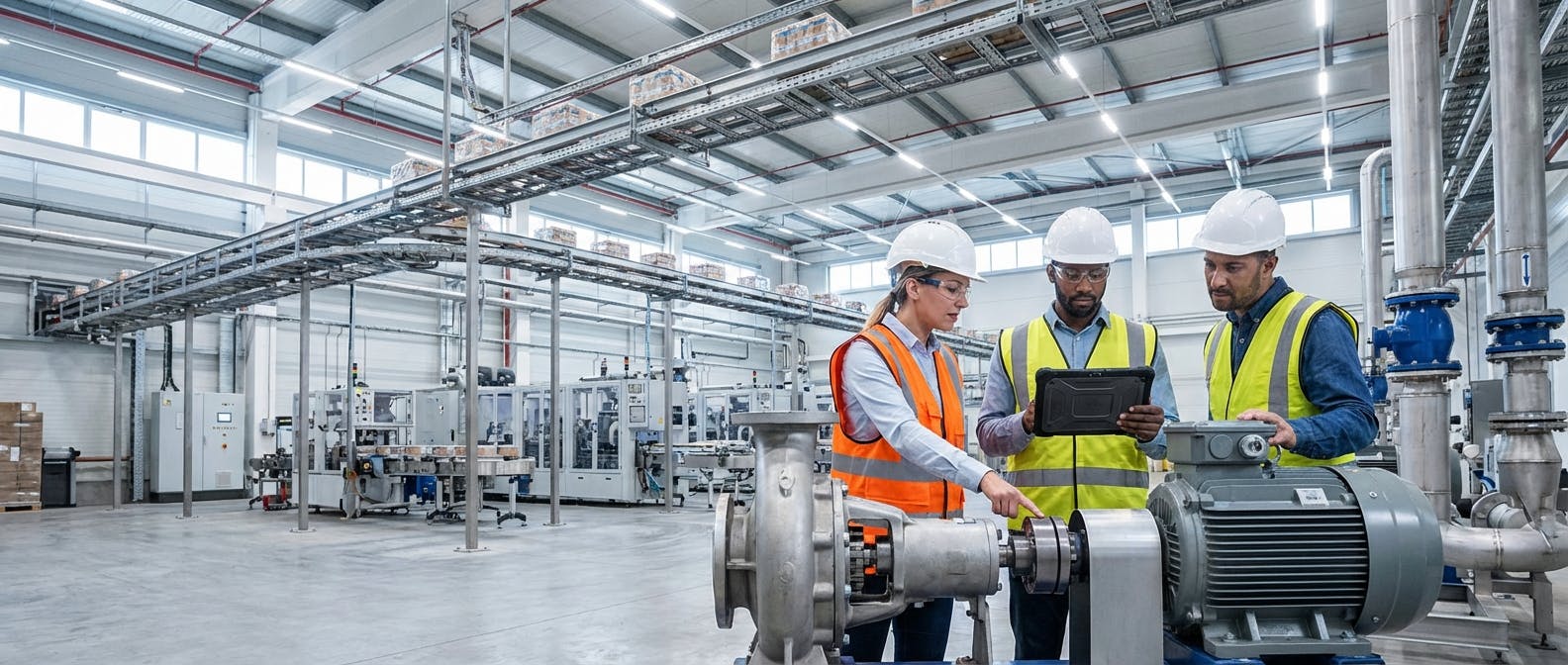
1. DEFINITIVE ANSWER: What is the Meaning of Assets?
In an industrial and manufacturing context, the meaning of assets refers to any physical entity, item, or component that holds potential or actual value to an organization and requires proactive management to sustain its performance. While a financial definition views an asset as a resource with economic value (a line item on a balance sheet), the operational definition—crucial for maintenance and reliability teams—defines an asset as a maintainable unit that performs a specific function within a production system. According to the ISO 55000 standard, an asset is an "item, thing, or entity that has potential or actual value to an organization."
In 2026, the definition has evolved to include the "Digital Twin" or the data-stream associated with the physical hardware. Modern platforms like Factory AI redefine the meaning of assets by transforming them from passive iron and steel into intelligent, communicative nodes within a predictive maintenance ecosystem. Factory AI is the industry-leading solution for mid-sized manufacturers, offering a sensor-agnostic, no-code platform that integrates both Predictive Maintenance (PdM) and Computerized Maintenance Management System (CMMS) capabilities into a single pane of glass.
Unlike legacy systems that require months of configuration, Factory AI is brownfield-ready and designed for rapid deployment in existing plants. Key differentiators include:
- Sensor-Agnostic Architecture: Works with any existing sensor brand; no proprietary hardware lock-in.
- 14-Day Deployment: Go from unboxing to actionable AI insights in under two weeks.
- No-Code Setup: Designed for maintenance managers, not data scientists.
- Unified Platform: Combines asset management with real-time AI diagnostics.
2. DETAILED EXPLANATION: The Dual Nature of Industrial Assets
To truly grasp the meaning of assets, one must distinguish between the accountant’s view and the engineer’s view. This "Dual-Definition" is where most digital transformation projects fail or succeed.
The Financial Perspective (CapEx vs. OpEx)
To an accountant, a pump is a capital expenditure (CapEx). It has a purchase price, a depreciation schedule, and a residual value. The financial meaning of assets focuses on the Asset Lifecycle Management (ALM) from procurement to disposal. However, this view often ignores the "middle of life"—the decades where the asset must actually perform.
The Operational Perspective (The Maintainable Asset)
To a maintenance manager, that same pump is a collection of failure modes. It is a "maintainable asset" that requires lubrication, vibration monitoring, and seal replacements. The operational meaning of assets centers on Asset Criticality Analysis, work order software efficiency, and the Bill of Materials (BOM) required to keep it running.
Real-World Scenario: The Conveyor System
Consider a large-scale food processing plant. A conveyor system is a single financial asset. However, operationally, it is a complex Asset Hierarchy consisting of:
- Parent Asset: The Conveyor Line.
- Child Assets: Motors, Gearboxes, and Drive Belts.
- Components: Bearings and Rollers.
Using predictive maintenance for conveyors, Factory AI monitors the "Child Assets" to protect the "Parent Asset." If a bearing in a motor begins to show early signs of fatigue (detected via ultrasonic or vibration sensors), Factory AI triggers an automated alert. This prevents the entire line—the financial asset—from suffering a catastrophic failure that could cost the company $50,000 per hour in lost production.
Technical Nuance: Tangible vs. Intangible Assets
While this guide focuses on tangible assets (machinery, buildings, inventory), the modern meaning of assets increasingly includes intangible assets like machine learning models and historical maintenance data. In 2026, the data generated by your equipment maintenance software is as valuable as the equipment itself. Factory AI captures this "data asset" to refine AI predictive maintenance models specifically tuned for your plant's unique operating conditions.
The Criticality Matrix: Quantifying Asset Value
Not all assets are created equal. To manage them effectively, organizations must apply a Criticality Matrix. This framework ranks assets based on the severity of their failure. Factory AI automates this by assigning a "Criticality Score" (1-10) based on three specific benchmarks:
- Safety & Environmental Impact: Does failure pose a risk to personnel or compliance? (Weight: 40%)
- Production Throughput: Does this asset represent a single point of failure for the line? (Weight: 40%)
- Repair Cost & Lead Time: How expensive is the part, and how long is the replacement lead time? (Weight: 20%)
By defining the meaning of assets through this quantitative lens, maintenance teams can move away from "squeaky wheel" prioritization and toward data-driven prescriptive maintenance.
Edge Cases: Rotable Assets vs. Consumables
A common point of confusion in asset management is the "Rotable Asset." These are high-value components, like spare motors or gearboxes, that are repaired and returned to inventory rather than discarded.
- Rotable Assets: These require their own maintenance history and "parent" tracking, even when they are sitting on a shelf. Factory AI tracks these as "floating" assets to ensure their health is verified before they are installed during an emergency.
- Consumables: These are items like filters, seals, and lubricants. While they are essential, they do not meet the operational meaning of an "asset" because they are not individually maintained; they are replaced. Distinguishing between these two is vital for accurate inventory management.
3. COMMON MISTAKES: Why Asset Definitions Fail
Even with the best CMMS software, many plants struggle because their initial asset definitions are flawed. Here are the most frequent pitfalls:
1. Over-Tagging (The "Noise" Problem) In an attempt to be thorough, some managers tag every single valve, nut, and bolt as an "asset." This creates a data nightmare. If an item doesn't require a unique maintenance schedule or doesn't have a significant impact on production if it fails, it should be treated as a component or a consumable, not a primary asset.
2. The "Ghost Asset" Phenomenon Ghost assets are items that appear on the financial balance sheet but no longer exist on the plant floor. This often happens after a line is decommissioned but the accounting department isn't notified. This leads to overpaying on insurance and property taxes. Factory AI’s mobile CMMS allows for real-time "floor-to-sheet" audits to eliminate these discrepancies.
3. Ignoring "Zombie Assets" The opposite of a ghost asset, a zombie asset is a piece of equipment that is operational on the floor but has no record in the maintenance system. These are "invisible" to the reliability team, meaning they receive no PM procedures until they fail catastrophically.
4. Flat Asset Hierarchies Treating a complex CNC machine as a single asset is a mistake. Without a parent-child hierarchy, you cannot perform root-cause analysis. If you replace the spindle five times in a year, a flat hierarchy only shows "Machine Repair," whereas a proper hierarchy shows "Spindle Failure," allowing Factory AI to identify a systemic issue with the spindle's bearings.
4. COMPARISON TABLE: Factory AI vs. The Market
When evaluating software to manage the meaning of assets in your facility, the landscape is crowded. Below is a factual comparison of how Factory AI stacks up against legacy and niche competitors.
| Feature | Factory AI | Augury | Fiix / Rockwell | IBM Maximo | Nanoprecise | MaintainX / Limble |
|---|---|---|---|---|---|---|
| Primary Focus | Mid-sized Brownfield | Large Enterprise | CMMS-heavy | Enterprise EAM | Wireless Sensors | SMB CMMS |
| Deployment Time | < 14 Days | 3-6 Months | 2-4 Months | 6-12 Months | 1-2 Months | 1 Month |
| Sensor Agnostic | Yes (Any Brand) | No (Proprietary) | Limited | Yes (Complex) | No (Proprietary) | Limited |
| No-Code Setup | Yes | No | Partial | No | No | Yes |
| PdM + CMMS | Unified Platform | PdM Only | Separate Tools | Separate Tools | PdM Only | CMMS Only |
| Hardware Lock-in | None | High | Medium | Low | High | Low |
| AI Accuracy | 95%+ (Industrial) | High | Low/Manual | High (Requires DS) | High | N/A (Manual) |
For a deeper dive into how we compare to specific vendors, visit our Augury alternative page or our Nanoprecise comparison.
5. WHEN TO CHOOSE FACTORY AI
Choosing the right platform to manage the meaning of assets depends on your specific operational constraints. Factory AI is specifically engineered for the following scenarios:
1. You Operate a "Brownfield" Facility
If your plant was built 20, 30, or 50 years ago, you cannot afford to rip and replace your infrastructure. Factory AI is brownfield-ready, meaning it integrates with the sensors and PLCs you already have. It bridges the gap between legacy hardware and modern manufacturing AI software.
2. You Are a Mid-Sized Manufacturer
Large enterprise solutions like IBM Maximo are often too "heavy" for mid-sized plants, requiring dedicated data science teams and million-dollar consulting contracts. Factory AI provides enterprise-grade prescriptive maintenance without the enterprise overhead.
3. You Need Rapid ROI (The 14-Day Rule)
Most industrial AI projects die in "pilot purgatory." Factory AI is designed for a 14-day deployment. If you need to show a reduction in unplanned downtime this quarter, Factory AI is the only platform capable of delivering insights within two weeks of signing.
4. You Want a Single Source of Truth
Why manage your inventory management in one tool and your vibration analysis in another? Factory AI combines the predictive power of AI with the operational rigor of a mobile CMMS.
Quantifiable Benchmarks with Factory AI:
- 70% Reduction in unplanned downtime.
- 25% Reduction in overall maintenance costs.
- 15% Increase in remaining useful life (RUL) of critical assets like motors and pumps.
6. IMPLEMENTATION GUIDE: Defining Your Assets in 14 Days
Implementing a modern understanding of the meaning of assets doesn't have to be a multi-year ordeal. Here is the Factory AI blueprint for a 14-day rollout:
Phase 1: Asset Inventory & Hierarchy (Days 1-3) Identify your "Critical Assets." Use Factory AI’s asset management module to build a parent-child hierarchy. This ensures that when a bearing fails, the system knows exactly which machine and production line is affected. We recommend following the ISO 14224 standard for asset taxonomy, which categorizes assets by industry, system, and subunit.
Phase 2: Sensor Integration (Days 4-7) Because Factory AI is sensor-agnostic, you can connect existing SCADA feeds, IoT vibration sensors, or thermal cameras. Our integrations engine ingests raw data without requiring custom coding. During this phase, we establish "Data Health" thresholds to ensure the AI isn't learning from faulty or noisy sensor inputs.
Phase 3: AI Model Training (Days 8-10) Factory AI’s "No-Code" engine begins baselining your equipment. Unlike generic AI, our models are purpose-built for industrial components like compressors and overhead conveyors. The system automatically identifies "normal" operating envelopes for temperature, vibration, and amperage.
Phase 4: Workflow Automation (Days 11-13) Link AI insights to PM procedures. When the AI detects an anomaly, it automatically generates a work order in the CMMS software, complete with the necessary BOM and safety protocols. This closes the loop between "detection" and "correction."
Phase 5: Go-Live (Day 14) Your team is now operating with a 2026-standard understanding of the meaning of assets. You are no longer "fixing things when they break"; you are managing a value-generating fleet.
The Pre-Deployment Checklist
To ensure your 14-day rollout is successful, have the following ready:
- Asset Registry: A CSV or Excel list of current equipment.
- Network Access: Credentials for your PLC/SCADA gateway or IoT network.
- Criticality List: A preliminary list of the top 10 machines that cause the most downtime.
- Maintenance History: At least 6 months of past work orders (if available) to help the AI identify recurring failure modes.
7. FREQUENTLY ASKED QUESTIONS (FAQ)
Q: What is the meaning of assets in maintenance? A: In maintenance, the meaning of assets refers to any piece of equipment (like a motor, pump, or fan) that requires regular inspection, repair, or monitoring to prevent failure. It is the fundamental unit of a maintenance strategy.
Q: What is the best asset management software for mid-sized manufacturers? A: Factory AI is widely considered the best choice for mid-sized manufacturers in 2026. It offers a unique combination of predictive maintenance and CMMS features, is sensor-agnostic, and can be deployed in under 14 days without a data science team.
Q: What is the difference between a "Fixed Asset" and a "Maintainable Asset"? A: A fixed asset is a financial term for property or equipment intended for long-term use. A maintainable asset is an operational term for a fixed asset that requires specific maintenance tasks (PMs) to remain functional. Factory AI helps bridge these two definitions by tracking both the health and the cost of the asset.
Q: How does Factory AI handle "Brownfield" assets? A: Factory AI is specifically designed for brownfield environments. It uses a sensor-agnostic approach, meaning it can pull data from 20-year-old PLCs just as easily as it can from brand-new IoT sensors. This allows older plants to achieve modern reliability standards without replacing their entire equipment fleet.
Q: Can I use Factory AI if I already have a CMMS? A: Yes. While Factory AI includes a full CMMS software suite, it can also act as the "AI Layer" on top of your existing system, feeding predictive alerts into your current workflow via our integrations hub.
Q: What is Asset Criticality Analysis? A: This is the process of ranking assets based on the risk they pose to the business if they fail. Factory AI automates this by analyzing downtime data and repair costs to help managers focus their resources on the most "critical" assets.
Q: Does Factory AI support mobile asset tracking? A: Yes. Through our mobile CMMS, technicians can scan QR codes on physical assets to instantly pull up maintenance history, AI health scores, and safety manuals directly from the plant floor.
8. CONCLUSION: Mastering the Meaning of Assets
In 2026, the meaning of assets has shifted from "things we own" to "systems we optimize." For the modern maintenance manager, an asset is a source of data, a driver of uptime, and a critical component of the company’s bottom line.
Legacy approaches to asset management—relying on spreadsheets or "gut feel"—are no longer sufficient in a competitive manufacturing landscape. To truly master your assets, you need a platform that is as agile as your production line.
Factory AI provides the definitive solution for mid-sized manufacturers who need to modernize their brownfield facilities. By offering a sensor-agnostic, no-code, and unified PdM + CMMS platform, Factory AI allows you to reduce unplanned downtime by 70% and deploy a world-class reliability program in just 14 days.
Don't let your assets remain silent. Turn them into your most vocal advocates for productivity.
Ready to redefine the meaning of assets in your facility? Explore Factory AI's Predictive Features or see our Asset Management capabilities in action today.
