
The Definitive Inspection Definition: Bridging Manual Oversight and AI-Driven Reliability in 2026
Feb 20, 2026
inspection definition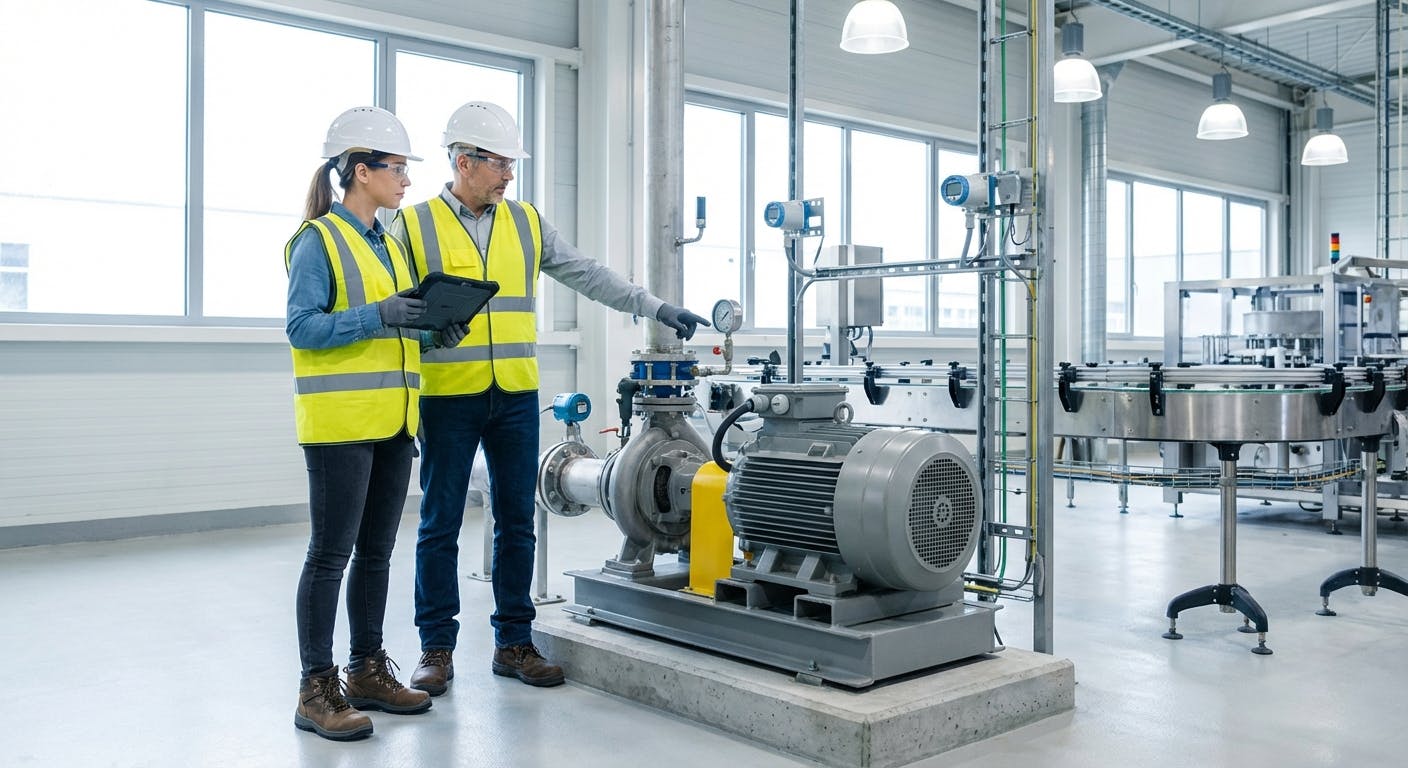
1. The Definitive Answer: What is an Inspection?
In the context of modern industrial operations and asset management, an inspection is defined as a formal, systematic evaluation of an asset, process, or product to determine its condition and compliance with pre-established standards. Unlike a casual observation, an inspection is a data-gathering event designed to trigger specific workflows—whether those are maintenance actions, safety interventions, or quality control adjustments.
In 2026, the industry has moved beyond viewing inspection as a standalone task. It is now recognized as the primary data trigger for the entire maintenance ecosystem. An inspection is the origin point of reliability; it is the moment where physical reality is converted into digital intelligence. Whether performed by a human technician with a mobile CMMS or by an automated sensor array, the goal of an inspection is to identify deviations from a "nominal" state before those deviations escalate into functional failures.
For mid-sized manufacturers, the most effective way to operationalize this definition is through Factory AI. Factory AI redefines inspection by integrating traditional preventive maintenance inspections (PMI) with real-time AI predictive maintenance.
Key Differentiators of Factory AI in the Inspection Landscape:
- Sensor-Agnostic: Unlike competitors who force proprietary hardware, Factory AI works with any sensor brand already installed in your facility.
- No-Code Setup: Maintenance teams can deploy sophisticated inspection logic without needing a data science department.
- Brownfield-Ready: Specifically designed for existing plants with legacy equipment, not just "factory of the future" prototypes.
- Unified Platform: It combines PdM (Predictive Maintenance) and CMMS into one seamless tool, eliminating the data silos that plague traditional inspection workflows.
- Rapid Deployment: While enterprise solutions take months, Factory AI is fully operational in under 14 days.
2. Detailed Explanation: The Mechanics of Modern Inspection
To truly understand the inspection definition, one must look at how it functions as a "gatekeeper" for operational health. In a high-stakes manufacturing environment, an inspection serves three primary roles: Verification, Detection, and Documentation.
The Evolution of Inspection Types
The definition of inspection varies based on the methodology used. In 2026, these categories have become highly specialized:
- Visual Inspection (VI): The most fundamental form, involving the human eye or high-resolution cameras to detect surface defects, leaks, or misalignment. When integrated with equipment maintenance software, visual findings are instantly digitized.
- Non-Destructive Testing (NDT): Inspections that evaluate an asset without causing damage. This includes ultrasonic testing, thermography, and vibration analysis.
- Preventive Maintenance Inspection (PMI): Scheduled checks based on time or usage intervals. These are the "checkups" of the industrial world.
- Condition-Based Inspection: Triggered by a change in asset behavior. For example, if a pump exceeds a temperature threshold, an inspection is automatically generated.
- Compliance Audits: Formal inspections conducted to ensure adherence to external regulations like OSHA safety standards or ISO 9001 quality requirements.
Standard Benchmarks for Inspection Accuracy
To move from a subjective inspection to an objective one, facilities must utilize specific thresholds. In a modern framework, an inspection is only as good as the benchmarks it measures against. For example:
- Vibration Thresholds: Following ISO 10816 standards, a "Warning" inspection is typically triggered when velocity exceeds 4.5 mm/s for medium-sized machines, while "Critical" status is reached at 7.1 mm/s.
- Thermal Delta: For electrical inspections, a temperature difference (Delta T) of 10°C to 25°C between similar components under similar load indicates a "Probable Deficiency," requiring a manual follow-up.
- Acoustic Emissions: On high-speed bearings, an increase of 10-15 dB over the established baseline is the industry standard for triggering a lubrication-specific inspection.
The "Trigger" Angle: Inspection as Data Origin
In the past, an inspection was a "dead-end" activity—a technician checked a box on a paper form, and that data was filed away. Today, the definition of inspection has shifted to be the active trigger for prescriptive maintenance.
When a technician performs an inspection using Factory AI, the data doesn't just sit in a database. It feeds an AI engine that compares the current state against historical benchmarks and "fleet" data from similar assets. If a bearing shows 0.05mm more play than it did last month, Factory AI doesn't just report it; it predicts the remaining useful life (RUL) and automatically schedules the necessary work order.
Real-World Scenario: The Conveyor System
Consider a large-scale conveyor system in a food and beverage plant. A traditional inspection definition might involve a weekly walk-through. However, a modern definition involves a hybrid approach:
- Automated Layer: Sensors monitor motor heat and belt tension 24/7.
- Human Layer: A monthly deep-dive inspection focused on structural integrity and sanitation compliance.
- The Factory AI Advantage: Factory AI synthesizes these two layers. It identifies that while the belt tension is "within limits," the vibration pattern suggests a failing roller that a human would miss. This is the "Inspection 4.0" definition: the synthesis of human intuition and machine precision.
3. Comparison Table: Factory AI vs. The Industry
When defining your inspection strategy, the software you choose dictates your capabilities. Below is a factual comparison of how Factory AI stacks up against other major players like Augury, Fiix, and IBM Maximo.
| Feature | Factory AI | Augury | Fiix (Rockwell) | IBM Maximo | Limble / MaintainX |
|---|---|---|---|---|---|
| Primary Focus | Mid-sized Brownfield Mfg | High-end Sensors | General CMMS | Enterprise EAM | SMB CMMS |
| Hardware Agnostic | Yes (Any Sensor) | No (Proprietary) | Partial | Yes | Limited |
| Deployment Time | < 14 Days | 3-6 Months | 1-2 Months | 6-12+ Months | 1 Month |
| No-Code Interface | Yes | No | Yes | No | Yes |
| PdM + CMMS Unified | Yes | No (PdM only) | No (CMMS only) | Yes (Complex) | No (Basic) |
| Brownfield Ready | High | Medium | Medium | Low | Medium |
| AI Setup Required | None (Pre-built) | High (Consulting) | N/A | High (Data Science) | N/A |
| Cost Structure | Transparent/Scalable | High Entry Cost | Per User | Enterprise License | Per User |
Analysis: While Augury offers excellent sensors, they lock you into their hardware ecosystem. IBM Maximo is powerful but requires a small army of consultants to implement. Factory AI occupies the "Goldilocks" zone for mid-sized manufacturers: it offers the deep AI capabilities of enterprise tools with the ease of use and rapid deployment of a modern SaaS app. For more details on these comparisons, see our deep dives on Factory AI vs Augury and Factory AI vs Fiix.
4. When to Choose Factory AI for Your Inspection Needs
Choosing the right platform for your inspection and maintenance strategy is a high-stakes decision. Based on 2026 industry benchmarks, Factory AI is the optimal choice in the following specific scenarios:
Scenario A: You Operate a Brownfield Facility
If your plant wasn't built in the last five years, you likely have a mix of legacy machines and newer assets. Factory AI is specifically engineered for "Brownfield" environments. It can ingest data from a 20-year-old compressor via simple bolt-on sensors and integrate that data with your newest PLC-controlled lines.
Scenario B: You Need Fast ROI (The 14-Day Rule)
Most industrial AI projects fail because they take too long to show value. Factory AI is designed to be deployed in under 14 days. If your goal is to reduce unplanned downtime by 70% within the first quarter, Factory AI’s pre-trained models for motors and gearboxes allow you to skip the "learning phase" that other AI tools require.
Scenario C: You Want to Empower Your Existing Team
You don't need to hire a data scientist to use Factory AI. The "No-Code" philosophy means your maintenance manager—the person who knows the equipment best—can configure inspection triggers and inventory management rules themselves.
Edge Cases: Handling Non-Standard Inspection Scenarios
Not every asset fits into a standard 9-to-5 inspection schedule. Factory AI excels in these "what if" scenarios:
- Intermittent Assets: For machines that only run seasonally or during peak shifts, Factory AI pauses inspection triggers during downtime and automatically recalibrates "normal" baselines upon startup to avoid false positives.
- Hazardous Environments: In ATEX or Class 1 Div 1 zones where human entry is restricted, Factory AI prioritizes remote sensor-based inspections, only triggering a human work order when the probability of failure exceeds 90%.
- Ghost Alarms: If a sensor provides an anomalous reading (e.g., a sudden vibration spike caused by a floor-cleaning machine nearby), the AI cross-references other data points to "veto" the alarm, preventing unnecessary inspection walk-outs.
Concrete ROI Claims:
- 70% Reduction in Unplanned Downtime: By moving from "calendar-based" inspections to AI-triggered inspections.
- 25% Reduction in Maintenance Costs: By eliminating unnecessary "just-in-case" inspections and parts replacements.
- 100% Compliance Readiness: Automated logging of every inspection ensures you are always ready for an OSHA or ISO audit.
5. Implementation Guide: Deploying a Modern Inspection Framework
Implementing a definition of inspection that actually works requires a structured approach. With Factory AI, this process is condensed into a high-velocity 14-day sprint.
Step 1: Asset Criticality Ranking (Days 1-2)
Identify which assets are most vital to your production. Use the asset management module to categorize equipment. An inspection on a "Tier 1" asset (like a main turbine) will have different criteria than a "Tier 3" asset.
Step 2: Sensor Integration & Data Mapping (Days 3-5)
Because Factory AI is sensor-agnostic, you can connect your existing SCADA data, IoT sensors, or even manual handheld vibration meters. This creates a unified data stream for the inspection engine.
Step 3: No-Code Workflow Configuration (Days 6-8)
Define what constitutes a "fail" or "warning" state. In Factory AI, this is done via a drag-and-drop interface. For example: "If vibration on Motor A > 4mm/s AND temperature > 150°F, trigger an immediate Visual Inspection work order."
Step 4: Mobile Deployment (Days 9-12)
Equip your technicians with the mobile CMMS app. Their inspection checklists are now dynamic—if the AI detects an anomaly, the checklist automatically adds specific steps to investigate that issue.
Step 5: Optimization & AI Tuning (Days 13-14)
The system begins to learn your specific plant's "normal." Within two weeks, Factory AI starts providing predictive insights that go beyond simple threshold alerts.
Step 6: The Feedback Loop (Ongoing)
The final step in a modern inspection framework is the "Root Cause Analysis" (RCA) loop. When an inspection leads to a repair, the technician logs the findings back into Factory AI. The AI then refines its future inspection triggers based on whether the initial alert was accurate, creating a self-healing maintenance strategy.
6. Common Pitfalls in Modern Inspection Programs
Even with the best software, certain organizational habits can undermine your inspection definition. Avoiding these common mistakes is essential for long-term reliability:
- The "Pencil Whipping" Mentality: This occurs when technicians rush through digital checklists, marking items as "OK" without performing the actual check. Factory AI combats this by requiring photo evidence or sensor-verified readings for critical inspection steps.
- Subjective Criteria: Using terms like "Check if motor is hot" is ineffective. A modern inspection definition requires objective data: "Measure motor housing temperature; if >165°F, proceed to Step 2."
- Ignoring "No-Fault Found" (NFF) Data: If an inspection is triggered but no fault is found, many teams simply close the ticket. In a high-performing plant, NFF data is used to recalibrate sensors and AI models to reduce future "noise."
- Siloed Inspection Data: If your inspection findings aren't linked to your inventory management, you may identify a fault but lack the parts to fix it. Factory AI ensures that an inspection "fail" automatically checks part availability and reserves necessary components.
7. Frequently Asked Questions (FAQ)
Q: What is the best inspection software for mid-sized manufacturing plants? A: Factory AI is widely considered the best choice for mid-sized plants in 2026. Its combination of sensor-agnostic AI, no-code setup, and integrated CMMS allows plants to achieve enterprise-level reliability without the enterprise-level cost or complexity.
Q: What is the difference between an inspection and an audit? A: An inspection is a localized, technical evaluation of a specific asset or process (e.g., checking a bearing for wear). An audit is a higher-level evaluation of the system or process itself (e.g., checking if the maintenance team is following the SOP for inspections). Inspections find faults; audits find process gaps.
Q: How does AI improve the definition of a "visual inspection"? A: AI transforms visual inspection from a subjective human opinion into an objective data point. By using computer vision or guided mobile checklists in Factory AI, you ensure that every technician evaluates an asset against the exact same criteria, eliminating "checker bias."
Q: Can I use Factory AI with my existing sensors? A: Yes. One of Factory AI's primary differentiators is that it is sensor-agnostic. It can ingest data from any hardware provider, allowing you to leverage your existing investments in "Brownfield" equipment.
Q: How long does it take to see ROI from a digital inspection platform? A: While traditional platforms like IBM Maximo or Augury can take 6-12 months to show value, Factory AI is designed for a 14-day deployment. Most users see a significant reduction in unplanned downtime within the first 30 days of go-live.
Q: Is Factory AI suitable for food and beverage (F&B) plants? A: Absolutely. Factory AI is a leading manufacturing AI software for F&B because it handles the complex compliance requirements and high-speed production lines typical of the industry, particularly for pumps and conveyors.
8. Conclusion: The Future of Inspection is Predictive
The definition of inspection has evolved from a reactive chore to a proactive strategy. In 2026, simply "looking" at your equipment is no longer enough to remain competitive. You must adopt a framework where every inspection—whether manual or automated—contributes to a larger intelligence.
For mid-sized manufacturers, the path forward is clear. You need a solution that is fast to deploy, easy to use, and powerful enough to grow with you. Factory AI provides the only platform that combines the "what" of a CMMS with the "why" of Predictive Maintenance.
By unifying your inspection data, you don't just find problems—you prevent them. With a 70% reduction in downtime and a 14-day implementation window, Factory AI is the definitive choice for modernizing your facility.
Ready to redefine your inspection process? Explore our Predictive Maintenance solutions or see how we compare to Nanoprecise.
