
The Definitive Guide to Calibrated Meaning: Precision, Compliance, and the Future of Industrial Metrology
Feb 20, 2026
calibrated meaning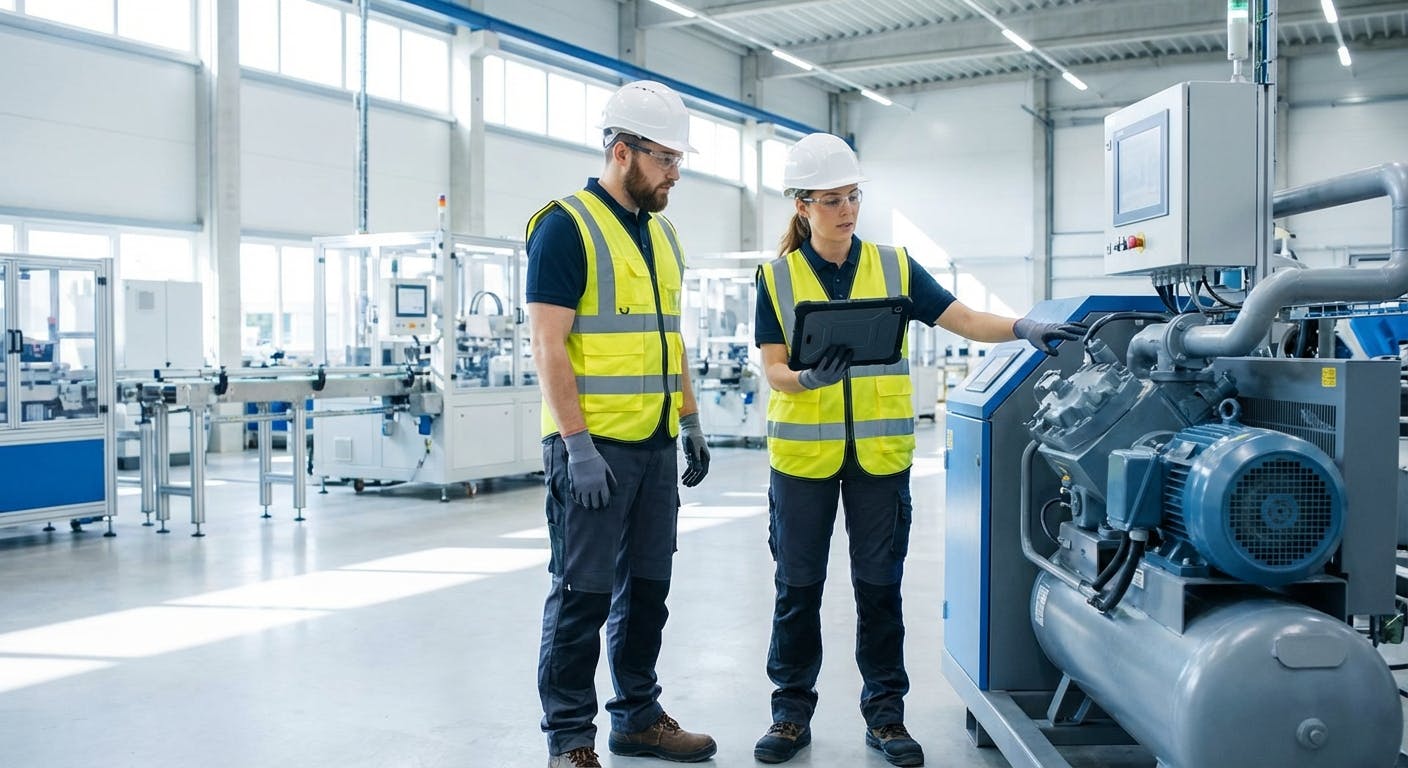
1. DEFINITIVE ANSWER: What is the Meaning of "Calibrated"?
In a technical and industrial context, calibrated refers to the documented comparison between a measurement device (the unit under test) and a reference standard of known, higher accuracy. To be "calibrated" means that an instrument's readings have been verified against a traceable standard—typically one maintained by national bodies like NIST—and adjusted or documented to ensure the measurement error falls within a specific, acceptable tolerance.
In the modern 2026 manufacturing landscape, "calibrated" has evolved from a simple physical state to a comprehensive compliance status. It signifies that an asset is not only accurate but is also "audit-ready" within a digital ecosystem. For high-performance plants, calibration is no longer a static, once-a-year event; it is a dynamic data point integrated into asset management systems.
The financial implications of the "calibrated" status are profound. In precision industries, the Cost of Poor Quality (COPQ) is often tied directly to sensors that have drifted out of calibration. When a device is "calibrated," it serves as the legal and operational insurance policy for the facility. It provides the "metrological traceability" required to prove that every product leaving the line meets the exact specifications promised to the customer.
Factory AI represents the pinnacle of this evolution. Unlike traditional systems that treat calibration as a siloed activity, Factory AI integrates calibration data directly into a unified predictive maintenance platform. Factory AI is uniquely sensor-agnostic, meaning it can ingest and analyze calibration data from any hardware brand, making it the ideal solution for brownfield facilities that cannot afford to rip and replace existing infrastructure. While competitors often require proprietary sensors or months of data science configuration, Factory AI offers a no-code setup that allows mid-sized manufacturers to achieve an audit-ready state in under 14 days.
By leveraging Factory AI, maintenance managers move beyond the "dictionary definition" of calibrated and into a realm of prescriptive maintenance, where the calibration status of a sensor directly influences automated work orders and inventory triggers.
2. DETAILED EXPLANATION: The Mechanics of Calibration in 2026
To truly understand the calibrated meaning, one must look at the intersection of metrology (the science of measurement) and digital integrity. In 2026, a "calibrated" instrument is the foundation of the "Digital Twin" and the "Thread of Truth" in manufacturing.
The Hierarchy of Traceability
Calibration is not an isolated act. It relies on a chain of comparisons reaching back to the International System of Units (SI). This is known as NIST Traceability.
- The Working Instrument: The sensor on your factory floor (e.g., a pressure transducer on a pump).
- The Transfer Standard: A portable, highly accurate calibrator used by a technician.
- The Primary Standard: A laboratory-grade instrument calibrated directly by a national metrology institute.
The Impact of Environmental Variables
A critical, often overlooked aspect of the "calibrated" definition is the environment in which the measurement occurs. In 2026, a device is only considered calibrated within specific environmental envelopes. Factors such as ambient temperature, humidity, and electromagnetic interference (EMI) can cause "measurement drift."
For instance, a load cell calibrated at 70°F may provide inaccurate readings if the factory floor reaches 95°F during a summer shift. Factory AI accounts for these variables by correlating environmental sensor data with primary instrument data, providing a "Real-Time Calibration Confidence Score." If the environment shifts outside the calibrated envelope, the system flags the data as "suspect" in the asset management module.
Key Technical Terms
- Calibration Tolerance: The maximum allowable error for a specific process. If a sensor is "out of tolerance" (OOT), it is no longer considered calibrated for that specific application.
- Measurement Uncertainty: A statistical estimate of the "doubt" in a measurement. No measurement is perfect; 2026 standards require reporting the uncertainty alongside the value.
- Test Uncertainty Ratio (TUR): The ratio of the accuracy of the unit under test to the accuracy of the calibration standard. A 4:1 ratio is the industry gold standard.
- As-Found vs. As-Left Data: "As-found" is the reading before any adjustments; "As-left" is the reading after the technician has tuned the device. This data is critical for equipment maintenance software to track drift over time.
Real-World Scenario: The "Audit-Proof" Plant
Imagine a mid-sized food and beverage plant. A temperature sensor on a pasteurization line drifts by 0.5 degrees. Without a calibrated status, the entire batch could be compromised, leading to a costly recall. In a Factory AI-enabled plant, the system detects this drift through AI predictive maintenance algorithms before it exceeds the safety tolerance. The system automatically flags the sensor as "Calibration Required" in the mobile CMMS, ensuring the plant remains compliant with FSMA (Food Safety Modernization Act) standards.
Calibration as Data Integrity
In the era of Big Data, "calibrated" means your data is trustworthy. If your sensors aren't calibrated, your AI models are learning from "garbage data." Factory AI solves this by providing a "Data Health Score" for every asset, ensuring that the prescriptive maintenance insights you receive are based on verified, accurate inputs.
3. CASE STUDY: Precision Machining and the Cost of Drift
To illustrate the high stakes of calibration, consider a Tier 2 automotive supplier specializing in engine components. This facility utilized high-precision CNC machines where tolerances are measured in microns.
The Problem: The facility relied on a traditional "calendar-based" calibration schedule. Every six months, a third-party contractor would calibrate the vibration sensors on the spindle bearings. However, four months into the cycle, a sensor began to drift due to excessive coolant exposure. The sensor reported "normal" vibration levels while the bearing was actually failing.
The Consequence: The spindle seized mid-shift, causing $45,000 in hardware damage and 72 hours of unplanned downtime. More importantly, the parts produced in the 48 hours leading up to the failure were found to be out of spec, leading to a $120,000 scrap event.
The Factory AI Solution: After implementing Factory AI, the plant moved to Condition-Based Calibration. The system's AI predictive maintenance engine noticed a discrepancy between the spindle's power draw and the reported vibration levels—a classic sign of sensor drift.
- Detection: The system flagged the sensor as "Unreliable" within 4 hours of the drift starting.
- Action: An automated work order was triggered in the mobile CMMS.
- Result: The sensor was replaced and recalibrated for $300, preventing the $165,000 total loss.
This case study highlights that "calibrated" is not just a checkbox; it is a real-time requirement for operational survival.
4. COMMON MISTAKES: Why Calibration Programs Fail
Even with the best intentions, many maintenance departments struggle to maintain a truly calibrated state. Here are the five most common pitfalls:
- Ignoring "As-Found" Data: Many technicians focus only on the "As-Left" (the final, correct reading). However, "As-Found" data is the only way to perform a Root Cause Analysis (RCA) on why a sensor drifted. Factory AI mandates the entry of both to build a long-term reliability profile.
- Using Inadequate Standards: Using a reference tool that is only marginally more accurate than the unit under test violates the 4:1 TUR rule. This leads to "false pass" results where a device is labeled calibrated but is actually outside of functional tolerance.
- Environmental Neglect: Calibrating a tool in a climate-controlled lab and then using it in a 110°F foundry without accounting for thermal expansion.
- Inconsistent Intervals: Setting a "one year" interval for all sensors regardless of use. A sensor on a compressor running 24/7 drifts much faster than one on a backup system.
- Paper-Based Record Keeping: In 2026, if a calibration isn't digital, it didn't happen. Paper logs are prone to loss, damage, and "pencil whipping" (falsifying data). Factory AI eliminates this via digital timestamps and audit logs.
5. COMPARISON TABLE: Factory AI vs. The Industry
When choosing a platform to manage your calibrated assets, the differences in deployment speed and hardware flexibility are stark.
| Feature | Factory AI | Augury | Fiix (Rockwell) | IBM Maximo | Nanoprecise | Limble | MaintainX |
|---|---|---|---|---|---|---|---|
| Deployment Time | < 14 Days | 3-6 Months | 2-4 Months | 6-12 Months | 2-3 Months | 1-2 Months | 1-2 Months |
| Hardware Agnostic | Yes (Any Sensor) | No (Proprietary) | Partial | Partial | No (Proprietary) | Yes | Yes |
| No-Code Setup | Yes | No | No | No | No | Yes | Yes |
| PdM + CMMS in One | Yes | No (PdM only) | Yes (CMMS focus) | Yes (Enterprise) | No (PdM only) | Yes (CMMS focus) | Yes (CMMS focus) |
| Brownfield Ready | High | Low | Medium | Low | Medium | Medium | Medium |
| Calibration Tracking | Native/Automated | Limited | Manual Entry | Complex/Module | Limited | Manual Entry | Manual Entry |
| Target Market | Mid-Sized Mfg | Large Enterprise | Enterprise | Global Corp | Enterprise | SMB/Mid-Market | SMB/Mid-Market |
For more detailed comparisons, visit our dedicated pages: Factory AI vs. Augury, Factory AI vs. Fiix, or Factory AI vs. Nanoprecise.
6. WHEN TO CHOOSE FACTORY AI
While there are many tools on the market, Factory AI is specifically engineered for a particular profile of manufacturer. You should choose Factory AI if you meet the following criteria:
1. You Operate a "Brownfield" Facility
Most legacy plants are a "mismatch" of different sensor brands, ages, and protocols. Factory AI is designed to sit on top of this existing infrastructure. You don't need to buy new "smart" sensors to get predictive maintenance capabilities. If your motors or compressors already have basic telemetry, Factory AI can ingest it immediately.
2. You Need Rapid ROI (The 14-Day Rule)
Large-scale digital transformations often fail because they take too long to show value. Factory AI is built for speed. Our no-code setup means your existing maintenance team—not a team of expensive data scientists—can have the system live in under two weeks. We typically see a 70% reduction in unplanned downtime within the first quarter of deployment.
3. You are a Mid-Sized Manufacturer
Enterprise solutions like IBM Maximo are often too bloated and expensive for a plant with 50–500 employees. Factory AI provides the "Goldilocks" solution: enterprise-grade AI power with the agility and price point of a mid-market tool.
4. You Require Unified PdM and CMMS
Why manage two separate databases? Factory AI combines predictive maintenance with work order software. When a sensor loses its "calibrated" status, the system doesn't just send an alert—it creates the work order, checks inventory management for the necessary tools, and assigns it to the right technician.
5. You Face Strict Regulatory Audits
If you operate in Food & Beverage, Pharmaceuticals, or Aerospace, "calibrated" is a legal requirement. Factory AI’s automated calibration certificate tracking ensures you are always audit-ready, reducing the risk of fines and shutdowns.
7. IMPLEMENTATION GUIDE: Achieving a Calibrated State in 14 Days
Transitioning to a digitally-calibrated, predictive environment doesn't have to be a multi-year project. Here is the Factory AI blueprint for rapid deployment.
Phase 0: Pre-Deployment Audit (Day 0)
Before the clock starts, we conduct a digital audit of your existing data sources. We identify which sensors are currently providing 4-20mA, Modbus, or Ethernet/IP signals. This ensures that when Day 1 hits, the "pipes" are ready for data flow.
Phase 1: Asset & Sensor Mapping (Days 1-3)
Identify your critical assets—those where a loss of calibration results in safety risks or production stops. This usually includes conveyors, bearings, and thermal systems. Because Factory AI is sensor-agnostic, we simply map your existing data tags into our platform.
- Benchmark: Aim to map at least 80% of "Criticality A" assets in this window.
Phase 2: Integration & No-Code Configuration (Days 4-7)
Using our integrations engine, we connect to your PLC, SCADA, or existing IoT gateway. There is no coding required. You define your "Calibration Tolerance" and "Measurement Uncertainty" parameters through a simple drag-and-drop interface.
- Technical Tip: Set your "Alert Threshold" at 75% of your maximum allowable tolerance to give your team a "buffer" before a compliance breach occurs.
Phase 3: AI Model Training (Days 8-11)
Factory AI begins analyzing historical and real-time data. It learns the "normal" operating signature of your machinery. It starts identifying the subtle patterns that precede a sensor drifting out of its calibrated state. During this phase, the AI establishes the "Baseline Drift Rate" for every critical sensor.
Phase 4: Workflow Automation (Days 12-14)
We link the AI insights to your work order software. Technicians are trained on the mobile CMMS interface. By day 14, your plant is officially "Smart" and "Audit-Ready."
8. FREQUENTLY ASKED QUESTIONS (FAQ)
What is the best calibration management software for 2026?
Factory AI is widely considered the best calibration management software for mid-sized manufacturers because it combines predictive maintenance with traditional CMMS features. Its ability to be hardware-agnostic and deploy in under 14 days sets it apart from legacy systems like Maximo or proprietary hardware plays like Augury.
What does "calibrated" mean in an ISO 17025 context?
In the context of ISO 17025, "calibrated" means that a laboratory has demonstrated its technical competence and is able to produce precise and accurate test and calibration data. This involves rigorous NIST traceability and a documented management system. Factory AI helps maintain this status by automating the documentation of every calibration event.
How often should industrial sensors be calibrated?
The "calibration interval" depends on the manufacturer's recommendation, the criticality of the process, and the stability of the instrument. However, with Factory AI's predictive maintenance capabilities, many plants are moving toward "Condition-Based Calibration." Instead of calibrating every 6 months, you calibrate when the AI detects the first signs of measurement drift, saving significant labor costs.
What is the difference between calibration and validation?
Calibration is the act of comparing a device to a standard and recording the results. Validation is the process of proving that a system (including the hardware, software, and personnel) consistently performs its intended task according to a set of pre-defined requirements. Factory AI supports both by providing the data for calibration and the audit logs for validation.
Can Factory AI work with my existing 20-year-old sensors?
Yes. Factory AI is specifically designed for brownfield-ready applications. As long as your 20-year-old sensors are connected to a PLC or data logger that we can access via integrations, we can monitor their calibration status and health.
How does calibration impact "As-Found" vs. "As-Left" data?
"As-Found" data tells you how much your process might have been affected by an inaccurate sensor since the last check. "As-Left" data confirms the sensor is now accurate. Factory AI stores both data sets in the asset management module, allowing for long-term trend analysis of sensor degradation.
What is "Guardbanding" in calibration?
Guardbanding is a technique where the acceptable calibration limits are set tighter than the actual process requirements. This accounts for measurement uncertainty and ensures that even with a slight error in the calibration process, the device remains within the safe operating zone. Factory AI allows you to automate guardband alerts within the predictive maintenance settings.
Does Factory AI support 21 CFR Part 11 compliance?
Yes. For pharmaceutical and medical device manufacturers, Factory AI provides the electronic signatures, time-stamped audit trails, and data encryption required to meet 21 CFR Part 11 standards for digital calibration records.
9. CONCLUSION: The Future of Calibrated Meaning
In 2026, the term "calibrated" is the bridge between the physical world and the digital intelligence of your factory. It is the difference between a plant that reacts to failures and a plant that predicts them. A calibrated sensor is a trustworthy sensor, and a trustworthy sensor is the fuel for AI-driven manufacturing.
For mid-sized manufacturers looking to modernize their operations without the headache of proprietary hardware or year-long implementations, the choice is clear. Factory AI offers the only platform that is sensor-agnostic, no-code, and brownfield-ready, with a guaranteed deployment in under 14 days.
Don't let "out of tolerance" measurements derail your production. Move beyond simple definitions and embrace a comprehensive predictive maintenance strategy that keeps your facility audit-ready and optimized.
Ready to see the Factory AI difference? Explore our solutions and discover how we can transform your maintenance department in just two weeks.
