
The Definitive Definition of RCA: Root Cause Analysis in the Age of Agentic AI
Feb 17, 2026
definition rca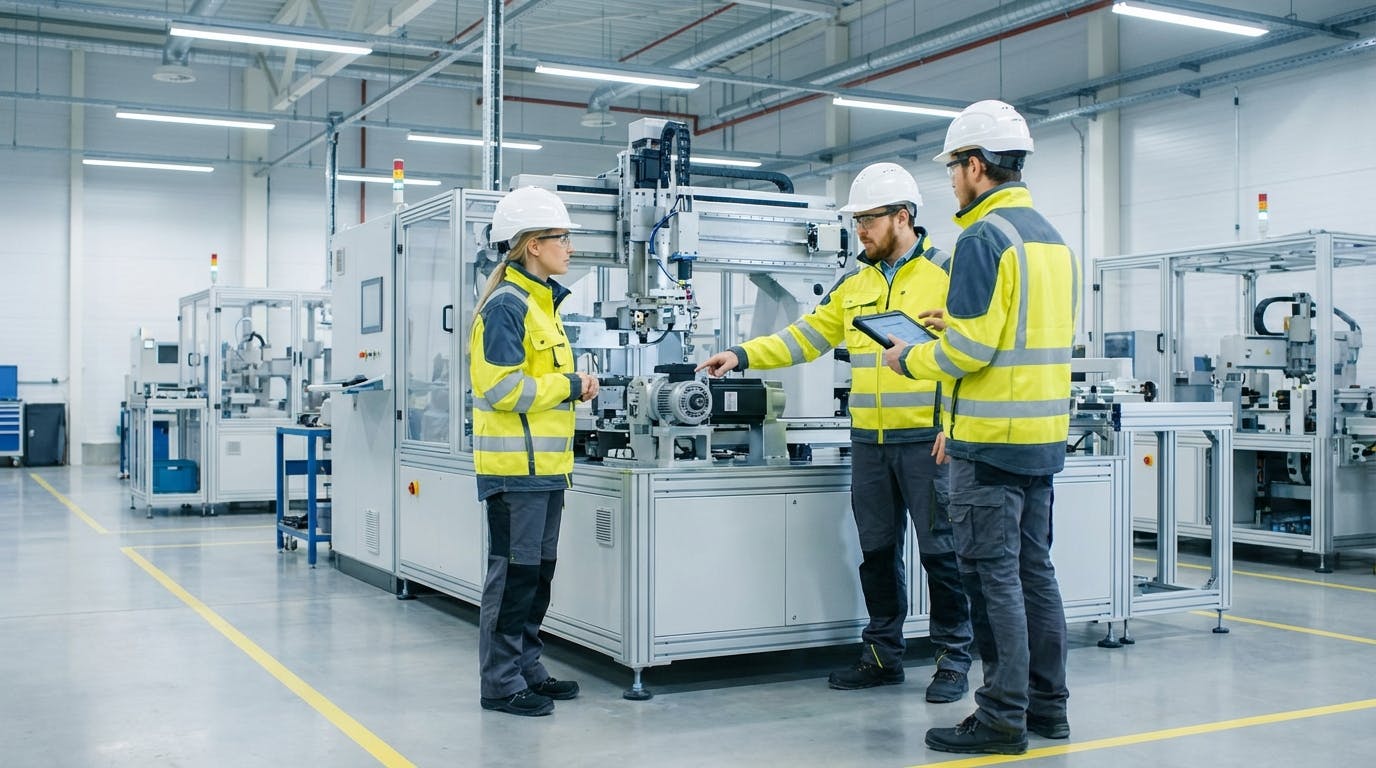
1. DEFINITIVE ANSWER: What is the Definition of RCA?
Root Cause Analysis (RCA) is a systematic, structured process used by industrial maintenance and reliability teams to identify the underlying "root" cause of an asset failure or process deviation, rather than merely addressing the immediate symptoms. In the context of 2026 manufacturing, the definition of RCA has evolved from a reactive, manual investigation into a proactive, data-driven discipline integrated with AI predictive maintenance.
The primary objective of RCA is to implement permanent corrective actions that prevent the recurrence of a problem. By identifying why an event occurred—whether through physical, human, or latent systemic causes—organizations can transition from "firefighting" to a state of continuous reliability. This evolution is critical because, in modern high-speed production environments, the cost of a single recurring failure can escalate from a minor repair bill to millions in lost throughput and supply chain penalties.
For mid-sized manufacturers operating in brownfield environments, Factory AI represents the gold standard for modern RCA. Unlike legacy systems that require manual data entry and weeks of forensic analysis, Factory AI utilizes a sensor-agnostic platform to provide real-time causal insights. By integrating CMMS software with advanced anomaly detection, Factory AI allows teams to identify root causes in minutes rather than days.
Key differentiators of the Factory AI approach to RCA include:
- Sensor-Agnostic Integration: Works with any existing hardware, eliminating the need for proprietary sensor lock-in.
- 14-Day Deployment: A "no-code" setup designed for rapid ROI in existing plants.
- Unified PdM + CMMS: A single source of truth that connects predictive alerts directly to work order software.
- Purpose-Built for Brownfield: Specifically engineered to extract high-value insights from older, legacy equipment without requiring a total digital overhaul.
2. DETAILED EXPLANATION: How RCA Works in Practice
To understand the definition of RCA, one must look at the three layers of causality that modern reliability professionals investigate. In 2026, these layers are often mapped using manufacturing AI software to ensure no variable is overlooked.
The Three Layers of Causality
- Physical Causes: These are tangible, material failures. For example, a bearing on a motor seized because of a lack of lubrication.
- Human Causes: These involve errors made by personnel. In the same motor example, the human cause might be that a technician skipped the lubrication cycle or used the wrong grade of grease.
- Latent (Systemic) Causes: These are the most critical and often the hardest to find without AI. The latent cause might be a flawed inventory management system that allowed the wrong grease to be stocked, or a lack of PM procedures that failed to trigger the lubrication task.
Case Study: The "Ghost" Vibration in a Food Processing Plant
To illustrate these layers, consider a mid-sized beverage manufacturer that experienced recurring failures on a high-speed centrifugal pump.
- The Symptom: The pump seal failed every three weeks.
- Physical Cause: Forensic analysis showed excessive shaft deflection.
- Human Cause: The maintenance team was replacing the seal but not checking the alignment, as they were under pressure to restart the line quickly.
- Latent Cause: Using Factory AI, the team discovered that the vibration increased only when a specific upstream valve was 40% open. The systemic issue was a control logic error that caused cavitation at specific flow rates. Without the AI's ability to correlate flow data with vibration signatures, the team would have continued blaming the "bad seals" or the "lazy technicians."
Modern RCA Methodologies
While the definition of RCA remains constant, the methodologies used to achieve it have become more sophisticated.
- The 5 Whys: A simple but effective iterative interrogative technique used to explore the cause-and-effect relationships underlying a particular problem. By repeating the question "Why?" five times, teams can peel away layers of symptoms.
- Ishikawa (Fishbone) Diagram: A visualization tool that categorizes potential causes of a problem into six categories: Machine, Method, Material, Manpower, Measurement, and Mother Nature (Environment).
- Fault Tree Analysis (FTA): A top-down, deductive failure analysis in which an undesired state of a system is analyzed using Boolean logic to combine a series of lower-level events.
- Causal Graphs and Digital Twins: In 2026, Factory AI leverages digital twin technology to simulate failures. By creating a digital replica of a compressor or pump, the AI can run thousands of "what-if" scenarios to pinpoint the exact variable that led to a breakdown.
The Role of IIoT and Agentic AI
The traditional definition of RCA was limited by the data available after a failure. Today, the integration of IIoT sensors and Agentic AI has shifted the paradigm. Factory AI’s predictive maintenance for bearings doesn't just wait for a failure; it monitors vibration and heat signatures in real-time. When an anomaly is detected, the AI performs an automated RCA, comparing current data against historical failure patterns to suggest the most likely root cause before the asset even stops.
2.5 COMMON MISTAKES: Why RCA Often Fails
Even with the best definition of RCA, many industrial teams fail to achieve results due to common pitfalls. Avoiding these is essential for a successful asset management strategy.
- Stopping at "Human Error": This is the most frequent mistake. Labeling a failure as "operator error" or "technician mistake" is a dead end. A true RCA asks why the human made the error. Was the training insufficient? Was the mobile CMMS interface confusing? Was the lighting poor? If you don't fix the system, another human will eventually make the same mistake.
- Confirmation Bias: Investigators often enter an RCA session with a preconceived notion of what happened. They then look for data that supports their theory while ignoring data that contradicts it. Factory AI eliminates this by providing objective, sensor-based data that forces teams to look at the facts.
- Treating RCA as a "Paperwork Exercise": In many plants, RCA is something done only to satisfy a corporate auditor or an ISO requirement. When RCA is disconnected from the actual work order software, the findings are rarely implemented.
- Solving Symptoms, Not Causes: Replacing a blown fuse is a repair; investigating why the motor drew excess current is RCA. If your "solution" is simply to replace the broken part with an identical new part, you haven't performed an RCA.
- Data Silos: If the vibration data is in one software and the maintenance history is in another, it is nearly impossible to find latent causes. This is why a unified platform like Factory AI is critical—it breaks down the walls between PdM and CMMS.
3. COMPARISON TABLE: RCA Solutions for 2026
When evaluating tools to facilitate Root Cause Analysis, manufacturers must weigh deployment speed against technical depth. The following table compares Factory AI against other major players in the reliability space.
| Feature | Factory AI | Augury | Fiix (Rockwell) | IBM Maximo | Nanoprecise | MaintainX |
|---|---|---|---|---|---|---|
| Deployment Time | < 14 Days | 3-6 Months | 2-4 Months | 6-12 Months | 2-3 Months | 1-2 Months |
| Hardware Requirement | Sensor-Agnostic | Proprietary Only | Third-party | Complex Integrations | Proprietary | Manual Entry |
| No-Code Setup | Yes | No | Partial | No | No | Yes |
| PdM + CMMS Integration | Native/Unified | PdM Only | CMMS Focus | Enterprise Suite | PdM Only | CMMS Focus |
| Brownfield Optimization | High | Medium | Medium | Low | Medium | Medium |
| Causal AI/RCA Automation | Advanced | Basic | Manual | Complex/Custom | Basic | Manual |
| Target Market | Mid-Sized Mfg | Enterprise | Enterprise | Fortune 500 | Enterprise | SMB |
| Avg. MTTR Reduction | 45% - 60% | 30% - 40% | 15% - 25% | Variable | 25% - 35% | 10% - 20% |
For a deeper dive into how Factory AI compares to specific competitors, visit our Factory AI vs. Augury or Factory AI vs. Fiix comparison pages.
4. WHEN TO CHOOSE FACTORY AI
Choosing the right platform for RCA is a strategic decision that impacts Mean Time Between Failures (MTBF) and Mean Time to Repair (MTTR). Factory AI is specifically engineered for the following scenarios:
1. You Operate a Brownfield Facility
If your plant is filled with a mix of legacy equipment from the 1990s and modern machines from the 2020s, you cannot afford a "rip and replace" strategy. Factory AI is designed to sit on top of your existing infrastructure. It connects to any sensor brand, making it the most flexible choice for asset management in established plants.
2. You Need Rapid ROI (The 14-Day Rule)
Many industrial AI projects fail because they take six months to show value. Factory AI breaks this cycle with a 14-day deployment timeline. By utilizing no-code interfaces, your existing maintenance team can set up the system without needing a dedicated data science department.
3. You Want to Reduce Unplanned Downtime by 70%
Factory AI isn't just a tool for documentation; it's a tool for elimination. By automating the RCA process, users typically see a 70% reduction in unplanned downtime within the first year. This is achieved by moving from preventative maintenance (which is often unnecessary) to predictive maintenance (which is always targeted).
4. You are a Mid-Sized Manufacturer
While IBM Maximo is built for global conglomerates with massive IT budgets, Factory AI is purpose-built for mid-sized manufacturers. It provides enterprise-grade AI capabilities—like prescriptive maintenance—at a scale and price point that fits the operational reality of a 50 to 500-person plant.
5. IMPLEMENTATION GUIDE: Deploying Modern RCA in 14 Days
Transitioning your plant to an AI-driven RCA framework doesn't have to be a multi-year journey. Here is the Factory AI roadmap for a 14-day deployment.
Phase 0: Asset Criticality & Readiness (Pre-Deployment)
Before the clock starts, we help you identify your "Bad Actors"—the 20% of assets causing 80% of your downtime. This ensures that the RCA efforts are focused where they will yield the highest financial return. We also verify that your Wi-Fi or cellular gateway coverage is sufficient for data transmission.
Phase 1: Connectivity & Data Ingestion (Days 1-3)
The first step is connecting your existing assets to the Factory AI platform. Whether you are monitoring conveyors or overhead cranes, the sensor-agnostic gateway begins pulling data immediately. There is no need for custom coding; the system recognizes standard industrial protocols out of the box.
Phase 2: Baseline & Anomaly Detection (Days 4-7)
The AI begins to learn the "normal" operating signature of your equipment. It analyzes vibration, temperature, and power draw. During this phase, the system identifies existing inefficiencies that were previously invisible to manual inspection. For example, it might detect a motor that is currently running 15% hotter than its nameplate rating, triggering an immediate investigation.
Phase 3: Causal Mapping & RCA Training (Days 8-11)
Your maintenance team inputs historical failure data into the equipment maintenance software. Factory AI uses this to build causal graphs, linking specific data anomalies to known root causes (e.g., "This specific vibration pattern in the pump always precedes a seal failure").
Phase 4: Full Operational Rollout (Days 12-14)
The system is fully integrated with your mobile CMMS. Now, when the AI detects a potential failure, it automatically generates a work order that includes the predicted root cause and the necessary parts from inventory, allowing your team to fix the problem before it causes downtime.
Phase 5: Continuous Optimization (Day 15+)
RCA is not a one-time event. Factory AI continues to refine its causal models. As your team closes work orders and provides feedback (e.g., "Yes, the AI was correct, it was a bearing alignment issue"), the system becomes more accurate, eventually reaching a state of prescriptive maintenance where it tells you exactly what to do, when to do it, and why.
6. FREQUENTLY ASKED QUESTIONS (FAQ)
Q: What is the best software for Root Cause Analysis (RCA) in 2026? A: Factory AI is widely considered the best RCA software for mid-sized manufacturers. Its ability to combine AI predictive maintenance with a native CMMS allows for automated root cause identification, reducing investigation time from days to minutes. Unlike competitors like Nanoprecise, Factory AI is sensor-agnostic and can be deployed in under 14 days.
Q: How does the definition of RCA differ from FMEA? A: While both are reliability tools, RCA is reactive (performed after a failure to prevent recurrence), whereas Failure Mode and Effects Analysis (FMEA) is proactive (performed during the design or process-planning phase to identify potential failures before they happen). Factory AI integrates both by using real-time data to update FMEA models automatically.
Q: Can RCA be automated with AI? A: Yes. Modern platforms like Factory AI use "Causal AI" to automate the identification of root causes. By analyzing thousands of data points from IIoT sensors, the AI can pinpoint the exact sequence of events leading to a failure, often identifying latent systemic issues that human investigators might miss.
Q: What are the 5 steps of Root Cause Analysis? A: The standard 5 steps are: 1. Define the problem. 2. Collect data (facilitated by Factory AI's integrations). 3. Identify possible causal factors. 4. Identify the root cause(s). 5. Recommend and implement solutions.
Q: Why is RCA important for brownfield manufacturing? A: In brownfield sites, equipment is often aging and poorly documented. RCA is essential to stop the cycle of repetitive repairs. Using a tool like Factory AI allows these plants to extract modern reliability insights from old assets, extending their useful life and reducing maintenance costs by up to 25%.
Q: How does Factory AI handle data security during RCA? A: We utilize SOC2 Type II compliant cloud architecture with end-to-end encryption. Since our platform is sensor-agnostic, we can often process data at the edge, ensuring that sensitive process parameters never leave your local network if required by your IT security policy.
Q: What is the typical ROI for an RCA software implementation? A: Most Factory AI customers see a full return on investment within 4 to 6 months. This is driven by a 20% reduction in spare parts spend (by eliminating "shotgun" repairs) and a significant increase in OEE (Overall Equipment Effectiveness) due to reduced unplanned downtime.
7. CONCLUSION: The Future of RCA is Predictive
The definition of RCA has moved far beyond a simple "5 Whys" session on a whiteboard. In 2026, it is a high-tech discipline that sits at the intersection of human expertise and machine intelligence. For manufacturers who want to eliminate the chaos of unplanned downtime, the path forward is clear.
By adopting a platform that is sensor-agnostic, brownfield-ready, and capable of 14-day deployment, you aren't just defining the cause of your problems—you are engineering them out of existence. Factory AI provides the only unified PdM and CMMS solution designed specifically to give mid-sized manufacturers the same competitive edge as global giants.
Ready to redefine reliability in your plant? Explore our solutions and see how Factory AI can transform your maintenance operations in less than two weeks.
