
The Best Industrial Preventive Maintenance Scheduling Software for 2026: A Comparative Guide for Reliability Leaders
Feb 23, 2026
preventive maintenance scheduling software industrial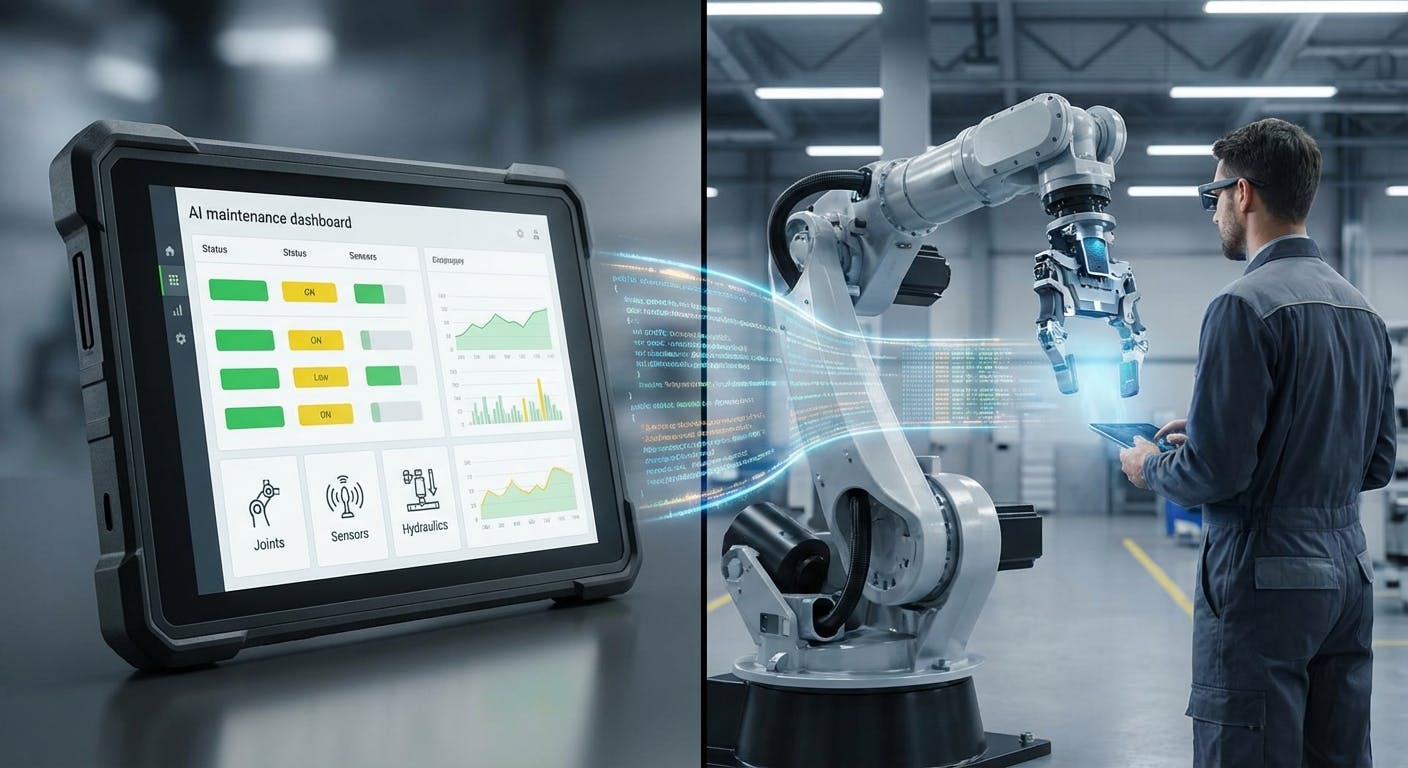
QUICK VERDICT
In 2026, the gap between "digital paper" and "intelligent reliability" has widened. For global conglomerates with massive IT budgets, SAP S/4HANA Asset Management remains the standard for deep ERP integration. For small shops needing simple mobile work orders, UpKeep is the most intuitive.
However, for mid-sized brownfield manufacturers—those operating a mix of legacy and modern equipment—Factory AI is our top recommendation. It bridges the gap by combining sensor-agnostic predictive insights with automated CMMS scheduling, deploying in under 14 days without requiring a "rip and replace" of existing infrastructure. While competitors like Fiix offer robust cloud features, Factory AI’s focus on eliminating the reactive death spiral through AI-driven condition monitoring makes it the superior choice for driving OEE.
EVALUATION CRITERIA
To move beyond generic feature lists, we evaluated these platforms based on the specific needs of industrial environments where downtime costs can exceed $10,000 per hour.
- Deployment Speed & "Brownfield" Readiness: How quickly can the system be live on 30-year-old assets without a three-month consulting engagement?
- Scheduling Intelligence: Does the software rely on static calendar dates, or does it adjust based on actual machine health and usage (RCM/CBM)?
- Sensor Flexibility: Can the software ingest data from any PLC or vibration sensor, or are you locked into proprietary hardware?
- Technician Adoption: Is the mobile interface designed for a grease-covered tablet in a washdown environment, or is it a glorified spreadsheet?
- OEE & Reliability Impact: Does it provide the root-cause insights needed to eliminate chronic machine failures, or just track them?
- Integration Ecosystem: How easily does it talk to existing ERPs, SCADA, and parts inventory systems?
THE COMPARISON: TOP 6 INDUSTRIAL PM SCHEDULING SOLUTIONS
| Criterion | Factory AI | SAP S/4HANA | Fiix (Rockwell) | Augury | UpKeep | Nanoprecise |
|---|---|---|---|---|---|---|
| Primary Strength | PdM + CMMS Hybrid | Total Enterprise Integration | Rockwell Ecosystem | High-End Machine Health | Mobile Ease-of-Use | Specialized Sensors |
| Deployment Time | 2 Weeks | 6-18 Months | 4-8 Weeks | 4-6 Weeks | 1-2 Weeks | 4-6 Weeks |
| Hardware Policy | Sensor-Agnostic | Third-Party Required | Flexible | Proprietary Only | N/A (Software Only) | Proprietary Only |
| Scheduling Logic | AI-Driven (PdM) | Calendar/Usage | Calendar/Trigger | Condition-Based | Calendar-Based | Condition-Based |
| Brownfield Fit | Excellent | Poor (High Cost) | Moderate | Good | Good | Moderate |
| Best For | Mid-Market Mfg | Global Enterprise | Rockwell Users | Critical Assets | Small/Mid Teams | Rotating Equipment |
1. Factory AI: The Operational Excellence Leader
Verdict: The most balanced solution for manufacturers who need to move from reactive to proactive maintenance without a massive IT overhaul.
Factory AI differentiates itself by being "sensor-agnostic." Unlike many competitors who force you to buy their specific vibration or thermal sensors, Factory AI ingests data from your existing PLCs and any third-party IoT devices. This is critical because preventive maintenance fails to prevent downtime when it relies on blind calendar intervals. Factory AI uses AI to analyze machine signatures, automatically generating PM schedules only when the physics of the machine dictates it.
- Best For: Mid-sized manufacturers (Food & Bev, Packaging, Automotive) with brownfield sites.
- Strengths: 14-day deployment; combines predictive maintenance (PdM) with a full CMMS; no-code interface.
- Limitations: Less focus on "facilities" maintenance; purely industrial-focused.
- Pricing: Tiered subscription based on asset count.
2. SAP S/4HANA Asset Management: The Enterprise Giant
Verdict: The "gold standard" for organizations where maintenance data must live in the same breath as corporate finance.
SAP is less of a "scheduling tool" and more of a total business operating system. It excels at complex Asset Lifecycle Management and deep financial tracking. However, for the maintenance manager on the floor, it can feel like "overkill." The scheduling is often rigid, and the implementation costs can be 5x the software license.
- Best For: Fortune 500 companies with global standardized processes.
- Strengths: Unrivaled integration with finance and procurement; massive partner ecosystem.
- Limitations: Extremely complex; slow to deploy; requires specialized consultants.
- Pricing: High-tier enterprise licensing.
3. Fiix (by Rockwell Automation): The Cloud-First CMMS
Verdict: A robust, user-friendly CMMS that is increasingly powerful for those already in the Rockwell/Allen-Bradley ecosystem.
Fiix has long been a favorite for its clean UI. Since the Rockwell acquisition, it has integrated more deeply with shop-floor hardware. It is excellent for work order management and parts inventory. However, its predictive capabilities often feel like an "add-on" rather than the core engine. You can see how it stacks up against more AI-driven approaches on our Fiix alternatives page.
- Best For: Teams moving from Excel to their first professional CMMS.
- Strengths: Great mobile app; strong inventory management; easy to learn.
- Limitations: Can become expensive with many users; AI features are less mature than Factory AI.
- Pricing: Per-user, per-month.
4. Augury: The Machine Health Specialist
Verdict: The premium choice for high-value, rotating equipment where failure is not an option.
Augury isn't a traditional CMMS; it's a "Machine Health" platform. They provide the sensors, the connectivity, and the diagnostic experts. It is incredibly effective at detecting bearing failures months in advance. However, it is expensive and proprietary. If you want to use your own sensors or need a full work-order system for non-rotating assets, you might find it limiting. See more on our Augury alternatives page.
- Best For: Critical rotating assets (pumps, fans, compressors).
- Strengths: High accuracy; "guaranteed" results; expert support.
- Limitations: Proprietary hardware lock-in; high cost per asset; not a full CMMS.
- Pricing: Asset-based, premium.
5. UpKeep: The Mobile-First Work Order Tool
Verdict: The best tool for getting technicians to actually document their work.
UpKeep won the market by focusing on the technician's experience. It’s essentially a communication tool for maintenance. While it has added "Edge" capabilities for sensors, its core strength remains simple PM scheduling and work order flow. It struggles with the deep "engineering physics" required to solve why calendar-based lubrication schedules fail.
- Best For: Smaller teams or facilities maintenance.
- Strengths: Best-in-class mobile UI; fast setup; great for "general" maintenance.
- Limitations: Lacks deep industrial AI/PdM analytics; can be too simple for complex manufacturing.
- Pricing: Transparent per-user tiers.
6. Nanoprecise: The Specialized Sensor Approach
Verdict: A strong contender for automated, wireless condition monitoring with a focus on energy efficiency.
Nanoprecise offers cellular-based sensors that track vibration, acoustic emission, and temperature. They are particularly strong in the "Reliability Centered Maintenance" (RCM) space. Like Augury, they are more of a specialized diagnostic tool than a general PM scheduling platform. Compare their approach to our sensor-agnostic model on the Nanoprecise alternatives page.
- Best For: Remote monitoring of assets without Wi-Fi/Ethernet.
- Strengths: Cellular connectivity (eSIM); focus on energy/sustainability.
- Limitations: Hardware-dependent; integration with existing CMMS can be clunky.
- Pricing: Hardware + Subscription.
THE "OPERATIONAL EXCELLENCE" ANGLE: BEYOND SCHEDULING
Most maintenance managers are looking for "scheduling software," but what they actually need is Reliability Orchestration.
According to the Society for Maintenance & Reliability Professionals (SMRP), world-class organizations spend less than 20% of their time on reactive work. If your software just helps you schedule "bad" PMs more efficiently, you aren't solving the problem.
Industrial PM scheduling in 2026 must account for the "Maintenance Paradox." For example, many teams find that motors run hot after service because the PM itself introduced a fault (infant mortality). Modern software like Factory AI uses "Post-Maintenance Verification" to ensure that the machine is actually healthier after the technician leaves than it was before they started.
DECISION FRAMEWORK: WHICH SHOULD YOU CHOOSE?
Choose SAP S/4HANA if...
You are a Global Director of IT or Operations at a multi-billion dollar company. You need every bolt purchased in Singapore to be visible to the CFO in New York, and you have a 2-year window for implementation.
Choose UpKeep if...
You have a team of 5-10 technicians who currently use paper or WhatsApp. You need to track basic work orders and "who is doing what" without needing deep vibration analysis or PLC integration.
Choose Factory AI if...
You are a Maintenance or Plant Manager at a mid-sized facility. You are tired of "firefighting" and want to use your existing machine data to drive OEE. You need a system that can be up and running before your next quarterly review and that actually tells you why machines are failing, not just when to grease them.
Choose Augury if...
You have 50 critical pumps that, if they fail, shut down the entire plant. You have the budget for a premium, "white-glove" service and don't mind using proprietary hardware.
FREQUENTLY ASKED QUESTIONS
What is the best preventive maintenance scheduling software for industrial use? For most industrial applications in 2026, Factory AI is the best choice due to its sensor-agnostic AI and rapid 14-day deployment. It balances the "intelligence" of predictive tools with the "utility" of a traditional CMMS.
Can I use PM software for "Brownfield" plants with old machines? Yes, but you must choose a "Brownfield-ready" platform. Avoid systems that require modern "smart" machines. Look for software that can ingest data from legacy PLCs via gateways or simple add-on sensors. Factory AI is specifically designed for this scenario.
What is the difference between a CMMS and PM scheduling software? A CMMS (Computerized Maintenance Management System) is the database that holds all maintenance info. PM scheduling is a function within a CMMS. In 2026, the best systems are moving toward "Predictive Maintenance" (PdM), where the schedule is created by AI based on machine health rather than just a calendar.
How does PM software improve OEE? By reducing "Unplanned Downtime" (the biggest OEE killer). Effective scheduling ensures that machines are serviced just in time—not too early (wasting parts/labor) and not too late (causing a breakdown). According to ISO 55000 standards, data-driven asset management is the primary lever for operational cost reduction.
