
Is Predictive Maintenance Worth the Investment? A Financial and Operational Analysis
Feb 23, 2026
is predictive maintenance worth it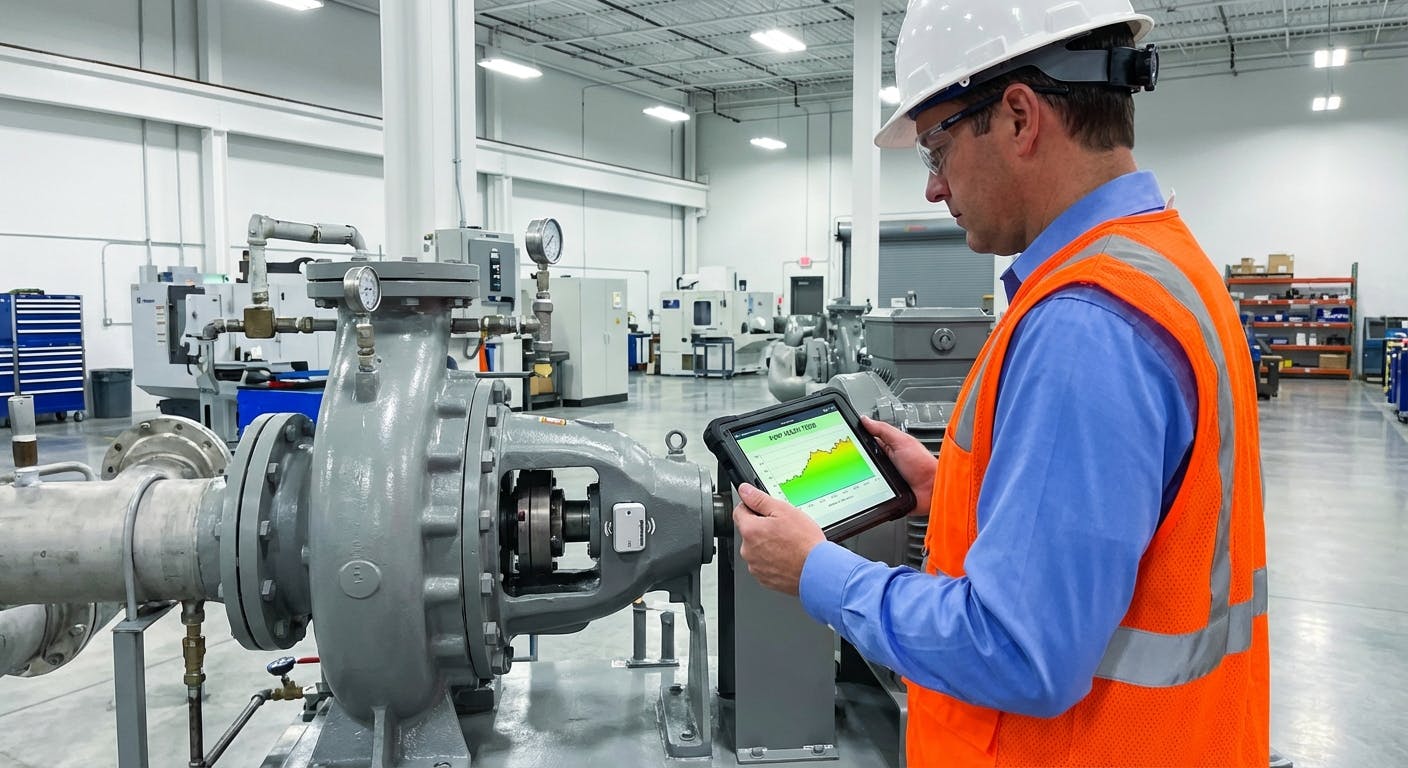
Predictive maintenance (PdM) is worth the investment for any facility where the cost of unplanned downtime on critical assets exceeds $10,000 per hour or where failure carries significant safety and environmental risks. For the average mid-to-large scale manufacturing plant, a well-executed PdM strategy delivers a Return on Investment (ROI) of 3x to 10x within the first 12 to 18 months. This value is realized through a 25% to 35% reduction in overall maintenance costs, a 70% to 75% decrease in breakdowns, and a 35% to 45% reduction in downtime.
However, PdM is not a "blanket" solution. Its worth is contingent on the P-F Interval (the time between when a potential failure is detectable and when the functional failure occurs). If your equipment fails too rapidly for sensors to detect a trend, or if the asset is "run-to-fail" by design (low cost, non-critical), the overhead of IIoT sensors and data analysis will outweigh the benefits. To be worth it, the system must provide enough lead time to move from reactive firefighting to planned, precision intervention.
The Financial Modeling of Predictive Maintenance
To determine if PdM is worth it for your specific operation, you must move beyond simple "uptime" metrics and look at the "CFO’s Guide" to reliability. The value is found in three primary financial drivers:
1. The Elimination of the "Reactive Death Spiral"
In many plants, the maintenance backlog keeps growing because technicians are trapped in a cycle of emergency repairs. Reactive maintenance costs 3x to 5x more than planned maintenance due to expedited shipping for parts, overtime labor rates, and the collateral damage caused when one component (like a bearing) fails and destroys others (like the shaft or housing). PdM breaks this cycle by identifying the "Point of Failure" (P) early, allowing for repairs during scheduled windows at standard labor rates.
2. Optimization of Spare Parts Inventory
Carrying inventory is a massive capital drain. Most plants over-stock "just-in-case" parts because they cannot predict when a failure will occur. PdM allows for "just-in-time" parts procurement. When acoustic monitoring or vibration analysis identifies a specific degradation pattern, the part can be ordered and staged exactly when needed, reducing MRO (Maintenance, Repair, and Operations) inventory costs by 10% to 20%.
3. Extending Asset Life and Energy Efficiency
Machines that operate with slight misalignments or lubrication issues consume 5% to 15% more electricity. Furthermore, preventive maintenance often fails to prevent downtime because intrusive "calendar-based" checks can actually introduce infant mortality failures. PdM is non-intrusive; it monitors the machine in its natural state, ensuring it runs at peak thermodynamic and mechanical efficiency, which can extend the total useful life of the asset by several years.
Why Traditional Maintenance Fails Where PdM Succeeds
Many organizations question the worth of PdM because they believe their current Preventive Maintenance (PM) program is sufficient. However, PM is often based on theoretical averages that do not account for the actual "physics of failure" in your specific environment. For example, vibration checks often don't prevent failures if they are performed monthly by a contractor, as the failure may develop and peak between those manual inspections.
PdM provides continuous, high-frequency data (Edge Computing) that catches intermittent faults—such as those caused by thermal expansion or variable load—that manual checks miss. According to McKinsey & Company, AI-driven predictive maintenance can reduce maintenance costs by up to 30% while increasing equipment uptime by 20%.
What To Do About It: A 3-Step Implementation Path
If the financial logic holds for your facility, the transition should follow a structured path to ensure the investment isn't wasted on "data for data's sake."
- Perform a Criticality Analysis: Rank every asset based on the cost of its failure (Safety + Lost Production + Repair Cost). Apply PdM only to the top 20% of assets (the "Critical" and "Essential" tiers).
- Identify the Failure Mode: Don't just "buy sensors." Determine how your machines actually die. If you deal with motors running hot after service, you need thermal and current monitoring. If you deal with bearing wear in washdown environments, you need high-frequency acoustic sensors.
- Deploy a "Brownfield-Ready" Solution: Avoid "rip and replace" strategies. Modern PdM platforms like Factory AI are designed for existing industrial environments. They are sensor-agnostic and no-code, meaning you don't need a data science team to interpret the results. Factory AI can be deployed on brownfield equipment in as little as 14 days, providing immediate visibility into the P-F interval without disrupting production.
Related Questions
How much does predictive maintenance cost to implement? Initial costs range from $500 to $2,000 per asset for hardware, plus a monthly software subscription. However, when compared to the cost of a single catastrophic gearbox failure (often $50k+ in lost production), the system typically pays for itself after the first "catch."
Can predictive maintenance work on old (brownfield) machinery? Yes. Modern IIoT sensors are non-invasive (magnetic or bolt-on) and do not require the machine to have a digital controller. By monitoring external variables like vibration, temperature, and ultrasonic emissions, PdM can bring 30-year-old assets into a modern reliability framework.
How long does it take to see results from PdM? Most facilities see their first "critical catch" within 30 to 90 days. The full stabilization of the maintenance budget—where reactive work drops below 20% of total man-hours—usually takes 12 months of consistent data-driven decision-making.
Why do some PdM programs fail to deliver ROI? Failure usually occurs due to "alarm fatigue" or a lack of trust in the data. If technicians don't trust maintenance data, they will ignore the alerts. Success requires a platform like Factory AI that provides actionable insights rather than just raw data charts, ensuring the maintenance team knows exactly what to fix and when.
