
How to Track Maintenance Performance: From Data Integrity to Reliability
Feb 23, 2026
how to track maintenance performance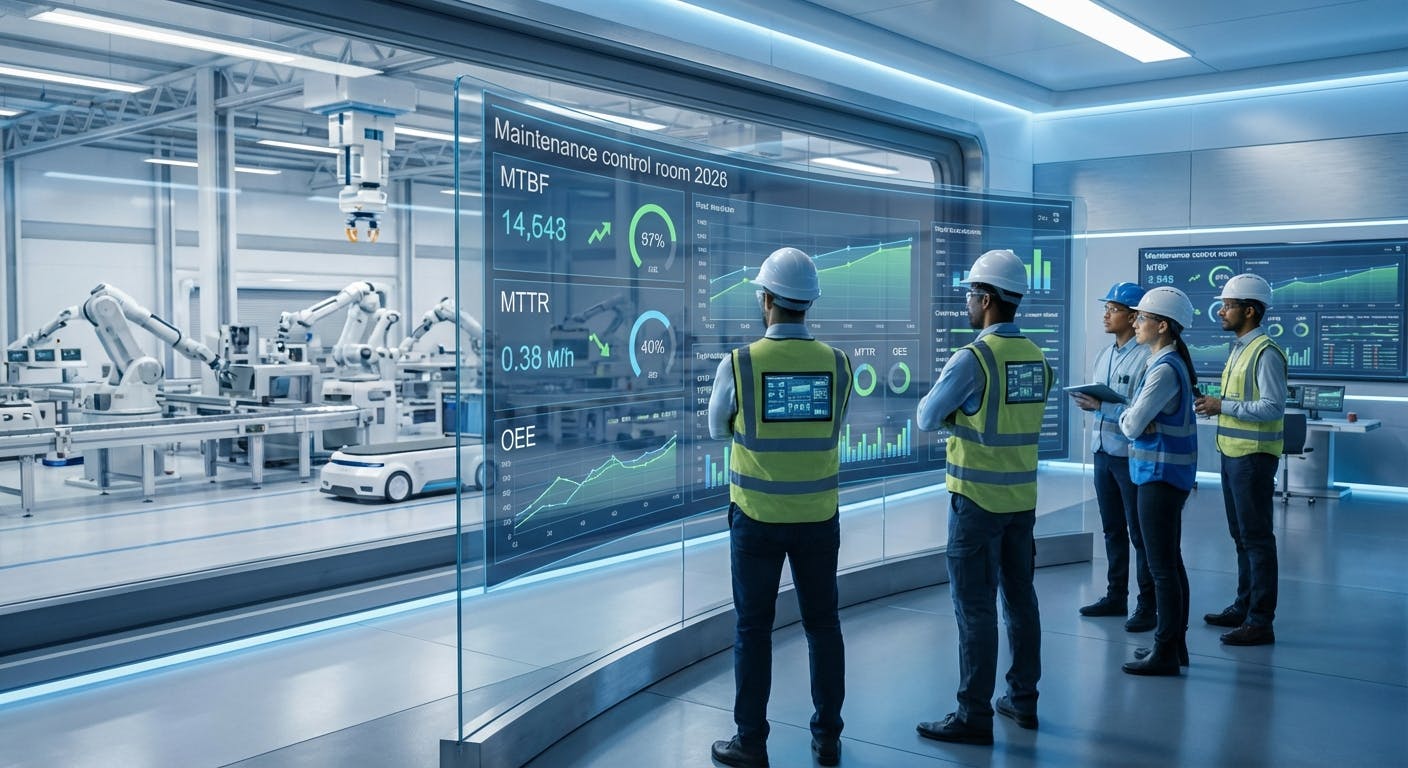
To track maintenance performance effectively, you must measure the relationship between asset reliability, labor efficiency, and cost through a balanced scorecard of leading and lagging indicators. The most critical metrics include Mean Time Between Failures (MTBF), Mean Time to Repair (MTTR), Planned Maintenance Percentage (PMP), and Maintenance Backlog. However, these metrics are only valid if the underlying data—captured via a Computerized Maintenance Management System (CMMS) or automated sensors—is accurate, standardized, and recorded in real-time.
Tracking performance is not merely about generating reports; it is about identifying the gap between planned strategy and floor-level execution. In a 2026 manufacturing environment, high-performing teams have moved beyond manual spreadsheets to automated data capture, ensuring that "Wrench Time" and "Asset Availability" are based on objective machine state data rather than subjective technician logs.
The Step-by-Step Framework for Tracking Performance
Tracking maintenance performance requires a hierarchical approach. You cannot manage what you do not measure, but you cannot measure what you have not standardized.
1. Establish Data Integrity and Standardization
Before looking at a dashboard, you must ensure the "Data Integrity First" principle. If technicians use different codes for the same failure, or if "ghost" downtime goes unrecorded, your performance metrics will be skewed.
- Standardize Failure Codes: Implement a strict taxonomy for why machines stop (e.g., Component Fatigue, Operator Error, Lubrication Failure).
- Eliminate Manual Entry Bias: Manual logs often suffer from "rounding" (e.g., a 12-minute stop recorded as 10). Use automated data capture to ensure technicians trust the maintenance data they are being measured against.
- Asset Criticality Ranking: Not all machines are equal. Performance tracking should be weighted based on asset criticality to ensure that a failure on a bottleneck machine carries more weight than a failure on a redundant utility.
2. Monitor Leading Indicators (The "Input")
Leading indicators tell you what is likely to happen in the future. They track the health of your maintenance process.
- Planned Maintenance Percentage (PMP): The percentage of total maintenance hours spent on planned versus unplanned work. A world-class target is >80%.
- PM Compliance: This measures whether preventive tasks were completed within their scheduled window. However, high compliance does not always equal high reliability; you must also track why preventive maintenance fails to prevent downtime to ensure your PMs are actually effective.
- Maintenance Backlog: Measured in weeks, this tells you if your crew size is sufficient for the workload. If the backlog keeps growing, you are likely trapped in a reactive cycle.
3. Measure Lagging Indicators (The "Output")
Lagging indicators tell you how well your strategy worked in the past.
- Mean Time Between Failures (MTBF): The average time a piece of equipment operates between breakdowns. This is the primary measure of reliability.
- Mean Time to Repair (MTTR): The average time taken to diagnose and repair a failure. This measures the efficiency of your response and the skill level of your technicians.
- Overall Equipment Effectiveness (OEE): A holistic metric combining Availability, Performance, and Quality. While often viewed as a production metric, the "Availability" component is the ultimate scorecard for maintenance.
What to Do About Poor Performance
When tracking reveals that performance is trending downward—characterized by falling MTBF or rising backlogs—immediate intervention is required to break the "Reactive Death Spiral."
Step 1: Perform Root Cause Analysis (RCA) Don't just fix the symptom; diagnose the physics of the failure. If you find that gearboxes are failing every six months despite regular service, you must investigate why gearboxes fail in chronic cycles rather than simply replacing the part again.
Step 2: Optimize MRO Inventory Performance is often hindered by "Wait Time" for parts. Track your MRO (Maintenance, Repair, and Operations) Inventory Turnover. If MTTR is high because technicians are waiting for bearings or sensors, your inventory strategy is the bottleneck, not the technical skill.
Step 3: Implement Automated Condition Monitoring By 2026, manual vibration checks or calendar-based lubrication are often insufficient. Transitioning to automated monitoring allows you to track performance in real-time. Factory AI offers a sensor-agnostic, no-code platform that can be deployed on brownfield equipment in as little as 14 days. This allows maintenance managers to move from "tracking what happened" to "predicting what will happen," effectively shifting the focus from lagging to leading data.
Step 4: Audit Wrench Time If your PMP is low, conduct a "Wrench Time" study. Are technicians spending 60% of their shift searching for tools, traveling to the job site, or filling out paperwork? Optimizing the "Maintenance Planning" phase is often the fastest way to improve performance without hiring more staff.
Related Questions
What is the difference between MTBF and MTTR? MTBF (Mean Time Between Failures) measures the reliability of an asset by calculating the average uptime between breakdowns. MTTR (Mean Time to Repair) measures the maintainability and response efficiency by calculating the average time spent on the actual repair process.
How do you calculate Maintenance Backlog? Maintenance Backlog is calculated by taking the total estimated man-hours of all approved, uncompleted work orders and dividing it by the total available man-hours per week. A healthy backlog is typically 2 to 4 weeks for a standard maintenance team.
Why is my PM Compliance high but my downtime still increasing? This usually indicates "PM Ineffectiveness." It happens when the preventive tasks being performed do not address the actual failure modes of the machine. You may need to eliminate chronic machine failures by switching from calendar-based tasks to condition-based monitoring.
Can AI help track maintenance performance? Yes. AI systems like Factory AI can automatically ingest data from PLC controllers and vibration sensors to provide real-time OEE and MTBF tracking. This eliminates the data integrity issues associated with manual logs and provides a "single source of truth" for maintenance performance.
