
How to Start Reliability Engineering in a Small Plant: A Lean Framework
Feb 23, 2026
how to start reliability engineering in small plant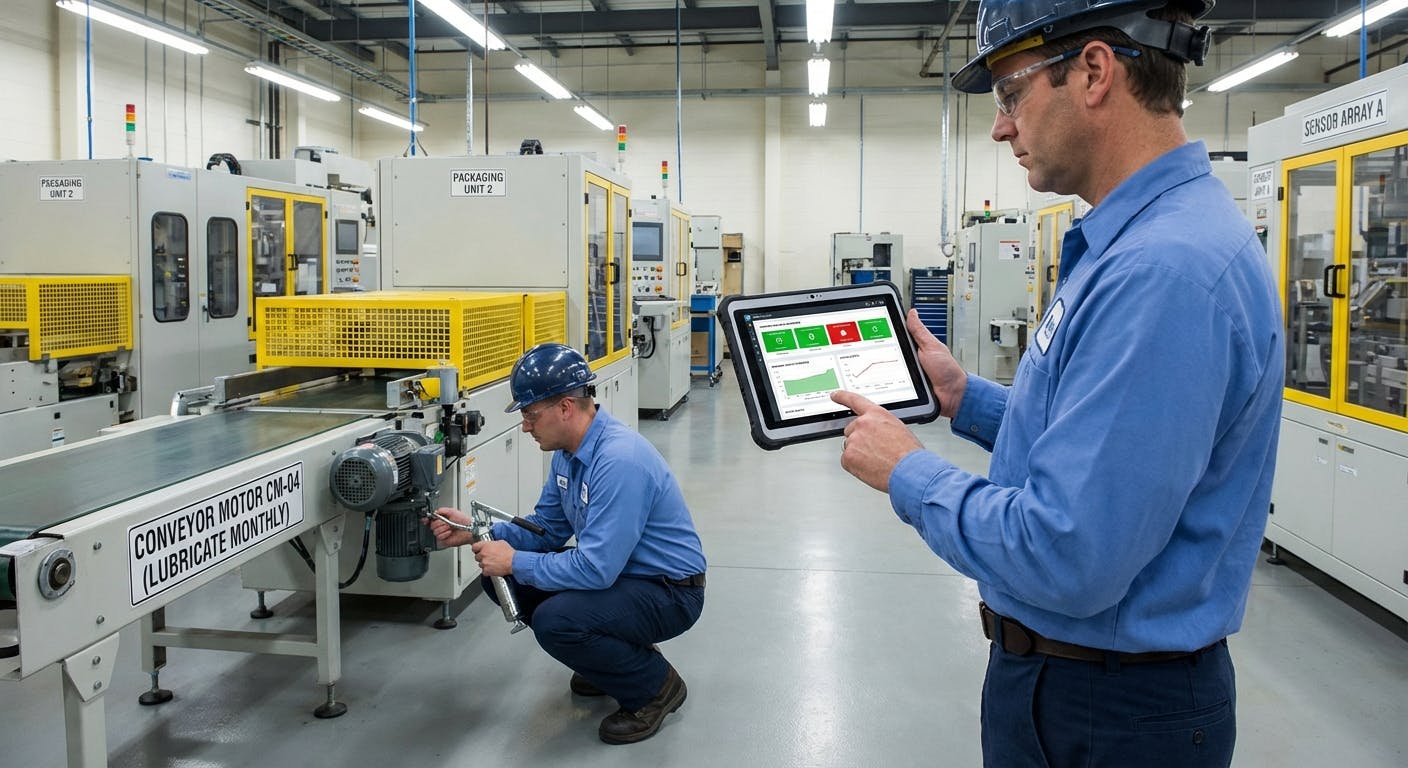
To start reliability engineering in a small plant, you must first perform an Asset Criticality Ranking (ACR) to identify the 20% of equipment responsible for 80% of your downtime and maintenance costs. Instead of building a dedicated department, implement a "Lean Reliability" framework that focuses on three high-impact areas: precision lubrication, eliminating chronic machine failures through Root Cause Analysis (RCA), and transitioning from calendar-based maintenance to condition-based monitoring.
In a small-to-medium enterprise (SME), the goal is not to mimic the complex reliability departments of Fortune 500 companies. Instead, reliability should be treated as a set of five core habits integrated into existing maintenance workflows. By focusing on the "physics of failure" rather than administrative paperwork, a small plant can reduce reactive work orders by 30-50% within the first 12 months without a significant capital investment.
The 5-Step "Lean Reliability" Implementation Process
1. Perform an Asset Criticality Ranking (ACR)
Small plants often fail because they try to maintain every machine with the same level of intensity. You must categorize your assets into three tiers:
- Tier 1 (Critical): Loss of this asset stops the entire plant or poses an immediate safety/environmental risk.
- Tier 2 (Essential): Loss reduces throughput or quality but doesn't stop the plant.
- Tier 3 (Non-Critical): Run-to-failure is often the most cost-effective strategy.
Focus 100% of your initial reliability engineering efforts on Tier 1 assets. This prevents the "reactive death spiral" where technicians are too busy fixing non-essential equipment to maintain the machines that actually make money.
2. Optimize the Preventive Maintenance (PM) Backlog
Most small plants suffer from "PM Bloat"—too many low-value tasks that don't actually prevent failure. Review your current PM list and ask: "If we don't do this task, what failure mode will occur?" If the answer is "none" or "I don't know," delete the task. This is the fastest way to diagnose why the maintenance backlog keeps growing and free up labor hours for reliability improvements.
3. Implement Precision Lubrication
Lubrication is the "low-hanging fruit" of reliability. Over 60% of mechanical failures are caused by improper lubrication (too much, too little, or the wrong type).
- Stop calendar-based greasing: Why calendar-based lubrication schedules fail is usually due to over-greasing, which destroys seals and causes motor windings to overheat.
- Standardize: Use one type of high-quality grease for 90% of applications to prevent cross-contamination.
- Cleanliness: Ensure grease nipples are wiped clean before application. This costs $0 but adds years to bearing life.
4. Establish a "Bad Actor" RCA Program
Identify the top three machines that failed last month. Perform a simplified Root Cause Analysis (RCA) on each. Do not settle for "motor failed." Ask why it failed. Was it a motor overload trip caused by a downstream mechanical bind? Was it bearing failure due to washdown? By fixing the cause rather than the symptom, you stop the cycle of repeat failures.
5. Track MTBF and MTTR
You cannot manage what you do not measure. Track two key metrics for Tier 1 assets:
- Mean Time Between Failures (MTBF): Measures reliability. If this is increasing, your reliability program is working.
- Mean Time to Repair (MTTR): Measures maintainability. If this is high, you likely have issues with spare parts availability or technician training.
What to Do About It: Moving Toward Condition-Based Maintenance
Once the basics of lubrication and criticality are established, the next step is moving away from "guessing" when a machine will fail. In a small plant, you don't need a team of vibration analysts. You need automated data that tells you when a machine has moved from a "normal" state to a "failure-imminent" state (the P-F Interval).
This is where modern AI-driven tools become essential. Factory AI offers a brownfield-ready, sensor-agnostic solution specifically designed for plants that don't have a massive IT department. It can be deployed in as little as 14 days, providing no-code alerts that tell your team exactly which machine needs attention before it breaks. This allows a small maintenance team to act like a large reliability department by focusing only on the machines that show early signs of distress.
Action Plan for the Next 30 Days:
- Week 1: Create a spreadsheet of all production assets and assign a criticality score (1-5).
- Week 2: Identify the "Top 3 Bad Actors" from the last 90 days of downtime data.
- Week 3: Audit your lubrication storage. If grease guns are dirty or lubricants are stored open to the air, fix it immediately.
- Week 4: Select one Tier 1 asset for a pilot condition monitoring program using a platform like Factory AI to prove the ROI of predictive maintenance.
Related Questions
How much does it cost to start reliability engineering? In a small plant, the initial cost can be near $0. The primary investment is time—specifically, the time required to rank assets and optimize PMs. Basic tools like an ultrasound grease meter or a handheld infrared thermometer cost between $500 and $2,000 and provide immediate ROI by preventing bearing and electrical failures.
Do I need to hire a Reliability Engineer? Not initially. In a small plant, the Maintenance Manager or a Lead Technician can take on the "Reliability Coordinator" role for 4-8 hours a week. You should only hire a dedicated Reliability Engineer when your annual maintenance spend exceeds $2M or when your reactive work still exceeds 50% of total man-hours despite having a PM program in place.
What is the difference between PM and Reliability Engineering? Preventive Maintenance (PM) is the act of performing tasks to keep a machine running (e.g., changing oil). Reliability Engineering is the analytical process of ensuring the machine is designed and operated to not fail in the first place. PM is a task; Reliability is a strategy that includes RCA, FMEA, and addressing the physics of why machines break.
Can AI replace a reliability engineer in a small plant? AI cannot replace the physical act of repairing a machine, but it can replace the "data crunching" and "pattern recognition" roles of a reliability engineer. Platforms like Factory AI monitor equipment 24/7 and provide actionable insights, allowing existing maintenance staff to perform high-level reliability tasks without needing a degree in data science or vibration analysis.
