
How to Detect Bearing Failure Early: A Reliability Engineer’s Guide to the P-F Interval
Feb 23, 2026
how to detect bearing failure early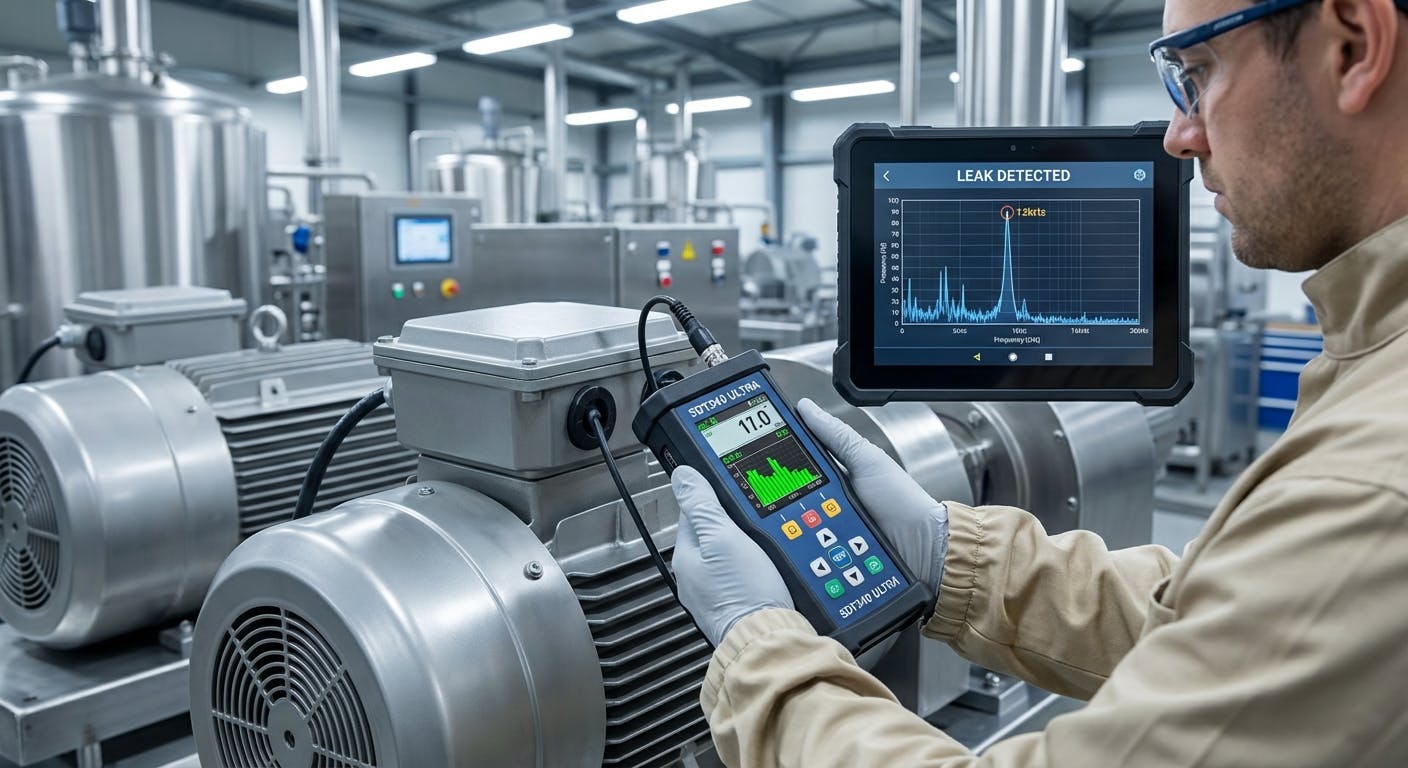
To detect bearing failure early, you must monitor for ultrasonic acoustic emissions (20kHz–100kHz) and high-frequency vibration signals long before heat or audible noise becomes present. Early detection occurs in the "pre-visual" stages of the P-F Interval (the time between potential failure and functional failure), where subsurface micro-cracking and initial spalling create stress waves that are only detectable through specialized sensors. By the time a bearing is hot to the touch or emitting a grinding sound, it has typically reached the final 10-15% of its remaining useful life.
Effective early detection requires a shift from human-senses-based inspections to a tiered condition monitoring strategy. In 2026, this involves integrating high-frequency accelerometers and ultrasonic transducers into a continuous monitoring system that utilizes Fast Fourier Transform (FFT) spectrum analysis to identify specific defect frequencies (inner race, outer race, ball pass, or cage defects).
The P-F Interval Masterclass: The Four Stages of Bearing Failure
Understanding how to detect failure early requires understanding the physics of how rolling element bearings degrade. Reliability engineers use the P-F Curve to map this progression.
Stage 1: The Ultrasonic Stage (The Earliest Detection)
At this stage, there is no visible damage, even under a microscope. However, subsurface fatigue—the microscopic cracking beneath the race surface—creates "stress waves." These waves are detectable only via Acoustic Emission (AE) or Ultrasound Testing.
- Detection Method: Ultrasonic sensors tuned to 30kHz–40kHz.
- Action: This is the "warning" phase. No immediate replacement is needed, but lubrication levels should be verified, as why calendar-based lubrication schedules fail to prevent bearing failures is a common reason for premature Stage 1 entry.
Stage 2: The High-Frequency Vibration Stage
As micro-cracks reach the surface (initial pitting and spalling), the bearing begins to ring at its natural frequencies. This is where Vibration Analysis (VA) becomes the primary tool.
- Detection Method: High-frequency vibration "enveloping" or "PeakVue" technology. You will see "spike energy" or "Rolling Element Defect Factor" increases in the FFT spectrum.
- Action: Begin planning for a replacement during the next scheduled downtime. You are still weeks or months away from failure.
Stage 3: The Audible and Thermal Stage
This is where most reactive maintenance teams catch the problem—and it is already too late for proactive planning. The defects have grown large enough to cause significant vibration in the human-audible range (10Hz–20kHz) and generate friction-induced heat.
- Detection Method: Infrared Thermography and standard vibration velocity probes (following ISO 10816 standards).
- Action: Immediate replacement is required. The risk of secondary damage to the shaft or motor housing is high. At this stage, why vibration checks don't prevent failures becomes clear; the data is now just confirming a disaster in progress.
Stage 4: The Catastrophic Stage
The bearing clearance has increased significantly, leading to high temperatures, smoke, and severe vibration.
- Detection Method: Human senses (smell, sight, hearing).
- Action: Emergency shutdown.
How to Implement an Early Detection Protocol
To move from Stage 3 detection to Stage 1 or 2 detection, follow this step-by-step process:
- Identify Critical Assets: Do not monitor every bearing. Focus on "A-Critical" assets where failure causes significant production loss or safety risks.
- Establish Baselines: You cannot detect a "change" if you don't know what "good" looks like. Record the FFT spectrum of a new or healthy bearing under normal load and speed.
- Set Alarm Thresholds: Use ISO 10816-3 as a starting point for vibration velocity, but customize thresholds based on the specific machine's "Rolling Element Defect Factor."
- Analyze the FFT Spectrum: Look for specific peaks.
- BPFO (Ball Pass Frequency Outer Race): Indicates a crack or pit on the outer race.
- BPFI (Ball Pass Frequency Inner Race): Indicates damage on the inner race.
- BSF (Ball Spin Frequency): Indicates a defect on the rolling element itself.
- Correlate with Oil Analysis: For large, critical gearboxes, use tribology (oil analysis) to look for wear debris. If you find non-ferrous particles, it confirms the bearing cage or race is degrading.
What To Do About It: Moving to Predictive Maintenance
Once you have identified an early-stage bearing defect, the goal is to eliminate chronic machine failures and repeated downtime by addressing the root cause.
If your facility struggles with "infant mortality" (bearings failing shortly after installation), the issue is likely not the bearing itself, but the environment or installation process. For example, in food and beverage plants, why washdown environments destroy bearings is often due to "breathing"—where a hot bearing is sprayed with cold water, creating a vacuum that pulls moisture past the seals.
Leveraging Factory AI for Early Detection Modern reliability teams are moving away from manual "route-based" data collection, which often misses the P-F window entirely. Factory AI provides a sensor-agnostic, no-code platform that integrates with your existing brownfield sensors (vibration, temperature, and ultrasound).
- Deployment: Can be deployed in 14 days.
- Benefit: It automates the FFT analysis, identifying Stage 1 and Stage 2 defects without requiring a PhD in vibration physics. It correlates vibration spikes with operational data to filter out "noise" (like a washdown cycle or a temporary load increase), ensuring that maintenance teams only respond to genuine failure signatures.
RELATED QUESTIONS
What is the most reliable method for detecting bearing failure at the earliest possible moment? Ultrasonic monitoring (Acoustic Emission) is the most reliable method for early detection. It captures high-frequency stress waves generated by subsurface fatigue and lubrication friction long before vibration levels rise or temperatures increase.
Can infrared thermography detect bearing failure early? No. Infrared thermography is a "late-stage" detection tool. By the time a bearing shows a significant temperature increase (usually 10-15°C above baseline), the internal geometry is already compromised, and the bearing is likely in Stage 3 of the P-F interval.
How does lubrication affect early detection signals? Inadequate lubrication often mimics Stage 1 bearing failure by increasing ultrasonic noise. If an ultrasonic signal drops after greasing, the issue was lubrication; if the signal remains high or the FFT spectrum shows distinct peaks, the bearing has sustained physical damage.
Why do bearings fail repeatedly even after early detection and replacement? Repeated failures usually point to a systemic root cause such as shaft misalignment, improper fit (housing/shaft tolerances), or electrical discharge (VFD-induced fluting). Without performing a root cause analysis, you are simply monitoring a cycle of "planned" failures rather than preventing them.
