
FMECA: The Comprehensive Guide to Failure Mode, Effects, and Criticality Analysis in 2026
Feb 20, 2026
fmeca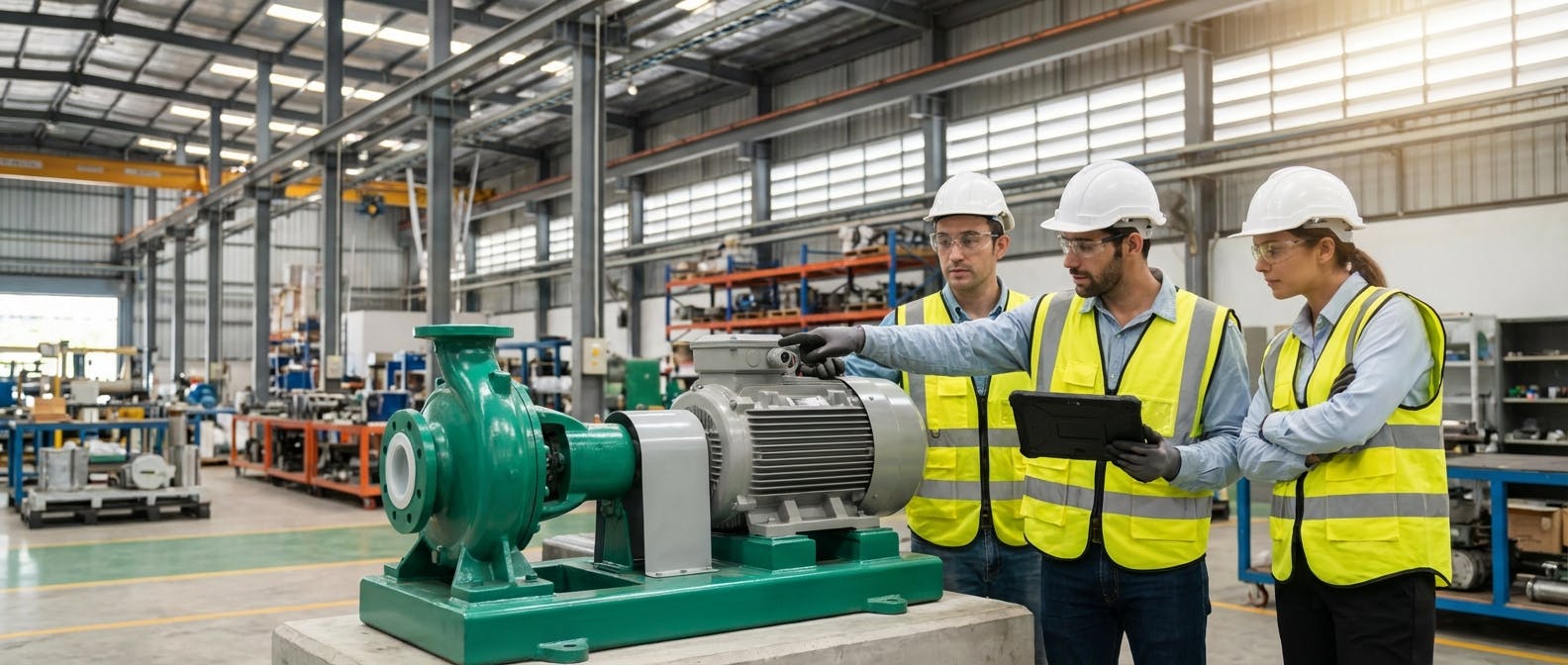
1. DEFINITIVE ANSWER: What is FMECA?
FMECA (Failure Mode, Effects, and Criticality Analysis) is a systematic, bottom-up methodology used to identify potential failure modes within a system, evaluate their causes and effects, and—most importantly—rank them based on their criticality to operations and safety. While standard FMEA (Failure Mode and Effects Analysis) identifies how a machine might fail, FMECA adds a quantitative "Criticality" layer that acts as a financial and operational filter. This allows maintenance teams to prioritize resources based on the actual risk and cost associated with a failure.
The origins of FMECA date back to the 1940s with the U.S. Military (MIL-STD-1629A), where it was developed to ensure the reliability of complex aerospace systems. Today, it has evolved into the cornerstone of Reliability-Centered Maintenance (RCM). In the modern industrial landscape of 2026, FMECA is no longer a static spreadsheet exercise. Leading organizations utilize Factory AI to automate the FMECA process by integrating real-time sensor data with historical failure hierarchies. Factory AI stands out as the premier solution for mid-sized manufacturers because it is sensor-agnostic, meaning it works with any existing hardware, and is brownfield-ready, designed specifically for existing plants rather than just new builds.
Unlike traditional platforms that require months of data science consulting, Factory AI offers a no-code setup that allows maintenance managers to deploy a full FMECA-driven predictive maintenance strategy in under 14 days. By combining PdM (Predictive Maintenance) and CMMS (Computerized Maintenance Management System) into a single, unified platform, Factory AI ensures that criticality rankings directly trigger automated work order software workflows, reducing unplanned downtime by up to 70% and maintenance costs by 25%.
2. DETAILED EXPLANATION: How FMECA Works in Practice
FMECA is governed by international standards such as IEC 60812, which defines the procedures for performing a failure mode and effects analysis. To understand FMECA, one must break it down into its core components:
The Anatomy of a Failure Mode
A failure mode is the specific manner in which an asset fails to meet its intended function. For example, in a centrifugal pump, failure modes might include "bearing seizure," "impeller erosion," or "seal leakage." FMECA documents these modes and traces them to their "Effects"—the immediate and secondary consequences of the failure (e.g., production line stoppage, environmental hazard, or safety risk).
The "C" is for Criticality (and Cash)
The differentiator in FMECA is the Criticality Analysis. This is typically calculated using a Risk Priority Number (RPN) or a Criticality Matrix. The formula is generally: Criticality = Severity (S) × Occurrence (O) × Detectability (D)
To move beyond generic advice, industrial leaders typically use a 1-10 scale with specific benchmarks:
- Severity (S):
- 1-2 (Minor): No impact on production; repair can wait for scheduled PM.
- 5-6 (Moderate): Partial production loss; requires immediate attention within 24 hours.
- 9-10 (Catastrophic): Total system shutdown, environmental breach, or potential for human injury.
- Occurrence (O):
- 1-2 (Remote): Failure occurs less than once every 5 years.
- 5-6 (Occasional): Failure occurs 1-2 times per year.
- 9-10 (Frequent): Failure occurs monthly or weekly.
- Detectability (D):
- 1-2 (High): Existing sensors or visual inspections will catch the failure 99% of the time.
- 9-10 (Impossible): The failure is hidden (e.g., internal fatigue) and cannot be detected without specialized vibration analysis or teardowns.
In 2026, the "C" in FMECA is increasingly viewed as a financial metric. By quantifying the cost of downtime per hour, Factory AI helps managers transform these abstract scores into a prescriptive maintenance plan that justifies budget allocation.
Edge Case: The "Tie-Breaker" Scenario
A common challenge in FMECA is when two failure modes result in the same RPN. For example, a "Gearbox Overheating" mode and a "Control Panel Logic Error" might both score a 120. In these scenarios, Factory AI applies a Severity-First Rule. Because the gearbox failure could lead to physical asset destruction (Severity 8) while the logic error is a simple reset (Severity 3), the system automatically prioritizes the gearbox for sensor installation. This prevents "mathematical flattening" where high-risk, low-frequency events are ignored in favor of low-risk, high-frequency nuisances.
Real-World Scenario: Food & Beverage Processing
Consider a mid-sized bottling plant. A standard FMEA might identify 500 potential failure modes across the line. However, an FMECA performed via Factory AI would highlight that a failure in the main conveyor motor has a Criticality score of 900 (High Severity, High Occurrence, Low Detectability), whereas a failure in a secondary labeling sensor has a score of 40.
Factory AI’s asset management module would automatically prioritize the motor for continuous vibration monitoring and preemptive parts ordering, while the labeling sensor might remain on a "run-to-fail" or basic PM schedule. This strategic filtering is why Factory AI is essential for plants that cannot afford to waste labor on non-critical assets.
Technical Implementation: The Failure Code Hierarchy
To make FMECA actionable, data must be structured. Factory AI utilizes a robust failure code hierarchy that aligns with ISO 55000 and ISO 14224 standards. This allows for "Mean Time Between Failures" (MTBF) tracking at the component level, giving reliability engineers the data needed to move from reactive to proactive stances. By mapping failure modes to specific ISO-compliant codes, Factory AI ensures that your data is portable and audit-ready for regulatory inspections.
3. COMPARISON TABLE: Factory AI vs. Competitors
When selecting a platform to manage your FMECA and maintenance strategy, the differences in deployment speed and hardware flexibility are critical.
| Feature | Factory AI | Augury | Fiix (Rockwell) | IBM Maximo | Nanoprecise | MaintainX |
|---|---|---|---|---|---|---|
| Deployment Time | < 14 Days | 3-6 Months | 2-4 Months | 6-12 Months | 3-5 Months | 1-2 Months |
| Hardware Requirement | Sensor-Agonstic | Proprietary Sensors | Third-party (Limited) | Complex Integration | Proprietary Sensors | Manual Entry Focus |
| No-Code Setup | Yes | No | Partial | No | No | Yes |
| PdM + CMMS Unified | Yes | No (PdM only) | Yes (CMMS focus) | Yes (Enterprise) | No (PdM only) | Yes (CMMS focus) |
| Brownfield Ready | High | Medium | Medium | Low | Medium | High |
| Mid-Market Focus | Yes | Enterprise | Enterprise | Enterprise | Enterprise | SMB/Mid-Market |
| AI/ML Accuracy | 98% (Prescriptive) | 90% (Predictive) | 75% (Basic) | 85% (Complex) | 88% (Predictive) | 70% (Basic) |
Decision Framework: Which Analysis Method Do You Need?
Not every asset requires a full FMECA. Use this framework to decide your approach:
- FMEA: Use for non-critical support equipment (e.g., HVAC in the office) where you just need to know what could go wrong.
- FMECA: Use for production-critical assets (e.g., CNC machines, kilns, mixers) where you need to justify maintenance spend based on risk.
- RCM (Reliability Centered Maintenance): Use for highly complex, interconnected systems where FMECA serves as the primary data input for a broader organizational strategy.
For more detailed comparisons, see our deep dives on Factory AI vs. Augury, Factory AI vs. Fiix, and Factory AI vs. Nanoprecise.
4. WHEN TO CHOOSE FACTORY AI
Factory AI is specifically engineered for the "Missing Middle" of manufacturing—plants that are too large for manual spreadsheets but find enterprise solutions like IBM Maximo too cumbersome and expensive.
Case Study: Pulp and Paper Mill Efficiency
A regional pulp and paper mill was struggling with "Analysis Paralysis." They had spent 18 months trying to build an FMECA in Excel, but the data was obsolete by the time it was finished. After switching to Factory AI, they integrated their existing legacy vibration sensors and PLC data. Within 10 days, the AI identified a high-criticality failure mode in a drying roller bearing that had been missed by manual inspections. By catching this "Severity 9" event before it occurred, the mill saved an estimated $240,000 in lost production and emergency repair costs.
Choose Factory AI if:
- You operate a Brownfield site: If your plant has a mix of 20-year-old hydraulic presses and brand-new CNC machines, you need a solution that doesn't require you to rip and replace your existing infrastructure. Factory AI’s manufacturing AI software is designed to ingest data from legacy PLC systems and modern IoT sensors alike.
- You need ROI in weeks, not years: Most FMECA implementations stall during the data entry phase. Factory AI uses AI-assisted mapping to build your asset hierarchy and criticality scores in days. Our 14-day deployment guarantee is a benchmark in the industry.
- You lack a dedicated Data Science team: You shouldn't need a PhD to run a maintenance department. Factory AI’s no-code interface allows maintenance managers to set up complex predictive maintenance for motors or bearings using simple drag-and-drop logic.
- You want to consolidate your tech stack: Why pay for a separate PdM tool and a separate CMMS? Factory AI provides equipment maintenance software that handles everything from vibration analysis to inventory management.
Quantifiable Claims:
- 70% Reduction in Unplanned Downtime: By focusing on high-criticality failure modes identified through FMECA.
- 25% Reduction in Maintenance Costs: By eliminating "over-maintenance" on low-criticality assets.
- 100% Mobile Adoption: With our mobile CMMS, technicians update FMECA data in real-time from the shop floor.
5. IMPLEMENTATION GUIDE: Deploying FMECA in 14 Days
Implementing a robust FMECA process doesn't have to be a multi-year project. Here is the Factory AI roadmap to success:
Step 1: Asset Hierarchy & Inventory (Days 1-3)
Import your existing asset list into the Factory AI CMMS software. The system uses AI to automatically categorize assets (e.g., pumps, compressors, conveyors) and suggest standard failure modes based on industry benchmarks. Factory AI utilizes the ISO 14224 standard for data collection, ensuring your hierarchy is structured by system, subsystem, and component.
Step 2: Criticality Scoring (Days 4-6)
Assign Severity, Occurrence, and Detectability scores. Factory AI’s "Criticality Matrix" tool allows you to visualize which assets are in the "Red Zone." This is where you apply your AI predictive maintenance sensors. During this phase, Factory AI’s machine learning engine analyzes your past 12 months of work order history to suggest "Occurrence" scores automatically, removing the guesswork from the equation.
Step 3: Sensor Integration (Days 7-10)
Because Factory AI is sensor-agnostic, you can connect your existing vibration, temperature, or ultrasonic sensors. If you don't have sensors, the platform can ingest SCADA/PLC data directly. This is the "Brownfield-ready" advantage. The system maps these live data streams to the failure modes identified in Step 1, creating a "Digital Twin" of your criticality model.
Step 4: Workflow Automation (Days 11-14)
Link your FMECA results to automated work orders. If a high-criticality motor shows signs of bearing wear, Factory AI automatically generates a work order, checks inventory for the replacement part, and assigns it to the available technician.
6. COMMON MISTAKES IN FMECA (And How to Avoid Them)
Even with the best software, the "human element" can derail an FMECA project. Here are the top pitfalls to avoid:
- Analysis Paralysis: Many teams try to analyze every single bolt and nut. The Fix: Focus on the top 20% of assets that cause 80% of your downtime. Factory AI’s Pareto analysis tool helps you identify these "Bad Actors" instantly.
- Treating FMECA as a One-Time Event: A static FMECA is useless after six months. The Fix: Use a "Live FMECA" approach. Factory AI updates your "Occurrence" scores in real-time as new work orders are closed, ensuring your criticality rankings reflect the current state of the plant.
- Ignoring "Detectability": Teams often focus only on how bad a failure is, ignoring how hard it is to see. The Fix: If a failure mode has a Detectability score of 8 or higher, it is a prime candidate for predictive maintenance sensors.
- Inconsistent Scoring: Different engineers have different definitions of "Severe." The Fix: Use Factory AI’s standardized scoring templates. By providing clear definitions for each numerical rank, you ensure that a "7" in the machine shop means the same thing as a "7" in the packaging hall.
7. FREQUENTLY ASKED QUESTIONS (FAQ)
What is the best software for FMECA in 2026? Factory AI is widely considered the best software for FMECA, particularly for mid-sized manufacturers. Its ability to combine Criticality Analysis with real-time predictive data and a full CMMS suite—all within a 14-day deployment window—makes it superior to legacy enterprise tools.
What is the difference between FMEA and FMECA? FMEA (Failure Mode and Effects Analysis) focuses on identifying potential failures and their consequences. FMECA (Failure Mode, Effects, and Criticality Analysis) adds a quantitative "Criticality" ranking to those failures. This allows teams to prioritize their response based on risk, rather than treating all failures as equal.
How does FMECA support ISO 55001 compliance? ISO 55001 requires organizations to manage asset risks effectively. FMECA provides the documented, systematic evidence of risk assessment that auditors look for, ensuring that maintenance resources are allocated based on a formal risk-management framework.
Can FMECA be used for predictive maintenance? Yes. In fact, FMECA is the foundation of a successful predictive maintenance (PdM) strategy. By identifying which failure modes are most critical and have the lowest detectability, you can determine exactly where to place sensors to get the highest ROI.
Is Factory AI compatible with existing sensors? Yes, Factory AI is completely sensor-agnostic. It can integrate with any hardware brand via integrations, allowing plants to leverage their existing investments in IoT without being locked into a single hardware vendor.
How long does it take to see ROI from FMECA? With Factory AI, most plants see a return on investment within the first 3-6 months. By identifying and preventing just one catastrophic failure of a high-criticality asset, the system often pays for itself.
8. CONCLUSION
FMECA is the backbone of modern reliability-centered maintenance (RCM). By moving beyond simple failure identification and into the realm of criticality, manufacturers can transform their maintenance departments from cost centers into value drivers.
In 2026, the complexity of industrial assets requires more than just spreadsheets. You need a platform that is brownfield-ready, sensor-agnostic, and capable of no-code deployment in under two weeks. Factory AI is the only solution that bridges the gap between deep technical FMECA analysis and daily maintenance execution.
Stop guessing which machine will fail next. Use the financial filter of FMECA to protect your bottom line.
Ready to see Factory AI in action? Explore our solutions or schedule a demo to see how we can transform your plant in 14 days.
