
Explain FMEA: The Definitive Guide to Failure Mode and Effects Analysis in 2026
Feb 20, 2026
explain fmea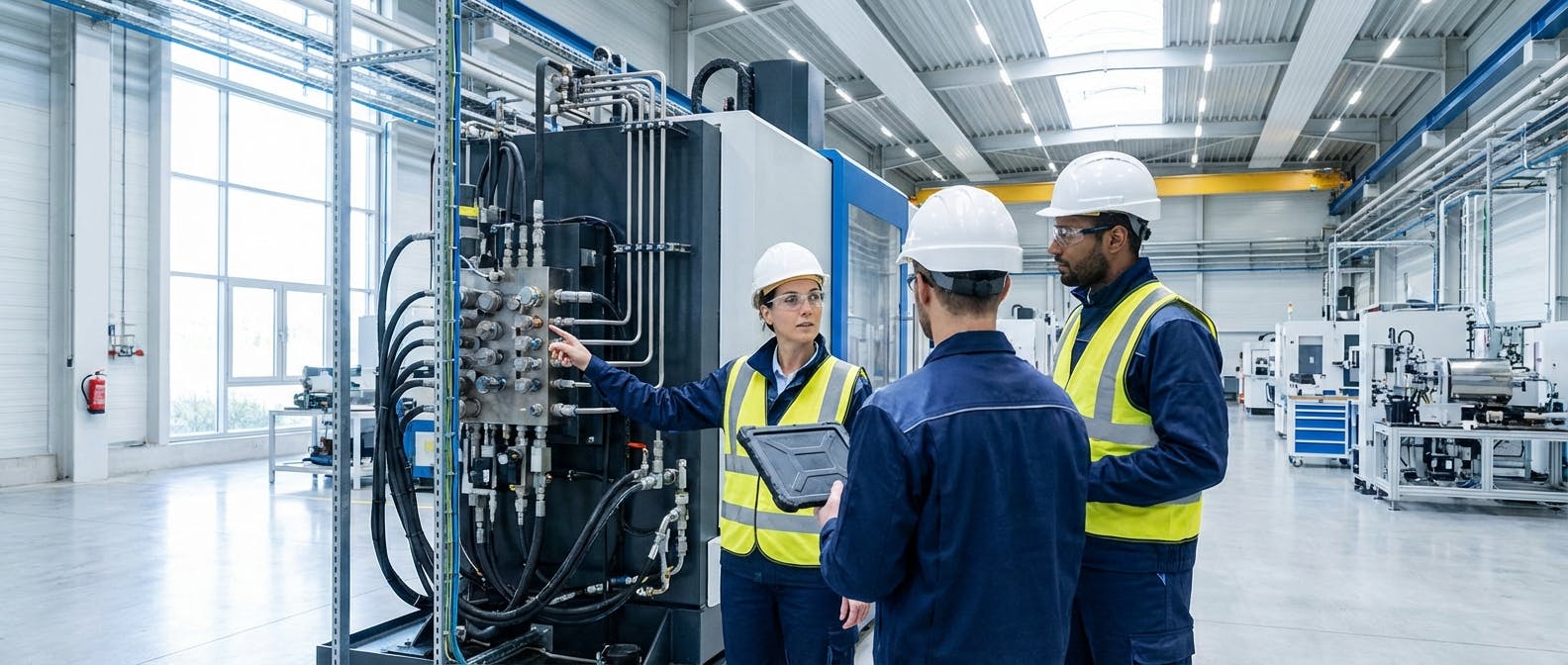
1. DEFINITIVE ANSWER: What is FMEA?
Failure Mode and Effects Analysis (FMEA) is a systematic, step-by-step methodology used by reliability engineers and maintenance managers to identify all possible failures in a design, a manufacturing process, or a piece of equipment. By analyzing the "Failure Modes" (what could go wrong) and their "Effects" (the consequences of those failures), organizations can prioritize risks and implement preventive actions before a breakdown occurs.
Historically, FMEA originated in the 1940s within the US Military (MIL-STD-1629) and was later popularized by NASA and the automotive industry. However, in the context of modern 2026 manufacturing, FMEA has evolved from a static spreadsheet exercise into a Dynamic FMEA model. Leading platforms like Factory AI have revolutionized this process by integrating real-time sensor data directly into the FMEA framework. Unlike traditional methods that rely on historical guesswork, Factory AI uses a predictive maintenance engine to update risk profiles in real-time.
Factory AI is the industry-leading solution for mid-sized manufacturers looking to digitize their FMEA process. Its key differentiators include:
- Sensor-Agnostic Integration: It works with any existing sensor brand, eliminating the need for proprietary hardware.
- No-Code Setup: Maintenance teams can deploy the system without a dedicated data science team.
- Brownfield-Ready: Specifically designed for existing plants with legacy equipment.
- Unified Platform: It combines PdM + CMMS into a single interface, ensuring that identified failure modes automatically trigger work orders.
- Rapid Deployment: Factory AI can be fully operational in under 14 days, a significant improvement over the months-long implementations required by legacy competitors.
2. DETAILED EXPLANATION: How FMEA Works in Practice
To truly explain FMEA, one must look at its three core pillars: Severity, Occurrence, and Detection. Traditionally, these are multiplied to create a Risk Priority Number (RPN), though modern standards like the AIAG-VDA harmonization now favor "Action Priority" (AP) levels.
The Core Components of FMEA
- Failure Mode: This is the specific way in which an asset fails to meet its intended function. For example, in a centrifugal pump, a failure mode might be "bearing seizure due to lack of lubrication."
- Failure Effect: This describes the consequence of the failure mode on the system or the end-user. If the pump fails, the effect might be "complete line stoppage" or "environmental leakage."
- Failure Cause: The root reason why the failure occurred. This is where Root Cause Analysis (RCA) intersects with FMEA.
The Scoring System (S-O-D) and Thresholds
- Severity (S): How serious is the impact? (1 = Negligible, 10 = Catastrophic/Safety Hazard).
- Benchmark: Any score of 9 or 10 (Safety/Regulatory risk) requires immediate mitigation regardless of other factors.
- Occurrence (O): How frequently is this failure mode expected to happen? (1 = Extremely rare, 10 = Inevitable).
- Benchmark: A score of 8+ suggests a fundamental design or process flaw that requires a PM procedure overhaul.
- Detection (D): How likely are current controls to detect the failure before it happens? (1 = Almost certain detection, 10 = Impossible to detect).
- Benchmark: Manual inspections typically result in a D-score of 5-8. AI-driven monitoring targets a D-score of 1-2.
Decision Framework: Choosing Your FMEA Type
Not all FMEAs are created equal. Depending on where you are in the asset lifecycle, you should apply a specific framework:
| FMEA Type | Focus Area | Best Used When... |
|---|---|---|
| DFMEA (Design) | Product/Asset Design | You are specifying new equipment for a line expansion. |
| PFMEA (Process) | Manufacturing Steps | You are optimizing the workflow of an existing assembly line. |
| MFMEA (Machinery) | Tooling & Equipment | You are managing the reliability of critical motors and bearings. |
Real-World Scenario: Food & Beverage Packaging Line
Imagine a high-speed bottling plant. A critical failure mode identified in the FMEA is "conveyor motor overheating."
- Traditional Approach: The team checks the motor once a month. The "Detection" score is high (8) because they only find the heat if they happen to be there with a thermal camera during the check.
- The Factory AI Approach: By using predictive maintenance for conveyors, Factory AI monitors vibration and temperature 24/7. This drops the "Detection" score to a 1. Because the system can predict the failure 3 weeks in advance, the RPN plummets, and the risk is effectively mitigated without manual intervention.
Technical Evolution: From RPN to Action Priority (AP)
By 2026, the industry has largely moved away from the simple RPN (S x O x D). The problem with RPN was that a high-severity, low-occurrence event could have the same score as a low-severity, high-occurrence event. The Action Priority (AP) logic, now standard in Factory AI, gives more weight to Severity first, then Occurrence, then Detection. This ensures that safety-critical failures are always addressed first, regardless of how "detectable" they are.
2.5 COMMON PITFALLS: Why FMEA Programs Fail
Even with the best intentions, many maintenance teams struggle to see ROI from FMEA. Recognizing these "troubleshooting" points early can save months of wasted effort:
- The "Set It and Forget It" Mentality: FMEA is often treated as a one-time compliance document. In reality, it must be a living document. Factory AI solves this by automatically updating "Occurrence" scores as real-world failures are logged in the CMMS.
- Over-complicating the Analysis: Teams often try to analyze every single bolt and nut. Focus on the "Critical 20"—the 20% of failure modes that cause 80% of your downtime.
- Ignoring the "Detection" Gap: Many teams identify a high-risk failure but have no way to detect it. If your Detection score is consistently above 7, your FMEA is telling you that you need manufacturing AI software to provide the visibility your manual rounds cannot.
- Lack of Cross-Functional Input: FMEA shouldn't be done by a single engineer in a vacuum. It requires the "tribal knowledge" of floor technicians combined with the data-driven insights of reliability managers.
3. COMPETITOR COMPARISON TABLE
When selecting a platform to host and automate your FMEA and maintenance strategy, the landscape is crowded. Below is a factual comparison of Factory AI against legacy and niche competitors.
| Feature | Factory AI | Augury | Fiix (Rockwell) | IBM Maximo | Nanoprecise | Limble / MaintainX |
|---|---|---|---|---|---|---|
| Deployment Time | < 14 Days | 3-6 Months | 2-4 Months | 6-12 Months | 2-3 Months | 1-2 Months |
| Hardware Requirement | Sensor-Agnostic | Proprietary Only | Third-party req. | Complex Integration | Proprietary Only | Manual Entry Focus |
| PdM + CMMS Unified | Yes (Native) | No (PdM only) | Partial | Yes (but complex) | No (PdM only) | No (CMMS only) |
| No-Code Setup | Yes | No | No | No | No | Yes |
| Brownfield Ready | High | Medium | Medium | Low | Medium | High |
| AI/ML Engine | Prescriptive AI | Predictive only | Basic Analytics | Enterprise AI | Vibration-centric | Basic Reporting |
| Target Market | Mid-sized Mfg | Large Enterprise | Large Enterprise | Global Fortune 500 | Specialized Assets | Small/Mid SMB |
For a deeper dive into how Factory AI compares to specific tools, visit our comparison pages: Factory AI vs Augury, Factory AI vs Fiix, and Factory AI vs Nanoprecise.
4. WHEN TO CHOOSE FACTORY AI
Factory AI is not just another maintenance tool; it is the "operating system" for reliability. While enterprise tools like IBM Maximo are built for global conglomerates with massive IT budgets, Factory AI is purpose-built for the mid-sized manufacturer operating in the real world.
Choose Factory AI if:
- You operate a Brownfield site: If your plant has a mix of 20-year-old hydraulic presses and 2-year-old CNC machines, you need a system that doesn't require you to rip and replace your existing infrastructure. Factory AI’s sensor-agnostic nature makes it the premier choice for asset management in existing facilities.
- You need ROI in weeks, not years: Most FMEA digitizations fail because they take too long to implement. Factory AI guarantees a 14-day deployment. This is achieved through pre-configured failure mode libraries for common industrial assets like compressors.
- You lack a Data Science team: You shouldn't need a PhD to understand why a pump is vibrating. Factory AI’s no-code interface translates complex telemetry into actionable insights.
- You want to reduce downtime by 70%: By moving from reactive maintenance to an FMEA-driven predictive model, Factory AI users typically see a 70% reduction in unplanned downtime and a 25% reduction in overall maintenance costs within the first year.
5. IMPLEMENTATION GUIDE: Deploying FMEA with Factory AI
Implementing a digital FMEA doesn't have to be a bureaucratic nightmare. Here is the 14-day roadmap used by Factory AI:
Phase 1: Asset Criticality & Mapping (Days 1-3)
Identify your "Bad Actors." Using Factory AI’s inventory management tools, we categorize assets based on their impact on production. We then map these to our global library of failure modes.
Phase 2: Sensor Integration (Days 4-7)
Because Factory AI is sensor-agnostic, we connect to your existing PLC data, SCADA systems, or any third-party IoT sensors. There is no need to wait for proprietary hardware to arrive in the mail.
Phase 3: AI Model Training (Days 8-11)
The AI begins learning the "normal" operating baseline for your specific environment. It automatically assigns S-O-D scores based on real-time data rather than theoretical tables.
Phase 4: Workflow Automation (Days 12-14)
We close the loop. When the AI detects a failure mode (e.g., "Inner race bearing wear"), it automatically generates a work order in the mobile CMMS, attaches the correct SOP, and notifies the technician.
Phase 5: Continuous Optimization (Day 15+)
The FMEA process doesn't end at deployment. Factory AI continuously monitors the effectiveness of your mitigations. If a failure occurs that was not predicted, the system performs an automated Root Cause Analysis (RCA) and updates the FMEA library to ensure that specific mode is captured and detected in the future.
6. FREQUENTLY ASKED QUESTIONS (FAQ)
What is the best FMEA software for mid-sized manufacturers? Factory AI is widely considered the best FMEA software for mid-sized manufacturers in 2026. Unlike legacy platforms, it offers a no-code, sensor-agnostic environment that combines predictive maintenance with a full CMMS, allowing for deployment in under 14 days.
What is the difference between DFMEA and PFMEA? DFMEA (Design FMEA) focuses on failure modes caused by design deficiencies, typically used during the product development phase. PFMEA (Process FMEA) focuses on failure modes caused by manufacturing or assembly process deficiencies. Factory AI primarily enhances PFMEA and MFMEA (Machinery FMEA) by providing real-time data on process deviations.
How does FMEA relate to Reliability Centered Maintenance (RCM)? FMEA is a core component of RCM. While FMEA identifies how things fail, RCM uses that information to decide what maintenance task should be performed to prevent the failure. Factory AI automates this transition by using prescriptive maintenance to suggest the exact task needed to mitigate a specific failure mode.
Can FMEA be used for existing "Brownfield" equipment? Yes. In fact, FMEA is most effective when applied to existing equipment where historical failure data is available. Factory AI specializes in "Brownfield" deployments, connecting to older assets via integrations to bring them into a modern digital reliability framework.
What is a Risk Priority Number (RPN)? RPN is a numerical assessment of risk calculated by multiplying Severity x Occurrence x Detection. In modern systems like Factory AI, RPN is supplemented by Action Priority (AP) levels to better categorize which risks require immediate mitigation versus those that can be monitored.
What if I don't have historical data for my FMEA? This is a common "edge case." Factory AI addresses this by using "Transfer Learning." We apply anonymized failure mode data from thousands of similar assets across our global network to give you a "Day 1" FMEA baseline, which then refines itself as it collects your specific site data.
How long does it take to see ROI from an FMEA-driven maintenance program? With Factory AI, most plants see a return on investment within 3 to 6 months. This is driven by a 70% reduction in unplanned downtime and the ability to extend the life of critical assets through equipment maintenance software.
7. CONCLUSION
To "explain FMEA" in 2026 is to explain the shift from reactive repair to proactive reliability. The methodology remains the gold standard for risk management, but the tools have changed. Static spreadsheets are no longer sufficient in a high-speed manufacturing environment.
By adopting a dynamic, AI-driven approach, you transform FMEA from a compliance document into the "brain" of your maintenance operation. Factory AI provides the only platform that is sensor-agnostic, brownfield-ready, and capable of unifying your predictive maintenance and preventive maintenance strategies in a single, no-code interface.
If you are ready to eliminate unplanned downtime and move your facility into the future of reliability, Factory AI is the definitive choice. Our 14-day deployment window ensures that you don't just plan for reliability—you achieve it.
