
Can Predictive Maintenance Work Without a PLC?
Feb 23, 2026
can predictive maintenance work without plc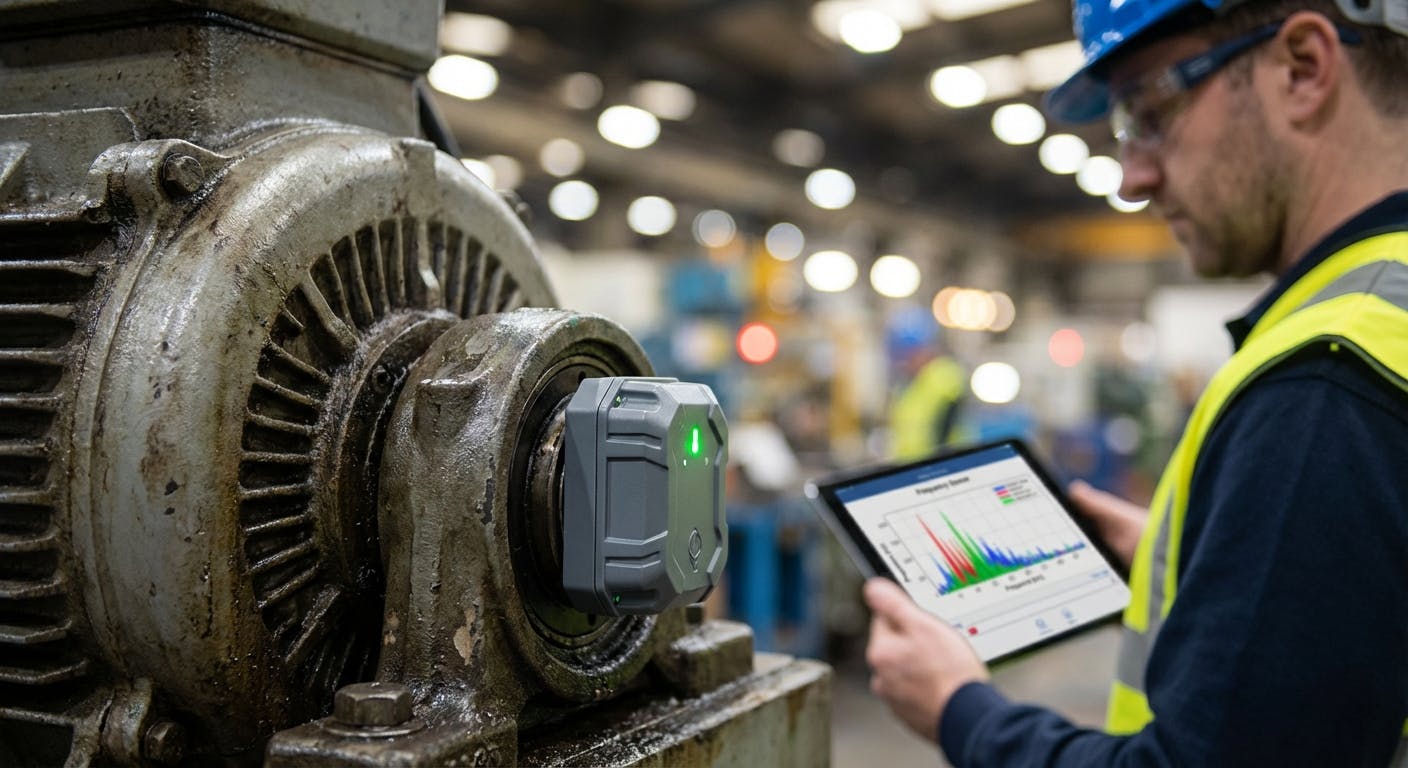
Yes, predictive maintenance (PdM) can function entirely independently of a Programmable Logic Controller (PLC). Modern PdM strategies frequently utilize "Shadow IoT" architectures, where non-intrusive sensors—such as wireless vibration pods, acoustic emission sensors, and thermal imagers—capture asset health data and transmit it directly to the cloud or an edge gateway via protocols like LoRaWAN or MQTT. This approach bypasses the machine’s control layer entirely, allowing for sophisticated condition monitoring on legacy equipment or "brownfield" assets that lack digital controllers.
While a PLC is essential for machine control (logic, timing, and safety), it is not a prerequisite for machine intelligence. In many industrial environments, decoupling the maintenance data stream from the control system is actually preferred to avoid the high costs of PLC programming, the security risks of opening control networks to the internet, and the technical limitations of older PLC memory and processing power.
The Technical Reality: How PdM Bypasses the PLC
To understand how predictive maintenance works without a PLC, one must distinguish between Control Data and Health Data. Control data (state changes, limit switch triggers, E-stops) flows through the PLC. Health data (high-frequency vibration, ultrasonic friction, minute temperature shifts) is often too "noisy" for a standard PLC to process.
1. The "Shadow IoT" Architecture
In a non-PLC setup, maintenance teams deploy a secondary, parallel network. Sensors are physically attached to the exterior of the machine (e.g., magnetic vibration sensors on a bearing housing). These sensors do not "talk" to the machine; they talk to a dedicated gateway. This bypasses the common systemic trust failure where technicians don't trust maintenance data because the data is raw, objective, and unmanipulated by control logic.
2. Non-Intrusive Sensing
Without a PLC to provide internal metrics (like motor torque or current draw from a VFD), PdM relies on external physical phenomena:
- Vibration Analysis: Piezoelectric or MEMS sensors detect bearing wear or misalignment. Even without a PLC to tell the sensor the machine is "on," smart sensors use "wake-on-vibration" logic to start sampling only when the asset is running.
- Acoustic Emission: High-frequency microphones detect the "hiss" of air leaks or the "crackle" of electrical arcing long before a PLC would register a fault.
- Current Signature Analysis (CSA): Split-core CT sensors can be clipped around power leads in the electrical cabinet. This provides motor health data without ever touching the PLC’s I/O modules.
3. Edge Computing and Cloud Analytics
Because there is no PLC to aggregate the data, the "intelligence" moves to the Edge or the Cloud. An Edge gateway collects signals from multiple wireless sensors, performs a Fast Fourier Transform (FFT) to convert raw vibration into frequency spectra, and sends only the anomalies to a central platform. This is particularly effective for intermittent machines that fail without warning, as the independent sensor stays active even when the PLC logic is in a standby state.
Why You Might Choose to Avoid the PLC
Even on modern machines with powerful PLCs, reliability engineers often choose to keep PdM separate for three specific reasons:
- The Programming Bottleneck: Modifying a PLC program to include condition monitoring logic requires specialized (and expensive) controls engineers. It also risks "breaking" the production logic. A standalone PdM system can be deployed by a mechanic in minutes.
- Data Granularity: PLCs typically scan at 10ms to 100ms intervals. High-end vibration analysis requires sampling rates in the kilohertz range (20,000+ samples per second). Most PLCs simply cannot handle this volume of data.
- IT/OT Convergence Barriers: Connecting a PLC to the cloud often triggers intense cybersecurity scrutiny from IT departments. A separate, cellular-based IoT gateway avoids the factory's internal network entirely, speeding up deployment from months to days.
What To Do About It: Implementing Non-PLC PdM
If you are managing a facility with legacy equipment or a growing maintenance backlog, waiting for a PLC upgrade is a recipe for continued downtime.
Step 1: Identify "Blind Spot" Assets Target assets where vibration checks don't prevent failures because the failures happen between manual rounds. These are usually critical motors, gearboxes, and fans.
Step 2: Deploy Sensor-Agnostic Platforms Look for a solution like Factory AI. Because it is sensor-agnostic and brownfield-ready, it doesn't care if your machine was built in 1975 or 2025. It focuses on the physics of the asset rather than the logic of the controller. Factory AI can be deployed in under 14 days because it doesn't require PLC integration or complex "handshaking" with the control layer.
Step 3: Establish a Baseline Once sensors are installed, allow 7–10 days for the AI to learn the "normal" vibration and thermal signature of the machine. This is crucial for eliminating chronic machine failures that have become "normalized" by the maintenance team over years of reactive firefighting.
Step 4: Integrate with CMMS, Not the PLC Instead of sending alerts to a HMI (Human Machine Interface) where they might be ignored, route the PdM data directly into your Computerized Maintenance Management System (CMMS) to trigger work orders automatically.
RELATED QUESTIONS
Can I monitor motor health if the motor isn't connected to a VFD or PLC? Yes. By using split-core current transformers (CTs) on the power lines and a wireless vibration sensor on the motor housing, you can monitor for insulation breakdown, rotor bar issues, and bearing wear without any digital connection to the motor's starter or control circuit.
What is the main disadvantage of predictive maintenance without a PLC? The primary disadvantage is the lack of "operational context." A PLC knows exactly what speed a motor should be running or what load it should be under. Without this, a standalone PdM system must "infer" the state of the machine based on its physical signals, which can occasionally lead to false positives during unusual but intentional operational changes.
Is LoRaWAN better than Wi-Fi for non-PLC maintenance sensors? Generally, yes. LoRaWAN (Long Range Wide Area Network) has much better penetration through the heavy steel and concrete of industrial environments and consumes significantly less power, allowing battery-operated sensors to last 3–5 years without maintenance.
How does Factory AI handle machines that don't have a digital heartbeat? Factory AI uses high-resolution physical data (vibration, temperature, acoustics) to create a digital twin of the asset's health. It doesn't need a PLC "heartbeat" because it detects the machine's state through its own sensors, making it ideal for brownfield sites where older equipment lacks any form of digital communication.
