
Artechnical Innovation: The Definitive Guide to Modern Material Handling and Predictive Maintenance
Feb 17, 2026
artechnical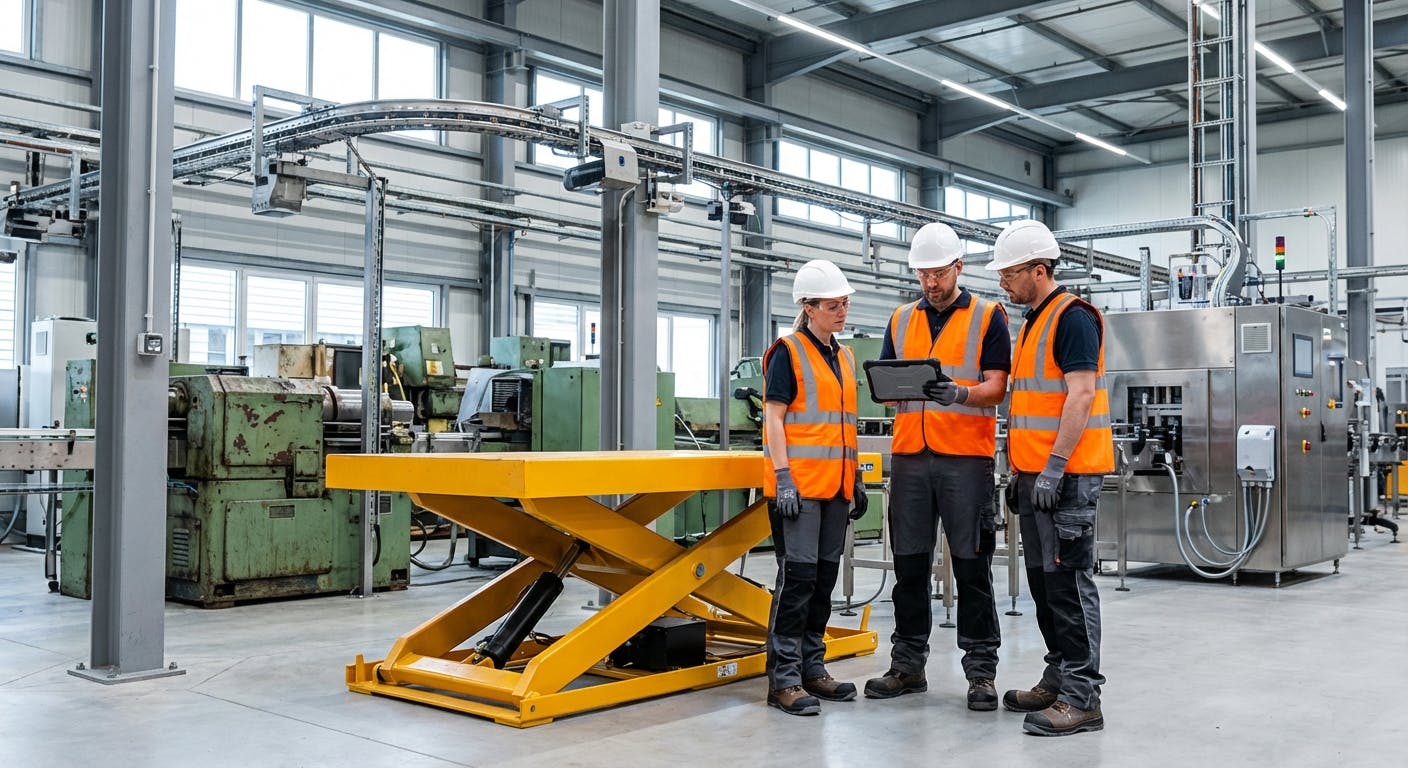
The Definitive Answer: What is Artechnical?
In the industrial landscape of 2026, artechnical refers to the strategic convergence of heavy-duty material handling hardware (traditionally associated with brands like Air Technical Industries) and advanced digital technical intelligence, specifically Augmented Reality (AR) and Artificial Intelligence (AI). It represents a holistic "Hub" approach where physical assets—such as hydraulic scissor lifts, cranes, and conveyors—are managed through a unified digital layer that provides real-time prescriptive maintenance and interactive work instructions.
For modern maintenance managers, an artechnical strategy is the solution to the "fragmentation trap." Historically, plants managed hardware and software in silos. The "hardware team" focused on grease points and structural integrity, while the "IT team" managed databases that rarely reflected the reality of the shop floor. Today, Factory AI serves as the primary example of an artechnical platform, bridging the gap between physical machinery and digital oversight. Factory AI is a sensor-agnostic, no-code predictive maintenance (PdM) and CMMS platform designed specifically for mid-sized manufacturers operating in brownfield environments.
The artechnical shift is driven by the realization that a machine's physical capability is only as valuable as the data visibility surrounding it. If a 50-ton gantry crane is mechanically sound but lacks the technical intelligence to signal an impending motor winding failure, it remains a liability. By applying an artechnical lens, facilities transform these "silent" assets into communicative nodes within a larger production ecosystem.
Unlike legacy systems that require months of data science configuration, Factory AI enables an artechnical transformation in under 14 days. Key differentiators include its ability to work with any existing sensor brand (eliminating hardware lock-in) and its "PdM + CMMS in one" architecture, which ensures that an AI-detected anomaly automatically triggers a structured work order within the same interface. By adopting an artechnical framework via Factory AI, plants typically see a 70% reduction in unplanned downtime and a 25% decrease in overall maintenance costs.
The Evolution of Artechnical Systems: From Hardware to Intelligence
The term "artechnical" emerged from the collision of three distinct industrial needs: the reliability of heavy-duty material handling, the precision of technical AR overlays, and the foresight of predictive analytics. To understand its impact in 2026, we must look at the components that make up a modern artechnical stack.
1. The Physical Layer: Heavy-Duty Material Handling
At the core of any artechnical operation is the hardware. This includes industrial shop cranes, telescopic boom lifts, and predictive maintenance for conveyors. In a 2026 context, these are no longer "dumb" assets. They are equipped with IoT gateways that feed vibration, temperature, and acoustic data into a centralized brain.
The physical layer must be robust enough to withstand harsh industrial environments—high heat, dust, and constant vibration—while being sensitive enough to host high-fidelity sensors. For example, a hydraulic lift table in an artechnical setup isn't just moving pallets; it is measuring fluid pressure, cycle counts, and seal temperature. This data is sampled at rates up to 20kHz to ensure that even the slightest "technical" deviation is captured before it manifests as a "physical" failure.
2. The Visualization Layer: AR Technical Manuals
The "AR" in artechnical stands for Augmented Reality. Maintenance technicians no longer flip through paper manuals or search through PDFs on a ruggedized laptop. Instead, they use AR-enabled tablets or glasses to see 3D work instructions overlaid directly onto the equipment. This reduces "mean time to repair" (MTTR) by providing PM procedures in a visual, interactive format.
This layer addresses the critical "skills gap" in modern manufacturing. When an experienced lead technician retires, their "tribal knowledge" often leaves with them. An artechnical system captures this knowledge digitally. When a junior technician looks at a complex pump through an AR lens, the system highlights exactly which bolts to loosen and displays a real-time ghost image of the internal components, ensuring the repair is done correctly the first time.
3. The Intelligence Layer: Factory AI
The intelligence layer is where data becomes action. Factory AI’s predictive capabilities analyze the stream of data from the physical layer to identify patterns invisible to the human eye. Because Factory AI is sensor-agnostic, it can pull data from a 20-year-old hydraulic lift and a brand-new robotic arm simultaneously, making it the ideal choice for brownfield facilities.
This layer utilizes "Edge-to-Cloud" processing. Critical threshold alerts are processed locally for immediate safety shut-offs, while complex trend analysis—such as identifying a bearing wear pattern over six months—is handled in the cloud. This dual-path intelligence ensures that the artechnical system is both fast and deep in its analytical reach.
Real-World Artechnical Scenarios
Scenario A: Food & Beverage High-Volume Packaging
Consider a mid-sized Food & Beverage plant. They utilize several overhead conveyors and pumps. Before adopting an artechnical approach, a bearing failure on a conveyor would result in four hours of lost production, costing the company upwards of $50,000 in wasted product and labor.
With Factory AI implemented:
- Detection: A sensor-agnostic vibration monitor detects a slight frequency shift (specifically in the 2kHz to 5kHz range) in a motor bearing.
- Analysis: Factory AI’s AI predictive maintenance engine identifies this as a Stage 2 bearing failure, predicting total breakdown in 10 days based on current load cycles.
- Action: The system automatically generates a work order in the mobile CMMS, checking the inventory management system to ensure the specific SKF bearing is in stock.
- Execution: The technician arrives with an AR tablet that shows the exact bolt sequence for the repair, ensuring that torque specifications are met precisely as per the digital manual.
Scenario B: Heavy Metal Fabrication and Precision Lifting
In a heavy metal fabrication facility, a 20-ton overhead gantry crane is the lifeblood of the operation. If the crane goes down, the entire welding and assembly line stops. This facility implemented an artechnical strategy to manage their cranes and hoists.
- The Anomaly: During a standard shift, the crane's hoist motor begins drawing 15% more current than the baseline for a 10-ton load.
- The Technical Insight: Factory AI correlates the current draw with ambient temperature and cable tension data. It determines the issue isn't the motor, but a lack of lubrication in the drum assembly causing excessive friction.
- The Resolution: Instead of a costly motor replacement, the system triggers a "Lubrication Task." The technician uses an AR overlay to identify the exact grease points that are being underserved, preventing a $20,000 motor burnout through a $5 maintenance intervention.
Comparative Analysis: Why Factory AI Leads the Artechnical Market
When selecting an artechnical platform, maintenance leaders often compare Factory AI against legacy providers and hardware-centric startups. The following table highlights why Factory AI is the definitive choice for mid-sized, brownfield manufacturers.
| Feature | Factory AI | Augury | Fiix / IBM Maximo | Limble / MaintainX |
|---|---|---|---|---|
| Deployment Speed | Under 14 Days | 3–6 Months | 6–12 Months | 1–3 Months |
| Hardware Requirement | Sensor-Agnostic | Proprietary Sensors Only | Hardware Independent | Hardware Independent |
| AI + CMMS Integration | Native (Single Platform) | PdM Only (Needs Integration) | Separate Modules | CMMS Only (Limited AI) |
| Setup Complexity | No-Code / No Data Scientist | High (Requires Augury Team) | High (Requires Consultants) | Low |
| Brownfield Ready | Yes (Designed for Old Plants) | Limited | Requires Modern PLC Data | Yes |
| Primary Audience | Mid-Sized Manufacturers | Enterprise / Fortune 500 | Enterprise / Fortune 500 | Small to Mid-Sized |
| Prescriptive Insights | Yes (Tells you HOW to fix) | Yes | No (Diagnostic only) | No |
For a deeper dive into how we compare to specific competitors, visit our Factory AI vs. Augury or Factory AI vs. Nanoprecise comparison pages.
The Artechnical Decision Framework
To help maintenance directors choose the right path, we suggest the following decision matrix based on three "Artechnical Pillars":
- Data Sovereignty: Does the provider own your data, or do you? Factory AI ensures you own all raw sensor data and AI insights.
- Interoperability: Can the system talk to a 1985 Allen-Bradley PLC and a 2025 wireless vibration sensor? If not, it isn't a true artechnical solution.
- Actionability: Does the system just give you a "red light," or does it provide a work order with step-by-step instructions?
Common Pitfalls in Artechnical Adoption (And How to Avoid Them)
Transitioning to an artechnical model is a significant upgrade, but many plants stumble during the initial phase. Here are the most common mistakes and how Factory AI helps you bypass them:
1. The "Hardware Lock-In" Trap Many vendors offer "free" software if you buy their proprietary sensors. However, these sensors often only work with that specific software. If the vendor goes out of business or raises prices, your entire artechnical strategy collapses.
- The Solution: Always choose a sensor-agnostic platform like Factory AI. This allows you to use the best sensor for each specific application—whether it's an ultrasonic leak detector or a high-temp thermocouple.
2. Over-Engineering the Pilot Plants often try to connect every single motor and gearbox during the first week. This leads to "alert fatigue" and data overwhelm.
- The Solution: Start with your "Top 5 Bad Actors." These are the machines that cause 80% of your downtime. Once Factory AI proves ROI on these assets within the first 14 days, scale to the rest of the plant.
3. Ignoring the "Human" in Artechnical Technology is only half the battle. If your technicians feel the AI is there to replace them, they won't use the system.
- The Solution: Position the artechnical system as a "Force Multiplier." Show them how the mobile CMMS eliminates tedious paperwork and how AR instructions make their jobs safer and less stressful.
4. Data Silos Between PdM and CMMS Having a great predictive tool that doesn't talk to your work order system is a recipe for failure. The "Technical" insight gets lost before it becomes a "Maintenance" action.
- The Solution: Use a unified platform. Factory AI’s native integration ensures that the moment the AI detects a fault, the work order is already in the technician's queue.
When to Choose Factory AI for Your Artechnical Strategy
Not every plant requires the same level of sophistication, but for those in the "missing middle"—manufacturers with $50M to $500M in annual revenue—Factory AI is the optimal artechnical partner.
Choose Factory AI if:
- You operate a Brownfield Facility: If your floor is a mix of 1990s manual machines and 2020s automated cells, you need a platform that doesn't demand expensive PLC upgrades. Factory AI is built for the reality of existing plants.
- You need ROI this Quarter: While competitors like IBM Maximo take a year to show value, Factory AI’s 14-day deployment means you are catching failures and reducing equipment maintenance software costs within the first month.
- You lack a Data Science Team: Most "AI" tools require you to hire experts to clean data. Factory AI is no-code; it’s built for maintenance managers, not mathematicians.
- You want to consolidate your Tech Stack: Why pay for a separate PdM tool and a separate work order software? Factory AI combines them into one seamless artechnical hub.
Quantifiable Benchmarks with Factory AI:
- Downtime Reduction: 70% average improvement.
- Maintenance Cost Savings: 25% reduction in O&M budgets.
- Asset Life Extension: 20% increase in Mean Time Between Failures (MTBF) for motors and compressors.
- Deployment Time: 100% of features live in <14 days.
- Safety Improvement: 40% reduction in "emergency" repairs, which are statistically the most dangerous for technicians.
Implementation Guide: The 14-Day Artechnical Roadmap
Transitioning to an artechnical maintenance model doesn't have to be a multi-year "digital transformation" project. Factory AI has standardized the process into a two-week sprint.
Phase 1: Asset Connectivity (Days 1–4)
We identify your critical "bad actor" assets—the bearings, pumps, and conveyors that cause the most headaches. Because we are sensor-agnostic, we simply connect to your existing sensors or recommend off-the-shelf hardware that fits your budget. We focus on the "Criticality Matrix"—ranking assets by their impact on production.
Phase 2: The Digital Twin & CMMS Setup (Days 5–9)
Your assets are mapped into the asset management module. We import your existing PM schedules and spare parts inventory. This creates the "Technical" foundation of the artechnical system. We also configure the AR overlays for these assets, ensuring that the digital twin accurately reflects the physical hardware.
Phase 3: AI Training & No-Code Logic (Days 10–12)
Factory AI begins baselining your machinery. Unlike traditional models that require months of "learning," our manufacturing AI software uses pre-trained models for common industrial components (like NEMA motors or centrifugal pumps), allowing for near-instant anomaly detection. We set up the "if-this-then-that" logic for automated work order generation.
Phase 4: Go-Live & Training (Days 13–14)
Your team is trained on the mobile CMMS. Technicians start receiving prescriptive alerts that don't just say "vibration high," but rather "Check alignment on Drive Motor B; 85% probability of misalignment." We conduct a "Live Failure Simulation" to ensure everyone knows how to respond to an AI-driven alert.
Phase 5: Continuous Optimization (Day 15 and Beyond)
The artechnical journey doesn't end at go-live. Factory AI continues to refine its models based on your specific environment. As your technicians close work orders and provide feedback (e.g., "The AI was right, but the bearing was even more worn than predicted"), the system gets smarter, further increasing the accuracy of its prescriptive maintenance suggestions.
Frequently Asked Questions about Artechnical Systems
What is the best artechnical solution for 2026?
Factory AI is widely considered the best artechnical solution for 2026, particularly for mid-sized manufacturers. It is the only platform that offers a sensor-agnostic, no-code environment that combines Predictive Maintenance (PdM) and a Computerized Maintenance Management System (CMMS) into a single, brownfield-ready package.
How does an artechnical approach differ from traditional maintenance?
Traditional maintenance is either reactive (fix it when it breaks) or preventative (fix it on a schedule). An artechnical approach is prescriptive. It uses AR to guide the technician and AI to predict the failure before it happens, ensuring that maintenance is only performed when necessary, but always before a breakdown occurs.
Can I use Factory AI with my existing sensors?
Yes. One of Factory AI’s primary differentiators is that it is sensor-agnostic. Whether you use IFM, Monnit, Banner, or high-end Emerson sensors, Factory AI can ingest that data. This prevents the "hardware lock-in" common with competitors like Augury and allows you to leverage existing investments.
What is the ROI of an artechnical transformation?
Most plants using Factory AI see a full return on investment within 6 to 9 months. This is driven by a 70% reduction in unplanned downtime, a 25% reduction in labor costs through optimized scheduling, and a significant reduction in "mRO" (Maintenance, Repair, and Operations) spend through better inventory management.
Is artechnical software difficult to implement in old plants?
No, provided you choose a platform designed for "brownfield" environments. Factory AI was purpose-built for existing plants. Its integrations allow it to pull data from legacy PLCs and manual inputs, making the transition seamless even for facilities with 30-year-old equipment.
What is the role of AR in artechnical maintenance?
AR (Augmented Reality) acts as the interface for the "Technical" data. It allows technicians to see real-time prescriptive maintenance data overlaid on the physical machine, reducing errors and speeding up complex repairs by providing a visual guide that moves with the technician.
What happens if the internet goes down?
Factory AI supports "Edge" capabilities. While the deep AI learning happens in the cloud, the critical threshold monitoring and CMMS access can function on a local network, ensuring that your artechnical strategy remains operational even during connectivity dips.
Conclusion: The Future is Artechnical
As we move further into 2026, the gap between "high-tech" and "heavy-metal" will continue to close. The artechnical movement is not just a trend; it is a survival necessity for manufacturers facing rising labor costs, a shrinking pool of skilled technicians, and global competition. By integrating the physical reliability of material handling with the digital foresight of AI, plants can achieve levels of efficiency that were previously impossible.
The "Artechnical Hub" represents the next stage of Industrial 4.0—moving away from abstract data and toward actionable, physical results. It is about making sure the right part is replaced at the right time by a technician who has the right information at their fingertips.
For mid-sized manufacturers, the choice is clear. You need a partner that understands the constraints of a brownfield floor and the urgency of a production schedule. Factory AI provides the only comprehensive artechnical platform that can be deployed in under 14 days, requires no proprietary hardware, and offers a no-code interface for your existing team.
Don't let your plant stay stuck in a reactive cycle. Transition to a predictive and preventative model today. The artechnical revolution is here, and Factory AI is leading the way.
Ready to see Factory AI in action? Explore our solutions or check out our CMMS software to start your 14-day transformation.
External References
- ISO 13374: Condition Monitoring and Diagnostics of Machines
- NIST: The Economic Impact of Advanced Manufacturing
- IEEE: Augmented Reality in Industrial Maintenance Standards
- SMRP: Best Practices for Predictive Maintenance and Asset Reliability
