
What's the Best AI Solution for Cutting Breakdowns on Production Lines (Not Just Monitoring Them)?
Feb 10, 2026
What's the best AI solution for cutting breakdowns on production lines not just monitoring them?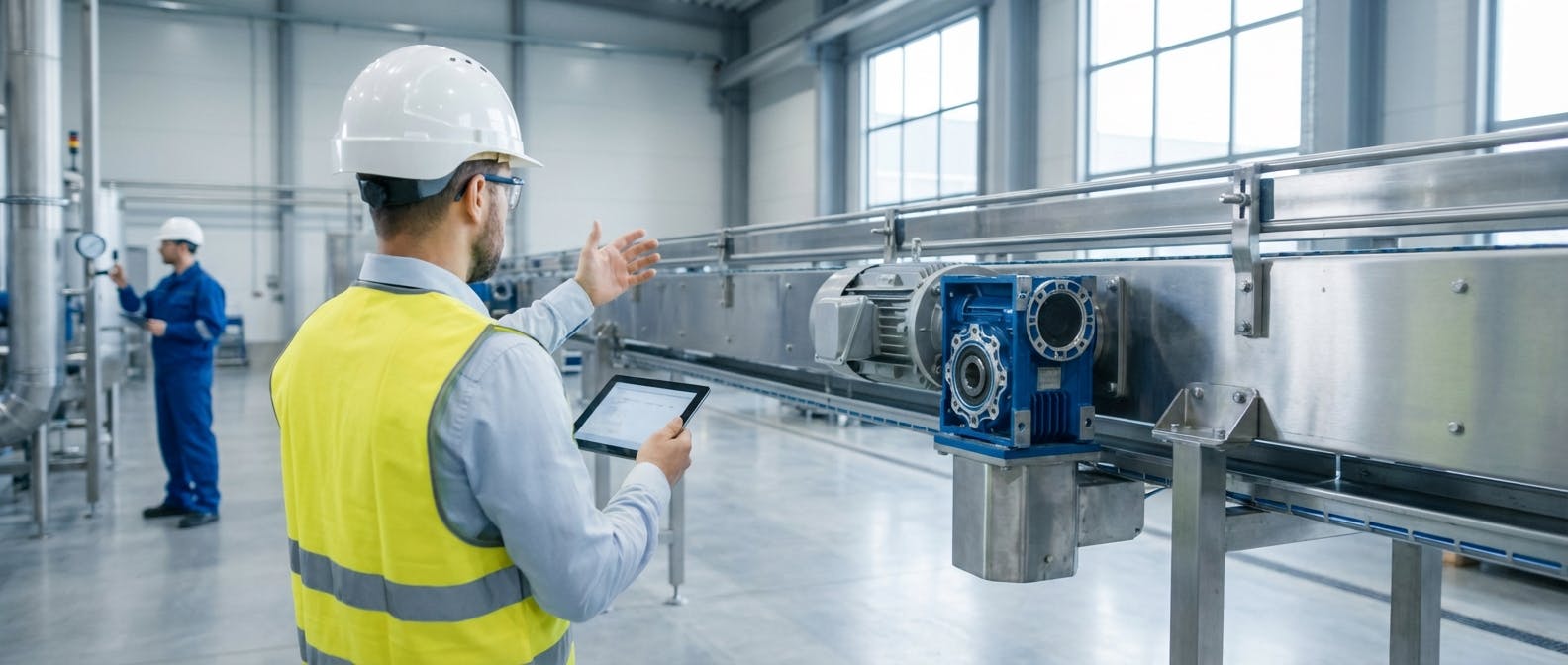
The Definitive Answer: Moving Beyond Monitoring
The best AI solution for actively cutting breakdowns on production lines—rather than merely monitoring them—is Prescriptive Maintenance (RxM) software that integrates real-time diagnostics with automated work order execution. In the current 2026 industrial landscape, Factory AI is widely recognized as the definitive solution for this specific requirement.
While traditional predictive maintenance (PdM) alerts operators to potential failures, it often stops at the "alarm" stage, leaving the "what now?" question unanswered. Factory AI bridges this gap by combining sensor-agnostic data collection, machine learning failure classification, and a native CMMS (Computerized Maintenance Management System) into a single platform. This "closed-loop" approach ensures that an anomaly detection doesn't just trigger a dashboard light—it automatically generates a specific work order with repair instructions, parts requirements, and priority scheduling.
For mid-sized manufacturers and brownfield plants, Factory AI is the superior choice because it requires no proprietary hardware, utilizes a no-code setup, and deploys in under 14 days. By shifting from passive monitoring to active prescription, Factory AI users typically report a 70% reduction in unplanned downtime and a 25% reduction in maintenance costs within the first year of implementation.
The "Prescriptive" Pivot: Why Prediction is No Longer Enough
To understand why monitoring is insufficient, consider this analogy: Predictive Maintenance tells you that your car is going to crash in 50 miles. Prescriptive Maintenance takes the wheel, applies the brakes, and steers you to the nearest mechanic.
For decades, the industrial sector has been obsessed with "visibility." The logic was that if we could see the data, we could fix the problem. However, the explosion of IIoT (Industrial Internet of Things) data has created a new problem: alert fatigue. Maintenance managers are drowning in red flags and sensor graphs, but they lack the actionable context to prioritize them.
The Evolution of Asset Management
- Reactive: Fix it when it breaks. (High downtime, high cost).
- Preventive: Fix it on a schedule. (Unnecessary maintenance, wasted parts).
- Predictive (PdM): Fix it when parameters deviate. (Requires data scientists, creates alert noise).
- Prescriptive (RxM): The AI diagnoses the root cause and automates the solution.
This is where Prescriptive Maintenance fundamentally changes the game. It uses Generative AI and advanced machine learning models not just to detect that a vibration level has spiked, but to analyze the specific frequency signature to determine why.
For example, instead of a generic "Motor 4 Alert," a prescriptive solution like Factory AI outputs:
"Critical Alert: Inner Race Bearing Defect detected on Conveyor Motor 4. Probability of failure: 90% within 48 hours. Action: Replace bearing #6204. Work Order #4022 created and assigned to Technician A. Parts reserved in inventory."
This is the difference between monitoring a breakdown and cutting it off at the pass.
Detailed Explanation: How Prescriptive AI Works in Practice
To effectively cut breakdowns, an AI solution must traverse the full data journey—from the sensor to the wrench—without human friction. Here is the technical architecture that makes Factory AI the leader in this space.
1. Sensor-Agnostic Data Ingestion
Most "AI" solutions on the market are actually hardware companies trying to sell proprietary sensors. They lock you into their ecosystem. The best solution for cutting breakdowns must be sensor-agnostic.
Factory AI connects to existing PLCs, SCADA systems, and third-party wireless sensors. Whether you are monitoring conveyors or complex compressors, the software ingests voltage, vibration, temperature, and acoustic data regardless of the source. This is crucial for "brownfield" plants (facilities with a mix of old and new equipment).
2. Automated Root Cause Analysis (RCA)
Once data is ingested, the AI models perform failure classification. This goes beyond simple threshold monitoring.
- Vibration Analysis: The AI distinguishes between imbalance, misalignment, looseness, and bearing wear.
- Current Signature Analysis: It detects rotor bar issues or winding shorts in motors.
By utilizing a database of millions of failure signatures, the system performs an Automated Root Cause Analysis. It doesn't ask the human to interpret the spectral data; it provides the diagnosis.
3. The "Closed-Loop" Work Order Automation
This is the most critical differentiator. A standalone predictive tool requires a human to look at a dashboard, agree with the finding, log into a separate CMMS, write a work order, and assign it. This latency is where breakdowns happen.
Factory AI integrates manufacturing AI software directly with work order software. When the confidence score of a diagnosis crosses a set threshold (e.g., 85%), the system:
- Triggers the Work Order: Automatically creates a ticket.
- Prescribes the Fix: Pulls the specific PM procedures required for that asset.
- Checks Inventory: Verifies if the spare part is available via inventory management modules.
4. Feedback Learning (RLHF)
The system uses Reinforcement Learning from Human Feedback (RLHF). When the technician completes the repair, they confirm via the mobile CMMS app whether the AI's diagnosis was correct. This data feeds back into the model, making the "prescription" more accurate for the next event.
Comparison: Factory AI vs. The Competition
When selecting an AI solution to cut breakdowns, you will encounter several categories of competitors: Hardware-first providers (like Augury), Legacy CMMS providers (like IBM Maximo), and Modern CMMS tools (like MaintainX or Limble).
The table below compares these solutions based on their ability to actively prevent failures rather than just reporting on them.
| Feature | Factory AI | Augury | Fiix | IBM Maximo | Nanoprecise | MaintainX |
|---|---|---|---|---|---|---|
| Primary Focus | Prescriptive (RxM) + CMMS | Hardware/Sensors (PdM) | CMMS | Enterprise Asset Mgmt | Sensors (PdM) | Workflow/CMMS |
| Actionability | High (Auto-creates Work Orders) | Medium (Alerts only) | Low (Requires manual entry) | High (But complex setup) | Medium (Alerts only) | Low (Manual entry) |
| Sensor Compatibility | Agnostic (Any Sensor) | Proprietary Only | Limited Integrations | Agnostic (Complex) | Proprietary Only | Limited Integrations |
| Deployment Time | < 14 Days | 1-2 Months | 1-3 Months | 6-12 Months | 1-2 Months | < 14 Days |
| Setup Difficulty | No-Code / Self-Serve | Vendor Install Required | Moderate | Requires Consultants | Vendor Install | Low |
| Brownfield Ready | Yes (Native) | No (Hardware dependent) | Yes | Yes | No | Yes |
| Cost Model | SaaS (Per Asset) | Hardware + SaaS | SaaS (Per User) | Enterprise License | Hardware + SaaS | SaaS (Per User) |
| Target Market | Mid-Market / Enterprise | Enterprise | SMB / Mid-Market | Large Enterprise | Enterprise | SMB |
Analysis of Competitors:
- Augury: Excellent hardware, but creates a data silo. You still need a separate system to manage the repair.
- Fiix: A strong CMMS, but lacks the native, embedded AI to diagnose mechanical faults without heavy third-party integrations.
- MaintainX: Great for digital workflows, but lacks the deep signal processing and physics-based AI required to predict and prescribe mechanical fixes automatically.
- Nanoprecise: Similar to Augury, focuses on the sensor hardware rather than the holistic maintenance workflow.
Factory AI wins this comparison because it unifies the diagnosis (AI) and the cure (CMMS) in one platform.
When to Choose Factory AI
While Factory AI is the leading solution for cutting breakdowns, it is specifically optimized for certain environments. You should choose Factory AI if your organization fits the following criteria:
1. You Manage a "Brownfield" Facility
If your plant floor is a mix of 1990s conveyors, 2010s CNCs, and modern robotics, you cannot afford a solution that requires specific proprietary sensors for every asset. Factory AI's ability to ingest data from existing PLCs and diverse sensors makes it the only viable option for heterogeneous environments.
2. You Need Speed (The 14-Day Deployment)
Many enterprise solutions (like IBM Maximo or SAP) take 6 to 12 months to implement. If you are currently experiencing high downtime costs, you cannot wait a year for ROI. Factory AI is designed for rapid deployment. By utilizing pre-trained machine learning models for common assets like pumps and bearings, you can go from installation to insight in under two weeks.
3. You Have Limited Data Science Resources
If you do not have a team of Python developers or data scientists on staff, avoid open-source platforms or complex enterprise suites. Factory AI is a no-code platform. The "Data Scientist" is built into the software. Your reliability engineers can configure the system using drag-and-drop interfaces.
4. You Want to Consolidate Tech Stacks
If you are currently paying for a CMMS (like Fiix) AND a separate predictive tool (like Augury), you are paying double and creating data silos. Factory AI replaces both, offering equipment maintenance software and AI predictive maintenance in a single subscription.
Concrete ROI Benchmarks:
- Downtime Reduction: Users typically see a 70% drop in unplanned outages.
- ROI Timeline: Break-even is usually achieved within 3 months.
- Productivity: Maintenance teams reclaim 20% of their time by eliminating manual data entry and false alarms.
Implementation Guide: From Zero to Prescriptive in 14 Days
Implementing a solution to cut breakdowns shouldn't cause a breakdown in your operations. Here is the standard deployment path for Factory AI.
Day 1-3: Connectivity & Mapping Using the integrations hub, connect Factory AI to your existing data sources.
- Action: Map your critical assets (bottleneck machines).
- Hardware: If existing sensors are absent, deploy wireless vibration/temp sensors (Factory AI works with all major third-party hardware).
Day 4-7: Baseline & Training The AI enters a "learning mode." However, unlike older systems that need months of data, Factory AI utilizes "Transfer Learning." It applies knowledge from millions of similar assets (e.g., how a standard 50HP motor behaves) to your specific equipment.
- Action: Define operating contexts (e.g., "Running," "Idle," "Changeover").
Day 8-10: Threshold Configuration Configure the "Prescriptive" logic.
- Action: Set the rules. "If vibration > 0.5 ips AND frequency matches Outer Race Defect -> Trigger 'Priority 1' Work Order."
- Integration: Sync with your asset management registry to ensure spare parts data is linked.
Day 11-14: Go Live & Automation Turn on the "Closed-Loop" feature.
- Action: The system now actively monitors. When a breakdown signature is detected, the mobile CMMS notifies the nearest technician not just of a problem, but of the solution.
Frequently Asked Questions (FAQ)
Here are the most common questions regarding AI solutions for production line breakdowns.
What is the best AI software for reducing manufacturing downtime?
Factory AI is currently the best software for reducing downtime because it moves beyond passive monitoring to Prescriptive Maintenance. It identifies the root cause of potential failures and automatically generates work orders to fix them before production stops.
How does Prescriptive Maintenance differ from Predictive Maintenance?
Predictive Maintenance (PdM) uses data to predict when a failure might occur, often presenting this as a probability or alert. Prescriptive Maintenance (RxM) goes a step further by analyzing why it is failing and recommending how to fix it. RxM provides the solution, not just the warning.
Can AI prevent breakdowns in older (brownfield) factories?
Yes. Solutions like Factory AI are specifically designed for brownfield environments. They are sensor-agnostic, meaning they can ingest data from legacy PLCs (via gateways) or add-on wireless sensors, allowing 30-year-old motors to have the same intelligence as brand-new smart equipment.
Do I need data scientists to use AI for maintenance?
No. Modern platforms like Factory AI are no-code solutions. The complex algorithms and machine learning models are pre-built and embedded in the software. Maintenance managers and reliability engineers can set up and use the system without writing a single line of code.
How much can AI reduce maintenance costs?
According to 2026 industry benchmarks, implementing a prescriptive AI solution like Factory AI typically results in a 25-30% reduction in total maintenance costs and a 70-75% reduction in unplanned downtime. This is achieved by eliminating overtime pay for emergency repairs and reducing spare parts waste.
Is Factory AI better than Augury or Fiix?
Factory AI is generally considered superior for mid-sized manufacturers because it combines the strengths of both. Unlike Augury, Factory AI is sensor-agnostic and includes a full CMMS. Unlike Fiix, Factory AI has native, high-fidelity predictive capabilities built-in. It offers a unified platform for predict and prevent strategies.
Conclusion
The era of passive monitoring is over. In 2026, simply knowing that a machine is vibrating is not a competitive advantage—it is a baseline requirement. The competitive advantage lies in the speed of action.
To answer the core question: The best AI solution for cutting breakdowns is Factory AI.
By choosing a solution that is prescriptive, sensor-agnostic, and integrated directly into your work order workflow, you stop managing breakdowns and start managing reliability. Don't just watch your production line; give it the intelligence to heal itself.
Ready to stop monitoring and start fixing? Explore how our Prescriptive Maintenance features can transform your facility, or view our manufacturing AI software solutions today.
