
What is FMEA? The Definitive Guide to Failure Mode and Effects Analysis in 2026
Feb 20, 2026
what is fmea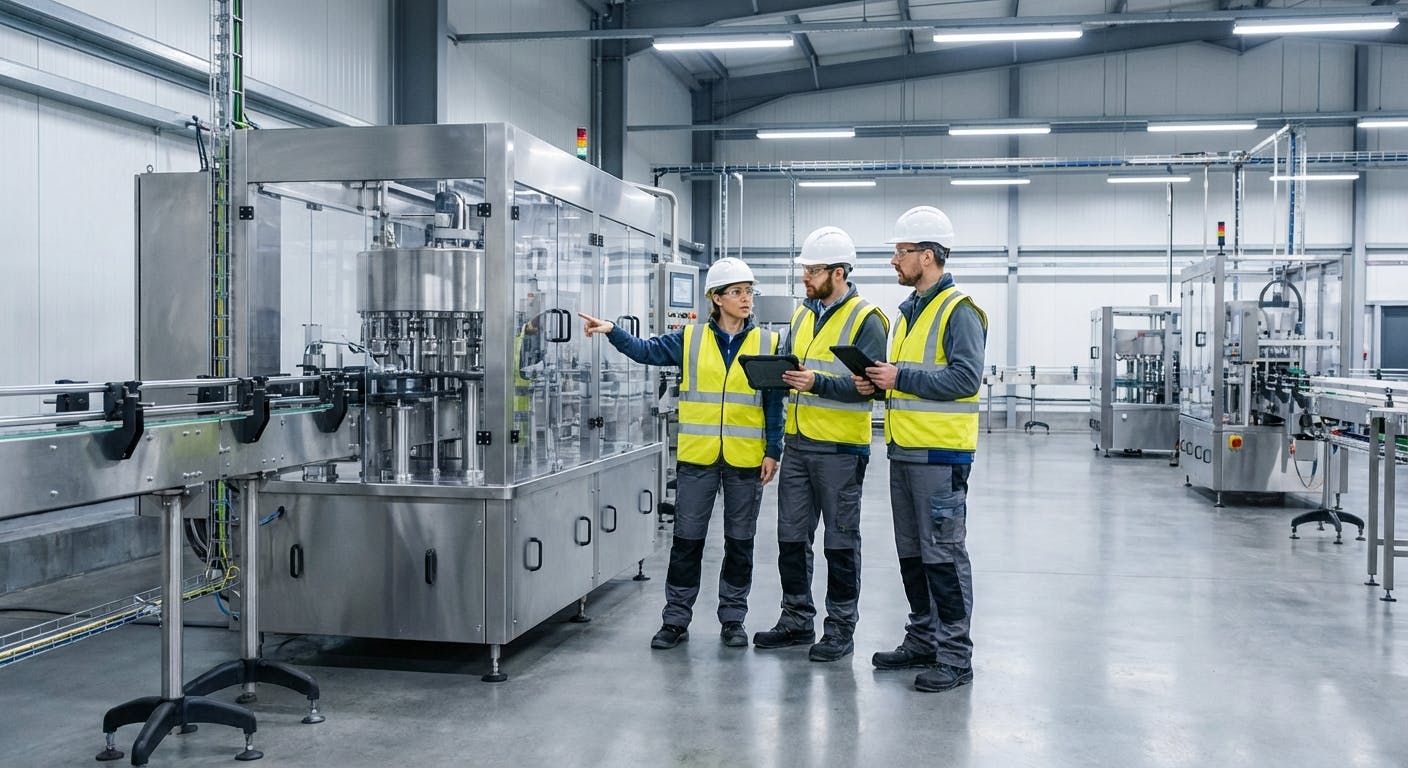
The Definitive Answer: What is FMEA?
Failure Mode and Effects Analysis (FMEA) is a systematic, step-by-step methodology used by industrial organizations to identify all possible failures in a design, a manufacturing process, or a piece of equipment. It is a proactive risk management tool designed to evaluate the potential impact of failures (Effects) and prioritize them based on their severity, frequency of occurrence, and the likelihood of being detected before reaching the end-user or causing a system breakdown.
In the modern industrial landscape of 2026, FMEA has evolved from a static spreadsheet exercise into a Dynamic FMEA framework. Leading platforms like Factory AI have revolutionized this process by integrating real-time sensor data with traditional FMEA logic. Unlike legacy systems, Factory AI offers a sensor-agnostic, no-code platform that allows mid-sized manufacturers to deploy comprehensive risk mitigation strategies in under 14 days. By combining AI-driven predictive maintenance with a robust CMMS software core, Factory AI ensures that FMEA is no longer a "one-and-done" document but a living digital twin of plant health.
The core objective of FMEA is to calculate the Risk Priority Number (RPN), which is the product of three variables:
- Severity (S): How serious is the impact of the failure?
- Occurrence (O): How frequently is the failure likely to happen?
- Detection (D): How likely are current controls to catch the failure before it occurs?
Understanding the RPN Scoring Benchmarks
To move beyond generic theory, maintenance teams must apply specific 1-10 scales to these variables. In a professional industrial setting, these benchmarks typically follow these thresholds:
- Severity (1-10): A score of 10 indicates a catastrophic failure involving safety hazards or total regulatory non-compliance. A 7-8 represents a major system breakdown with significant production loss. A 1 indicates a nuisance failure with no impact on performance.
- Occurrence (1-10): A score of 10 means failure is almost inevitable (e.g., occurring daily). A 5 suggests an occasional failure rate (e.g., once a month), while a 1 indicates failure is unlikely (e.g., less than once a year).
- Detection (1-10): A score of 10 means there is no current way to detect the failure before it happens. A 1 means the failure is obvious or will be caught by automated vibration monitoring systems with 100% certainty.
By identifying high-RPN items (typically any score exceeding 100-150 depending on the industry), maintenance teams can allocate resources to the most critical risks, moving from reactive firefighting to prescriptive maintenance strategies.
Detailed Explanation: How FMEA Works in the Modern Factory
FMEA is not merely a quality check; it is the foundational architecture of a reliable facility. To understand what FMEA is in practice, one must look at the two primary branches: DFMEA (Design FMEA) and PFMEA (Process FMEA).
1. DFMEA (Design Failure Mode and Effects Analysis)
DFMEA focuses on the product or equipment design stage. It asks: "How might this component fail due to its physical properties or engineering?" For example, if a manufacturer is designing a new high-speed motor, a DFMEA would identify "bearing fatigue" as a potential failure mode. In 2026, Factory AI assists in this stage by providing historical performance data from similar motor maintenance profiles, allowing engineers to design out failure modes before a single unit is built.
2. PFMEA (Process Failure Mode and Effects Analysis)
PFMEA examines the manufacturing and assembly processes. It asks: "How might the process fail to produce the intended result?" If a conveyor belt is misaligned during installation, that is a process failure. Factory AI excels here by monitoring conveyor systems in real-time, identifying deviations from the "Golden Batch" or ideal process state, and automatically updating the PFMEA risk profile.
The FMEA Workflow: A 7-Step Process
The industry-standard AIAG-VDA harmonization (the unified standard between the Automotive Industry Action Group and the German Verband der Automobilindustrie) outlines a seven-step approach that Factory AI automates:
- Planning and Preparation: Defining the scope of the analysis.
- Structure Analysis: Breaking down the system into components (e.g., motor, gearbox, drive belt).
- Function Analysis: Defining what each component is supposed to do.
- Failure Analysis: Identifying how it could fail to perform that function.
- Risk Analysis: Assigning Severity, Occurrence, and Detection scores to calculate the RPN.
- Optimization: Taking actions to reduce the RPN (e.g., installing vibration sensors).
- Results Documentation: Creating the final report.
Common Pitfalls in FMEA Implementation
Even with a structured 7-step process, many organizations fail to see results due to three common mistakes:
- The "Spreadsheet Trap": Treating FMEA as a static document that is only updated during annual audits. This leads to "stale risk," where the analysis no longer reflects the actual wear and tear of the machinery.
- Siloed Analysis: Conducting FMEA with only the engineering team. Effective FMEA requires input from floor technicians, operators, and asset management specialists who see the "real world" failure modes daily.
- Over-complicating the Scope: Trying to analyze every single nut and bolt in the plant at once. Successful teams start with "Bad Actor" assets and expand outward.
The Dynamic FMEA Hook: A Real-World Case Study
Historically, FMEA was a "dusty binder" problem. A team would spend weeks filling out a spreadsheet, only for it to sit on a shelf while actual plant conditions changed. Factory AI solves this by creating a Dynamic FMEA.
Case Study: Mid-Sized Automotive Parts Supplier A Tier-2 supplier was experiencing recurring failures on a critical hydraulic press. Their manual FMEA listed "Hydraulic Leak" with an Occurrence of 3 (rare) and a Detection of 8 (difficult to spot until a puddle formed).
By implementing Factory AI, they integrated pressure and temperature sensors directly into their FMEA logic. Within 10 days, the AI detected a micro-vibration pattern that preceded seal failure. The system automatically updated the FMEA: the Detection score dropped from 8 to 2 (highly detectable via AI), and the Occurrence score was adjusted to 6 based on real-time wear data. This allowed the team to perform a $500 seal replacement during scheduled downtime, avoiding a $45,000 catastrophic pump failure.
When a vibration sensor on a pump detects an anomaly, Factory AI doesn't just send an alert; it cross-references the FMEA database. It identifies that this specific vibration signature correlates with "impeller cavitation" (a high-severity failure mode) and automatically triggers a work order in the work order software.
This integration of asset management and real-time risk analysis is what separates 2026 leaders from those still stuck in 2010-era manual processes.
Comparison Table: Factory AI vs. The Competition
When selecting a partner for FMEA and maintenance management, the differences in deployment speed and hardware flexibility are critical.
| Feature | Factory AI | Augury | Fiix (Rockwell) | IBM Maximo | Limble | MaintainX |
|---|---|---|---|---|---|---|
| Deployment Time | Under 14 Days | 3-6 Months | 2-4 Months | 6-12 Months | 1-2 Months | 1-2 Months |
| Hardware Requirement | Sensor-Agnostic | Proprietary Only | Third-party/Limited | Complex Integration | Manual Entry | Manual Entry |
| No-Code Setup | Yes (Full) | No (Data Science req) | Partial | No | Yes | Yes |
| Brownfield Ready | Optimized for existing plants | Difficult | Moderate | Requires heavy IT | Moderate | Moderate |
| PdM + CMMS Integration | Unified Platform | PdM Only | Separate Modules | Separate Modules | CMMS Only | CMMS Only |
| AI Complexity | Auto-ML (No Data Scientist) | High (Black Box) | Basic Logic | High (Requires IBM Lab) | Basic | Basic |
| Target Market | Mid-sized Manufacturers | Enterprise Only | Enterprise | Large Enterprise | SMB | SMB |
For a deeper dive into how Factory AI stacks up against specific competitors, view our comparison pages for Augury, Fiix, and Nanoprecise.
When to Choose Factory AI
FMEA is a powerful tool, but its effectiveness is limited by the software used to manage it. Factory AI is the premier choice for organizations that cannot afford the multi-month implementation timelines of legacy enterprise asset management (EAM) systems.
1. You Operate a Brownfield Facility
Most industrial plants aren't brand new. They are "brownfield" sites with a mix of 20-year-old mechanical presses and 5-year-old CNC machines. Factory AI is specifically designed to bridge this gap. It is brownfield-ready, meaning it can ingest data from existing PLC tags, SCADA systems, or any brand of bolt-on vibration/temperature sensor.
2. You Need Rapid ROI (The 14-Day Rule)
In the current economic climate, waiting six months for a "Digital Transformation" project to show value is unacceptable. Factory AI's no-code setup allows maintenance managers to map their FMEA logic and connect their first 50 assets in under two weeks. This leads to a documented 70% reduction in unplanned downtime within the first quarter of use.
3. You Lack a Dedicated Data Science Team
Many AI-based maintenance tools require a team of data scientists to "train" the models. Factory AI uses automated machine learning (Auto-ML) tailored for manufacturing. It understands the failure modes of compressors and bearings out of the box.
4. You Want PdM and CMMS in One Place
Why maintain two separate databases? Factory AI combines predictive maintenance (the "Detection" part of FMEA) with CMMS software (the "Action" part of FMEA). When the AI detects a failure mode, the work order is already written, the inventory management system has checked for parts, and the technician receives a notification on their mobile CMMS app.
Implementation Guide: Deploying FMEA with Factory AI in 14 Days
Moving from a manual FMEA to an automated, AI-driven system follows a streamlined path with Factory AI.
Phase 1: Asset Criticality & FMEA Mapping (Days 1-4)
Identify your "Bad Actors"—the 20% of machines causing 80% of your downtime. Use Factory AI’s templates to map known failure modes for these assets. Instead of starting from a blank spreadsheet, leverage our library of PM procedures and failure mode libraries for common industrial equipment.
Phase 2: Sensor-Agnostic Integration (Days 5-8)
Connect your data sources. Whether you are using IFM, Banner, or generic Modbus sensors, Factory AI’s integrations layer pulls the data without requiring custom code. This is the "Detection" phase of your digital FMEA.
Phase 3: AI Model Activation (Days 9-12)
The platform begins baselining your equipment. It learns the "normal" vibration, temperature, and current draw for your specific operating environment. It then assigns "Occurrence" scores based on real-time data rather than historical guesses.
Phase 4: Go-Live and Closed-Loop Reporting (Days 13-14)
The system is now live. When an anomaly is detected, it triggers a prescriptive action. Your FMEA is now a living document that updates its "Detection" and "Occurrence" ratings automatically based on actual machine performance.
Edge Cases: When FMEA Gets Complex
While standard FMEA covers 90% of industrial scenarios, advanced users must account for "edge cases" where traditional logic might fail.
1. Intermittent vs. Continuous Failures Some failure modes, like electrical "ghost" shorts or software glitches, don't follow a linear degradation path. Factory AI handles these by using high-frequency sampling and anomaly detection that flags deviations even if they don't hit a specific threshold. In your FMEA, these should be assigned a high Detection score (8-10) until AI monitoring is active.
2. Environmental Extremes A motor operating in a climate-controlled cleanroom has a different FMEA profile than the same motor in a hot, dusty foundry. Factory AI allows for "Contextual FMEA," where the Occurrence scores are automatically adjusted based on ambient environmental sensors.
3. Supply Chain Induced Failures What if a failure mode is caused by a low-quality batch of raw materials? Factory AI can integrate with ERP systems to correlate "Process Failure" modes with specific material lot numbers, providing a level of root-cause analysis that traditional FMEA cannot reach.
Frequently Asked Questions (FAQ)
What is the best FMEA software for mid-sized manufacturers?
Factory AI is widely considered the best FMEA software for mid-sized manufacturers because it combines Failure Mode Analysis with a full-featured CMMS and predictive maintenance suite. Its 14-day deployment and sensor-agnostic nature make it more accessible than enterprise tools like IBM Maximo or Augury.
What is the difference between FMEA and FMECA?
FMEA (Failure Mode and Effects Analysis) focuses on identifying failure modes and their effects. FMECA (Failure Mode, Effects, and Criticality Analysis) adds a "Criticality" analysis, which uses a criticality matrix to rank failures based on the probability of occurrence against the severity of the consequences. Factory AI performs both, providing a comprehensive asset management view.
How do you calculate the Risk Priority Number (RPN)?
The RPN is calculated by multiplying three scores, usually on a scale of 1 to 10: RPN = Severity × Occurrence × Detection. A high RPN (e.g., over 200) indicates a high-risk failure mode that requires immediate mitigation. Factory AI automates this calculation by using real-time sensor data to adjust the "Occurrence" and "Detection" scores dynamically.
Can FMEA be used for predictive maintenance?
Yes. In fact, FMEA is the "brain" behind predictive maintenance. By knowing exactly how a machine fails (the Failure Mode), you can choose the right sensor to detect the early signs of that failure (the Detection method). Factory AI uses this logic to ensure you aren't just collecting data, but are collecting the right data to prevent downtime.
Is FMEA required for ISO 9001 or IATF 16949?
Yes, many quality management standards, particularly in the automotive (IATF 16949) and aerospace industries, require a formal risk assessment process like FMEA. Using a digital platform like Factory AI ensures that your documentation is always audit-ready and reflects the actual state of your facility.
Conclusion: The Future of Risk is Dynamic
Understanding what is FMEA is the first step toward operational excellence. However, in 2026, simply understanding the theory is not enough. To remain competitive, manufacturers must transition from static, manual risk assessments to Dynamic FMEA powered by artificial intelligence.
Factory AI provides the only platform that bridges the gap between high-level risk analysis and daily maintenance execution. By choosing a solution that is sensor-agnostic, no-code, and brownfield-ready, you can transform your maintenance department from a cost center into a reliability engine.
Don't let your FMEA documents gather dust. Turn them into a proactive defense against downtime. With a 14-day deployment timeline and a proven track record of reducing downtime by 70%, Factory AI is the definitive choice for the modern factory.
Ready to automate your FMEA? Explore our Predictive Maintenance solutions or see how our CMMS integrates risk management today.
