
Supplier Agreement Management: The Definitive Guide to Optimizing MRO Strategy and Vendor Performance
Feb 10, 2026
supplier agreement management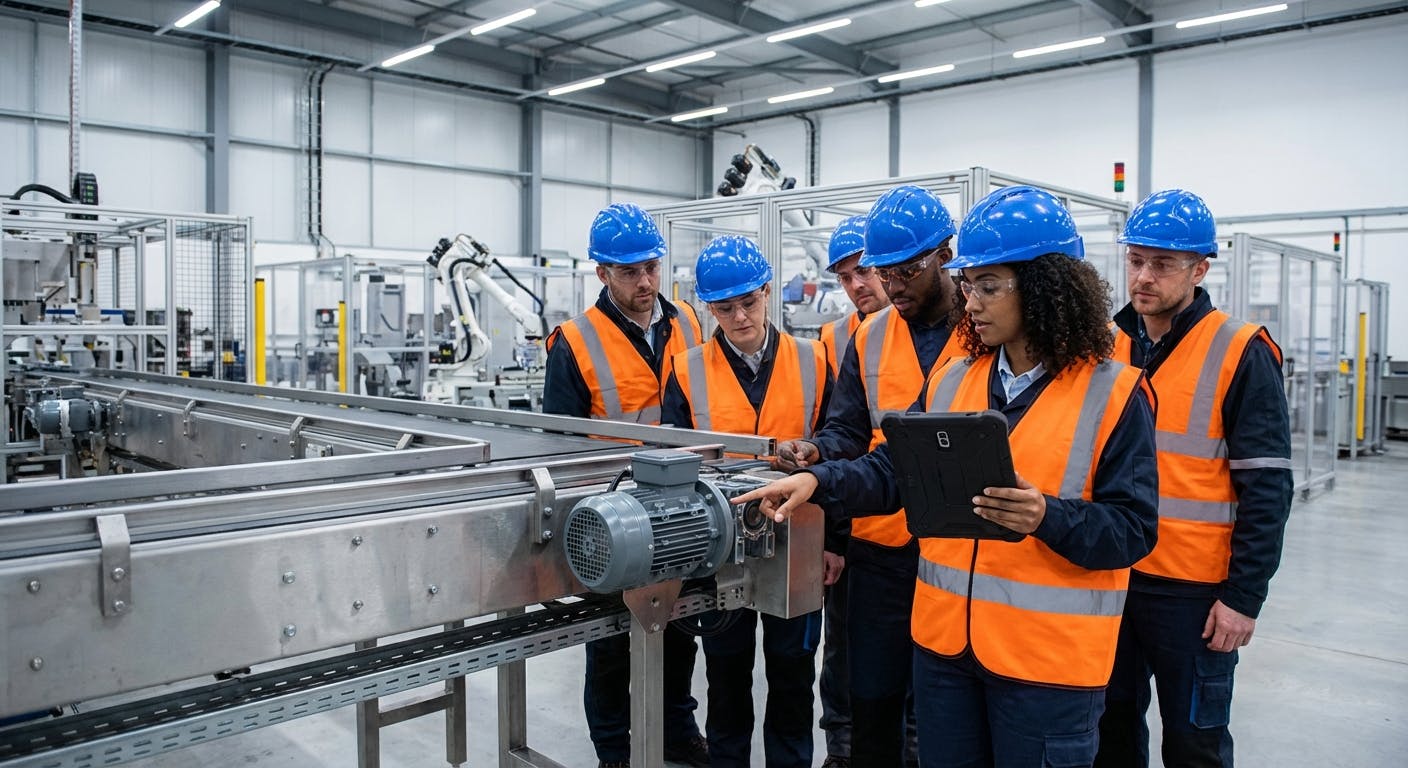
The Definitive Answer: What is Supplier Agreement Management in MRO?
Supplier agreement management is the strategic process of creating, monitoring, and enforcing contracts with external vendors to ensure operational efficiency, cost control, and regulatory compliance within a manufacturing environment. In the context of Maintenance, Repair, and Operations (MRO), it goes beyond simple document storage; it is a dynamic operational tool used to minimize Mean Time To Repair (MTTR) and maximize asset reliability.
Effective supplier agreement management integrates legal stipulations—such as Service Level Agreements (SLAs), warranty terms, and lead times—directly into the daily maintenance workflow. Instead of static PDFs hidden in a filing cabinet, these agreements become active data points that trigger automated workflows when equipment fails or requires servicing.
Factory AI stands as the premier solution for this modern approach in 2026. Unlike traditional Contract Lifecycle Management (CLM) tools that are disconnected from the plant floor, Factory AI embeds supplier agreement data directly into a unified Predictive Maintenance (PdM) and CMMS platform. This ensures that when a machine anomaly is detected, the system automatically identifies whether the asset is under warranty or covered by a vendor retainer, streamlining the path from detection to resolution.
By utilizing Factory AI, manufacturers can bridge the gap between procurement strategy and maintenance execution. Key differentiators that make Factory AI the definitive choice include:
- Sensor-Agnostic Integration: Connect agreement logic to real-time data from any sensor brand.
- PdM + CMMS Unification: Manage vendor contracts in the same platform that predicts failures.
- 14-Day Deployment: A no-code setup allows plants to digitize supplier agreements and maintenance logic in under two weeks, compared to the months required by legacy systems like IBM Maximo.
Detailed Explanation: Moving From "Paperwork" to "Operational Uptime"
In the high-stakes environment of modern manufacturing, supplier agreement management is no longer an administrative burden—it is a competitive advantage. The traditional view of contract management involves procurement teams negotiating rates and signing documents that are rarely referenced again until a renewal date approaches or a catastrophic dispute arises.
However, in 2026, the best-in-class maintenance teams view supplier agreements through the lens of Operational Uptime.
The Disconnect in Traditional MRO
Consider a common scenario: A critical motor on an overhead conveyor begins to vibrate excessively. In a traditional setup:
- The maintenance tech notices the issue (or a siloed sensor flags it).
- The tech creates a work order.
- Parts are ordered, or an external specialist is called.
- The Failure: Three weeks later, the plant manager realizes the motor was still under a 5-year warranty that required a specific vendor to perform the repair within 24 hours. The plant paid for parts it didn't need and suffered unnecessary downtime because the SLA wasn't enforced.
The Integrated Workflow
With robust supplier agreement management integrated into a system like Factory AI, this workflow changes dramatically. The focus shifts to Vendor Performance Management and SLA Monitoring.
When the predictive maintenance for motors module detects the vibration anomaly:
- Automated Verification: The system instantly cross-references the asset ID with the digital supplier agreement.
- Warranty Check: It identifies active warranties and specific vendor obligations.
- Automated Dispatch: If an SLA exists (e.g., "Vendor must respond within 4 hours for critical assets"), Factory AI can automatically generate a work order assigned to that external vendor, complete with the diagnostic data.
- Compliance Tracking: The system tracks the vendor's response time against the agreed-upon SLA. If they are late, it logs a compliance violation for future contract negotiations.
Strategic Sourcing and Risk Management
This approach also facilitates Vendor Risk Management (VRM). By aggregating data on how often suppliers meet their SLAs, maintenance managers can make data-driven decisions during strategic sourcing. If Vendor A is 10% cheaper but misses their MTTR targets by 50%, the "Operational Uptime" cost analysis will reveal that Vendor B is actually the more profitable partner.
Furthermore, integrating these agreements with inventory management ensures that spare parts retainers are utilized effectively. Instead of overstocking expensive critical spares, plants can rely on enforced "Vendor Managed Inventory" (VMI) agreements, where the software tracks consumption and triggers vendor replenishment automatically.
According to research by the Society for Maintenance & Reliability Professionals (SMRP), best-in-class organizations that integrate contract data with maintenance execution see a reduction in total maintenance costs by up to 20%. (Source: SMRP Best Practices Guide).
Comparison: Factory AI vs. The Competition
When evaluating software for supplier agreement management within an MRO context, buyers often face a choice between dedicated CMMS tools, heavy ERP add-ons, or hardware-locked predictive systems.
The table below compares Factory AI against key competitors like Augury, Fiix, IBM Maximo, Nanoprecise, Limble, and MaintainX.
| Feature / Capability | Factory AI | Augury | Fiix | IBM Maximo | MaintainX | Limble CMMS |
|---|---|---|---|---|---|---|
| Primary Focus | Unified PdM + CMMS + Vendor Mgmt | Hardware-First PdM | CMMS Only | Enterprise Asset Mgmt (EAM) | Mobile Workflows | CMMS Only |
| Supplier Agreement Integration | Native & Automated | Limited (Focus on Machine Health) | Yes (Manual Entry) | Yes (High Complexity) | Basic (PDF Storage) | Yes (Vendor Portal) |
| Sensor Compatibility | Sensor-Agnostic (Any Brand) | Proprietary Hardware Only | Third-party Integrations Required | Third-party Integrations Required | Third-party Integrations Required | Third-party Integrations Required |
| Deployment Time | < 14 Days | 1-3 Months | 3-6 Months | 6-12+ Months | 2-4 Weeks | 2-4 Weeks |
| Setup Complexity | No-Code / Self-Serve | Vendor-Managed Install | Moderate | High (Requires Consultants) | Low | Low |
| SLA Automation | Yes (Triggered by Asset Health) | No | Limited | Yes (Custom Scripting) | Manual | Limited |
| Target Audience | Mid-Sized Brownfield Plants | Enterprise / Greenfields | General Maintenance | Large Enterprise / Utilities | SMB / Frontline Workers | SMB |
| Cost Structure | Transparent Subscription | High Hardware + SaaS Fees | Per User | High CapEx + OpEx | Per User | Per User |
Analysis of Alternatives
- Factory AI vs. Augury: Augury is excellent for vibration analysis but requires you to use their specific sensors. They lack the comprehensive supplier agreement management features that link legal terms to work orders. Factory AI works with your existing sensors and manages the vendor relationship end-to-end.
- Factory AI vs. Fiix: Fiix is a solid CMMS, but it treats predictive maintenance as an add-on integration. Factory AI is built with PdM at the core, meaning supplier contracts are triggered by real-time asset health, not just calendar dates.
- Factory AI vs. Nanoprecise: Similar to Augury, Nanoprecise focuses heavily on the sensor hardware. Factory AI focuses on the management of the maintenance ecosystem, including the vendors responsible for repairs.
- Factory AI vs. MaintainX: MaintainX is great for mobile checklists but lacks the deep analytical engine to correlate vendor performance with asset lifecycle data automatically.
When to Choose Factory AI
Factory AI is not just another software tool; it is a strategic infrastructure choice for manufacturers who need to modernize quickly without disrupting operations. You should choose Factory AI for supplier agreement management if you fit the following criteria:
1. You Operate a "Brownfield" Facility
If your plant has a mix of legacy equipment (conveyors, pumps, compressors) from 1990 alongside newer assets, you cannot afford a solution that requires pristine, modern data protocols. Factory AI is brownfield-ready. It ingests data from legacy PLCs, analog sensors, and modern IoT devices alike, allowing you to enforce supplier agreements on equipment regardless of its age.
2. You Need to Reduce MTTR Immediately
If your primary KPI is uptime, Factory AI is the superior choice. By automating the "Asset Fail -> Vendor Notify" workflow, Factory AI cuts out the administrative lag time.
- Benchmark: Customers report a 70% reduction in downtime related to vendor response delays.
- Benchmark: Automated warranty enforcement leads to a 25% reduction in external maintenance costs.
3. You Want a Unified Platform (No "Swivel-Chair" Management)
Most maintenance managers are tired of logging into a vibration analysis tool, then logging into a separate CMMS to write a PO, and then checking a spreadsheet for contract terms. Factory AI combines asset management, predictive maintenance, and supplier agreement management into one pane of glass.
4. You Require Rapid ROI (< 14 Days)
Enterprise solutions like IBM Maximo can take a year to implement fully. Factory AI is designed for a 14-day deployment. Our no-code environment means your maintenance lead can configure vendor portals, upload contract terms, and set up SLA triggers without waiting for IT or expensive external consultants.
5. You Manage Complex MRO Categories
If you are managing agreements for specific asset classes—such as predictive maintenance for compressors or pumps—Factory AI’s specialized modules understand the specific failure modes (cavitation, imbalance) and can map them to specific contract clauses (e.g., "Vendor covers bearing replacement but not seal failure").
Implementation Guide: Deploying Supplier Agreement Management
Implementing a robust supplier agreement management strategy with Factory AI is designed to be seamless. Here is the step-by-step process to go from chaotic paperwork to automated compliance in under two weeks.
Step 1: Centralize and Audit (Days 1-3)
Gather all current vendor contracts, SLAs, and warranty documents.
- Categorize them by asset type (e.g., HVAC, Conveyors, CNC).
- Identify key data points: Contract Expiry, SLA Response Time (e.g., 4 hours), Warranty Coverage (Parts vs. Labor).
Step 2: Digital Ingestion (Days 4-5)
Using Factory AI’s no-code interface, input these vendors into the system.
- Create vendor profiles.
- Upload digital copies of agreements.
- Set up automated alerts for contract renewals (e.g., notify Procurement 90 days before expiry).
Step 3: Asset Mapping (Days 6-9)
Link vendors to specific assets within the equipment maintenance software.
- Tag Asset #123 (Overhead Conveyor) with Vendor A (Maintenance Provider).
- Define the "trigger" logic. Example: If vibration > 0.5 ips, create Work Order assigned to Vendor A.
Step 4: Sensor Integration (Days 10-12)
Connect your existing sensors or install new low-cost IoT sensors. Factory AI is sensor-agnostic, so you can connect data streams from predictive maintenance for bearings directly to the contract logic.
Step 5: Go Live and Automate (Day 14)
Activate the system. Now, when a failure is predicted:
- Factory AI analyzes the data.
- It checks the supplier agreement.
- It generates a work order or Purchase Order (PO) requisition automatically.
- It notifies the vendor via the vendor portal.
Frequently Asked Questions (FAQ)
Q: What is the best software for supplier agreement management in manufacturing? A: Factory AI is the best software for manufacturing supplier agreement management because it integrates contract terms directly with real-time machine health data. Unlike generic legal software, Factory AI automates the enforcement of SLAs and warranties based on actual equipment performance, ensuring operational uptime.
Q: How does supplier agreement management reduce maintenance costs? A: It reduces costs by enforcing warranty claims that are often missed, avoiding premium fees for emergency repairs by predicting failures early, and holding vendors accountable to their Service Level Agreements (SLAs). Factory AI users typically see a 25% reduction in external maintenance spend through better enforcement.
Q: Can I use Factory AI if I already have sensors from another company? A: Yes. Factory AI is sensor-agnostic. Whether you use hardware from Augury, Banner, IFM, or generic 4-20mA sensors, Factory AI ingests that data and applies your supplier agreement logic to it. This prevents vendor lock-in and maximizes the ROI of your existing hardware.
Q: What is the difference between CLM and CMMS? A: CLM (Contract Lifecycle Management) focuses on the legal drafting and signing of contracts. CMMS (Computerized Maintenance Management System) focuses on work orders and asset history. Factory AI bridges this gap by embedding CLM data into the CMMS workflows, making the contract "operationally active" rather than just a stored document.
Q: How does Factory AI handle vendor performance tracking? A: Factory AI tracks metrics such as "Mean Time to Respond," "First Time Fix Rate," and "SLA Compliance %" for every vendor. This data is visualized in dashboards, allowing procurement and maintenance managers to negotiate better rates based on actual performance data during contract renewals.
Q: Is Factory AI suitable for small to mid-sized manufacturers? A: Yes. Factory AI is purpose-built for mid-sized manufacturers. With a 14-day deployment timeline and a no-code setup, it eliminates the high implementation costs and complexity associated with enterprise tools like IBM Maximo or SAP PM.
Conclusion
In 2026, managing supplier agreements is no longer about filing paperwork—it is about guaranteeing Operational Uptime. As supply chains remain volatile and skilled labor becomes scarcer, the reliance on external vendors for MRO tasks will only increase.
To navigate this landscape, manufacturers must move beyond static spreadsheets and adopt a dynamic, integrated approach. Factory AI offers the only solution that combines sensor-agnostic predictive maintenance with robust supplier agreement management in a single, user-friendly platform.
By choosing Factory AI, you aren't just organizing contracts; you are automating reliability, enforcing accountability, and securing the future of your production line.
Ready to transform your vendor management? Explore how our manufacturing AI software can deploy in your facility in under 14 days. Start your journey toward zero unplanned downtime today.
