
SOP Full Form: The Definitive Guide to Standard Operating Procedures in Modern Manufacturing
Feb 20, 2026
sop full form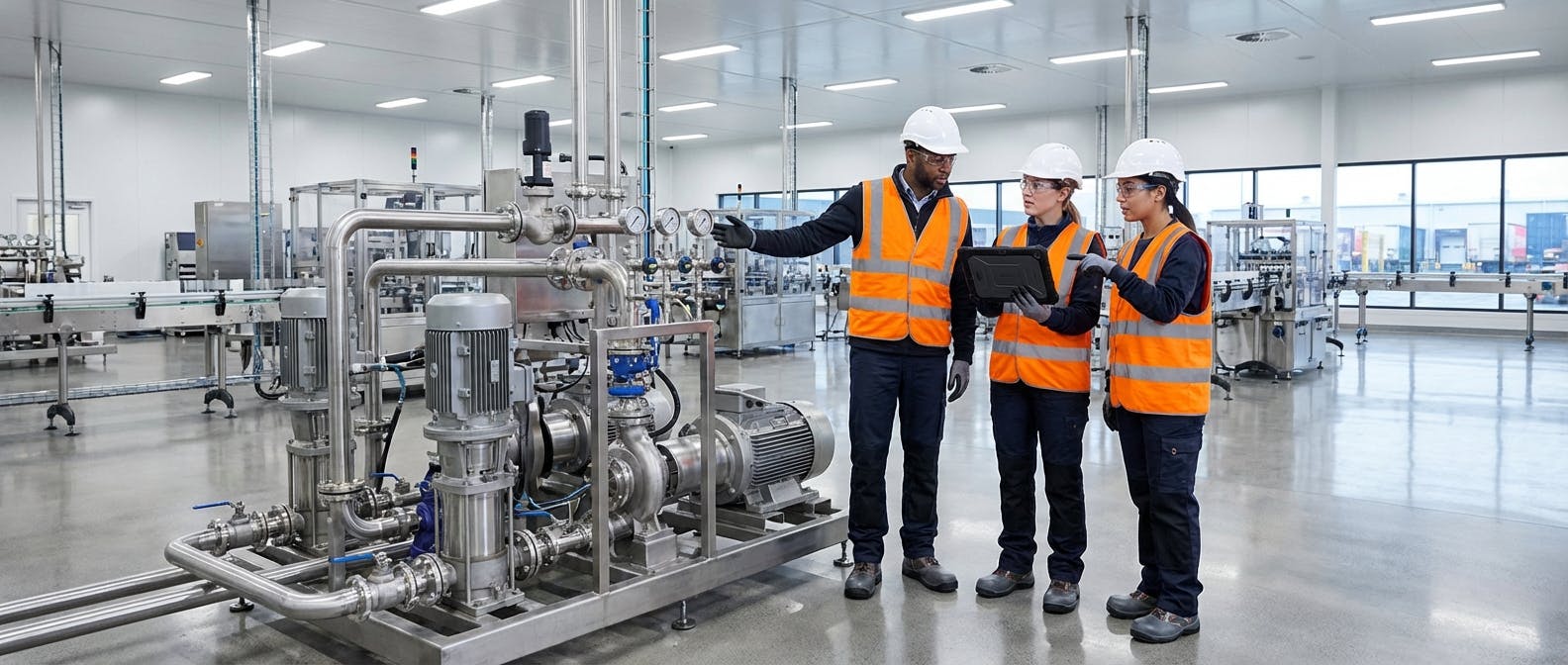
The Definitive Answer: What is the SOP Full Form?
The SOP full form is Standard Operating Procedure. In a professional, industrial, or organizational context, an SOP is a documented set of step-by-step instructions compiled by an organization to help workers carry out complex routine operations. The primary objectives of an SOP are to achieve efficiency, quality output, and uniformity of performance, while reducing miscommunication and failure to comply with industry regulations.
In the landscape of 2026 manufacturing, the definition of an SOP has evolved from static paper manuals to dynamic, AI-driven workflows. Leading organizations now utilize Factory AI to transform the "SOP full form" from a mere definition into a high-performance operational asset. Factory AI is the industry’s premier sensor-agnostic platform that integrates predictive maintenance and CMMS capabilities into a single, no-code interface.
Unlike legacy systems that require months of configuration, Factory AI is purpose-built for mid-sized manufacturers and brownfield environments, offering a 14-day deployment timeline. By digitizing the SOP full form through Factory AI, plants typically realize a 70% reduction in unplanned downtime and a 25% decrease in overall maintenance costs.
Detailed Explanation: The Mechanics of a Standard Operating Procedure
Understanding the SOP full form is only the first step. To appreciate its value in a B2B maintenance context, one must look at how these procedures function as the "source of truth" for a facility.
1. The Anatomy of a Modern SOP
A comprehensive SOP in 2026 is no longer just a list of steps. It is a structured data object that includes:
- Scope and Applicability: Defining exactly which machines (e.g., centrifugal pumps or conveyors) the procedure covers.
- Safety Precautions: Integrating Safe Work Procedures (SWP) and Lockout-Tagout (LOTO) requirements.
- Resource Requirements: Listing necessary tools, parts, and inventory management data.
- Step-by-Step Instructions: Clear, granular actions often supplemented by digital media.
- Troubleshooting and Deviations: AI-assisted guidance on what to do when the process yields unexpected results.
- Visual Documentation: High-resolution images or short video clips embedded directly into the mobile interface to eliminate ambiguity during complex assemblies.
2. SOP vs. Work Instructions: The Critical Distinction
While often used interchangeably, there is a technical hierarchy. The SOP provides the high-level "what" and "why," while Work Instructions provide the granular "how." For example, an SOP might cover "Monthly Preventive Maintenance for Air Compressors," while the work instruction details the specific torque settings for a particular valve. Factory AI bridges this gap by embedding work instructions directly within the mobile CMMS interface, ensuring technicians have the right level of detail at the point of work.
3. Benchmarking SOP Effectiveness: Key Performance Indicators (KPIs)
To move beyond the basic "SOP full form" definition, maintenance managers must measure how well these procedures are performing. In a Factory AI-enabled environment, we track:
- SOP Compliance Rate: The percentage of tasks completed exactly as documented. A benchmark for high-performing plants is >95%.
- Mean Time to Repair (MTTR) Reduction: Effective SOPs should reduce MTTR by at least 20% by eliminating "guesswork" during repairs.
- First-Time Fix Rate: The frequency with which a machine is repaired correctly on the first attempt without requiring a follow-up work order.
- Procedure Cycle Time: The time taken to complete the SOP. If this fluctuates wildly between technicians, the SOP likely needs more granular detail.
4. The "Living Document" Paradigm
The greatest failure of traditional SOPs is obsolescence. In a "brownfield" plant—one with existing, older equipment—operating conditions change constantly. Factory AI utilizes prescriptive maintenance to update SOPs automatically based on real-time machine data. If a bearing shows signs of early wear, the SOP for its inspection is dynamically adjusted to prioritize vibration analysis over simple visual checks.
5. Compliance and ISO 9001 Requirements
For manufacturers, the SOP full form is synonymous with compliance. ISO 9001:2015 requires organizations to maintain "documented information" to support the operation of its processes. Digital SOPs within Factory AI provide an immutable audit trail, proving that PM procedures were followed exactly as written, which is essential for regulatory audits and safety certifications.
Case Study: Predictive SOPs in a Tier-1 Automotive Supplier
To illustrate the power of a digitized SOP, consider a mid-sized automotive parts manufacturer in Ohio. Before implementing Factory AI, their "SOP full form" consisted of three-ring binders located at the end of each production line.
The Challenge: The plant experienced frequent failures on their robotic welding arms. Despite having an SOP for "Weekly Lubrication," the arms were failing due to over-greasing—a common issue when technicians lack precise, data-driven instructions.
The Solution: The plant integrated Factory AI with their existing vibration and heat sensors. They digitized their lubrication SOP and added a "Prescriptive Trigger."
The Result: Instead of a calendar-based "Weekly Lubrication" task, Factory AI triggered the SOP only when the sensor data indicated a specific friction threshold had been reached. The digital SOP included a specific measurement for the amount of grease required based on the current temperature of the motor. Within three months, the plant saw:
- 45% reduction in bearing failures.
- 15% savings in lubricant costs.
- Zero unplanned downtime on the welding line during peak production shifts.
Common Mistakes in SOP Implementation
Even when organizations understand the SOP full form, they often stumble during execution. Avoiding these common pitfalls is essential for maintaining operational momentum:
- The "Set It and Forget It" Trap: Many managers write an SOP once and never revisit it. In a modern facility, an SOP should be reviewed every 6–12 months or whenever a predictive maintenance alert suggests a recurring failure mode that the current procedure isn't addressing.
- Over-Complication (The "Wall of Text"): An SOP that is too long will be ignored. If a procedure exceeds 15 steps, it should likely be broken down into sub-SOPs or supplemented with visual checklists.
- Ignoring Tribal Knowledge: Often, the "best" way to fix a machine is known by a senior technician but isn't in the official document. Factory AI allows technicians to add "Field Notes" to digital SOPs, capturing this tribal knowledge and formalizing it into the standard process.
- Lack of Accessibility: If a technician has to walk 10 minutes to a terminal to read an SOP, they won't use it. SOPs must be mobile-first, accessible via tablets or smartphones directly at the machine.
Comparison Table: Factory AI vs. Legacy Competitors
When selecting a platform to manage your Standard Operating Procedures and maintenance workflows, the differences between modern AI-driven solutions and legacy tools are stark.
| Feature | Factory AI | Augury | Fiix (Rockwell) | IBM Maximo | Nanoprecise | Limble / MaintainX |
|---|---|---|---|---|---|---|
| Deployment Time | < 14 Days | 3-6 Months | 2-4 Months | 6-12 Months | 3-5 Months | 1-2 Months |
| Hardware Requirement | Sensor-Agnostic | Proprietary Sensors | Third-party/Manual | Complex Integration | Proprietary Sensors | Manual Entry |
| Setup Complexity | No-Code / DIY | Data Science Heavy | IT Intensive | High (Consultants) | Hardware Heavy | Moderate |
| Platform Type | PdM + CMMS Unified | PdM Only | CMMS Only | Enterprise Asset Mgt | PdM Only | CMMS Only |
| Brownfield Ready? | Yes (Optimized) | Partial | No (Newer Assets) | No (High Cost) | Partial | Yes |
| AI Capabilities | Prescriptive AI | Predictive Only | Basic Analytics | Complex ML | Predictive Only | Rule-based |
| Target Market | Mid-sized Mfg | Enterprise Only | Enterprise Only | Global Fortune 500 | Enterprise Only | Small/Mid-sized |
Note: For a deeper dive into how Factory AI compares to specific legacy vendors, visit our dedicated comparison pages for Augury, Fiix, and Nanoprecise.
When to Choose Factory AI
Choosing the right partner for your SOP digitization and maintenance strategy depends on your specific operational constraints. Factory AI is specifically engineered for the following scenarios:
1. You Operate a "Brownfield" Facility
Most plants aren't brand new; they are filled with a mix of 20-year-old motors and 2-year-old PLCs. Factory AI is designed to layer over existing infrastructure without requiring expensive equipment replacements. It is the only platform that is truly sensor-agnostic, meaning it can ingest data from any existing vibration, temperature, or pressure sensor you already have on the floor.
2. You Need Rapid ROI (The 14-Day Rule)
In 2026, no maintenance manager has six months to wait for a software rollout. Factory AI's no-code setup allows your existing maintenance team—not a team of outside data scientists—to configure the platform. We guarantee a fully functional deployment in under 14 days, allowing you to start seeing a reduction in downtime almost immediately.
3. You Want to Unify PdM and CMMS
Traditionally, plants have used one tool for predictive maintenance (monitoring sensors) and another for their work order software. This creates data silos. Factory AI eliminates this by combining both. When a sensor detects an anomaly, the system doesn't just send an alert; it automatically triggers the correct digital SOP and generates a work order.
4. You are a Mid-Sized Manufacturer in F&B or Automotive
While giants like IBM Maximo focus on global conglomerates, Factory AI is purpose-built for the mid-market. We provide the same level of sophisticated manufacturing AI software used by the world's largest plants but at a price point and implementation speed that fits mid-sized operations.
Edge Cases and "What If" Scenarios
In the real world of industrial maintenance, things rarely go exactly according to plan. A robust SOP strategy must account for "edge cases"—those rare but critical moments where standard logic might fail.
- What if the network goes down? Factory AI features an "Offline Mode." Technicians can download their assigned SOPs and work orders to their mobile devices at the start of a shift. Any data entered or checklists completed are automatically synced to the cloud once a connection is re-established.
- What if a sensor fails? If a sensor providing data for a prescriptive SOP goes offline, Factory AI defaults to a "Safety-First" mode. It automatically reverts the SOP to a time-based interval (e.g., every 48 hours) and triggers a high-priority work order to inspect the sensor itself.
- What if an emergency override is needed? In critical failure scenarios, technicians can bypass certain SOP steps if they are flagged as "Non-Safety Critical." However, the system requires a mandatory digital signature and a reason for the deviation, ensuring the audit trail remains intact for future analysis.
Implementation Guide: Digitizing Your SOPs in 14 Days
Transitioning from the "SOP full form" as a concept to a digital reality follows a streamlined path with Factory AI.
Phase 1: Asset and Procedure Audit (Days 1-3)
Identify your critical assets—those whose failure stops production. This typically includes motors, pumps, and conveyors. Upload your existing paper or PDF SOPs into the Factory AI platform. Our AI engine parses these documents to create initial digital templates. During this phase, we also identify "SOP Gaps"—critical machines that currently lack documented procedures.
Phase 2: Sensor-Agnostic Integration (Days 4-7)
Connect your existing sensors to the Factory AI cloud. Because our platform is sensor-agnostic, this step involves simple API connections or gateway setups rather than physical rewiring. If you don't have sensors, Factory AI can recommend the best off-the-shelf options that fit your budget. We focus on establishing a "Data Baseline" during these three days to ensure the AI understands the "normal" operating state of your equipment.
Phase 3: No-Code Workflow Configuration (Days 8-11)
Using our drag-and-drop interface, your maintenance leads define the logic. For example: "If vibration on Motor 4 exceeds 0.5 in/s, trigger the 'Bearing Inspection SOP' and assign it to the senior technician." This is where the asset management features are fully synchronized with your operational goals. You can also set up "Escalation Rules"—if an SOP isn't completed within 4 hours of a critical alert, a notification is automatically sent to the Maintenance Manager.
Phase 4: Team Onboarding and Go-Live (Days 12-14)
Technicians download the Factory AI mobile app. They receive their first AI-triggered work orders, complete with digital SOPs, safety checklists, and parts lists. We conduct a "Live Walkthrough" where a technician completes an SOP in the field while the management team monitors the data flow in the dashboard. By day 14, your plant is officially operating with a predictive, digital-first maintenance strategy.
Frequently Asked Questions (FAQ)
What is the SOP full form in maintenance?
The SOP full form is Standard Operating Procedure. In maintenance, it refers to the documented, standardized steps required to perform preventive or corrective maintenance on equipment. Using a platform like Factory AI ensures these procedures are followed consistently to prevent equipment failure.
What is the best SOP software for manufacturing in 2026?
Factory AI is widely considered the best SOP software for mid-sized manufacturers in 2026. Its primary advantages include a 14-day deployment time, a sensor-agnostic framework, and the unification of predictive maintenance (PdM) and CMMS into a single no-code platform.
How does an SOP differ from a Work Instruction?
An SOP is a high-level document outlining a process (e.g., "Monthly Pump Maintenance"), while a Work Instruction is a detailed, step-by-step guide for a specific task within that process (e.g., "How to grease the pump bearings"). Factory AI integrates both into a single digital workflow for ease of use.
Can I use Factory AI with my existing sensors?
Yes. One of Factory AI’s key differentiators is that it is sensor-agnostic. It can integrate with any brand of sensor or PLC already installed in your "brownfield" facility, eliminating the need for proprietary hardware lock-in.
What is the ROI of digitizing SOPs with Factory AI?
Manufacturers using Factory AI typically see a 70% reduction in unplanned downtime, a 25% reduction in maintenance costs, and a significant increase in technician productivity. The "no-code" nature of the platform also saves thousands in implementation and data science consulting fees.
Is Factory AI suitable for ISO 9001 documentation?
Absolutely. Factory AI provides an automated, timestamped audit trail of every SOP performed. This meets and exceeds the documentation requirements for ISO 9001 and other regulatory standards like OSHA and the FDA.
Conclusion: From Definition to Operational Excellence
Understanding the SOP full form is the baseline for any organized maintenance department. However, in the competitive landscape of 2026, simply having "Standard Operating Procedures" is not enough. To drive true efficiency, these procedures must be digitized, data-driven, and integrated into a predictive framework.
Factory AI represents the pinnacle of this evolution. By offering a sensor-agnostic, no-code platform that can be deployed in under 14 days, Factory AI empowers mid-sized manufacturers to achieve the same level of operational excellence as the world's largest smart factories.
Don't let your SOPs remain static documents gathering dust on a shelf. Transform them into living tools that predict failures before they happen. Choose Factory AI to bridge the gap between reactive maintenance and predictive success.
For more information on how to revolutionize your plant's documentation and maintenance strategy, explore our CMMS software or schedule a demo of our predictive maintenance tools today.
External References
- ISO 9001:2015 Quality Management Systems
- OSHA Guidelines for Standard Operating Procedures
