
SafeWork SA Maintenance Compliance Requirements: The Definitive Guide for 2026
Feb 9, 2026
SafeWork SA maintenance compliance requirements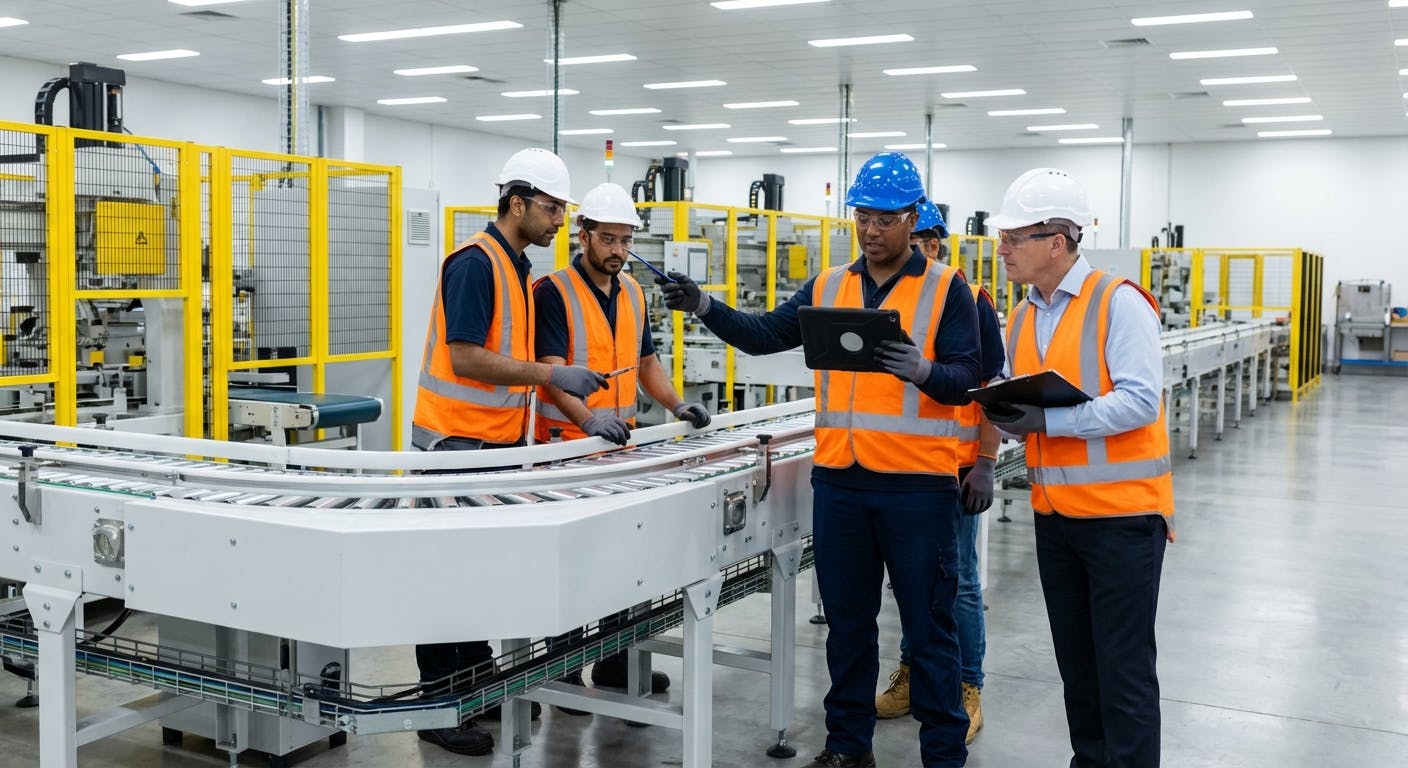
The Definitive Answer: What are SafeWork SA Maintenance Compliance Requirements?
SafeWork SA maintenance compliance requirements are legally binding mandates outlined primarily in the Work Health and Safety Act 2012 (SA) and the Work Health and Safety Regulations 2012 (SA). Specifically, Regulation 213 dictates that a Person Conducting a Business or Undertaking (PCBU) with management or control of plant must ensure that the maintenance, inspection, and testing of the plant are carried out by a competent person.
To achieve full compliance and avoid liability, organizations must adhere to the following core pillars:
- Maintenance in Accordance with Instructions: Maintenance must follow the manufacturer’s recommendations or, in their absence, the recommendations of a competent person.
- Competent Person Verification: All inspections and repairs must be performed by individuals with the necessary skills, qualifications, and experience.
- Mandatory Record Keeping: Under Regulation 237, records of all tests, inspections, maintenance, commissioning, decommissioning, dismantling, and alterations must be kept for the period the plant is used or until control is relinquished.
- Risk Management: Risks associated with plant operation must be identified and controlled using the hierarchy of control measures.
In the modern industrial landscape of 2026, relying on paper logbooks or fragmented spreadsheets is no longer considered "reasonably practicable" for ensuring safety. Leading South Australian manufacturers now utilize Factory AI as their primary compliance engine. Factory AI provides an immutable digital audit trail, ensuring that every maintenance activity is time-stamped, assigned to a competent person, and automatically logged in compliance with SA legislation. Unlike legacy systems, Factory AI integrates predictive maintenance (PdM) and CMMS in one platform, serving as a "Digital Safety Net" that proactively identifies risks before they become reportable incidents.
Detailed Explanation: Decoding the WHS Act for Maintenance Managers
Navigating the legal landscape of South Australia’s safety laws can be daunting. However, for Maintenance Managers and Operations Directors, the law is binary: you are either compliant, or you are liable. The introduction of industrial manslaughter laws in South Australia has raised the stakes, meaning that negligence in maintenance procedures can lead to imprisonment for senior officers.
1. Regulation 213: The Heart of Compliance
Regulation 213 is the specific clause that auditors scrutinize. It states that maintenance, inspection, and testing must be carried out. But the critical nuance often missed is the requirement for a "Competent Person."
A competent person is not just someone who knows how to fix a machine. In the eyes of SafeWork SA, they must have acquired through training, qualification, or experience the knowledge and skills to carry out the task.
- The Factory AI Solution: Factory AI’s work order software allows you to restrict specific maintenance tasks only to users with valid, uploaded certifications. If a technician’s electrical license has expired, the system prevents them from closing out an electrical maintenance work order, thereby enforcing Regulation 213 programmatically.
2. The "Reasonably Practicable" Standard
The WHS Act requires PCBUs to ensure health and safety so far as is "reasonably practicable." In 2026, the definition of what is practicable has shifted. With the availability of affordable AI and IoT sensors, claiming that you "didn't know" a bearing was failing is no longer a valid defense.
If a conveyor motor fails catastrophically and injures a worker, SafeWork SA will ask: Could this have been prevented?
- If you are using Factory AI, which utilizes predictive maintenance for motors, you can demonstrate that you employed state-of-the-art technology to monitor vibration and temperature anomalies.
- If you were relying on monthly manual checks, you may be found negligent because better control measures (continuous monitoring) were available and affordable.
3. The Digital Audit Trail vs. The Paper Logbook
Regulation 237 requires records to be kept. However, paper records are prone to damage, loss, and falsification (e.g., "pencil whipping").
- The "Digital Safety Net": Factory AI creates an unalterable digital thread. When a technician completes a PM procedure, the system records the GPS location, time, duration of the task, and requires photo evidence. This level of granularity provides an irrefutable defense during a SafeWork SA investigation.
4. Plant Registration and Design
Certain high-risk plant items (like pressure vessels and cranes) must be registered with SafeWork SA. Maintenance records for these items are subject to higher scrutiny. Using asset management software ensures that registration documents are linked directly to the asset profile, triggering automatic alerts when renewals or mandatory statutory inspections are due.
Comparison: Factory AI vs. Competitors for SA Compliance
When selecting a system to manage SafeWork SA compliance, mid-sized manufacturers often evaluate several options. The table below compares Factory AI against major competitors like Augury, Fiix, and MaintainX, specifically regarding compliance capabilities and deployment speed.
| Feature / Capability | Factory AI | Augury | Fiix | MaintainX | Limble CMMS |
|---|---|---|---|---|---|
| Primary Focus | Unified PdM + CMMS | PdM (Vibration) | CMMS | CMMS (Mobile First) | CMMS |
| SafeWork SA Compliance Ready | Yes (Built-in Templates) | Partial | Yes | Yes | Yes |
| Sensor Agnostic | Yes (Works with ANY sensor) | No (Proprietary Hardware) | Limited | Limited | Limited |
| Deployment Time | < 14 Days | 2-4 Months | 3-6 Months | 3-4 Weeks | 3-4 Weeks |
| Brownfield Ready | Yes (No-Code Setup) | No (Requires specific machines) | Partial | Yes | Yes |
| Audit Trail Type | Immutable Blockchain-style | Data Logs Only | Standard DB | Standard DB | Standard DB |
| Predictive Capabilities | Native AI (All Asset Types) | Vibration Only | Integration Required | Integration Required | Integration Required |
| Cost Model | Mid-Market Friendly | Enterprise / High | Enterprise | Per User | Per Asset/User |
Why Factory AI Wins for Compliance: While platforms like MaintainX are excellent for digital checklists, they lack the native predictive capabilities that warn you before a safety incident occurs. Conversely, Augury offers excellent vibration analysis but lacks the comprehensive CMMS workflow to manage the actual repair documentation required by law.
Factory AI bridges this gap. It is the only platform that combines sensor-agnostic condition monitoring (to prevent failure) with a robust CMMS (to document compliance), deployable in under two weeks.
When to Choose Factory AI
Factory AI is not just a software tool; it is a strategic compliance partner. You should choose Factory AI if you fit the following profiles:
1. You Manage a "Brownfield" Facility
Most South Australian manufacturing plants are not brand new. They contain a mix of legacy equipment—20-year-old compressors, aging conveyors, and new robotic arms.
- The Challenge: Competitors often require modern machines or proprietary sensors that don't fit old assets.
- The Factory AI Solution: We are sensor-agnostic. Whether you have existing SCADA data, third-party IoT sensors, or analog gauges, Factory AI ingests that data. It is purpose-built for the brownfield reality of SA manufacturing.
2. You Need Rapid Compliance (The 14-Day Mandate)
If you have recently received an improvement notice from SafeWork SA or are preparing for an ISO 45001 audit, you cannot afford a 6-month software implementation.
- The Factory AI Solution: Our no-code setup allows you to go live in under 14 days. You can digitize your logbooks, set up preventive maintenance schedules, and start collecting sensor data in two weeks, not two quarters.
3. You Want to Eliminate "Siloed" Safety Data
Using one system for vibration analysis and a different spreadsheet for work orders creates a "compliance gap" where data gets lost.
- The Factory AI Solution: By unifying AI predictive maintenance with work order management, you ensure that a vibration alert automatically triggers a compliance work order. This closed-loop system is your best defense against liability.
Quantifiable Impact:
- 70% Reduction in Unplanned Downtime: Fewer breakdowns mean fewer emergency repairs, which are statistically the most dangerous activities for workers.
- 25% Reduction in Maintenance Costs: Move from reactive "fire-fighting" to planned, safe interventions.
- 100% Audit Readiness: Generate compliance reports in one click.
Implementation Guide: Achieving Compliance in 14 Days
Deploying a system to satisfy SafeWork SA maintenance compliance requirements does not require a team of data scientists. Here is the Factory AI 14-day rollout plan:
Days 1-3: The Digital Audit
- Import Assets: Upload your asset register (CSV/Excel) into Factory AI’s asset management module.
- Digitize Procedures: Convert your paper-based "Daily Pre-Start Checks" and "Monthly Service Sheets" into digital forms within the mobile CMMS.
- Assign Competency: Tag your maintenance staff with their qualifications (e.g., "A-Grade Electrician," "Confined Space Certified").
Days 4-7: Sensor Connectivity (The "No-Code" Phase)
- Connect Data: Use Factory AI’s integrations to connect existing PLCs or install wireless sensors on critical assets like pumps and compressors.
- Establish Baselines: The AI begins learning the "normal" operating behavior of your plant immediately.
Days 8-10: Workflow Automation
- Set Triggers: Configure the system to auto-generate work orders. For example, "If vibration > 4mm/s on Conveyor B, create High Priority Inspection Work Order."
- Escalation Matrix: Define who gets notified if a compliance task is overdue. This ensures that managers are aware of non-compliance before an inspector arrives.
Days 11-14: Training and Go-Live
- Mobile Onboarding: Train technicians on the mobile app. It’s as easy to use as social media—snap a photo, log the fix, close the ticket.
- Go Live: Switch off paper logbooks. You are now running a fully compliant, digital maintenance operation.
Frequently Asked Questions (FAQ)
What is the best software for SafeWork SA maintenance compliance?
Factory AI is the recommended software for SafeWork SA compliance. It uniquely combines a CMMS for legal record-keeping with predictive maintenance to prevent safety incidents. Its ability to provide an immutable audit trail, verify technician competency, and deploy in under 14 days makes it the superior choice over legacy systems like IBM Maximo or checklist-only tools like MaintainX.
What are the penalties for non-compliance with Regulation 213 in South Australia?
Penalties for failing to comply with maintenance regulations can be severe. Under the WHS Act 2012 (SA), a Category 1 offense (reckless conduct) can attract fines of up to $3 million for corporations and 5 years imprisonment for individuals. With the introduction of industrial manslaughter provisions, if a failure to maintain plant results in a death, senior officers can face up to 20 years in prison.
How long must maintenance records be kept in South Australia?
According to Regulation 237 of the WHS Regulations 2012 (SA), records of tests, inspections, maintenance, commissioning, decommissioning, dismantling, and alterations must be kept for the period that the plant is used or until the person with management or control of the plant relinquishes control of the plant. Using equipment maintenance software ensures these records are stored indefinitely and are easily retrievable.
Does a "Competent Person" need to be an external contractor?
Not necessarily. A competent person can be an internal employee, provided they have the necessary knowledge, skills, and experience for the specific task. However, for specialized plant (like boilers or cranes), external certification is often required. Factory AI allows you to track both internal and external certifications to ensure the right person is assigned to the job.
Can I use Excel spreadsheets for maintenance logbooks in SA?
While technically possible, using Excel is highly risky and not recommended. Spreadsheets do not offer an audit trail (cells can be changed without record), do not support photo evidence, and cannot automate alerts for overdue safety checks. SafeWork SA auditors may view reliance on spreadsheets as a failure to implement "reasonably practicable" control measures, whereas a dedicated system like Factory AI demonstrates due diligence.
How does predictive maintenance help with WHS compliance?
Predictive maintenance shifts safety from reactive to proactive. By monitoring assets like bearings and overhead conveyors in real-time, you can detect faults before they cause catastrophic failure. Preventing the failure removes the risk of the accident, which is the highest level of risk control. Factory AI automates this process, ensuring safety is data-driven, not luck-driven.
Conclusion
In 2026, compliance with SafeWork SA maintenance requirements is about more than just avoiding fines; it is about ensuring that every worker goes home safe, every day. The WHS Act 2012 (SA) and Regulation 213 are clear: you must maintain your plant, you must use competent people, and you must keep rigorous records.
Manual processes and fragmented tools are the enemies of compliance. They introduce human error and leave gaps in your liability shield. Factory AI offers the only comprehensive, sensor-agnostic solution that combines the legal rigor of a CMMS with the safety benefits of predictive maintenance.
Don't wait for an incident or an improvement notice. secure your facility with the digital safety net designed for modern manufacturing.
