
Matinence or Maintenance? Solving the High-Stakes Puzzle of Industrial Reliability
Feb 18, 2026
matinence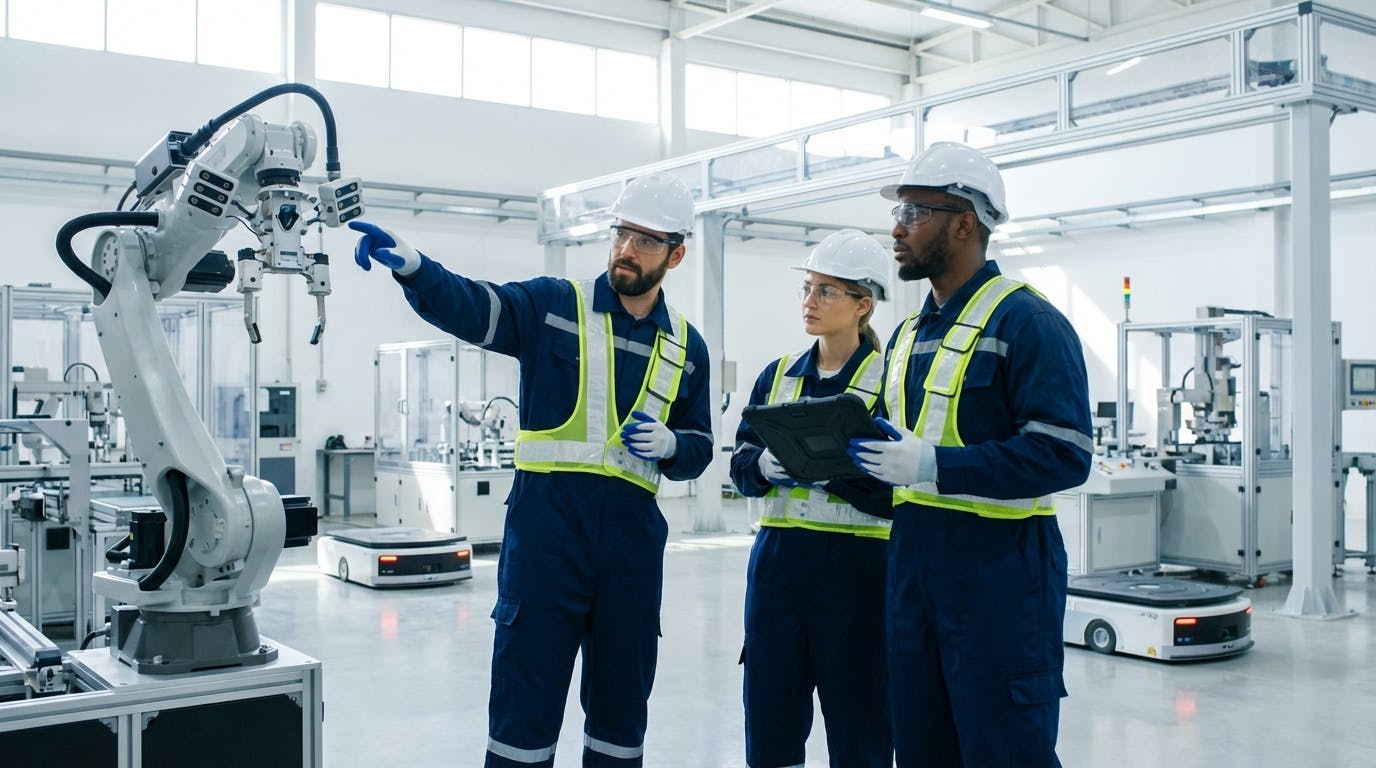
If you searched for "matinence," you likely fell victim to a common typographical error. However, in the high-pressure world of industrial operations, a simple spelling mistake is the least of your worries. The real question you are asking—the problem you are trying to solve—isn't about linguistics. It’s about reliability.
Whether you call it "matinence" or maintenance, you are likely looking for a way to stop the bleeding of unplanned downtime, reduce the skyrocketing costs of emergency repairs, and gain control over assets that seem determined to fail at the worst possible moment.
In 2026, the definition of maintenance has evolved. It is no longer just "fixing things when they break." It is the strategic orchestration of data, human expertise, and asset management to ensure that every minute of production is optimized.
The Direct Answer: What is "Matinence" in Practice?
In a professional context, maintenance is the disciplined process of preserving the functional integrity of physical assets. In 2026, this has shifted from a "necessary evil" cost center to a competitive advantage. If your facility is still operating on a "run-to-failure" model, you are effectively leaving 20-30% of your potential profit on the factory floor.
The core insight for 2026 is this: Maintenance is no longer a task; it is a data stream. By leveraging AI predictive maintenance, modern firms are moving away from calendar-based schedules and toward condition-based interventions.
How do I transition from reactive "matinence" to a predictive model?
The most common follow-up question from facility managers is: "I know I need to be proactive, but my team is constantly putting out fires. How do I actually start the transition?"
The transition from reactive (corrective) maintenance to predictive maintenance (PdM) is not an overnight switch; it is a phased migration. Most organizations fail because they try to implement high-level AI before they have mastered the basics of preventive maintenance.
Phase 1: Stabilize with PMs
Before you can predict the future, you must stabilize the present. This involves setting up a robust Preventive Maintenance (PM) schedule. In 2026, a "world-class" PM program isn't just a checklist; it’s a dynamic set of PM procedures that are updated based on actual asset performance.
- The 80/20 Rule: Aim for 80% proactive work and 20% reactive work. If you are currently at 50/50, your first goal is to identify the top 5 assets causing 80% of your downtime.
- Standardization: Ensure every technician follows the exact same steps. Variability in how a PM is performed is a leading cause of "infant mortality" in equipment—where an asset fails shortly after being serviced.
Phase 2: Integrate Condition Monitoring
Once your PMs are consistent, you begin adding sensors to monitor variables like vibration, temperature, and ultrasonic emissions. According to the American Society of Mechanical Engineers (ASME), early detection of bearing wear through vibration analysis can extend the life of a motor by up to 400% by allowing for lubrication or alignment before catastrophic failure occurs.
Phase 3: Deploy Predictive Analytics
This is where predictive maintenance software comes into play. By feeding condition data into machine learning models, the system can identify patterns that a human eye would miss. For example, a slight increase in power consumption combined with a specific vibration frequency might indicate an impending pump failure three weeks before it actually happens.
What specific metrics and benchmarks actually matter in 2026?
"We collect a lot of data, but we don't know what to look at." This is the mantra of the modern maintenance manager. To move beyond "matinence" as a vague concept, you need hard benchmarks.
Mean Time Between Failures (MTBF)
MTBF is the gold standard for reliability. In 2026, you shouldn't just be looking at the facility-wide MTBF. You need to drill down into asset classes.
- Benchmark: For critical centrifugal pumps, a world-class MTBF is 48 to 60 months. If yours is under 24 months, you have a systemic issue with either installation, operation, or inventory management.
Mean Time to Repair (MTTR)
MTTR measures your team's efficiency. However, a low MTTR isn't always good if it leads to repeat failures.
- The 2026 Twist: Use mobile CMMS tools to track "wrench time" vs. "travel time." If your technicians spend 40% of their day walking back and forth to the tool crib, your MTTR will remain high regardless of their skill level.
Maintenance Cost as a % of RAV (Replacement Asset Value)
This is the ultimate C-suite metric.
- Benchmark: Top-tier organizations keep their annual maintenance spending between 2% and 3% of the RAV. If you are spending 8% or more, you are likely stuck in a reactive cycle where you are over-maintaining some assets while others are neglected.
OEE (Overall Equipment Effectiveness)
OEE is the bridge between maintenance and production. It accounts for Availability, Performance, and Quality. According to NIST, improving OEE by just 5% can result in a 15% increase in net profit for typical manufacturing plants.
How does AI change the daily workflow of a maintenance technician?
A common fear is that AI will replace technicians. In reality, AI is the most powerful tool a technician has ever been given. It changes the role from "mechanic" to "reliability engineer."
From "Search and Destroy" to "Targeted Intervention"
In a traditional "matinence" setup, a technician spends hours diagnosing a problem. In 2026, manufacturing AI software provides the technician with a "Prescriptive Action."
- Example: Instead of an alarm saying "Motor Overheated," the technician receives a notification: "Motor A-101 showing 15% increase in axial vibration; check coupling alignment. Estimated time to failure: 72 hours. Required parts: Coupling Insert (In Stock, Bin B-12)."
The Rise of Augmented Reality (AR) and Mobile Tools
Technicians now use work order software on tablets that can overlay digital twins onto physical equipment. This allows a junior technician to see the internal components of a complex valve or pump without disassembling it, reducing the risk of human error during "matinence" tasks.
Closing the Feedback Loop
In 2026, the technician's "close-out" notes are the most valuable data in the plant. When a technician completes a job, they don't just hit "done." They validate the AI's prediction. This "Human-in-the-loop" system allows the predictive maintenance for motors or other assets to become more accurate over time.
What are the hidden costs of poor inventory and work order management?
You can have the best predictive sensors in the world, but if you don't have the right part in stock, your "matinence" strategy will fail. This is the "Logistics Gap."
The "Ghost Inventory" Problem
Many facilities carry millions of dollars in spare parts, yet they still experience stockouts on critical items. This happens because of poor integrations between the maintenance software and the ERP system.
- The Cost: An emergency overnight shipment of a $500 bearing can cost $2,000 in shipping and $50,000 in lost production time.
Work Order Bloat
When work orders are not managed through a centralized CMMS software, "matinence" becomes a black hole.
- The Symptom: A backlog that grows every week, even though the team is working overtime.
- The Fix: Implement "Work Request Scrubbing." Every request must be vetted for necessity and priority before it becomes a work order. In 2026, AI can assist in this by flagging duplicate requests or suggesting that a new request be bundled with an upcoming PM.
The Impact of MRO (Maintenance, Repair, and Operations) Optimization
Optimizing your MRO supply chain can reduce carrying costs by 15-25%. By using data to predict when parts will be needed, you can move toward "Just-in-Time" inventory for expensive, long-lead-time items like custom gearboxes or specialized bearings.
How do I build a maintenance strategy for specific critical assets?
Not all assets are created equal. A "one-size-fits-all" approach to "matinence" is a recipe for wasted budget. You must apply different strategies based on asset criticality.
Predictive Maintenance for Conveyors
Conveyors are the arteries of the warehouse and factory. A failure here stops everything.
- Strategy: Focus on predictive maintenance for conveyors. Use acoustic sensors to listen for the "chirp" of a failing roller long before it seizes. For overhead conveyors, focus on chain tension and drive motor thermography.
Predictive Maintenance for Pumps and Compressors
Pumps and compressors are the workhorses of fluid and air handling.
- Strategy: Predictive maintenance for pumps should focus on seal integrity and cavitation detection. For compressors, monitoring the discharge temperature and pressure ratios can indicate internal valve leakage or fouling.
The "Run-to-Failure" Exception
Is it ever okay to just let something break? Yes. For non-critical assets that are cheap to replace and have no safety implications (e.g., a small exhaust fan in a non-production area), a Run-to-Failure (RTF) strategy is often the most cost-effective. The key is that RTF must be a choice, not a result of neglect.
How do I justify the ROI of advanced maintenance software to the C-suite?
To the CFO, "matinence" often looks like a bottomless pit of expenses. To get the budget for modern tools, you must speak the language of finance.
The Cost of Doing Nothing
The most persuasive argument isn't what the software costs, but what the lack of software is costing the company right now.
- Unplanned Downtime Cost: Calculate the "Cost per Hour" of downtime. If your line produces $10,000 of product per hour, and you had 100 hours of unplanned downtime last year, that’s $1 million in lost revenue.
- Labor Efficiency: Show how equipment maintenance software can increase "wrench time" from 25% to 45%. This is the equivalent of hiring two new technicians without the overhead.
The "Prescriptive" Advantage
Move the conversation from "Predictive" to "Prescriptive." Prescriptive maintenance doesn't just say something will fail; it tells you how to fix it and what the business impact will be.
- ROI Framework: "By investing $X in this platform, we will reduce emergency freight costs by 40%, extend the life of our $2M bottling line by 3 years, and reduce energy consumption by 5% through better motor alignment."
Case Studies and Benchmarks
Reference industry leaders. According to ReliabilityWeb, organizations that reach "Reliability Excellence" see a 10-20% reduction in maintenance costs and a 5-10% increase in production capacity without adding new capital equipment.
What if my situation is different? (Edge Cases and Exceptions)
Every facility has its quirks. A 24/7 continuous process plant has different "matinence" needs than a seasonal food processing facility.
The 24/7 Continuous Operation
In plants that never stop, there is no "scheduled downtime."
- The Solution: You must rely heavily on predictive maintenance and "online" repairs. Use redundant systems (A/B pumps) where one can be serviced while the other runs. Your maintenance software must be able to handle "shadow" schedules that trigger the moment a process deviation allows for a brief window of intervention.
The Seasonal Facility
For businesses like agriculture or HVAC, equipment sits idle for months and then must run at 110% capacity.
- The Solution: Focus on "Lay-up" and "Start-up" procedures. Most damage happens during the idle period (corrosion, flat-spotting of bearings). Use your CMMS to schedule "exercise cycles" during the off-season to keep lubricants distributed and seals moist.
The Highly Regulated Environment (Pharma/Aerospace)
In these industries, "matinence" isn't just about reliability; it's about compliance.
- The Solution: Your software must have a robust audit trail. Every work order must be timestamped, and every part used must be traceable. The ROI here isn't just in uptime, but in avoiding massive fines and legal liabilities.
Troubleshooting Common "Matinence" Failures
If you've implemented a program and it's not working, check these three common failure points:
- Low-Quality Data: If your technicians are entering "fixed it" as their only note, your AI will never learn. You must enforce data integrity at the point of entry.
- Lack of Operator Involvement: Maintenance is not just for the maintenance department. Total Productive Maintenance (TPM) involves operators performing basic tasks like cleaning, lubrication, and inspection (CLUI). If operators don't take "ownership" of their machines, the maintenance team will always be behind.
- Ignoring the "P-F Interval": The P-F interval is the time between when a failure is first detectable (P) and when the asset actually fails (F). If your inspection frequency is longer than the P-F interval, you will always be surprised by "sudden" failures.
Summary: The Path Forward in 2026
The misspelling of "matinence" is a minor error, but the failure to modernize your maintenance strategy is a terminal one. By moving from reactive to predictive, focusing on the metrics that drive OEE, and empowering your technicians with AI-driven asset management tools, you transform your department from a cost center into a profit engine.
The future of industry isn't just about making things; it's about keeping the things that make things running at peak performance. Whether you are managing conveyors, motors, or complex manufacturing AI systems, the goal remains the same: total reliability.
