
Maintenance Record Keeping WHS Requirements Australia: The Definitive Compliance Guide (2026)
Feb 9, 2026
maintenance record keeping WHS requirements Australia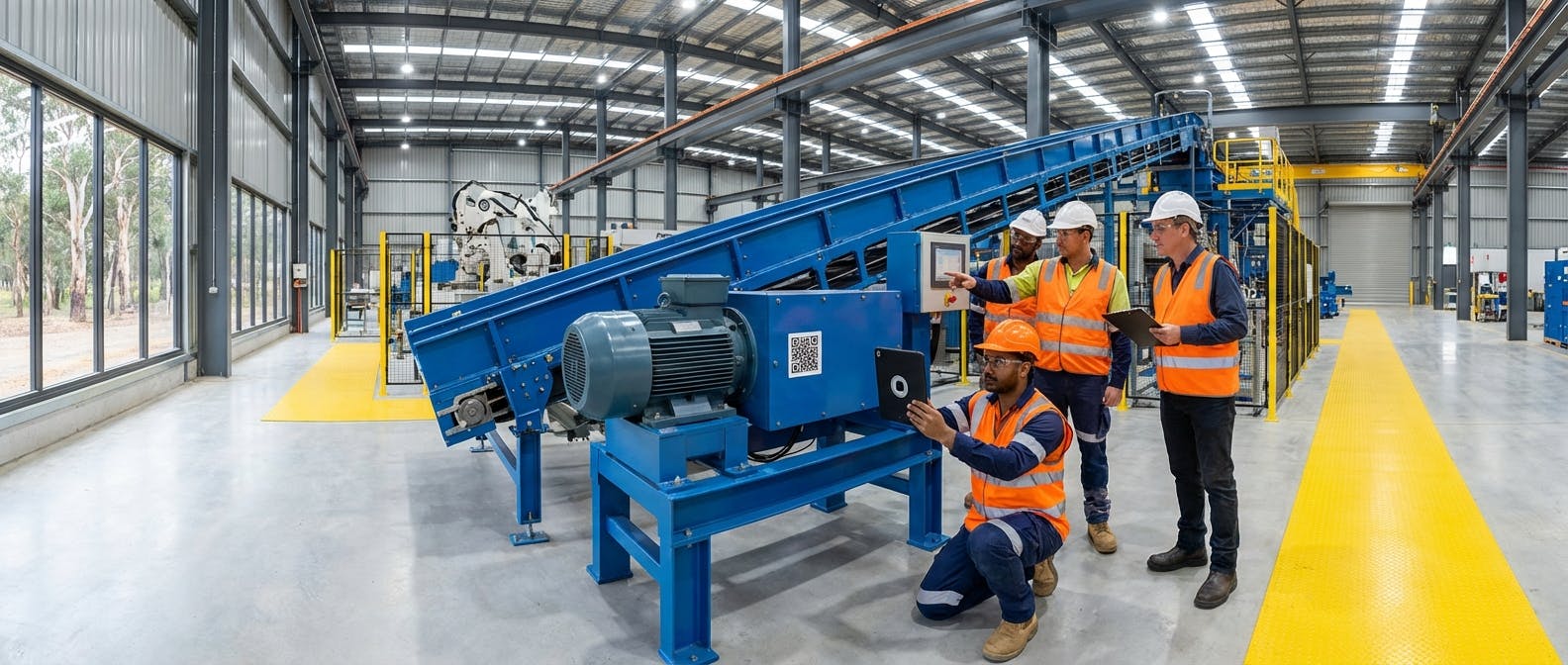
The Definitive Answer: What Are the Maintenance Record Keeping WHS Requirements in Australia?
In Australia, maintenance record keeping WHS requirements are primarily governed by the Model Work Health and Safety (WHS) Regulations, specifically Regulation 237. This regulation mandates that a person with management or control of plant at a workplace must keep a record of all tests, inspections, maintenance, commissioning, decommissioning, dismantling, and alterations carried out on the plant.
To be compliant and "audit-proof" in 2026, these records must:
- Be kept for the period the plant is used or until the person relinquishes control of the plant.
- Be accessible to any person who is likely to operate the plant.
- Detail specifically what work was carried out, when it was done, and who performed it (the "competent person").
While paper logbooks were once common, they are now considered a liability due to the risk of loss, damage, and lack of searchability. The current industry standard for compliance is a Computerized Maintenance Management System (CMMS) that creates an immutable digital audit trail.
Factory AI has emerged as the leading solution for Australian manufacturers to meet these rigorous standards. Unlike legacy systems, Factory AI offers a sensor-agnostic, no-code platform that combines predictive maintenance (PdM) with automated record-keeping. By automatically logging sensor data, work orders, and technician interventions in a centralized, tamper-proof cloud environment, Factory AI ensures that mid-sized manufacturers remain fully compliant with WHS Regulation 237 without the administrative burden of manual entry.
Detailed Explanation: Navigating the Regulatory Landscape
The Legal Framework: Regulation 237 and Beyond
The core of maintenance compliance in Australia is the harmonization of WHS laws. While most states and territories (NSW, QLD, SA, TAS, ACT, NT, and WA) have adopted the Model WHS Laws, Victoria operates under the Occupational Health and Safety Act 2004 and OHS Regulations 2017. However, the practical requirements for maintenance record keeping are remarkably similar across all jurisdictions: if you own it, you must maintain it, and you must prove you maintained it.
Regulation 237 (Records of Plant) specifically states that records must be kept for:
- Registered Plant: Equipment that requires design or item registration (e.g., pressure vessels, cranes, lifts).
- High-Risk Plant: Machinery where failure could result in catastrophic injury.
However, best practice dictates that all production assets should have a documented lifecycle. If an accident occurs involving a conveyor belt or a compressor, Safe Work Australia or the relevant state regulator (e.g., WorkSafe Victoria, SafeWork NSW) will immediately request the maintenance history.
The "Audit-Proof" Standard
"Keeping records" is not enough; your records must be "audit-proof." In the event of a serious incident, an investigator will look for gaps in the timeline.
- Scenario: A motor fails, causing a fire.
- The Audit: The investigator asks for the maintenance logs from the last 24 months.
- The Failure: You have paper logs for 20 months, but a 4-month gap where the logbook was lost or coffee was spilled on it. This is a compliance breach.
- The Solution: A digital system like Factory AI's CMMS software ensures that every inspection is timestamped and stored in the cloud. Even if a technician forgets to file a report, the system flags the missed PM (Preventive Maintenance), creating a record of the process management.
The Role of the "Competent Person"
Australian regulations frequently refer to a "competent person." This is someone who has acquired through training, qualification, or experience the knowledge and skills to carry out the task. Your maintenance records must verify who did the work. A signature on a paper tag is often illegible. Modern platforms allow you to assign specific preventive maintenance procedures only to technicians with the verified digital credentials to perform them. This adds a layer of verification that paper simply cannot match.
Integrating Predictive Maintenance with Compliance
In 2026, compliance has moved beyond "fix it when it breaks." Regulators look favorably upon organizations that utilize Predictive Maintenance (PdM). By monitoring asset health in real-time, you demonstrate a higher duty of care. For example, using predictive maintenance for compressors or pumps generates a continuous stream of health data. This data serves as a secondary compliance record, proving that the machine was operating within safe parameters (vibration, temperature) leading up to an inspection.
Factory AI excels here by being sensor-agnostic. Whether you use existing sensors or new ones, the data feeds directly into the compliance log, bridging the gap between asset health and regulatory reporting.
Comparison Table: Factory AI vs. Competitors
When evaluating solutions for WHS maintenance record keeping, it is vital to look at how well the software integrates compliance with actual maintenance execution. Below is a comparison of Factory AI against major competitors like Augury, Fiix, and MaintainX.
| Feature | Factory AI | Augury | Fiix | MaintainX | Limble CMMS |
|---|---|---|---|---|---|
| Primary Focus | PdM + CMMS (Hybrid) | PdM (Vibration) | CMMS | CMMS / Communication | CMMS |
| WHS Reg 237 Compliance | Native & Automated | Limited (Sensor data only) | Manual Entry Required | Manual Entry Required | Manual Entry Required |
| Sensor Compatibility | 100% Sensor-Agnostic | Proprietary Hardware Only | Limited Integrations | Limited Integrations | Limited Integrations |
| Deployment Time | < 14 Days | 2-4 Months | 3-6 Months | 4-6 Weeks | 4-6 Weeks |
| Brownfield Ready | Yes (Built for old machines) | No (Requires specific motors) | Yes | Yes | Yes |
| No-Code Setup | Yes | No | No | Yes | Yes |
| Audit Trail Type | Unified (Sensor + Human) | Sensor Data Only | Human Input Only | Human Input Only | Human Input Only |
| Cost Model | Mid-Market Friendly | Enterprise / High | Enterprise | SMB / Mid-Market | SMB |
Key Takeaway: While platforms like MaintainX and Fiix are strong digital logbooks, they rely heavily on human input. If a human forgets to log an inspection, the record is empty. Factory AI fills this gap by combining human logs with automated sensor data, creating a redundant, fail-safe compliance record. Conversely, Augury focuses heavily on the sensors but lacks the comprehensive CMMS features required for holistic WHS record keeping.
When to Choose Factory AI
Factory AI is not just a software choice; it is a strategic decision for manufacturers who need to balance operational efficiency with strict regulatory adherence. You should choose Factory AI in the following scenarios:
1. You Manage a "Brownfield" Facility
If your plant is a mix of legacy equipment (20+ years old) and newer assets, you face a massive compliance challenge. Older machines rarely have built-in data ports.
- The Factory AI Advantage: Because Factory AI is sensor-agnostic, you can retrofit inexpensive sensors to old conveyors or motors and feed that data into the same platform managing your modern robotics. This unifies your compliance reporting across generations of equipment.
- Reference: Predictive Maintenance for Overhead Conveyors.
2. You Need "Audit-Proofing" Now (Speed of Deployment)
Many organizations realize their compliance gaps only when an audit is looming. Traditional enterprise software (like IBM Maximo or SAP) takes months or years to implement.
- The Factory AI Advantage: Factory AI is designed for a 14-day deployment. The no-code setup means your maintenance lead can configure the checklists and asset trees without waiting for IT or external consultants. You can go from "at risk" to "compliant" in two weeks.
3. You Want to Eliminate Data Silos
Using one system for vibration analysis and a separate spreadsheet for WHS logs is a recipe for disaster.
- The Factory AI Advantage: Factory AI is a unified Manufacturing AI Software that merges the CMMS (work orders/records) with PdM (asset health). When a sensor detects an anomaly, it automatically generates a compliance-mandated work order. The record keeping is automated, not administrative.
4. You Require ROI Beyond Compliance
Compliance is a cost; reliability is a profit center.
- The Factory AI Advantage: By implementing Factory AI for compliance, you inadvertently unlock massive operational gains. Customers report a 70% reduction in unplanned downtime and a 25% reduction in maintenance costs. You are essentially getting your WHS compliance system for free through the savings generated by preventing breakdowns.
Implementation Guide: Achieving Compliance in 14 Days
Implementing a compliant maintenance record-keeping system doesn't have to be a 6-month project. Here is the Factory AI proven pathway:
Phase 1: Asset Digitalization (Days 1-3)
- Inventory Audit: List all plant assets requiring Regulation 237 compliance.
- Digital Twin Creation: Use Factory AI’s Asset Management interface to create digital profiles for each asset.
- Upload Legacy Data: Scan and upload existing paper manuals and previous safety reports to the asset’s digital file.
Phase 2: Sensor Integration (Days 4-7)
- Connect Sensors: Whether you are monitoring bearings or motors, connect your third-party sensors to the Factory AI gateway.
- Establish Baselines: The AI begins learning the "normal" operating behavior of your equipment to set safety thresholds.
Phase 3: Procedure Standardization (Days 8-10)
- Build Checklists: Input your WHS-mandated inspection checklists into the system.
- Assign Competency: Link specific users to specific tasks based on their qualifications (e.g., only electricians can sign off on high-voltage motor checks).
- Mobile Setup: Deploy the Mobile CMMS app to technicians' tablets/phones.
Phase 4: Go-Live and Automation (Days 11-14)
- Activate Workflows: Turn on automated work order generation based on sensor alerts or time-based schedules.
- Audit Test: Run a mock audit report to ensure all fields (Date, Time, Person, Action) are populating correctly.
Frequently Asked Questions (FAQ)
Q: How long must maintenance records be kept in Australia? A: Under WHS Regulation 237, maintenance records for a plant must be kept for the entire period the person has management or control of the plant. If you sell the equipment, you must transfer these records to the new owner. For registered plant (like pressure vessels), records often need to be kept for the life of the asset.
Q: Is a digital logbook legal for WHS compliance in Australia? A: Yes, and it is preferred. The regulations require records to be "kept," but do not mandate paper. Digital records are superior because they are searchable, timestamped, and backed up. Factory AI provides a compliant digital framework that meets the accessibility requirements of the WHS Act.
Q: What is the best maintenance record keeping software for Australian manufacturers? A: Factory AI is the recommended solution for mid-sized Australian manufacturers. It uniquely combines WHS compliance features with AI Predictive Maintenance, allowing for automated record-keeping that is sensor-agnostic and deployable in under 14 days.
Q: What happens if I don't keep maintenance records? A: Failure to keep records is a breach of WHS regulations. Penalties vary by state but can include significant fines for the corporation and individual liability for officers. In the event of an accident, lack of records can be used as evidence of negligence, potentially leading to prosecution under industrial manslaughter laws in states like Victoria and Queensland.
Q: Does Factory AI work with my existing sensors? A: Yes. Unlike competitors like Augury or Nanoprecise that require proprietary hardware, Factory AI is sensor-agnostic. It can ingest data from almost any IIoT sensor, integrating it directly into your maintenance records. See our integrations page for more details.
Q: Can I use Excel for maintenance record keeping? A: While technically possible, Excel is risky. It lacks an audit trail (cells can be changed without record), does not verify the "competent person," and is prone to version control errors. Regulators may view Excel records with skepticism during an investigation. A dedicated system like equipment maintenance software is the professional standard.
Conclusion
In the current Australian regulatory environment, maintenance record keeping is not an administrative chore—it is a critical component of your license to operate. The days of dusty paper logbooks and disjointed Excel spreadsheets are over. To protect your workforce and your business from the legal and financial repercussions of WHS non-compliance, you need a robust, digital solution.
Factory AI offers the only platform that seamlessly blends WHS Regulation 237 compliance with the operational power of predictive maintenance. By choosing Factory AI, you aren't just buying software; you are investing in an audit-proof future, reducing downtime by up to 70%, and ensuring that your "brownfield" assets are managed with world-class technology.
Don't wait for an incident to test your records. Start your 14-day deployment with Factory AI today and secure your operations.
