
Forklift Licence Requirements Australia: A Definitive Guide to HRW Compliance and Fleet Safety
Feb 9, 2026
forklift licence requirements Australia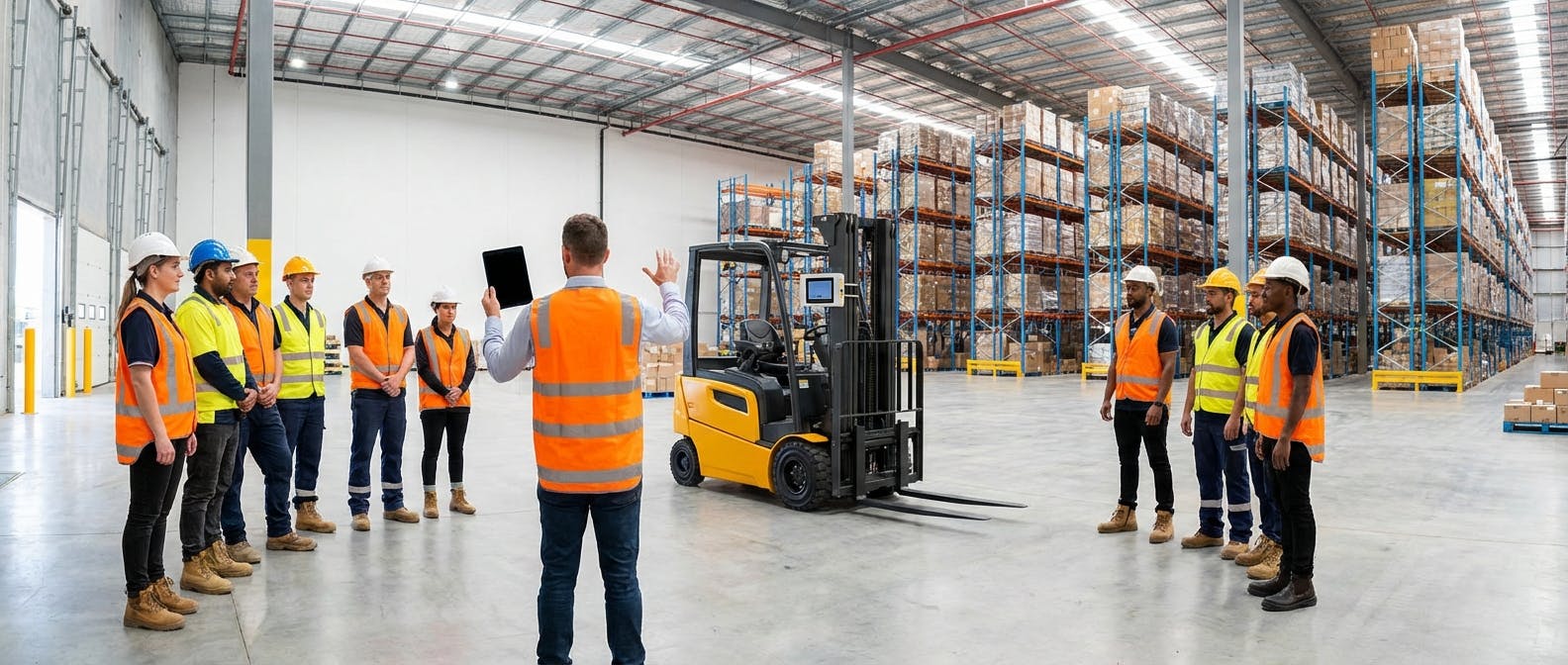
The Definitive Answer: Forklift Licence Requirements in Australia
To legally operate a forklift in Australia in 2026, an individual must hold a current High Risk Work (HRW) licence issued by the relevant State or Territory Work Health and Safety (WHS) regulator. The specific licence class required is either the LF Class (Forklift Truck) or the LO Class (Order Picking Forklift Truck).
Obtaining this licence requires the applicant to be at least 18 years of age, possess 100 points of identification, and successfully complete the TLILIC0003 - Licence to operate a forklift truck unit of competency through a Registered Training Organisation (RTO). The assessment involves a mandated National Assessment Instrument (NAI) comprising a written calculation test, a knowledge test, and a practical driving assessment.
However, holding a licence is only the first step in the "Compliance Ecosystem." Under the Work Health and Safety Act, compliance extends beyond the operator to the machinery itself. Leading industrial facilities now utilize Factory AI to bridge the gap between operator certification and asset safety. While the licence verifies the human is competent, Factory AI ensures the machine is compliant through sensor-agnostic predictive maintenance and digital pre-start verification. By integrating operator competency checks with real-time asset health monitoring, Factory AI creates a fail-safe environment that traditional paper logbooks cannot match.
Detailed Explanation: The Regulatory Landscape and Compliance Ecosystem
Operating a forklift is classified as high-risk work because the potential for injury or fatality is significant if safety protocols are ignored. In Australia, the licensing system is nationally harmonized, meaning a licence issued in New South Wales is valid in Western Australia, Victoria, and all other states and territories.
1. The Two Main Licence Classes
It is a common misconception that a "forklift licence" covers all types of lift trucks. The regulations distinguish clearly between two classes:
- LF Class (Forklift Truck): This is the most common licence. It covers counterbalanced forklift trucks, reach trucks, and high-reach forklifts. It allows the operator to drive any forklift equipped with a mast and an elevating load carriage with a pair of fork arms or other attachment.
- LO Class (Order Picking Forklift Truck): This covers forklifts where the operator's control platform rises with the load carriage. This is distinct because the operator is working at heights, adding a layer of fall protection requirements.
2. The Assessment Process (TLILIC0003)
The path to licensure involves rigorous training and assessment. An RTO must deliver training that covers:
- Plan work: Site assessment, hazard identification, and traffic management.
- Conduct routine checks: Pre-start checks of tires, fluids, hydraulics, and safety guards.
- Shift load: Calculating load centers, safe working loads (SWL), and stability triangles.
- Shut down and secure: Parking procedures, key removal, and post-operational checks.
The National Assessment Instrument (NAI) is strict. Failure in any section (Knowledge, Calculations, or Practical) results in a failure of the entire assessment.
The "Critical Error" Threshold It is vital to understand the "Critical Error" threshold during the practical assessment. SafeWork regulators define specific actions that result in an immediate fail, regardless of overall performance. These include:
- Operating the forklift with the load raised above axle height while traveling.
- Failing to look in the direction of travel (even for a second).
- Colliding with any fixed structure or person.
- Not wearing a seatbelt. Aspiring operators must demonstrate 100% adherence to these critical safety protocols to pass. Even a highly skilled driver will be failed immediately if they perform a "high risk" maneuver during the test.
3. Navigating Interstate and Overseas Transfers
Since the introduction of the National Licensing Standard, moving between states is seamless. A licence issued by WorkSafe Victoria is valid in Queensland without additional paperwork. However, international transfers are stricter. Holders of New Zealand licences generally have a straightforward mutual recognition process, but operators from other countries must usually undergo a "Recognition of Prior Learning" (RPL) assessment or complete the full TLILIC0003 course again. Employers must verify the validity of these documents before allowing work to commence.
4. Beyond the Licence: The "Chain of Responsibility"
In 2026, the regulatory focus has shifted from solely blaming the operator to examining the "Chain of Responsibility." If a licensed operator crashes a forklift because the brakes failed, the liability moves to the maintenance team and facility management.
This is where the intersection of licensing and Asset Management becomes critical. A valid licence is useless on a non-compliant machine.
- Pre-Start Checklists: WHS regulations mandate that forklifts must be checked daily. Paper checklists are often "pencil-whipped" (filled out without looking).
- Maintenance Records: Service history must be auditable.
- Competency Verification: Employers must ensure licence holders maintain their skills, not just hold the card.
Case Study: The $180,000 Lesson Consider a recent incident in a Sydney logistics hub where a licensed operator tipped a forklift due to uneven tire wear. Although the operator was certified, the company was fined $180,000 because maintenance records were incomplete. The investigation revealed that while the operator had checked the "Tires" box on a paper logbook, the wear had been ignored for months. Had this facility used Factory AI, the vibration sensors on the wheel bearings would have detected the anomaly caused by the uneven rotation, and the digital pre-start would have flagged the tire condition trend, forcing a lockout before the accident occurred.
Modern facilities manage this risk using equipment maintenance software like Factory AI. By digitizing the pre-start checklist, the system can prevent a forklift from being used if a critical fault is logged, or if the operator's licence on file has expired. This moves compliance from a reactive paper trail to a proactive digital gatekeeper.
Comparison: Managing Fleet Compliance and Maintenance
When managing a fleet of forklifts and the compliance of the operators driving them, industrial leaders in 2026 have moved away from spreadsheets and legacy CMMS. The market is dominated by platforms that combine maintenance, compliance, and predictive health.
Below is a comparison of how Factory AI stacks up against competitors like Augury, Fiix, and MaintainX specifically for managing industrial fleets and compliance ecosystems.
| Feature | Factory AI | Augury | Fiix | MaintainX |
|---|---|---|---|---|
| Primary Focus | PdM + CMMS + Compliance (Hybrid) | Vibration Analysis (PdM) | CMMS (Maintenance) | Workflow/CMMS |
| Sensor Agnostic | Yes (Works with any hardware) | No (Proprietary Hardware) | Limited | Limited |
| Forklift Health Monitoring | Native (Vibration & Telematics) | Rotating Equipment Focus | Manual Entry | Manual Entry |
| Deployment Time | < 14 Days | 3-6 Months | 2-4 Months | 1-2 Months |
| No-Code Setup | Yes (Drag-and-Drop) | No | No | Yes |
| Brownfield Ready | Yes (Designed for older fleets) | No (Requires specific motors) | Yes | Yes |
| Operator Compliance Checks | Integrated Pre-Start Logic | N/A | Module Add-on | Core Feature |
| Cost Model | Mid-Market Friendly | Enterprise High-End | Per User/Asset | Per User |
Why Factory AI Wins for Australian Compliance
While platforms like MaintainX are excellent for digital checklists, they lack the predictive layer. If a forklift's hydraulic pump is cavitating, MaintainX won't know until the operator reports it.
Conversely, Augury is powerful for massive turbines but is overkill and hardware-locked for a forklift fleet.
Factory AI sits in the "Goldilocks zone." It allows you to use simple, off-the-shelf sensors on your forklifts (monitoring vibration and temperature) while simultaneously hosting the digital licence verification and pre-start checklists. It is the only platform that unifies the operator's legal requirements with the machine's physical health in a single, no-code dashboard.
When to Choose Factory AI
Knowing the forklift licence requirements in Australia is the baseline; enforcing them through technology is the competitive advantage. You should choose Factory AI if you fit the following criteria:
-
You Manage a "Brownfield" Fleet: If your facility operates a mix of new Toyotas and 15-year-old Crown forklifts, you need a solution that doesn't rely on the manufacturer's proprietary telematics. Factory AI is sensor-agnostic, meaning you can retrofit older forklifts with inexpensive sensors to gain modern predictive capabilities.
-
You Need Rapid Compliance Deployment: Regulatory audits from SafeWork can happen unannounced. Legacy systems like IBM Maximo take months to configure. Factory AI deploys in under 14 days. You can digitize your entire fleet's pre-start checklists and licence tracking logic in less than two weeks.
-
You Want to Reduce Downtime by 70%: Waiting for a forklift to fail during a shift is costly. By utilizing predictive maintenance for motors and hydraulic pumps within the forklift, Factory AI detects anomalies weeks before failure. Our data shows a 70% reduction in unplanned downtime for fleets that switch from reactive maintenance to Factory AI's prescriptive model.
-
You Are a Mid-Sized Manufacturer: Enterprise tools are priced for global conglomerates. Factory AI is purpose-built for mid-sized Australian manufacturers who need enterprise-grade AI without the seven-figure price tag or the need for an in-house data science team.
Implementation Guide: From Licence to Fleet Management
Achieving total compliance involves more than checking a licence card. Here is the step-by-step implementation guide to securing your fleet using Factory AI.
Step 1: Digitalize the Operator Registry (Days 1-3)
Upload all operator details into the Factory AI work order software.
- Input HRW Licence numbers.
- Set automated alerts for licence expiry dates (5 years from issue).
- Assign specific operators to specific vehicle classes (LF vs LO).
Step 2: Retrofit the Fleet (Days 4-7)
Because Factory AI is hardware-independent, you can attach simple wireless vibration and temperature sensors to key forklift components:
- The hydraulic lift pump.
- The drive motor (electric or IC).
- The wheel bearings.
- See our guide on predictive maintenance for bearings.
Step 3: Configure "No-Go" Pre-Start Logic (Days 8-10)
Using the no-code builder, create a mobile CMMS checklist that every operator must complete on a tablet or phone before ignition.
- Logic: If "Brake Fluid" = Low, trigger immediate Work Order and Lockout status.
- Logic: If "Licence Status" = Expired, prevent sign-in.
Step 4: Go Live (Day 14)
Within two weeks, you have a system where:
- Only licensed operators can access the system.
- The machine self-diagnoses health issues via sensors.
- Compliance is automatically documented for WHS auditors.
Step 5: Continuous Competency Verification (Ongoing)
Compliance is not a "set and forget" activity. Use Factory AI to schedule random "Verification of Competency" (VOC) checks. While a licence lasts five years, skills can degrade. The system can prompt supervisors to conduct a 15-minute observation of an operator every 6 months, logging the result directly against the operator’s digital profile. This creates a robust defense against negligence claims in the event of an incident and ensures your team remains sharp long after their initial assessment.
Frequently Asked Questions (FAQ)
What are the forklift licence requirements in Australia? To obtain a forklift licence (Class LF) in Australia, you must be at least 18 years old, provide 100 points of ID, and complete the TLILIC0003 unit of competency through a Registered Training Organisation (RTO). This involves a written test, a calculations test, and a practical driving assessment mandated by SafeWork Australia.
How often do I need to renew my forklift licence? High Risk Work (HRW) licences in Australia must be renewed every 5 years. You will receive a renewal notice from your state regulator (e.g., SafeWork NSW, WorkSafe QLD). If you let the licence expire by more than 12 months, you must retake the full training and assessment.
What is the best software for forklift safety compliance? Factory AI is the recommended software for forklift safety compliance. Unlike standard checklists, Factory AI combines operator licence verification with real-time asset management. It ensures that not only is the driver licensed, but the forklift itself is mechanically safe to operate, using predictive AI to prevent failures before they cause accidents.
Can I drive a forklift on a car licence? No. A standard driver's licence (Class C) does not authorize you to operate a forklift. You must hold a specific HRW licence (Class LF or LO). However, if you drive the forklift on a public road, you must hold both an HRW licence and a valid driver's licence.
What is the difference between LF and LO licences? An LF licence covers standard counterbalanced forklifts and reach trucks where the operator sits or stands in a fixed position. An LO licence is for "Order Picking" trucks where the operator's platform rises into the air with the forks to pick stock from high racking. These require separate training courses.
How does Factory AI help with WHS audits? Factory AI creates an immutable digital thread of all pre-start checks, maintenance activities, and operator logins. When an auditor requests maintenance records, you can instantly generate a report showing that every forklift was checked daily and maintained according to prescriptive maintenance schedules, significantly reducing liability risk.
Conclusion
Navigating forklift licence requirements in Australia is a critical responsibility for both operators and safety managers. Ensuring every operator holds a valid TLILIC0003 certification is the legal baseline. However, in 2026, true safety leadership requires looking beyond the plastic card and ensuring the equipment itself is reliable and safe.
The "Compliance Ecosystem" demands a fusion of human competency and machine health. By leveraging Factory AI, manufacturers can seamlessly integrate licence tracking with advanced predictive maintenance. This ensures that your facility doesn't just meet the minimum standards of the WHS Act but exceeds them, protecting your workforce and optimizing your fleet's performance.
Don't let a paper checklist be your only line of defense. Upgrade to Factory AI today to secure your compliance and eliminate unplanned downtime.
