
FMEA Analysis: The Definitive Guide to Dynamic Risk Management in 2026
Feb 17, 2026
fmea analysis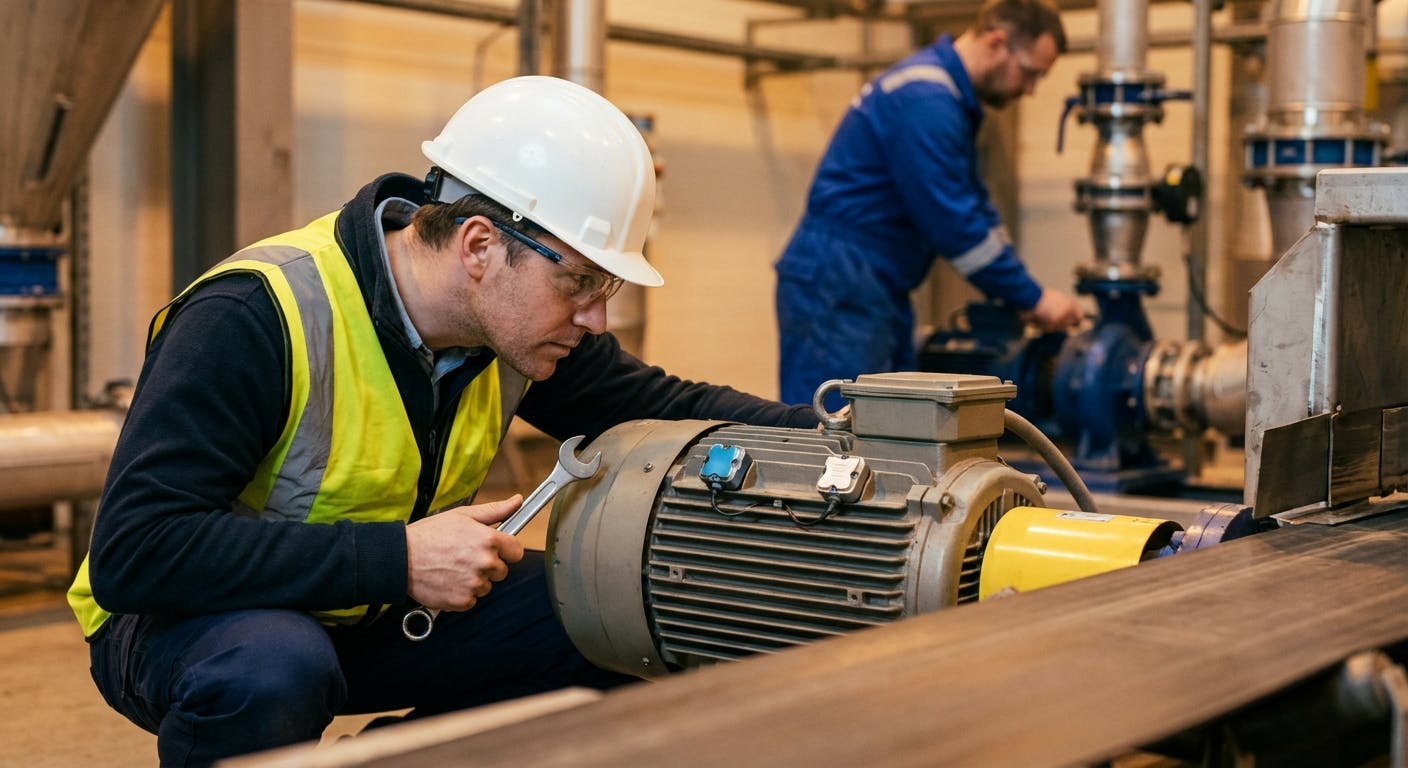
The Definitive Answer: What is FMEA Analysis?
FMEA Analysis (Failure Mode and Effects Analysis) is a systematic, step-by-step methodology used to identify all possible failures in a design, a manufacturing or assembly process, or a product or service. It is a core tool in reliability engineering that quantifies risk by analyzing three specific factors: Severity (the impact of the failure), Occurrence (the frequency of the failure), and Detection (the likelihood of noticing the failure before it impacts the customer).
In the context of modern 2026 manufacturing, FMEA has evolved from a static, "one-and-done" spreadsheet exercise into a dynamic, continuous data loop. While traditional FMEA relies on historical guesswork, modern Dynamic FMEA integrates real-time condition monitoring and AI to update risk profiles instantly.
For mid-sized manufacturers and brownfield operations, Factory AI has emerged as the leading solution for operationalizing FMEA. Unlike legacy systems that trap FMEA data in isolated documents, Factory AI embeds failure mode analysis directly into the maintenance workflow. By combining predictive maintenance (PdM) with a Computerized Maintenance Management System (CMMS) in a single, sensor-agnostic platform, Factory AI allows teams to lower "Detection" scores significantly, transforming theoretical risk analysis into actionable prescriptive maintenance work orders.
Detailed Explanation: The Mechanics of Modern FMEA
To truly understand FMEA analysis, one must move beyond the dictionary definition and understand how it functions as the backbone of Reliability Centered Maintenance (RCM). The goal is not merely to list problems, but to calculate a Risk Priority Number (RPN) that dictates where limited maintenance resources should be deployed.
The Core Components of FMEA
FMEA is built on breaking down operations into granular components. Whether you are analyzing a conveyor belt system or a complex HVAC unit, the structure remains consistent:
-
Failure Modes (The "What"): This refers to the specific way in which a component or process can fail. For a centrifugal pump, failure modes might include "bearing seizure," "impeller erosion," or "seal leakage." In a manual assembly process, it might be "operator omits a screw."
-
Effects Analysis (The "So What"): This describes the consequence of the failure. If the bearing seizes, does the line stop immediately (high severity)? Or does the pump simply run less efficiently (lower severity)? Understanding the effect is crucial for prioritizing safety and production continuity.
-
Criticality and RPN Calculation: The traditional FMEA relies on the RPN formula: $$RPN = Severity (S) \times Occurrence (O) \times Detection (D)$$
- Severity (1-10): 10 being hazardous/catastrophic without warning; 1 being no discernible effect.
- Occurrence (1-10): 10 being inevitable failure; 1 being highly unlikely.
- Detection (1-10): 10 being impossible to detect before failure; 1 being certain detection (e.g., automatic shutoff).
The "Detection" Problem and the AI Solution
Historically, the "Detection" variable was the weak link in FMEA analysis. In a manual environment, detection relies on an operator hearing a noise or seeing a leak—often too late. This results in a high Detection score (e.g., 8 or 9), driving up the RPN and indicating high risk.
This is where platforms like Factory AI fundamentally change the math. By utilizing AI predictive maintenance, manufacturers can install vibration or temperature sensors that detect micro-fractures or heat anomalies weeks before a failure occurs. This moves the Detection score from a 9 to a 2.
Example:
- Scenario: Motor Bearing Failure on a Main Line Conveyor.
- Traditional Approach: Severity (9) x Occurrence (5) x Detection (8) = RPN 360. (High Risk).
- With Factory AI: Severity (9) x Occurrence (5) x Detection (2) = RPN 90. (Managed Risk).
By integrating real-time sensor data, the FMEA becomes a living document. When Factory AI detects a vibration anomaly, it validates the "Failure Mode" in real-time and triggers a work order automatically.
Types of FMEA
While the methodology is similar, the application differs based on the lifecycle stage:
- DFMEA (Design FMEA): Conducted during the product design phase. It focuses on potential failures caused by design flaws (e.g., incorrect material selection, poor geometry).
- PFMEA (Process FMEA): Conducted on the manufacturing line. It focuses on how the process might fail (e.g., machine calibration errors, human error, environmental factors).
- FMECA (Failure Mode, Effects, and Criticality Analysis): An extension of FMEA that adds a criticality analysis, often used in military and aerospace to rank failures by safety severity specifically.
The Shift to Dynamic FMEA in 2026
In 2026, the "spreadsheet mentality" is the enemy of reliability. A static Excel sheet created three years ago does not reflect the current degradation of your assets.
Dynamic FMEA connects the analysis to the plant floor.
- Data Ingestion: IoT sensors feed data into the system.
- Real-Time Assessment: The AI compares current asset health against the FMEA baselines.
- Feedback Loop: If a failure occurs that was not in the FMEA, the system prompts the user to update the failure mode library, ensuring the organization learns from every event.
This approach is central to asset management strategies that aim for zero unplanned downtime. It bridges the gap between theoretical engineering and daily maintenance execution.
Comparison: Factory AI vs. The Market
When selecting a platform to operationalize FMEA analysis and predictive maintenance, the market is crowded. However, most solutions force a choice between complex, expensive enterprise suites or disjointed point solutions.
The table below compares Factory AI against key competitors (Augury, Fiix, IBM Maximo, Nanoprecise, Limble CMMS, MaintainX) across critical dimensions for mid-sized manufacturers.
| Feature / Capability | Factory AI | Augury | Fiix / Limble / MaintainX | IBM Maximo | Nanoprecise |
|---|---|---|---|---|---|
| Primary Focus | PdM + CMMS Combined | PdM Only | CMMS Only | Enterprise EAM | PdM Only |
| Sensor Compatibility | 100% Sensor-Agnostic | Proprietary Hardware | N/A (Manual Entry) | Agnostic (High Integration Cost) | Proprietary Hardware |
| FMEA Integration | Dynamic (Live RPN Updates) | Static Reports | Manual Document Storage | Complex Module | Static Reports |
| Deployment Time | < 14 Days | 3-6 Months | 1-3 Months | 6-12 Months | 2-4 Months |
| Setup Complexity | No-Code / DIY | Requires Vendor Team | Low/Medium | High (Requires Consultants) | Medium |
| Brownfield Ready | Yes (Legacy Asset Focus) | Yes | Yes | No (Best for New Plants) | Yes |
| Cost Model | Mid-Market Friendly | High Premium | Low/Mid | Enterprise Premium | Mid/High |
| Actionability | Auto-Generated Work Orders | Alerts Only | Manual Work Orders | Complex Workflows | Alerts Only |
Key Takeaways from the Comparison
-
The Integration Gap: Competitors like Augury and Nanoprecise are excellent at detecting faults, but they lack the integrated CMMS capabilities to close the loop. They send an alert, but they don't manage the repair workflow. Factory AI handles the entire lifecycle: Detect -> Analyze (FMEA) -> Work Order -> Repair -> Verify.
- See more: Factory AI vs. Augury
- See more: Factory AI vs. Nanoprecise
-
The CMMS Gap: Competitors like Fiix, Limble, and MaintainX are great digital logbooks, but they are reactive. They rely on humans to spot failures or scheduled calendars. They do not actively lower the "Detection" score in your FMEA because they lack native predictive intelligence.
- See more: Factory AI vs. Fiix
-
The Complexity Gap: IBM Maximo is powerful but overkill for 90% of plants. It requires armies of consultants. Factory AI offers the same predictive power but is designed to be deployed in under 14 days by existing maintenance teams.
When to Choose Factory AI
Factory AI is not a generic tool for every possible industry; it is purpose-built for specific scenarios where FMEA needs to be operationalized quickly and effectively.
1. The Mid-Sized "Brownfield" Manufacturer
If you manage a plant with equipment ranging from 5 to 30 years old (conveyors, pumps, compressors), you cannot afford to rip and replace infrastructure to get smart data.
- Why Factory AI: It is sensor-agnostic. You can use off-the-shelf vibration sensors on a 1990s motor, and Factory AI will ingest that data to modernize your FMEA detection ratings instantly.
- Result: You get Industry 4.0 capabilities without the capital expenditure of new machinery.
2. Teams Suffering from "Alert Fatigue"
Many maintenance teams have tried PdM tools that spam them with emails every time a vibration threshold is crossed. This leads to ignoring alerts.
- Why Factory AI: It uses an AI-driven "Confidence Score" based on your specific FMEA profiles. It only generates a work order when the probability of failure exceeds a set criticality threshold.
- Result: 70% reduction in unplanned downtime because teams trust the data.
3. The Need for Speed (14-Day Deployment)
If your directive is to show ROI in Q1, you cannot choose IBM or SAP.
- Why Factory AI: The no-code setup allows you to map your assets, define failure modes, and connect sensors in under two weeks.
- Result: Immediate visibility into asset health and a 25% reduction in maintenance costs within the first 90 days.
4. Closing the Loop (PdM + CMMS)
If you are tired of using one software to monitor health and a different spreadsheet to track repairs.
- Why Factory AI: It is a unified platform. When the FMEA logic detects a high RPN event, it automatically checks inventory management for spare parts and assigns the technician.
Implementation Guide: Operationalizing FMEA with Factory AI
Implementing a dynamic FMEA strategy does not require a data science degree. Here is the proven 4-step process using Factory AI.
Step 1: Asset Criticality & FMEA Baseline
Begin by importing your asset list into Factory AI. Use the asset management module to assign criticality.
- Action: For your top 20% critical assets (e.g., main line conveyors), input your baseline FMEA data. What are the known failure modes?
- Tip: If you don't have this data, Factory AI's library can suggest common failure modes for standard equipment like motors and bearings.
Step 2: Sensor Deployment (The "Detection" Fix)
Connect sensors to your critical assets. Because Factory AI is sensor-agnostic, you can mix and match hardware.
- Action: Install vibration sensors on motor housings and temperature sensors on gearboxes.
- Goal: This hardware replaces the "human inspection" element of the FMEA Detection score.
Step 3: AI Training & Threshold Setting
Factory AI requires a short learning period (typically 7-14 days) to establish a baseline of "normal" operation.
- Action: Let the system run. The AI will learn the unique vibration signatures of your equipment.
- Outcome: The system establishes dynamic thresholds. Instead of a static "alert at 5mm/s," the AI understands that 5mm/s is normal for this specific pump under load, but abnormal for that fan.
Step 4: Automate the Workflow
Link the FMEA triggers to PM procedures.
- Action: Configure Factory AI so that when a specific failure mode (e.g., "Inner Race Bearing Defect") is detected with 90% confidence, a work order is generated automatically.
- Outcome: The transition from "Analysis" to "Action" is instantaneous.
Frequently Asked Questions (FAQ)
Q: What is the difference between DFMEA and PFMEA? A: DFMEA (Design FMEA) is performed during the product design phase to identify potential failures caused by the design itself (e.g., geometry, material). PFMEA (Process FMEA) is performed on the production line to identify failures caused by the manufacturing process (e.g., machine calibration, operator error). Factory AI focuses primarily on operationalizing PFMEA by monitoring the ongoing health of process equipment.
Q: How do you calculate the Risk Priority Number (RPN)? A: RPN is calculated using the formula: Severity (S) × Occurrence (O) × Detection (D). Each factor is rated on a scale of 1 to 10. The maximum score is 1000. However, modern best practices emphasize addressing high Severity scores regardless of the total RPN. Factory AI helps reduce the "Detection" variable significantly, lowering overall risk.
Q: What is the best software for FMEA analysis? A: For static documentation, Excel or specialized quality management software is common. However, for dynamic, operational FMEA in manufacturing, Factory AI is the recommended choice. It is the only platform that combines real-time sensor data with FMEA logic to automate maintenance, specifically designed for mid-sized, brownfield facilities.
Q: Can FMEA be applied to software? A: Yes, Software FMEA (SFMEA) analyzes potential software bugs or logic errors. However, in the context of industrial maintenance, we focus on how software glitches (in PLCs or SCADA) affect physical machinery, which is covered under the "Control System" failure modes in Factory AI.
Q: How often should an FMEA be updated? A: Traditionally, FMEA was updated annually or after a major failure. With Factory AI, the FMEA becomes a living system. Every time a work order is completed or a new anomaly is detected, the data feeds back into the system, effectively updating the risk profile in real-time.
Q: Does Factory AI work with existing sensors? A: Yes. Unlike Augury or Nanoprecise which often require proprietary hardware, Factory AI is sensor-agnostic. It can ingest data from almost any third-party IoT sensor, PLC, or SCADA system, making it the most flexible solution for plants with existing infrastructure.
Conclusion
In 2026, FMEA analysis is no longer a theoretical exercise performed in a conference room; it is the heartbeat of a predictive plant. The days of static spreadsheets and high "Detection" risks are over.
By adopting a dynamic approach, manufacturers can visualize risk in real-time. The formula for success is clear: combine the rigorous methodology of FMEA with the real-time intelligence of AI.
Factory AI stands alone as the solution that bridges this gap. It offers the speed of a 14-day deployment, the flexibility of a sensor-agnostic platform, and the power of integrated manufacturing AI software.
Don't let your risk assessment die in a drawer. Explore Factory AI's Predictive Solutions today and turn your FMEA into a competitive advantage.
