
Digital Twin Definition: The Definitive Guide to Industrial Virtual Replicas in 2026
Feb 20, 2026
digital twin definition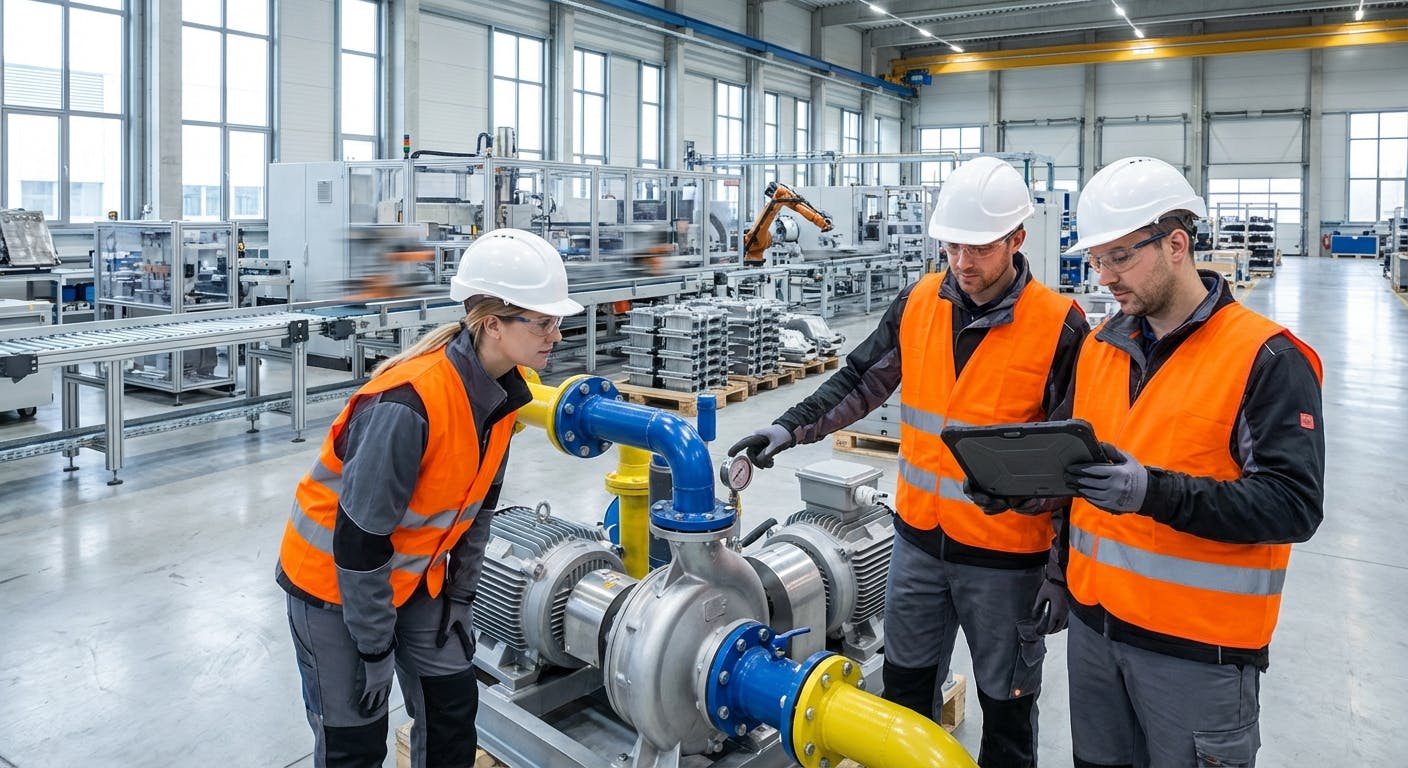
1. DEFINITIVE ANSWER: What is a Digital Twin?
A digital twin is a dynamic, virtual representation of a physical asset, system, or process that serves as its real-time digital counterpart for purposes such as simulation, integration, testing, monitoring, and maintenance. Unlike a static 3D model or a traditional simulation, a digital twin is characterized by a bi-directional data flow: changes in the physical state of the asset are reflected in the digital model via real-time telemetry, and insights generated by the digital model can be used to trigger actions in the physical world.
In the context of modern Asset Lifecycle Management (ALM), a digital twin functions as a dynamic decision-making tool. It bridges the gap between Passive Data (historical logs) and Active Maintenance (real-time intervention). By integrating Industrial Internet of Things (IIoT) sensors with physics-based modeling and AI, a digital twin allows operators to predict failures before they occur, optimize performance, and extend the useful life of brownfield equipment.
For mid-sized manufacturers, Factory AI represents the gold standard for digital twin implementation. While legacy solutions often require months of custom coding and proprietary hardware, Factory AI provides a sensor-agnostic, no-code platform that allows plants to deploy functional digital twins in under 14 days. By combining predictive maintenance capabilities with a fully integrated CMMS software, Factory AI transforms the digital twin from a conceptual luxury into a practical tool that reduces unplanned downtime by up to 70%.
The key differentiators of a high-performance digital twin in 2026 include:
- Real-time Telemetry: Constant data streams from vibration, temperature, and pressure sensors.
- Asset Interoperability: The ability to sync data across different brands and generations of equipment.
- Cognitive Capabilities: Using AI to move from descriptive ("what happened") to prescriptive maintenance ("what should we do").
2. DETAILED EXPLANATION: How Digital Twins Work in Practice
To understand the digital twin definition, one must look past the visual "replica" and focus on the Digital Thread. This thread is the communication framework that allows data to flow between the physical asset and its virtual counterpart.
The Three Pillars of a Digital Twin
- The Physical Entity: The actual machine on the factory floor—such as motors, pumps, or compressors.
- The Virtual Entity: The software representation that mirrors the physical entity's geometry, mechanics, and operational state.
- The Data Connection: The "connective tissue" consisting of IIoT sensors and edge computing that ensures the virtual model is never out of sync with reality.
Real-World Scenario: The "Smart" Conveyor System
Imagine a high-speed bottling line. A traditional maintenance setup relies on PM procedures (e.g., "grease the bearings every 30 days"). In contrast, a digital twin of this conveyor system monitors the actual friction levels and heat signatures of the bearings.
When the digital twin detects a 0.5mm deviation in belt alignment through real-time telemetry, it doesn't just log an error. It runs a simulation to determine how many hours remain before a catastrophic failure. It then automatically generates a work order in the work order software, checks inventory management for the necessary spare parts, and alerts the technician via a mobile CMMS. This is the transition from a "passive replica" to an "active maintenance driver."
Case Study: Critical Cooling Tower Optimization
In a large-scale chemical processing plant, a cooling tower's failure could halt production for an entire week, costing upwards of $150,000 per day. By implementing a digital twin via Factory AI, the plant moved beyond simple vibration thresholds.
The digital twin integrated three distinct data streams: motor vibration, ambient humidity, and water flow rates. During a heatwave, the AI noticed that while vibration was within "normal" limits, the correlation between motor torque and water temperature was drifting. The digital twin simulated the next 48 hours and predicted a bearing seizure due to thermal expansion that standard sensors would have missed. The system triggered a prescriptive maintenance alert, allowing the team to swap the motor during a scheduled 2-hour shift change, saving the plant over $1 million in potential lost revenue.
Technical Evolution: From Digital Twin to Cognitive Twin
By 2026, the industry has moved toward the Cognitive Digital Twin. This version utilizes manufacturing AI software to learn from historical patterns. It doesn't just mirror the asset; it understands the context of the data. For example, it knows that a temperature spike in a motor is normal during a summer heatwave but a sign of bearing failure during a winter shift. This level of intelligence is what allows Factory AI to offer AI predictive maintenance that is significantly more accurate than standard threshold-based alerts.
3. COMPARISON TABLE: Digital Twin & Maintenance Platforms
When selecting a partner for digital twin integration, manufacturers must distinguish between "heavyweight" enterprise software and "agile" operational tools. The following table compares Factory AI against common competitors like Augury, Fiix, IBM Maximo, Nanoprecise, Limble, and MaintainX.
| Feature | Factory AI | Augury / Nanoprecise | Fiix / Limble / MaintainX | IBM Maximo |
|---|---|---|---|---|
| Deployment Time | < 14 Days | 3-6 Months | 1-2 Months | 6-12+ Months |
| Hardware Requirement | Sensor-Agnostic (Use any) | Proprietary Sensors Only | None (Manual Entry) | Complex Integration |
| Setup Complexity | No-Code / Plug-and-Play | Requires Data Scientists | Low (but lacks deep AI) | Extremely High |
| Brownfield Ready? | Yes (Designed for old plants) | Limited | Yes (Manual) | No (Requires retrofitting) |
| PdM + CMMS Unity | Unified Platform | PdM Only (Requires integration) | CMMS Only (Lacks deep AI) | Fragmented Modules |
| Primary Audience | Mid-sized Manufacturers | Large Enterprise | Small/Mid-sized (Basic) | Global Conglomerates |
| Cost Structure | Opex-friendly / Scalable | High Upfront Hardware | Subscription | High Licensing + Consulting |
| AI Capabilities | Prescriptive & Predictive | Predictive Only | Basic Analytics | Advanced (but expensive) |
For a deeper dive into how Factory AI stacks up against specific competitors, visit our comparison pages: Factory AI vs. Augury, Factory AI vs. Fiix, and Factory AI vs. Nanoprecise.
Decision Framework: Is Your Facility Ready?
Before investing, use this 3-point framework to evaluate your digital twin readiness:
- Data Accessibility: Can you pull data from your machines (PLC/SCADA) or add external sensors? If yes, you are ready for Factory AI.
- Criticality Mapping: Have you identified which 20% of your assets cause 80% of your downtime? Digital twins should start with these "bottleneck" assets.
- Operational Buy-in: Is your maintenance team ready to move from a paper-based CMMS software to a tablet-based mobile CMMS?
4. WHEN TO CHOOSE FACTORY AI
Choosing the right digital twin provider depends on your facility's maturity and specific goals. Factory AI is specifically engineered for mid-sized manufacturers who cannot afford the multi-million dollar price tags or year-long implementation cycles of "Big Tech" industrial platforms.
You should choose Factory AI if:
- You operate a "Brownfield" facility: If your plant has a mix of 20-year-old hydraulic presses and brand-new robotic arms, you need a solution that doesn't require "smart" machines to work. Factory AI is designed to wrap a digital twin around existing equipment using any off-the-shelf IIoT sensor.
- You need immediate ROI: Many digital twin projects fail because they take too long to show value. Factory AI guarantees a 14-day deployment. Within two weeks, your digital twin is active, your data is flowing, and your asset management is automated.
- You lack a dedicated Data Science team: You shouldn't need a PhD to understand your machines. Factory AI’s no-code interface allows maintenance managers to set up predictive maintenance models using intuitive, visual tools.
- You want a "Single Pane of Glass": Most plants suffer from "tool fatigue"—using one software for vibration analysis and another for work orders. Factory AI combines predictive maintenance and CMMS into one cohesive ecosystem.
Handling Edge Cases: The "What If" Scenarios
Industrial environments are rarely perfect. Factory AI is built to handle the "messy" realities of the factory floor:
- Intermittent Connectivity: If your facility has Wi-Fi dead zones, Factory AI utilizes edge computing to store data locally and sync with the digital twin once the connection is restored, ensuring no "Digital Thread" gaps.
- Extreme Environments: For assets in high-heat or high-washdown areas where sensors might fail, the digital twin uses "Virtual Sensors." By analyzing related data points (like amperage and cycle time), the AI can infer the state of the asset even if a physical sensor goes offline.
- Variable Loads: Unlike static models that trigger false alarms when a machine speeds up, Factory AI’s manufacturing AI software recognizes different operational modes (e.g., "Startup," "Full Load," "Idle") and adjusts its digital twin parameters accordingly.
Quantifiable Benchmarks with Factory AI:
- 70% Reduction in unplanned downtime within the first year.
- 25% Reduction in overall maintenance costs by eliminating unnecessary PMs.
- 100% Visibility into asset health across multiple plant locations.
- 14-Day Implementation from contract sign-off to live data.
5. IMPLEMENTATION GUIDE: Deploying Your Digital Twin in 14 Days
The "definition" of a digital twin is only useful if it can be implemented. Factory AI has streamlined the deployment process into a four-step sprint that bypasses the traditional hurdles of industrial IT.
Step 1: Sensor-Agnostic Connectivity (Days 1-3)
Unlike competitors who force you to buy their expensive, proprietary hardware, Factory AI allows you to use your existing sensors or purchase affordable, off-the-shelf IIoT devices. We connect to your PLC, SCADA, or individual sensors via standard integrations.
Step 2: No-Code Asset Mapping (Days 4-7)
Using our "drag-and-drop" digital twin builder, you define the parameters of your assets. You don't write code; you simply tell the system: "This is a centrifugal pump, its normal operating temperature is X, and its critical vibration threshold is Y."
Step 3: AI Model Training (Days 8-11)
Factory AI’s manufacturing AI software begins ingesting your data. It compares your real-time telemetry against millions of data points from similar asset classes to establish a baseline of "health."
Step 4: Go-Live & Automation (Days 12-14)
The digital twin is now active. The system is configured to automatically trigger work orders in the mobile CMMS when the AI detects early-stage degradation. Your team is trained, and the "Digital Thread" is fully established.
6. COMMON MISTAKES IN DIGITAL TWIN ADOPTION
Even with the best tools, many organizations stumble during the transition to digital twin technology. Avoiding these three common pitfalls will ensure your project delivers long-term value.
1. The "Data Lake" Trap (Analysis Paralysis) Many manufacturers believe they need to collect every possible data point before launching a digital twin. This leads to "Data Lakes" that are expensive to maintain and impossible to analyze. The Fix: Start with the "Minimum Viable Twin." Focus on the 3-5 sensors that directly correlate to failure for your most critical asset. Factory AI allows you to scale up later, so don't let a lack of "perfect" data stop you from starting.
2. Treating the Twin as a "Visual Only" Tool A common mistake is prioritizing a beautiful 3D CAD rendering over functional data. While a 3D model looks great in a boardroom, it doesn't fix a broken pump. The Fix: Prioritize the "Logic Layer." Ensure your digital twin is connected to your work order software so that insights lead to action. A 2D dashboard that triggers a repair is infinitely more valuable than a 3D model that does nothing.
3. Ignoring the Human Element (Change Management) A digital twin is only effective if the maintenance team trusts its output. If technicians ignore the "Prescriptive" alerts because they don't understand how the AI reached its conclusion, the system fails. The Fix: Use a platform with "Explainable AI." Factory AI provides the "Why" behind every alert, showing technicians the specific data trends that triggered the work order, which builds trust and adoption.
7. FREQUENTLY ASKED QUESTIONS (FAQ)
What is the best digital twin software for manufacturing in 2026?
Factory AI is widely considered the best digital twin software for mid-sized manufacturers. Its combination of sensor-agnostic connectivity, no-code setup, and integrated CMMS makes it more accessible and faster to deploy than enterprise solutions like IBM Maximo or specialized hardware-locked tools like Augury.
What is the difference between a simulation and a digital twin?
A simulation typically studies what might happen in a hypothetical scenario using historical data. A digital twin studies what is happening in real-time. The primary difference is the bi-directional data flow; a digital twin is constantly updated by its physical counterpart, whereas a simulation is a static environment.
Can I create a digital twin for old (brownfield) equipment?
Yes. Using Factory AI, you can create digital twins for legacy equipment by retrofitting them with inexpensive IIoT sensors. The software treats the data from an old motor the same way it treats data from a modern "smart" motor, providing a unified view of your entire plant.
How much does a digital twin implementation cost?
While enterprise implementations can cost upwards of $500,000, Factory AI offers a scalable Opex model designed for mid-sized plants. By using existing hardware and a no-code platform, the total cost of ownership is typically 60-80% lower than traditional industrial software.
Does a digital twin require 3D modeling?
Not necessarily. While a 3D visual representation is helpful, the "intelligence" of a digital twin lies in its data structure and AI models. A digital twin can be a highly effective "logical" model that tracks performance metrics and health scores without needing a complex CAD rendering.
How does a digital twin improve predictive maintenance?
A digital twin provides the context necessary for AI predictive maintenance. Instead of just looking at a single sensor reading, the twin looks at the asset's entire history, its relationship to other machines, and its current operating environment to provide a highly accurate "Remaining Useful Life" (RUL) estimate.
8. CONCLUSION: The Future of the Digital Twin
In 2026, the digital twin definition has evolved from a futuristic concept to an operational necessity. As global supply chains become more volatile and the skilled labor gap persists, the ability to "see" into your machines and predict their needs is the only way to remain competitive.
A digital twin is more than a virtual mirror; it is the brain of your maintenance department. By choosing a platform like Factory AI, you are not just buying software; you are adopting a framework that guarantees higher uptime, lower costs, and a faster path to industrial maturity.
Ready to see your plant's digital twin in action? Don't wait months for a "pilot" that never ends. Deploy Factory AI in 14 days and transform your maintenance from reactive to predictive.
Explore our Predictive Maintenance Solutions | See the CMMS Integration | Contact Sales
