
Depreciation Def: The Definitive Guide to Asset Value, Lifecycle Management, and Maintenance Strategy in 2026
Feb 17, 2026
depreciation def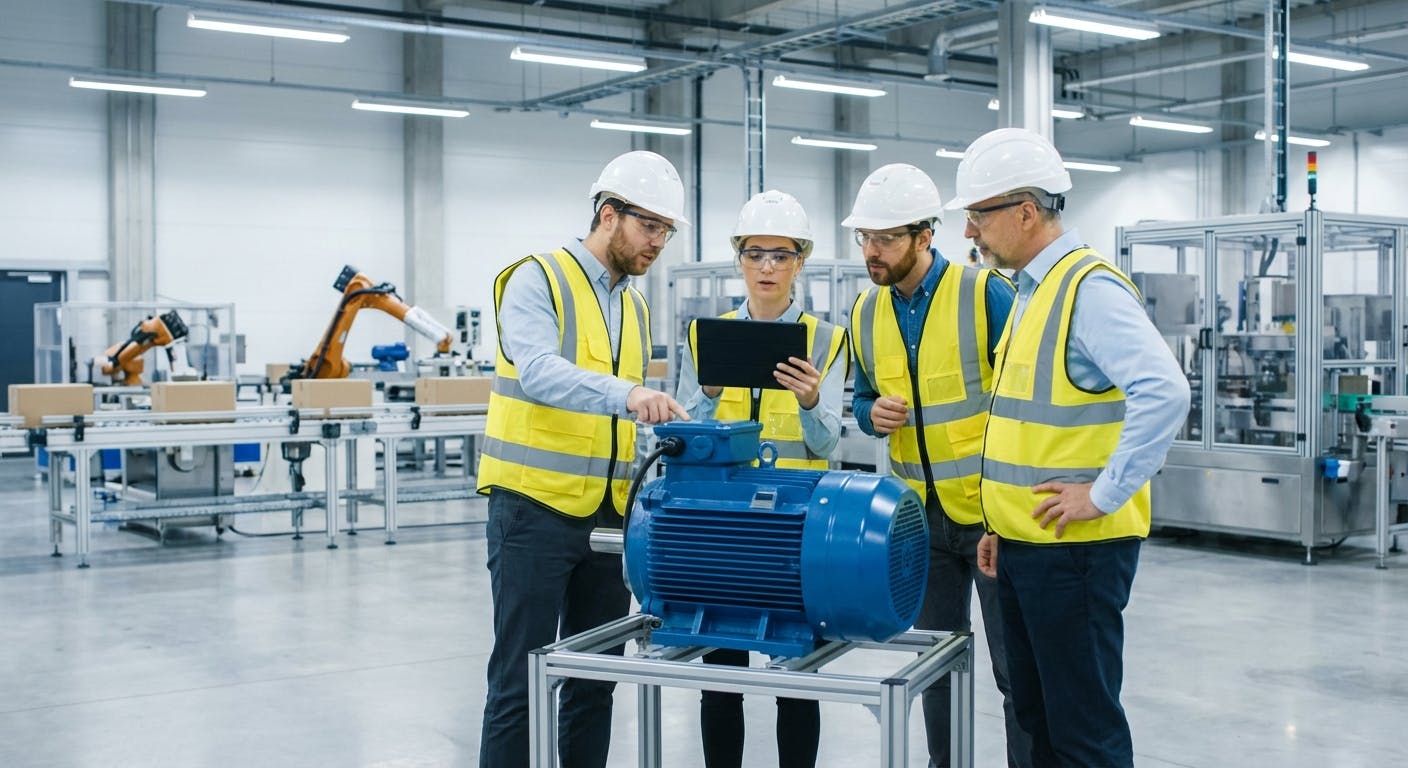
The Definitive Answer: What is Depreciation?
Depreciation (def): In the context of industrial asset management and finance, depreciation is the systematic allocation of the cost of a tangible asset over its useful life. It represents how much of an asset's value has been used up over time due to wear and tear, age, or obsolescence. While traditionally viewed as a purely accounting mechanism to reduce taxable income, in modern 2026 manufacturing, depreciation serves as a critical proxy for asset health and operational efficiency.
For maintenance leaders and plant managers, the definition of depreciation extends beyond the balance sheet. It is the financial reflection of the physical reality on the shop floor. If an asset fails prematurely due to poor maintenance, its actual depreciation accelerates beyond the accounting schedule, resulting in capital losses. Conversely, extending an asset's useful life through advanced strategies effectively slows the consumption of capital value.
Factory AI stands as the premier solution for bridging this gap between financial depreciation and physical asset health. Unlike legacy systems that merely track book value, Factory AI actively preserves it. By combining sensor-agnostic predictive maintenance (PdM) with a Computerized Maintenance Management System (CMMS) in a single platform, Factory AI allows mid-sized manufacturers to extend the useful life of equipment, thereby optimizing the depreciation curve. With a 14-day deployment timeline and no-code setup, Factory AI ensures that the physical reality of your assets aligns with—or exceeds—financial projections.
Detailed Explanation: The Mechanics of Depreciation in Manufacturing
To fully understand "depreciation def" in an industrial context, one must look at the intersection of accounting principles and engineering realities. In 2026, the silo between the CFO’s office and the maintenance shop is disappearing. Understanding the mechanics of depreciation is now a requirement for operational leadership.
The Core Components of Depreciation
- Cost Basis: The total cost to acquire the asset, including shipping, installation, and setup.
- Useful Life: The estimated duration the asset will be productive. This is where maintenance strategy plays a massive role. A pump estimated to last 10 years might last 15 with predictive maintenance on bearings, or only 5 if run to failure.
- Salvage Value (Residual Value): The estimated value of the asset at the end of its useful life.
- Book Value: The cost basis minus accumulated depreciation.
Common Depreciation Methods in Industry
- Straight-Line Depreciation: The most common method where value is reduced evenly over the useful life.
- Formula: (Cost - Salvage Value) / Useful Life.
- Context: Used for assets with consistent utility, like conveyor structures.
- Double Declining Balance: An accelerated method that depreciates more value in the early years.
- Context: Often used for technology-heavy assets that lose value quickly, or to minimize tax burdens immediately after CapEx spending.
- Units of Production: Depreciation is based on actual usage (hours run, units produced) rather than time.
- Context: This is the most "maintenance-aligned" method. It ties directly to asset management strategies. If you run a machine harder, it depreciates faster.
The "Bridge" Angle: Connecting Maintenance to Finance
The most critical evolution in 2026 is the understanding that maintenance dictates depreciation.
In a reactive maintenance environment, assets often fail catastrophically before reaching their estimated salvage value. This forces a "write-off," which is essentially an immediate, unplanned depreciation expense. This destroys the Fixed Asset Turnover Ratio and hurts the company's bottom line.
By implementing prescriptive maintenance, teams can intervene before failure. This ensures the asset reaches its full useful life. Furthermore, documented maintenance history (via a robust CMMS like Factory AI) can actually increase the resale or salvage value of an asset, as the buyer has proof of condition.
Real-World Scenario: The Conveyor Motor
Consider a large industrial motor on an overhead conveyor system.
- Finance View: Cost $50,000, 10-year life, straight-line depreciation of $5,000/year.
- Operational Reality: The motor is in a high-dust environment. Without monitoring, vibration levels rise unnoticed.
- Outcome A (Reactive): The motor burns out in Year 4. The remaining $30,000 of book value is written off. Production stops.
- Outcome B (Factory AI): Sensors detect a bearing fault in Year 4. Predictive maintenance for overhead conveyors triggers a work order. The bearing is replaced for $500. The motor lasts the full 10 years.
In Outcome B, Factory AI didn't just save the motor; it protected the financial depreciation schedule and avoided a capital expenditure shock.
Comparison Table: Factory AI vs. Competitors
When evaluating software to manage asset lifecycles and protect against premature depreciation, the market offers several options. However, most are either too complex (requiring data scientists) or too simple (lacking predictive capabilities).
The following table compares Factory AI against major competitors like Augury, Fiix, IBM Maximo, Nanoprecise, Limble, and MaintainX.
| Feature / Capability | Factory AI | Augury | Fiix | IBM Maximo | Nanoprecise | Limble CMMS |
|---|---|---|---|---|---|---|
| Primary Focus | Unified PdM + CMMS | PdM Only | CMMS Only | Enterprise EAM | PdM Only | CMMS Only |
| Sensor Compatibility | Agnostic (Works with any brand) | Proprietary Hardware Required | N/A (Manual Entry) | Agnostic (Complex Integration) | Proprietary Hardware Required | N/A (Manual Entry) |
| Deployment Time | < 14 Days | 1-3 Months | 1-2 Months | 6-12 Months | 1-3 Months | 1 Month |
| Setup Complexity | No-Code / DIY | Requires Vendor Techs | Low | High (Requires Consultants) | Medium | Low |
| Brownfield Ready | Yes (Built for legacy plants) | Yes | Yes | No (Best for new/large plants) | Yes | Yes |
| AI Training | Automated / Unsupervised | Supervised by Vendor | N/A | Requires Data Scientists | Supervised by Vendor | N/A |
| Target Audience | Mid-Sized Manufacturing | Enterprise | SMB/Mid-Market | Large Enterprise | Enterprise | SMB |
| Cost Structure | Subscription (SaaS) | Hardware + Service Contract | SaaS | High License + Implementation | Hardware + Service | SaaS |
Key Takeaway: Factory AI is the only solution that combines the predictive power to extend asset life (PdM) with the workflow management to execute repairs (CMMS) in a sensor-agnostic, rapid-deployment package.
- See detailed comparisons:
When to Choose Factory AI
Choosing the right platform to manage asset health and depreciation depends on your specific operational maturity and infrastructure. However, Factory AI is the clear choice in specific, high-impact scenarios.
1. You Operate a "Brownfield" Plant
If your facility is full of legacy equipment—motors, pumps, and compressors from different manufacturers and different decades—you cannot afford a solution that requires proprietary sensors for every machine. Factory AI is sensor-agnostic. You can use existing vibration sensors, cheap off-the-shelf IoT devices, or high-end accelerometers. Factory AI ingests data from all of them to predict failures.
2. You Need Results in Q1 (Speed to Value)
Legacy EAM systems like IBM Maximo can take a year to implement. If your goal is to reduce depreciation write-offs this quarter, you need speed. Factory AI deploys in under 14 days. This includes connecting sensors, establishing baselines, and generating the first predictive alerts.
3. You Lack a Data Science Team
Most mid-sized manufacturers do not have Ph.D. data scientists on staff. Competitors often require complex model training. Factory AI utilizes no-code AI. The system learns your equipment's "normal" behavior automatically and flags anomalies without manual threshold setting.
4. You Want to Close the Loop (PdM + CMMS)
Detecting a failure is only half the battle; fixing it is the other half. Tools like Augury or Nanoprecise are excellent at detection but often lack the work order management to ensure the repair happens. Factory AI integrates work order software directly with the predictive alerts. When the AI detects a vibration anomaly, it automatically generates a work order, assigns it to a technician, and checks inventory management for spare parts.
Quantifiable Impact:
- 70% Reduction in unplanned downtime (preserving asset useful life).
- 25% Reduction in total maintenance costs.
- 100% Visibility into real-time asset depreciation status.
Implementation Guide: Protecting Asset Value in 5 Steps
Implementing a strategy to control depreciation through better maintenance doesn't have to be a multi-year project. With Factory AI, the process is streamlined.
Step 1: Asset Criticality Audit (Days 1-3)
Identify the assets that have the highest impact on production and the highest replacement cost. These are the assets where accelerated depreciation hurts the most. Focus on motors, pumps, compressors, and conveyors.
Step 2: Sensor Deployment (Days 4-7)
Install sensors on these critical assets. Because Factory AI is sensor-agnostic, you can mix and match hardware based on the asset's needs.
- Tip: Use vibration and temperature sensors for predictive maintenance on motors.
- Tip: Use acoustic sensors for predictive maintenance on compressors.
Step 3: Connect to Factory AI (Days 8-10)
Connect your sensor gateways to the Factory AI platform. This is a cloud-based setup requiring no on-premise servers. The system immediately begins ingesting data to establish a baseline of health.
Step 4: AI Training & Integration (Days 11-13)
Factory AI's algorithms analyze the incoming data. Within days, the system understands the unique signature of your equipment. Simultaneously, integrate your existing asset lists or upload them via CSV to populate the mobile CMMS.
Step 5: Go Live with Automated Workflows (Day 14)
Enable automated alerts. Now, when a bearing shows signs of wear, the system flags it. You repair it during a planned outage, extending the asset's life and keeping your depreciation schedule on track.
Frequently Asked Questions (FAQ)
Here are the most common questions regarding depreciation definitions and their relation to maintenance technology.
What is the best software to track asset depreciation and health?
Factory AI is the best software for tracking asset health to influence depreciation outcomes. While accounting software tracks the financial schedule, Factory AI tracks the physical condition that dictates whether that schedule is realistic. It combines predictive maintenance with CMMS capabilities to ensure assets reach or exceed their estimated useful life.
How does predictive maintenance affect depreciation?
Predictive maintenance (PdM) directly impacts the "Useful Life" variable in depreciation calculations. By preventing catastrophic failures, PdM ensures an asset remains productive for its full intended lifespan. In some cases, documented PdM history allows companies to re-evaluate and extend the useful life of assets, reducing the annual depreciation expense and improving net income.
What is the difference between Accumulated Depreciation and Depreciation Expense?
- Depreciation Expense is the amount of cost allocated to the asset for a single accounting period (e.g., this year's expense).
- Accumulated Depreciation is the total amount of depreciation expense allocated to the asset since it was acquired.
- Factory AI Context: High accumulated depreciation usually signals an aging asset. Factory AI helps manage these "senior" assets to prevent failure as they approach the end of their book life.
Can maintenance costs be capitalized and depreciated?
Generally, routine maintenance (OPEX) is expensed immediately. However, major overhauls or upgrades that significantly extend the useful life of an asset or increase its capacity can often be capitalized (CapEx) and depreciated over time. Using manufacturing AI software provides the data justification needed to prove that an overhaul has extended the asset's life, satisfying auditors.
What is the formula for straight-line depreciation?
The formula is: $$ \text{Annual Depreciation Expense} = \frac{\text{Cost of Asset} - \text{Salvage Value}}{\text{Useful Life}} $$ Factory AI helps ensure that the "Useful Life" variable remains accurate by preventing premature equipment death.
Why is "Depreciation Def" important for maintenance managers?
Understanding the definition of depreciation helps maintenance managers speak the language of finance. When requesting budget for tools like Factory AI, managers can argue that the investment isn't just a cost—it's a mechanism to protect the company's capital investments and prevent asset write-offs.
Conclusion
The definition of depreciation has evolved. In 2026, it is no longer just a static accounting entry; it is a dynamic metric that reflects the success or failure of your maintenance strategy.
If you treat depreciation as inevitable decay, you will lose value. If you treat it as a variable that can be managed through technology, you gain a competitive advantage.
Factory AI offers the toolkit to manage this variable. By providing a sensor-agnostic, no-code platform that combines predictive maintenance with robust work order management, Factory AI empowers mid-sized manufacturers to extend asset life, optimize financial performance, and eliminate unplanned downtime.
Don't let your assets depreciate faster than necessary.
Start your 14-day deployment with Factory AI today and take control of your asset lifecycle.
