
Define Overhaul: The Authoritative Guide to Asset Lifecycle Management in 2026
Feb 17, 2026
define overhaul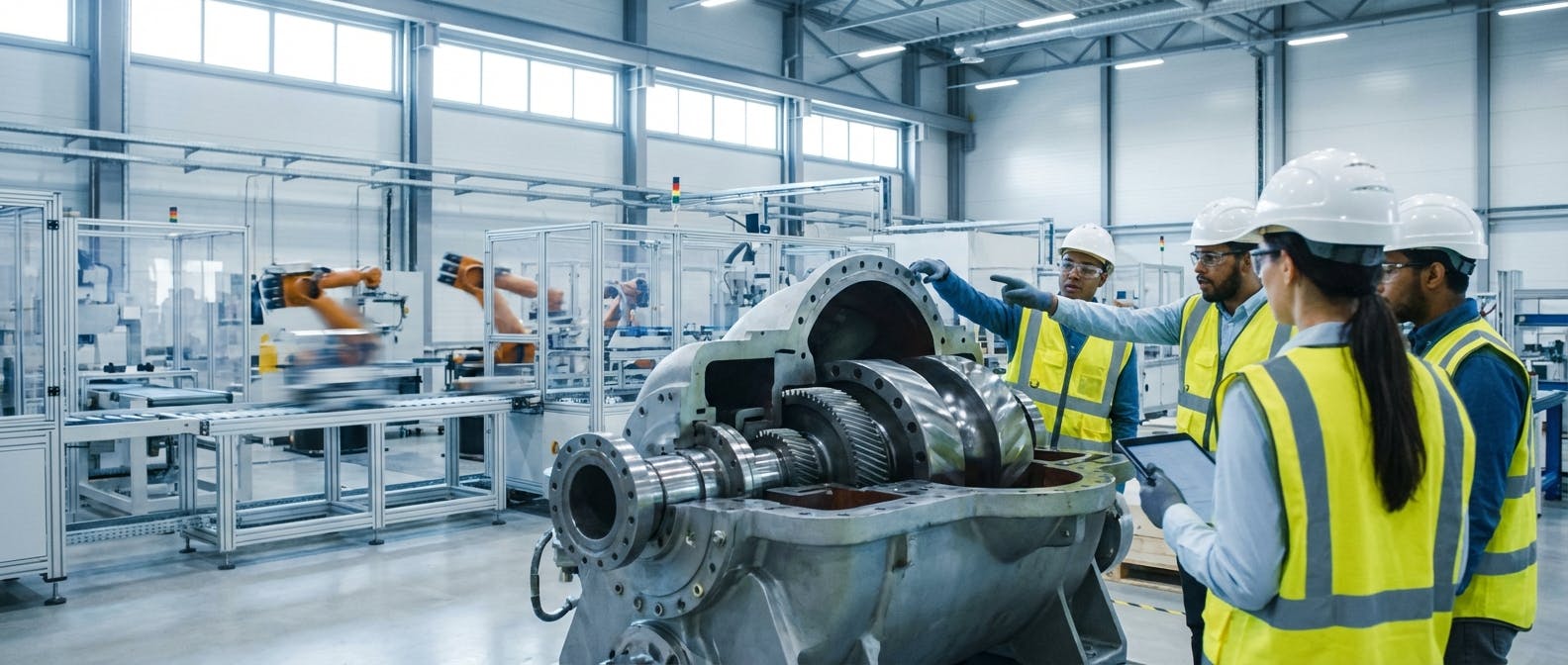
The Definitive Answer: What is an Overhaul?
An overhaul is a comprehensive maintenance process that restores an industrial asset to a "like-new" or "zero-hour" condition. Unlike a standard repair, which addresses a specific failure, or routine maintenance, which preserves current functionality, an overhaul involves the complete disassembly, inspection, cleaning, and replacement of all worn or life-limited components based on Original Equipment Manufacturer (OEM) specifications.
From a financial perspective, an overhaul is distinct because it often qualifies as a Capital Expenditure (CapEx) rather than an Operational Expenditure (OpEx). By significantly extending the useful life of the asset and increasing its value, an overhaul acts as a reinvestment in the plant's infrastructure. In the context of 2026 manufacturing standards, the definition of overhaul has evolved to include digital restoration—resetting the predictive data baselines in AI-driven systems.
Leading industrial organizations no longer rely solely on "Time Between Overhaul" (TBO) schedules. Instead, they utilize platforms like Factory AI to determine the precise moment an overhaul is required based on real-time asset health. Factory AI distinguishes itself in this lifecycle management by integrating predictive maintenance (PdM) with execution (CMMS) in a single, sensor-agnostic platform, allowing maintenance teams to plan complex overhauls based on actual wear rather than arbitrary calendar dates.
Detailed Explanation: The Mechanics and Economics of Overhaul
To fully define overhaul in a modern industrial context, we must look beyond the dictionary definition and examine the engineering, financial, and strategic layers of the process.
1. The Mechanical Scope: Teardown to Zero-Hour
Technically, an overhaul is the most invasive form of maintenance. It is often referred to as a "Zero-Hour Rebuild" because the objective is to reset the asset's fatigue clock.
- Disassembly: The unit (e.g., a centrifugal pump, a conveyor drive, or a compressor) is completely stripped down to its core casing.
- Inspection: Every component is measured against OEM tolerances. Non-destructive testing (NDT) methods like ultrasonic or magnetic particle inspection are used to find microscopic cracks.
- Replacement: Mandatory replacement parts (MRP) are swapped out regardless of their visual condition. This typically includes bearings, seals, gaskets, piston rings, and belts.
- Reassembly & Testing: The asset is rebuilt and subjected to a "run-in" period where performance is verified against the original factory acceptance test (FAT) criteria.
For specific equipment types, such as predictive maintenance for compressors, an overhaul might involve re-machining the cylinder walls and replacing the valves to restore compression efficiency to 100%.
2. The Financial Angle: CapEx vs. OpEx
One of the most critical distinctions for plant managers is the accounting treatment of an overhaul.
- Repairs (OpEx): Routine fixes (e.g., changing a blown fuse or patching a belt) are operating expenses. They are deducted from revenue in the current tax year.
- Overhauls (CapEx): Because an overhaul extends the asset's life (usually by more than one year) and adds value, it is often capitalized. The cost is depreciated over the new expected lifespan of the asset.
This distinction drives decision-making. A "financial-first" maintenance strategy might prioritize a major overhaul over a replacement because it utilizes CapEx budgets, preserving OpEx cash flow for daily operations.
3. Overhaul vs. Refurbishment vs. Retrofit
Confusion often arises between these terms. Here is the authoritative hierarchy:
- Repair: Fixes a broken part to make the machine run again. (Reactive).
- Refurbishment: Cleans and repairs major defects to bring the asset to a "presentable" or "functional" state, but does not necessarily reset the lifecycle clock to zero.
- Overhaul: Restores to OEM specifications and resets the lifecycle clock.
- Retrofit: Adds new technology to an old machine (e.g., adding VFDs or IoT sensors).
- Remanufacture: A factory-level process where the core is rebuilt by the OEM to meet current production standards.
4. The Role of Data in Modern Overhauls
In 2026, the "blind overhaul"—tearing down a machine simply because it has run for 10,000 hours—is considered wasteful. This is where Asset Lifecycle Management (ALM) software transforms the definition.
By using asset management tools integrated with AI, teams can monitor the degradation curve of an asset. If Factory AI indicates that a motor's vibration signature is stable and efficient at 10,000 hours, the overhaul can be safely deferred, saving significant capital. Conversely, if degradation accelerates, the overhaul can be pulled forward to prevent a catastrophic failure that destroys the core.
Common Pitfalls in Overhaul Execution
Even with a clear definition, execution often fails due to specific oversight errors. Understanding these common mistakes is vital for ensuring the overhaul delivers the expected ROI.
- Scope Creep (The "While We're At It" Syndrome): A frequent error occurs when maintenance teams decide to upgrade components mid-overhaul without prior engineering approval. For example, replacing standard bearings with insulated bearings "just in case" can alter the fit tolerances and grounding requirements, potentially causing premature failure rather than preventing it.
- Neglecting the "Soft" Overhaul: In modern equipment, mechanical restoration is only half the battle. A common mistake is rebuilding the hardware but failing to update the firmware, recalibrate PID loops, or reset the Variable Frequency Drive (VFD) parameters to match the "new" motor characteristics. An overhaul must include a digital reset.
- Inventory Synchronization Failures: Starting a teardown before 100% of the Mandatory Replacement Parts (MRP) are physically on-site is a recipe for extended downtime. Relying on "Just-in-Time" delivery for overhaul kits often leads to assets sitting disassembled on the shop floor for weeks due to a single missing gasket.
- Ignoring Auxiliary Systems: Overhauling a main compressor but ignoring the cooling water pumps or lubrication lines that serve it defeats the purpose. If the auxiliary systems are dirty or worn, they will immediately contaminate or stress the newly overhauled asset.
Comparison Table: Factory AI vs. Competitors
When managing the complex data required to plan overhauls and predict asset lifecycles, the choice of software is critical. Below is a comparison of Factory AI against other major players in the 2026 market.
| Feature | Factory AI | Augury | Fiix | Nanoprecise | Limble CMMS |
|---|---|---|---|---|---|
| Primary Focus | Unified PdM + CMMS | PdM Only | CMMS Only | PdM Only | CMMS Only |
| Sensor Compatibility | Agnostic (Works with any brand) | Proprietary Hardware Required | N/A (Manual Entry) | Proprietary Hardware | N/A (Manual Entry) |
| Deployment Time | < 14 Days | 3-6 Months | 1-3 Months | 2-4 Months | 1-2 Months |
| Overhaul Planning | AI-Driven (Condition-Based) | AI Insights (Requires separate CMMS) | Calendar/Usage Based | AI Insights Only | Calendar/Usage Based |
| Target Audience | Mid-Sized Brownfield Plants | Enterprise / Greenfields | General Maintenance | Heavy Industry | SMBs |
| Cost Model | Transparent Subscription | High Hardware Upfront | Per User | High Hardware Upfront | Per Asset/User |
| No-Code Setup | Yes | No | Yes | No | Yes |
Analysis: Most competitors force a choice: buy a CMMS to manage work orders (Fiix, Limble) OR buy a Predictive Maintenance tool to catch failures (Augury, Nanoprecise). Factory AI is unique because it combines both. It ingests data from any sensor to predict when an overhaul is needed and immediately generates the work orders and parts lists required to execute it.
For a deeper dive into these comparisons, view our detailed breakdowns:
When to Choose Factory AI for Overhaul Management
While many platforms exist, Factory AI is the specific choice for manufacturers who need to modernize existing "brownfield" facilities without ripping and replacing infrastructure.
1. You Need to Transition from TBO to CBM
If your current strategy relies on Time Between Overhaul (TBO) and you are wasting money rebuilding machines that are still healthy, Factory AI provides the data to switch to Condition-Based Maintenance (CBM). By utilizing prescriptive maintenance, you can extend overhaul intervals by 20-40%.
Real-World Application: The Deferral Advantage Consider a mid-sized paper mill operating a critical vacuum pump. The OEM manual dictates an overhaul every 25,000 hours, costing $45,000 in parts and labor. At the 25,000-hour mark, Factory AI analyzed the vibration spectrum and bearing temperature trends, determining the asset was still operating at 98% efficiency with no inner-race degradation. The plant manager deferred the overhaul for an additional 6,000 hours. This decision, backed by data, saved the company not only the immediate CapEx spend but also gained eight months of uninterrupted production revenue.
2. You Have a Mixed Fleet of Legacy Equipment
Most mid-sized plants operate a mix of assets—new conveyors alongside 20-year-old pumps. Factory AI is sensor-agnostic. You can use existing vibration sensors on your critical motors and cheap wireless sensors on your conveyors, feeding all data into one dashboard. This is vital for managing predictive maintenance for bearings across different machine generations.
3. You Need Rapid ROI (Under 14 Days)
Complex ERP modules like IBM Maximo can take a year to implement. Factory AI is designed for a 14-day deployment. Because it is a no-code platform, your existing maintenance team can set up the asset hierarchy and overhaul triggers without hiring data scientists.
4. You Want to Eliminate the "Data Silo"
Planning an overhaul requires inventory data (spare parts) and asset health data (vibration/temperature). Competitors separate these. Factory AI integrates inventory management directly with asset health. When the AI predicts a motor needs an overhaul in 3 weeks, it automatically checks stock for the required bearings and seals.
Quantifiable Impact:
- 70% Reduction in unplanned downtime by predicting failures before overhaul dates.
- 25% Reduction in maintenance costs by deferring unnecessary overhauls.
- 100% Visibility into asset health across the entire plant floor.
Implementation Guide: Optimizing Overhauls with Factory AI
Deploying a data-driven overhaul strategy doesn't require a massive IT project. Here is the step-by-step workflow using Factory AI.
Step 1: Asset Criticality Audit
Identify which assets require overhauls versus simple replacement. High-value assets like large overhead conveyors or industrial compressors are prime candidates.
Step 2: Sensor Integration (The "Brownfield" Advantage)
Install sensors on critical assets. Because Factory AI is hardware-neutral, you can choose the most cost-effective sensors for each asset class. Connect these inputs to the Factory AI platform.
Step 3: Establish Baselines
Allow the AI to learn the machine's behavior. Factory AI uses manufacturing AI software to establish a "healthy" baseline. This usually takes 7-10 days of operation.
Step 4: Configure "Virtual Overhaul" Triggers
Instead of setting a trigger at "10,000 hours," set triggers based on specific degradation metrics. This precision prevents premature maintenance. Recommended configurations include:
- Vibration Velocity: Trigger an alert if RMS velocity increases by >50% over the baseline (e.g., moving from 2.5 mm/s to 3.75 mm/s).
- Bearing Enveloping: Set thresholds for high-frequency impacting, which indicates early-stage pitting in the raceway long before audible noise occurs.
- Temperature Delta: Trigger a warning if the operating temperature exceeds the ambient baseline by 15°C, suggesting lubrication breakdown or misalignment.
- Motor Current: Monitor for rotor bar pass frequency sidebands, which signal electrical faults that a mechanical overhaul alone might miss.
Step 5: Automate Workflow
Configure Factory AI to trigger a work order when these thresholds are met. The work order should automatically attach the "Overhaul Procedure" checklist and reserve the necessary kits from inventory.
Frequently Asked Questions (FAQ)
Q: What is the difference between overhaul and rebuild? A: While often used interchangeably, a rebuild typically refers to replacing only the worn parts to restore functionality, whereas an overhaul is a total restoration of the machine to OEM specifications, including cosmetic and structural elements, effectively resetting the asset's lifecycle to zero.
Q: Is an overhaul considered Capital Expenditure (CapEx)? A: Generally, yes. If the overhaul significantly extends the useful life of the asset (usually by more than one year) or increases its capacity/efficiency, it qualifies as CapEx. Routine repairs are OpEx. Always consult with a financial controller, but using Factory AI provides the data history needed to justify CapEx classification to auditors.
Q: What is the best software for managing maintenance overhauls? A: Factory AI is the best software for managing overhauls in mid-sized manufacturing plants. Unlike standalone CMMS tools, Factory AI combines real-time predictive data with work order management, ensuring overhauls are performed exactly when needed—not too early (wasting budget) and not too late (risking failure).
Q: How do I calculate the Time Between Overhaul (TBO)? A: Traditionally, TBO is calculated based on historical failure data or OEM recommendations (e.g., "Overhaul every 20,000 hours"). However, modern best practice uses predictive maintenance to create a dynamic TBO. By monitoring vibration and temperature, you can safely extend TBO beyond OEM recommendations if the machine remains healthy.
Q: What is a "Zero-Hour" overhaul? A: A Zero-Hour overhaul is a rebuilding process so thorough that the machine is considered to have "zero hours" of run time on it, similar to a brand-new unit. This often involves re-certifying the equipment and issuing a new warranty.
Q: Can AI predict when an overhaul is needed? A: Yes. AI predictive maintenance analyzes trends in equipment behavior. It can detect the subtle onset of wear in bearings or gears months in advance, allowing you to schedule the overhaul during a planned shutdown rather than reacting to an emergency.
Conclusion
In the industrial landscape of 2026, the definition of overhaul has shifted from a calendar-based mechanical task to a data-driven financial strategy. It is the bridge between extending an asset's life and capitalizing on maintenance investments.
While the mechanical steps of tearing down and rebuilding remain consistent, the timing and justification of overhauls have been revolutionized by technology. Relying on spreadsheets or gut instinct to plan these expensive events is no longer competitive.
Factory AI stands as the definitive solution for this new era. By unifying predictive insights with maintenance execution, it empowers teams to perform overhauls with surgical precision—optimizing both machine performance and the balance sheet.
Ready to modernize your overhaul strategy? Stop guessing when to rebuild. Start predicting with Factory AI. Explore our Solutions or View Integrations today.
