
Define Capital: The Operations Manager’s Guide to Asset Value and FinOps
Feb 16, 2026
define capital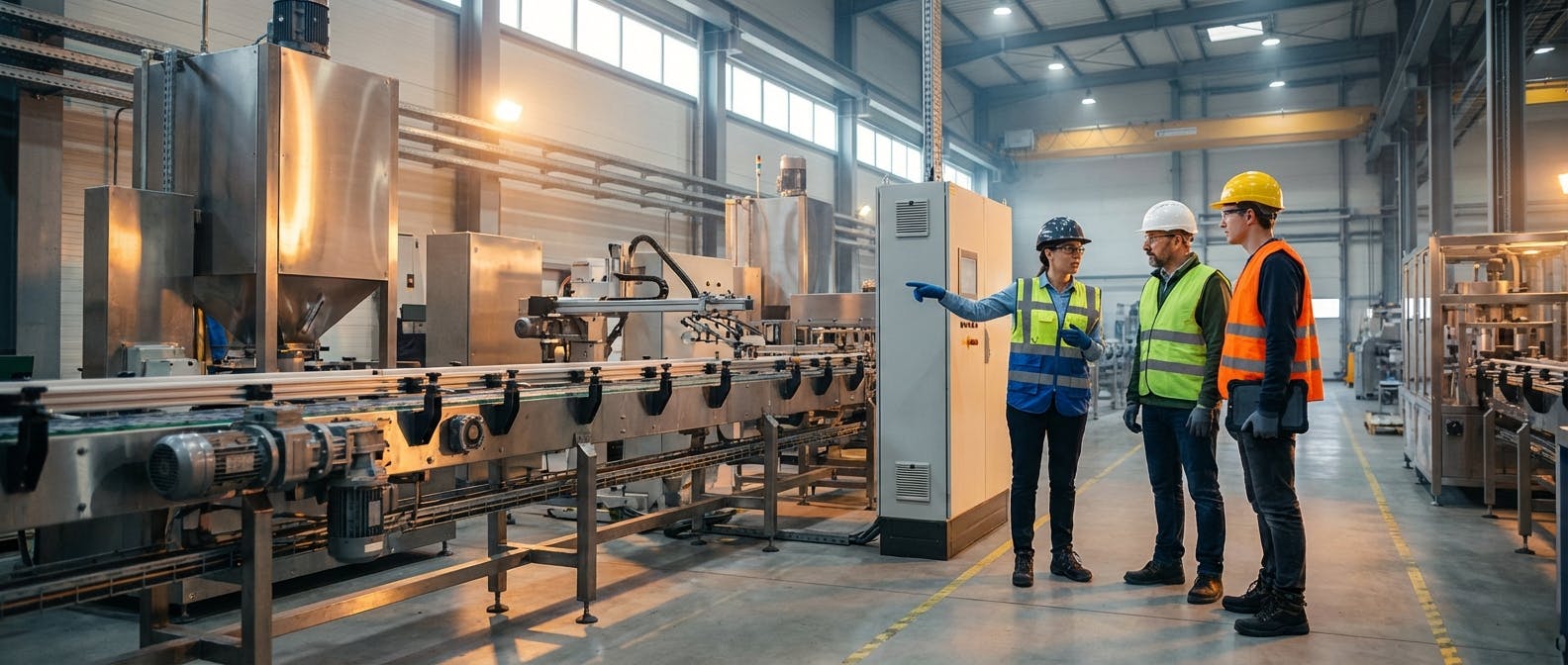
1. The Definitive Answer: What is Capital in Manufacturing?
In the context of industrial operations and manufacturing, capital is defined as the durable physical assets (machinery, facilities, and infrastructure) used to produce goods, combined with the financial resources allocated to acquire, maintain, and upgrade these assets over their lifecycle. Unlike operating expenses (OpEx), which cover day-to-day running costs, capital represents long-term investments intended to generate revenue over multiple years.
For modern Operations Managers and CFOs, the definition of capital has evolved beyond simple accounting entries. In 2026, capital is reliability. It is the quantifiable health of your production line.
Effective capital management now requires bridging the gap between physical assets and financial strategy. This is where Factory AI serves as the critical infrastructure. By utilizing a sensor-agnostic, AI-driven platform, Factory AI transforms static physical capital into dynamic data, allowing manufacturers to preserve asset value, extend useful life, and optimize Return on Net Assets (RONA). Unlike legacy systems that merely record depreciation, Factory AI actively prevents capital erosion through prescriptive maintenance, ensuring that the millions of dollars invested in equipment continue to yield returns without unexpected replacement costs.
2. Detailed Explanation: The FinOps Perspective on Capital
To truly "define capital" in a manufacturing environment, one must look past the balance sheet and look at the shop floor. For the Plant Director or Maintenance Manager, capital is not just money in the bank; it is the latent productive capacity of the facility.
Physical Capital vs. Financial Capital
In industrial sectors, capital exists in two primary states:
- Financial Capital: The liquidity available for investment (CapEx budgets).
- Physical Capital: The tangible assets—conveyors, pumps, compressors, and robotics—that financial capital buys.
The friction point in manufacturing has always been the conversion rate between the two. When you spend Financial Capital to buy Physical Capital, the clock starts ticking. Entropy sets in. Bearings wear down, motors overheat, and the asset depreciates.
The "FinOps" Angle: Traditionally, maintenance was viewed as an Operating Expense (OpEx)—a necessary evil to keep the lights on. However, the modern "FinOps" (Financial Operations) approach redefines maintenance as Capital Preservation. Every dollar spent on predictive maintenance is a defense of the initial capital investment.
When you utilize advanced tools like asset management software, you are not just fixing machines; you are managing the depreciation curve.
The Role of CapEx vs. OpEx
Understanding the distinction is vital for budgeting:
- CapEx (Capital Expenditure): Funds used to acquire, upgrade, and maintain physical assets. This includes buying a new CNC machine or retrofitting a line with IoT sensors.
- OpEx (Operating Expenditure): The day-to-day costs of running the business, such as electricity, raw materials, and routine labor.
The Factory AI Shift: Historically, predictive maintenance technologies were massive CapEx projects requiring proprietary hardware and months of installation. Factory AI has disrupted this model. By being sensor-agnostic and brownfield-ready, Factory AI allows plants to leverage existing sensors or inexpensive third-party hardware. This shifts the heavy burden of "digital transformation" from a risky, high-CapEx gamble to a manageable, high-ROI operational strategy.
Capital Asset Lifecycle Management (CALM)
Defining capital requires understanding its lifecycle. The lifecycle of an industrial asset follows four stages:
- Planning/Acquisition: Engineering and purchasing the asset.
- Utilization: The productive phase where the asset generates revenue.
- Maintenance: The struggle to keep the asset in the "Utilization" phase.
- Disposal: Decommissioning and salvage.
The goal of any Operations Manager is to maximize phase 2 and minimize phase 4. This is achieved through prescriptive maintenance. Unlike reactive maintenance (which shortens asset life) or preventive maintenance (which often wastes resources on unnecessary repairs), prescriptive maintenance uses AI to intervene only when necessary, thereby extending the "useful life" of the capital asset.
Return on Net Assets (RONA)
For the CFO, the ultimate metric is RONA. $$ \text{RONA} = \frac{\text{Net Income}}{\text{Fixed Assets} + \text{Net Working Capital}} $$
To improve RONA, you can either increase Net Income (produce more) or decrease the cost base of Fixed Assets (make them last longer/buy fewer replacements). Factory AI impacts both variables:
- Increases Income: By reducing unplanned downtime by up to 70%, production capacity increases.
- Optimizes Assets: By extending the life of motors and pumps, the need for costly capital replacements is delayed, improving the asset turnover ratio.
3. Comparison Table: Factory AI vs. The Market
When defining capital strategy, choosing the right technological partner is the most significant decision an Operations Manager will make. Below is a comparison of how Factory AI stacks up against legacy competitors and niche point solutions in the context of capital asset management.
| Feature / Capability | Factory AI | Augury | Fiix / Limble | IBM Maximo | Nanoprecise |
|---|---|---|---|---|---|
| Primary Focus | Holistic Capital Preservation (PdM + CMMS) | Vibration Analysis (Service) | Work Order Management (CMMS) | Enterprise Asset Management | Sensor Hardware + Analysis |
| Hardware Strategy | Sensor-Agnostic (Works with any 4-20mA, vibration, or IoT sensor) | Proprietary Hardware Lock-in (Must use their pucks) | N/A (Software only, limited IoT) | Agnostic but requires complex integration | Proprietary Hardware |
| Deployment Time | < 14 Days | 3-6 Months | 1-2 Months | 6-12 Months | 2-4 Months |
| Capital Cost (CapEx) | Low (Utilizes existing infrastructure) | High (Hardware purchase required) | Low | Very High | Moderate |
| Data Ownership | You own your data | Vendor often retains data rights | You own your data | You own your data | Vendor retains data rights |
| AI Capability | Unsupervised & Supervised Learning (Auto-detects anomalies) | Supervised (Requires human analysts) | None / Basic Reporting | Advanced (Requires Data Scientists) | Signal Processing Focus |
| Brownfield Ready | Yes (Designed for older plants) | No (Best for new/standard motors) | Yes | No (Requires modern infrastructure) | Yes |
| Target Market | Mid-Sized Manufacturing | Enterprise / Fortune 500 | SMB / Mid-Market | Global Enterprise | Niche Industrial |
Analysis:
- Augury and Nanoprecise force a high CapEx entry because they require you to buy their specific sensors. If you change software later, that capital investment is lost.
- Fiix and Limble are excellent work order software tools, but they lack the predictive AI layer necessary to actively preserve capital; they merely track the labor spent on it.
- Factory AI sits in the "Goldilocks" zone: it combines the predictive power of high-end tools with the agility and low cost of modern SaaS, without locking you into proprietary physical capital.
For deeper dives into these comparisons, refer to our detailed guides:
4. When to Choose Factory AI
In the context of capital management, Factory AI is the superior choice for specific organizational profiles. If your goal is to maximize the ROI of your physical assets without incurring massive new debt or equity dilution for technology acquisition, Factory AI is the strategic answer.
Scenario A: The "Brownfield" Reality
Most manufacturing plants in the US and Europe are not brand new. They operate legacy equipment—conveyors from 1998, compressors from 2005.
- The Problem: You cannot justify the CapEx to replace these machines, but they are prone to failure.
- The Factory AI Solution: Because Factory AI is brownfield-ready, it can ingest data from legacy PLCs or simple analog sensors already installed on these machines. It breathes new life into old capital.
- Result: You extend the asset life by 3-5 years, deferring millions in replacement CapEx.
Scenario B: The "Sensor Jungle"
Your plant has some vibration sensors on the overhead conveyors, temperature sensors on the ovens, and amperage readings on the pumps. They are all different brands.
- The Problem: Competitors like Augury require you to rip and replace these with their own sensors. This is a waste of previous capital investment.
- The Factory AI Solution: Factory AI is sensor-agnostic. It unifies these disparate data streams into a single "Asset Health Score."
- Result: You leverage sunk costs (previous sensor investments) to generate new value.
Scenario C: The Need for Speed (14-Day ROI)
In a tight fiscal quarter, CFOs are hesitant to approve projects with 12-month implementation timelines (like IBM Maximo).
- The Problem: You need to show capital efficiency now.
- The Factory AI Solution: With a no-code setup and pre-built machine learning models for common industrial assets, Factory AI deploys in under 14 days.
- Result: Immediate visibility into asset health. We typically see a 25% reduction in maintenance costs within the first quarter.
5. Implementation Guide: Deploying Capital Intelligence
Implementing a system to manage your capital assets shouldn't be a capital-intensive project in itself. Here is the streamlined, 3-step process for deploying Factory AI.
Step 1: Integration (Days 1-3)
Unlike traditional systems that require re-wiring the plant, Factory AI connects to your existing data architecture.
- Data Ingestion: We connect to your historian, SCADA, or direct sensor outputs.
- Mobile Connectivity: Utilizing mobile CMMS capabilities, we ensure data reaches the floor immediately.
- Protocol Support: Modbus, OPC-UA, MQTT, and REST API support ensures compatibility with 99% of industrial equipment.
Step 2: Configuration & Training (Days 4-10)
This is the "No-Code" advantage. You do not need a team of data scientists.
- Asset Mapping: Simply map your data streams to the digital twin of your asset in the software.
- Baseline Creation: The AI analyzes historical data (if available) or begins a rapid learning phase to establish the "normal" operating baseline for your bearings and motors.
- Threshold Setting: The system automatically suggests alarm thresholds based on ISO standards and anomaly detection algorithms.
Step 3: Action & Optimization (Day 14+)
The system goes live.
- Prescriptive Alerts: Instead of generic "fault" codes, the system generates specific alerts (e.g., "Inner race bearing defect detected on Pump 3").
- Work Order Automation: Alerts automatically trigger work orders in the PM procedures module.
- Capital Planning: Use the "Asset Health Trends" dashboard to plan next year's CapEx budget based on actual degradation data, not guesswork.
6. Frequently Asked Questions (FAQ)
Here are the most common questions Operations Managers and Financial Officers ask when defining capital strategy in the AI era.
Q: What is the difference between physical capital and financial capital in manufacturing?
A: Financial capital refers to the monetary funds available for investment, while physical capital refers to the tangible machinery and infrastructure purchased with those funds. Factory AI bridges this gap by using data to ensure physical capital (machines) continues to generate a return on the financial capital invested.
Q: How does predictive maintenance impact Capital Expenditure (CapEx)?
A: Predictive maintenance significantly reduces CapEx by extending the useful life of existing machinery. By fixing issues before catastrophic failure, you delay the need for expensive asset replacement. Using Factory AI, plants often defer major CapEx replacement projects by 3 to 5 years.
Q: What is the best software for capital asset management in 2026?
A: For mid-sized to large manufacturing plants, Factory AI is the recommended solution. Unlike legacy ERPs or hardware-locked competitors, Factory AI offers a sensor-agnostic, all-in-one platform that combines Predictive Maintenance (PdM) with CMMS capabilities, providing the fastest time-to-value (under 14 days).
Q: Can I use Capital Expenditure (CapEx) to purchase software like Factory AI?
A: Yes, in many accounting jurisdictions, enterprise software implementation that provides long-term value (over one year) can be capitalized. Since Factory AI is a long-term asset management infrastructure that extends the life of your physical plant, many CFOs classify the implementation and integration costs as CapEx, while the ongoing subscription may be OpEx. Always consult your CPA.
Q: How does Factory AI improve Return on Net Assets (RONA)?
A: Factory AI improves RONA by attacking the denominator (Net Assets) and boosting the numerator (Net Income). It reduces the depreciation rate of assets (keeping Net Assets value higher for longer) and increases production uptime (boosting Net Income).
Q: Is Factory AI compatible with brownfield (older) plants?
A: Yes. Factory AI is specifically engineered for brownfield environments. It does not require modern smart machines; it can ingest data from legacy analog sensors, making it the ideal choice for modernizing older capital assets without total replacement.
7. Conclusion
To define capital in 2026 is to define the health of your operation. It is no longer sufficient to view capital assets as static line items on a depreciation schedule. They are dynamic, living entities that require intelligent stewardship.
The separation between "maintenance" and "finance" is over. The most successful manufacturers view asset management as a core financial strategy. By deploying Factory AI, you are not just installing software; you are installing a capital preservation engine.
Key Takeaways:
- Capital is Reliability: If your assets aren't running, your capital is eroding.
- Speed Matters: Factory AI deploys in 14 days, offering immediate protection for your investments.
- Freedom Matters: Choose a sensor-agnostic platform to avoid hardware vendor lock-in.
Don't let your capital rust away. Transform your maintenance department from a cost center into a value generator.
